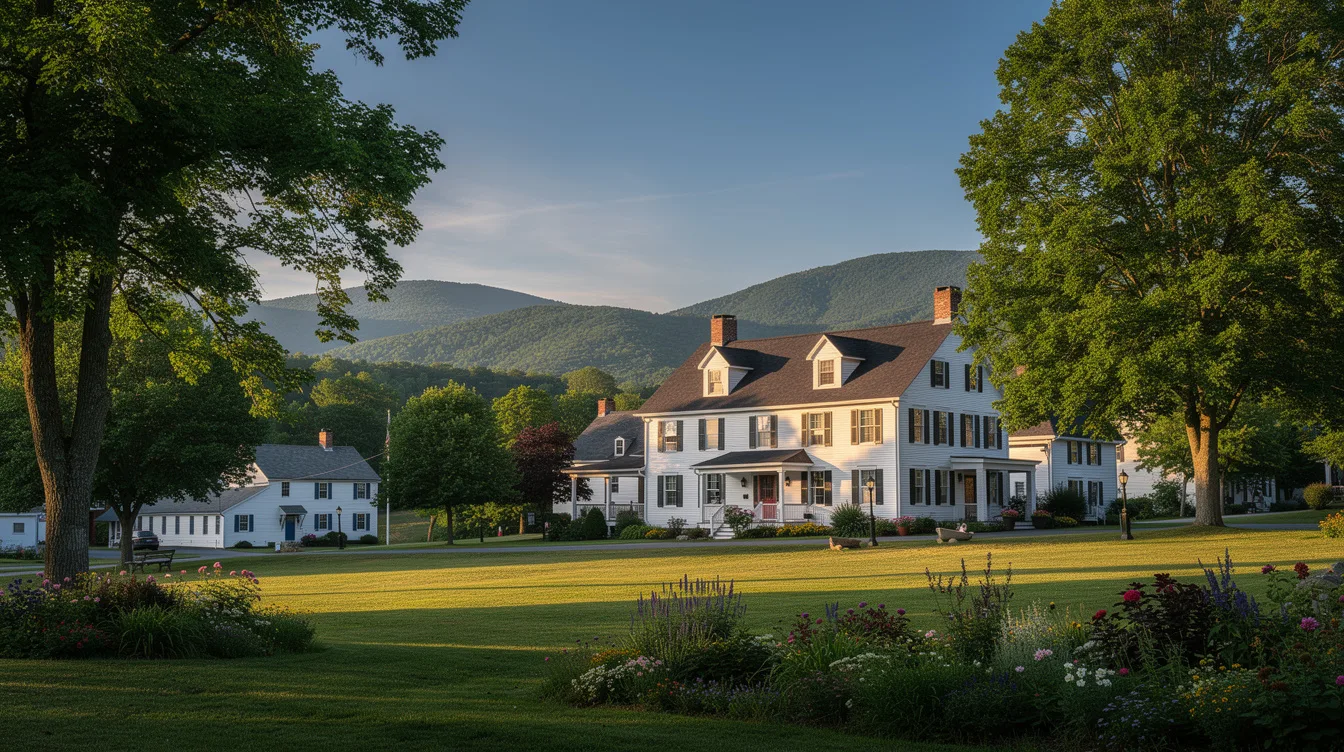
1801 is the date that gives Grafton its pull. That’s when Le Grafton Inn opened, and it remains among America’s oldest inns still operating. But the inn works because the village around it hasn’t been rushed into becoming a resort.
And Grafton is small enough to understand on foot, with about 650 residents and a preserved New England center. You’ll find quiet streets, white churches, old houses, bridges, and wooded roads. My opinion: this is the kind of Vermont stop that makes a packed itinerary feel like a mistake.
Why 1801 still matters in Grafton
And the inn is more than an old date on a sign. Le Grafton Inn has welcomed travelers for generations, giving you a place to sleep or eat while the village provides the real setting. The buildings feel connected, not scattered across a commercial strip.
But age alone won’t carry a trip. The appeal is the combination of a working inn and a town center restored with help from the Windham Foundation. Walk slowly, because the best details are easy to miss from a car: painted trim, church steeples, and roads that stay unusually quiet.
And Grafton’s story reaches back to 1754, when the town was founded on April 8. If you like places with a visible past, you’ll enjoy the way local history remains part of an ordinary morning here. Read more about Vermont’s small historic towns before you go.
A 1754 village with very little noise
And the center rewards a simple walk rather than a checklist. You can study the old architecture, cross the village bridges, and follow the roads toward the surrounding woods. The setting is photogenic, but it never feels arranged for your camera.
But Grafton is not a place for constant stimulation. There are small galleries, artists’ workshops, antique shops, and local museums, yet the town’s strongest quality is its quiet. I’d choose it when you want a few days of conversation, fresh air, and nowhere urgent to be.
And the contrast changes by season. In summer, the roads turn green and invite cycling; in winter, snow brings cross-country skiing, snowshoeing, and tubing. You’ll have fewer choices than in a larger Vermont town, which is precisely why the days feel spacious.
What can you do beyond the inn?
Can you make Grafton a one-day stop?
And you can, but the village makes more sense as a stay of one to three days. Start with the inn, then visit Grafton Village Cheese for Vermont cheddar before heading outdoors. The itinerary is modest, though the slower pace is the point.
But don’t expect a major downtown or a packed cultural calendar. You can hike, mountain bike, or ride the rural roads, then return for a meal and a quieter evening. My take is simple: Grafton is better for lingering than collecting attractions.
And the Grafton Trails & Outdoor Center and Grafton Ponds Outdoor Center add structure to an otherwise open-ended visit. In warmer months, choose walking or cycling; in winter, you can ski, snowshoe, or try snow tubing. The activities are outdoorsy, practical, and pleasantly low-key.
When should you visit, and how do you get there?
Can you reach Grafton without making it a major expedition?
And yes, Grafton is remote enough to feel rural but not difficult to reach. From I-91, approach through Bellows Falls, then continue on Routes 121 and 35. The village sits about 20 miles west of Bellows Falls and 45 miles north of Brattleboro.
But timing matters. Late September through mid-October brings the strongest fall color and the heaviest demand. You’ll find winter suited to Nordic activities, while late spring and summer favor hiking, cycling, swimming, and very green roads.
And March through May can be easier on the lodging budget, depending on availability. If you’re building a longer trip, Grafton pairs naturally with Brattleboro, Manchester, Woodstock, or the Connecticut River Valley. See Brattleboro if you want a livelier stop nearby.
The quiet is the real reason to stay
And Grafton won’t satisfy travelers who need nightlife, big museums, or a new attraction every hour. The village has a limited range of restaurants and activities, so you should arrive ready to slow down. That limitation is honest, and it keeps the place from feeling overproduced.
But if you want a Vermont morning built around old buildings, local cheese, wooded roads, and an inn open since 1801, Grafton delivers. By evening, the streets grow still, and the last light settles over the white church steeples.