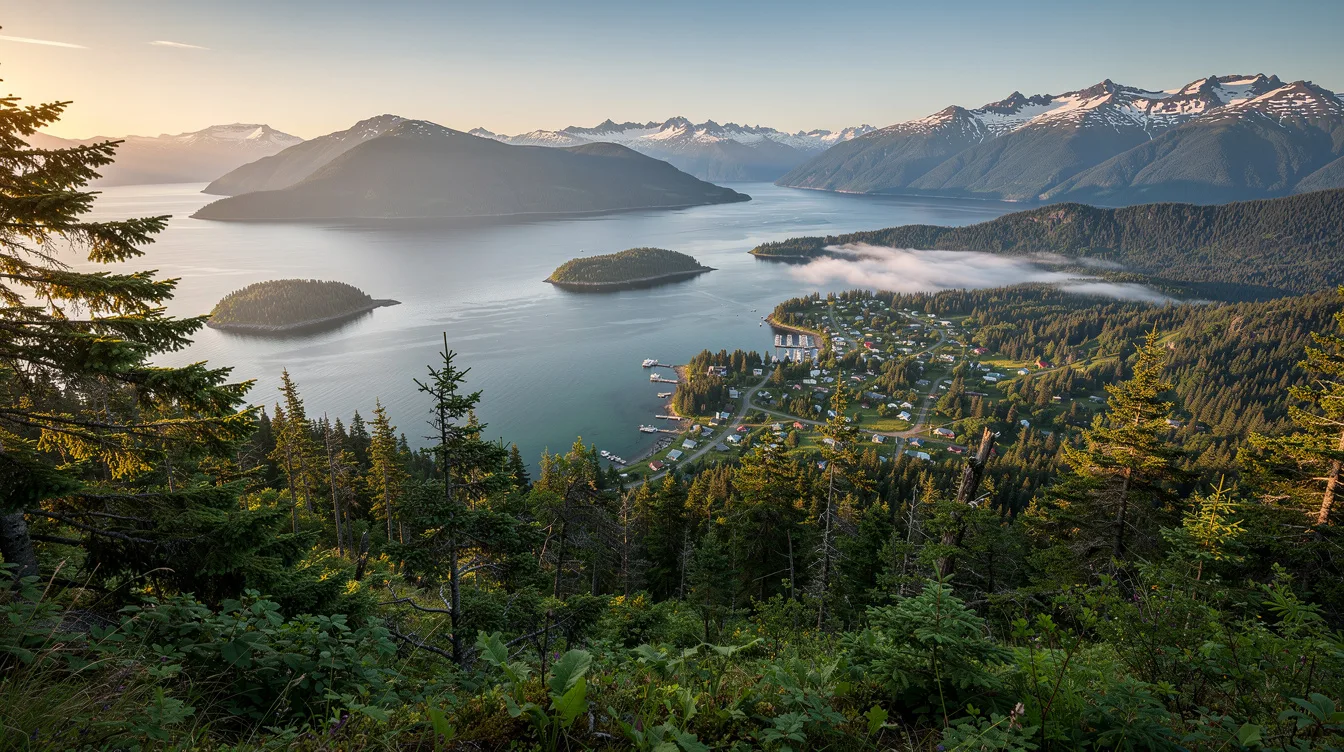
Sitka is the largest U.S. City by total area, covering 4,811 square miles, yet only about 8,500 people live there. That mismatch is the reason to skip crowded Alaska ports and come here instead.
The town feels compact, while its borough stretches across water, forest, and remote island country.
And you can reach Sitka without a road trip. It sits on the west side of Baranof Island, with access mainly by plane, ferry, or cruise ship. Plan your Sitka visit from May through September, when daylight lasts and outdoor operators are busiest.
Why this Alaska city feels bigger than it looks
Sitka’s numbers sound almost absurd until you look across the harbor. The city-borough includes 2,870 square miles of land and 1,941 square miles of water, so its size belongs more to a map than a downtown walk.
But the center is easy to explore on foot, which gives the place its unusual rhythm. You can move from Russian Orthodox architecture to Tlingit art and coastal forest without spending the day in a vehicle. My opinion: Sitka is far more rewarding when you slow down instead of chasing distant viewpoints.
And the weather keeps the town honest. Sitka has a maritime climate with abundant rain, cool temperatures, and occasional snow, so pack a waterproof jacket even in July. The forest smells of wet cedar, and low cloud can erase the mountains before lunch.
From Russian capital to Alaska’s transfer ceremony
October 18, 1867, is the date that gives Sitka unusual weight. The formal transfer of Alaska from Russia to the United States took place here, and Sitka remained the American territorial capital until 1906, when the role moved to Juneau.
That history is still visible in a remarkably compact area. St. Michael’s Cathedral recalls the Russian period, while Castle Hill looks over the harbor from the site associated with the transfer.
Read the Alaska history guide before you arrive, and the streets become easier to read.
But this isn’t a museum town sealed behind glass. Tlingit memory, Indigenous artistic traditions, Russian buildings, and American institutions share the same setting. The past is complicated, and Sitka is better when you let that tension remain visible.
What should you do between rain showers?
Can you see wildlife without spending all day on a boat?
Yes, but a boat trip gives you the best odds. Humpback whales, sea lions, sea otters, bald eagles, and seabirds are frequently seen around Sitka, depending on the season and conditions. The water can turn silver under a rain squall, then open suddenly to dark Pacific swells.
And you don’t need to fill every hour with an excursion. Sitka National Historical Park has coastal trails, Tlingit and Haida totems, an interpretive center, and Indigenous artists. The Alaska Raptor Center adds another worthwhile stop, especially when rain makes a long hike unpleasant.
For a stronger outdoor day, choose kayaking in nearby bays or a forest walk. More demanding climbs lead toward Gavan Hill or Mount Verstovia, but there’s a trade-off: wet ground, changing weather, and fewer easy exits once you commit.
Can you experience Sitka in a single cruise stop?
You can see the center, but you’ll miss the reason to stay. Castle Hill, the cathedral, the park, and a short wildlife outing fit a busy day, yet the city makes more sense over several nights.
And three to four nights lets you leave room for weather. Cruise visitors can start with the harbor, while independent travelers can combine flights, ferry connections, and walks through the forest. Sitka is lively when ships arrive, but quieter once the docks empty.
When should you go to Sitka?
May through September is the practical window for hiking, kayaking, wildlife trips, and longer daylight. You’ll find more services operating then, although cruise traffic can make the waterfront feel busy. The best days are often cool, damp, and bright enough for the mountains to appear.
But November brings WhaleFest and a different mood. Conditions are colder, wetter, and darker, so you’ll need patience along with warm layers. By evening, rain taps the harbor windows, and the last boats leave the water under a low gray sky.
Sitka won’t give you Alaska’s broad roads or easy inland access. It gives you an island city where history, ocean, and forest press close together. By the time the harbor quiets, the rain is usually the loudest thing left.