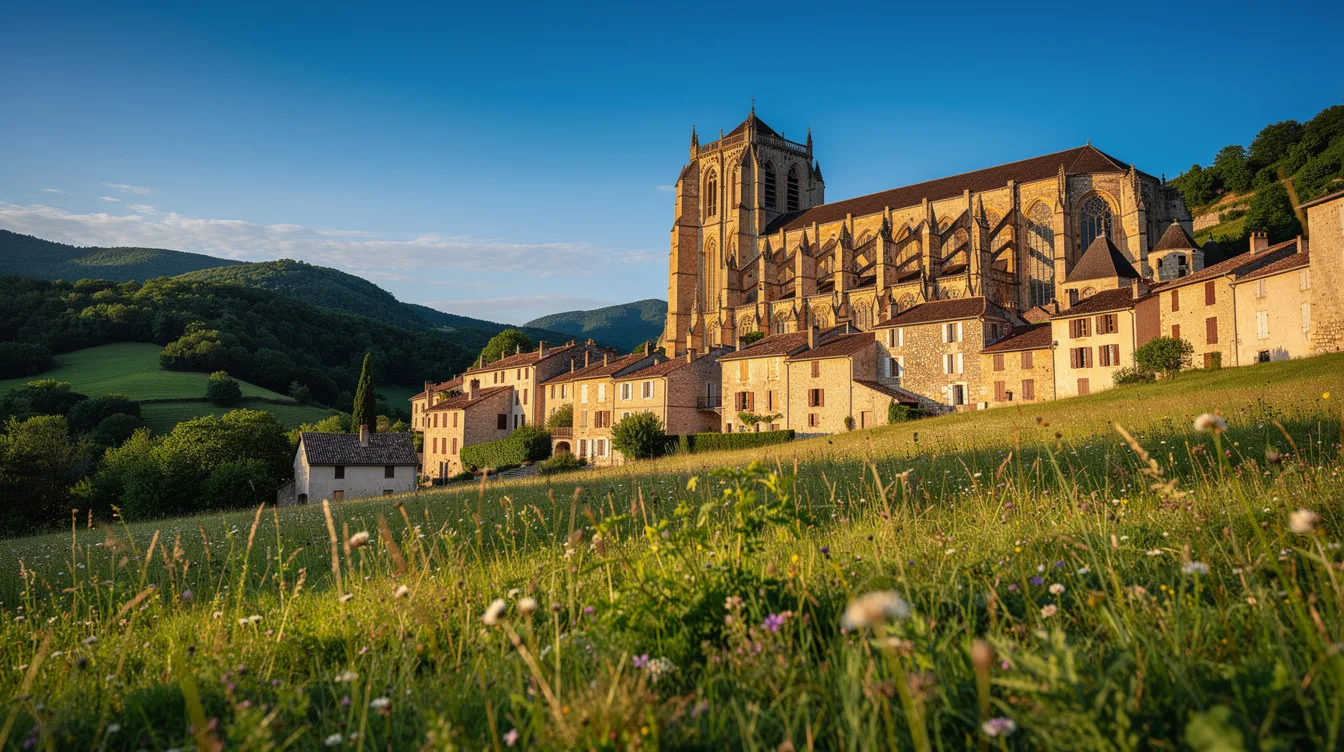
Saint-Antoine-l’Abbaye was named France’s favorite village in 2025, and the title makes sense at the abbey. The original Hospitalier house was founded here in 1095, and the Gothic church reached completion toward the end of the 15th century. The headline is quick; you find the deeper story in the streets.
But the title only tells part of the story. It’s a commune in western Isère, with 1,263 residents recorded in 2023 and a historic center shaped by pilgrims and religious care. And because it sits in the Chambaran hills, west of Grenoble and northeast of Romans-sur-Isère, it feels like a deliberate detour.
The 2025 title points to a medieval core
But the award is the door into the village’s older story. Walk the historic center and the appeal is physical: paved lanes, timber-framed houses, old façades, and an abbey that dominates the village. You don’t need a packed itinerary to understand why it won.
And the best first move is slow. Let the lanes lead you toward the Grande Cour and the former monastic buildings, where the village opens in layers instead of delivering everything at one glance. But an unhurried walk is enough, lively in recognition but quiet in its proportions.
Why 1095 still matters in the streets
1095 changes the way you read the village. It marks the founding of the original Hospitalier house here, after the site became tied to a saint’s cult and reports of healing. Pilgrims came because they believed the place could help with an illness now identified as ergotism.
But the history is practical, not just devotional. And that tension still shapes the story: sacred, but built around people arriving for care.
Look up at the Gothic church and the chronology becomes visible. Its long construction history gives the building a presence that feels earned rather than decorative. You can admire the stonework, but the question is why so many people once made this journey.
The abbey is only the first room
What should you see after the church?
Start with the façade and interior of the abbey church, then move through the 17th-century Porterie, built to receive important visitors and pilgrims. And don’t rush the old lanes. Their paving and half-timbered façades make the route tactile, especially when you stop looking for a checklist.
But the museum gives the walk its context. The Fr/”>departmental museum of Saint-Antoine-l’Abbaye follows the history of the abbey and the Antonins, so you leave with more than attractive façades in your camera roll. You can also look for the Antonins’ treasure when the relevant spaces are open.
And this is where the village becomes more than an old quarter. The Hospitalier tradition gives each monument a job in the story, from welcome to care. The best quality is that the history stays legible.
How to plan the visit when seasons change
Can you visit Saint-Antoine-l’Abbaye all year?
Yes, access to the medieval village is free all year, and the old center remains open to visitors. But don’t assume every door follows the same calendar: hours for the church and museum vary by season, and guided visits do too. Check the Tourisme. Pays-saint-marcellin. Fr/”>local tourism information before you leave.
And early morning or late afternoon is the right rhythm here. The center is best when you can read the buildings without hurrying, then step into the abbey or museum while those spaces are open. But seasonal variation is a real trade-off: the village stays accessible, while a fuller visit depends on timing.
Plan it as a car-based heritage stop in western Isère. From here, you can build a wider day or weekend around Saint-Marcellin, Romans-sur-Isère, the Vercors, or the Isère valley. Remote in feel, but not difficult to fold into a regional itinerary.
What the 2025 favorite leaves you with
The national title puts Saint-Antoine-l’Abbaye on your screen, but the Hospitalier past gives it staying power. You can arrive because of the 2025 vote, then let the Gothic abbey lead you into a history of pilgrimage and care. But the village doesn’t need a grand claim to hold you.
And when seasonal hours end, the old center still gives you a reason to walk: paved lanes and timber-framed houses beneath the abbey. The recognition is recent; the reason to walk slowly is much older.