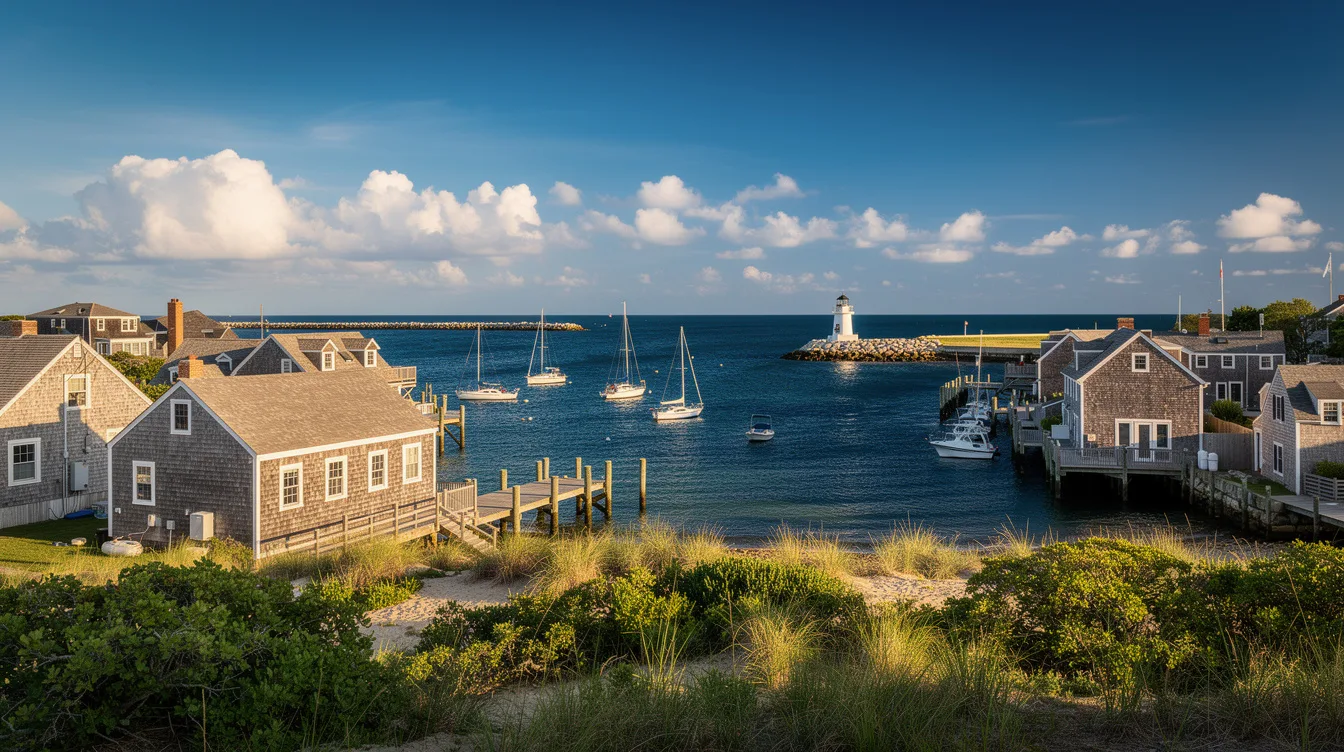
In 1966, the National Park Service designated Nantucket a National Historic Landmark District. It calls the island the finest surviving architectural and environmental example of a late 18th- and early 19th-century New England seaport town. That is a serious claim, and the old harbor gives it weight.
And at 29.8 miles south of Cape Cod, the island feels remote without becoming difficult. The fast ferry from Hyannis takes about one hour, while the conventional boat takes about two hours and 15 minutes and can carry a vehicle. You can fly through Nantucket Memorial Airport, but I’d take the water once.
But the slower arrival matters more than convenience. The shoreline comes into focus gradually, and that first view prepares you for a place where the past isn’t tucked away. You feel the shift before you reach the cobbles.
Why Nantucket’s 18th-century port still feels intact
Main Street leads toward the harbor through cobbled streets and gray shingle cottages with white shutters. You can hear ferry horns beyond the rooftops while gardens soften the edges of old homes. I think the preservation works because it changes your pace without asking for attention.
And the island’s 19th-century whaling story explains why so much remains. Nantucket was one of the major whaling centers of its era, and that trade paid for many historic houses and docks. The Nantucket Whaling Museum gives that maritime past a useful shape.
But this isn’t a museum-town performance. The harbor and homes still frame everyday island life, even when summer visitors crowd the center. That contrast is part of the appeal.
The trade-off arrives quickly: Nantucket is carefully preserved, but it can also be expensive and busy from June through September. You come for quiet history, yet the popular months rarely feel private.
From Hyannis to Sankaty Head Lighthouse, go slowly
Hyannis is the practical gateway to the Cape Cod ferry route. The fast crossing takes about one hour, while the conventional boat takes about two hours and 15 minutes and can carry your vehicle. Choose the boat around your plans.
And if you have time, I’d choose the slower boat once. The crossing gives the harbor a measured entrance, with open water behind you and old buildings ahead. You can also arrive by air at Nantucket Memorial Airport.
But don’t mistake easy cycling for effortless travel. Nantucket has bike paths, and distances are relatively manageable without a car. If you ride, you’ll see the scene change from harbor streets to quieter coastal stretches.
Can you get around without a car?
Yes, you can, because the island has bike paths and distances remain relatively easy to cover. Start early and the pavements feel cool under your wheels, while the center grows busier later.
Beyond Main Street, Nantucket’s whaling era still speaks
Siasconset, often shortened to “‘Sconset,” gives the island a different rhythm on its eastern side. Its coastal cottages and roses feel less formal than the harbor center, which is why the village deserves a separate afternoon. You may find more breathing room there.
And the island’s lighthouses give you another way to read its geography. Brant Point Lighthouse sits near the harbor, while Sankaty Head Lighthouse marks the eastern side.
The island is also both a town and a county, a detail that’s easy to miss when beaches dominate the visit. That civic scale helps explain its self-contained feel, even though summer crowds can make the center feel tightly packed.
But don’t rush through the old center after seeing the landmarks. The streets make more sense when you notice how the port and houses sit together. I prefer this kind of history because it asks you to look closely instead of moving from one attraction to the next.
Why September changes the Nantucket experience
September and early fall are the island’s smart compromise. Summer brings classic Nantucket energy, but it also brings high demand for lodging and restaurants. If you fold the island into a broader Massachusetts trip, later-season days can still mean beach walks and bike rides with fewer people around.
And you should expect to pay for the island’s polish. Nantucket is generally expensive, especially from June through September, so a quieter calendar doesn’t turn it into a bargain. Plan around that fact before you book.
Is September a better time to go?
For a calmer visit, yes. The season usually brings fewer crowds while the weather remains appealing, though prices don’t disappear.
The season has a quiet edge beyond tourism. Nantucket is a sensitive maritime environment, and waters near the island can have slow zones to reduce collision risk for North Atlantic right whales.
But the island’s best moment may arrive after the day-trippers leave. By the time the last ferry pulls away, the harbor is quiet again, with salt air where the horns were.