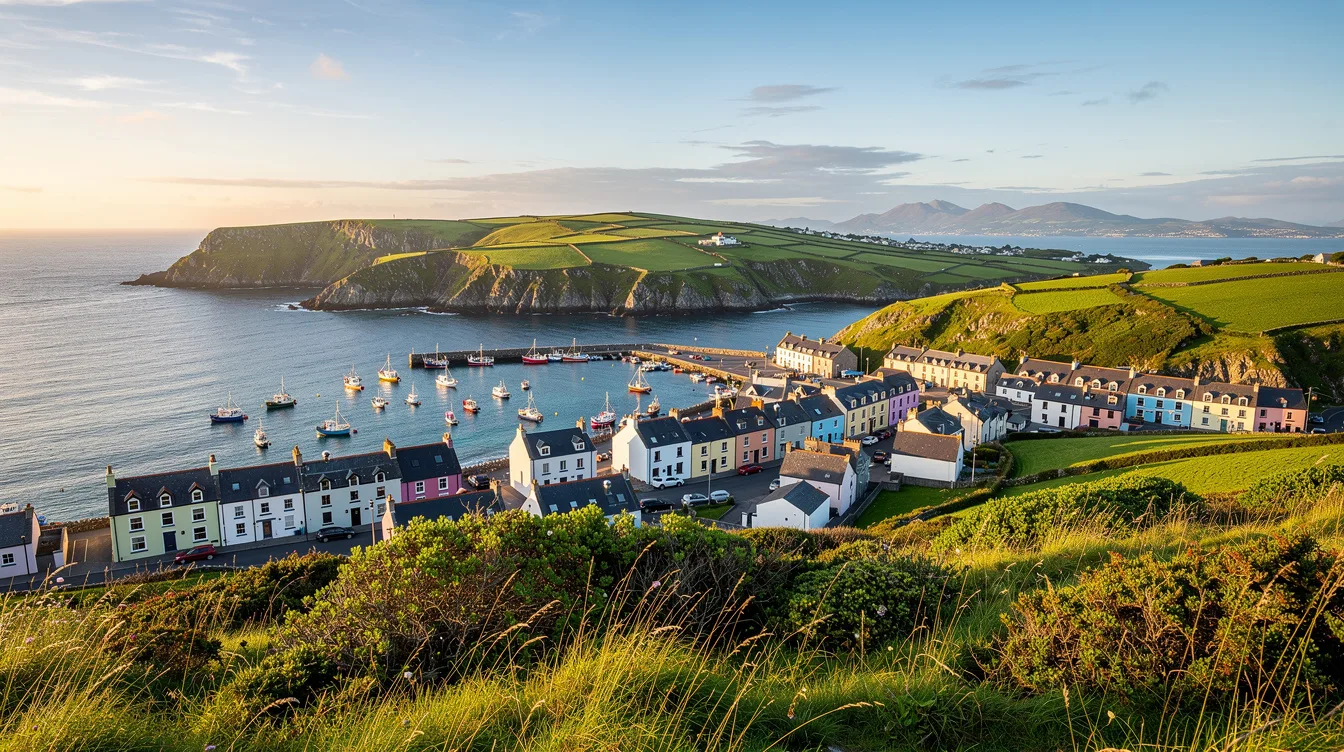
Dingle, on Ireland’s Dingle Peninsula, once exported more goods than Limerick. That edge belonged to the town in the 13th century, when its harbor was tied to Atlantic trade. But today, the harbor is compact and walkable, and its appeal starts where streets open to the coast and changing weather.
And you can use the town as a base, because good outings begin nearby. It feels remote without a heroic journey. I’d come in late spring or early autumn, when weather leaves room on the roads.
By 1257, Dingle had out-exported Limerick
And the record is clear. After the Norman invasion, Dingle developed as a port, and by the 13th century it exported more goods than Limerick. That fact shaped royal customs policy.
But in 1257, an ordinance imposed customs on Dingle’s exports, placing the harbor in the administrative record. You can still read the town through its trading geography, with streets leading to water and the peninsula opening west.
And trade widened. By the 16th century, Dingle exported fish and hides while importing wine from continental Europe. French and Spanish fleets used the harbor, and in 1529 the Treaty of Dingle marked another link with Europe.
A 1,671-person town where Irish stays present
The town had roughly 1,671 residents in the 2022 census, but the number isn’t the story. It’s part of the Corca Dhuibhne Gaeltacht, an Irish-speaking region where the Irish name is widely used. You’ll notice that identity before leaving the harbor.
And its streets reward slow walking around the harbor and town center. Independent shops, cafes, traditional pubs, and live music keep evenings social, but the scale stays manageable. You can go out without turning the night into logistics.
But the town’s best quality is the handoff between town and coast. Order seafood near the water, then drive west toward cliffs and beaches; one afternoon can feel like two trips.
Slea Head meets the Atlantic
And the route to Slea Head Drive is why a second day makes sense. It runs west from Dingle through Ventry toward Dún Chaoin, passing beaches, cliffs, archaeological sites, and views toward the Blasket Islands. Rushing it would miss the point.
But you’ll need patience on exposed, narrow roads when summer traffic builds. Conor Pass crosses the mountains between Dingle and the peninsula’s north side, and weather can change the plan. I’d treat it as an option, not a promise.
And the western end rewards a second look. From the coast, you can admire the Blasket Islands or cross by boat when conditions allow, while Gallarus Oratory adds an early-Christian anchor near Ballyferriter. Bring time for weather, because the Atlantic decides the easiest route.
Can you reach Dingle without a car?
How do you get there without driving?
Yes, but a car gives you the most freedom. Bus Éireann’s route 275 links Dingle with Tralee, while route 76 links it with Killarney. Local Kerry services reach peninsula villages.
And Tralee is the nearest rail connection, with buses from its Bus and Rail Stations. You’ll plan around buses or a car rather than a train arriving at the harbor.
But without a car, you’ll group outings and accept fewer detours. The town itself is walkable, so you can spend the morning by the harbor and use a bus when the peninsula’s villages fit the schedule.
Late spring or early autumn keeps the plan flexible
And the best timing is late spring or early autumn, the periods recommended for a quieter experience. Summer brings narrow-road traffic and lodging pressure, so book accommodation and key restaurants ahead.
Can you cross to the Blasket Islands?
Yes, in suitable weather, but the crossing isn’t guaranteed. You can admire the Blasket Islands from the coast, then take a boat trip when conditions allow. Keep the day loose, because the Atlantic can cancel the plan without apology.
But Dingle works even when rain turns the peninsula gray. Oceanworld Aquarium offers an indoor stop, and cafes, independent shops, traditional pubs, and live music keep the evening moving. The rain doesn’t improve the view, but it can make a warm pub feel earned.
And that’s the bargain: Dingle’s old export story gives the harbor weight, while the peninsula pulls you outdoors. But weather can rearrange your plans. By evening, the harbor is dark glass, and traditional music slips through a pub door.