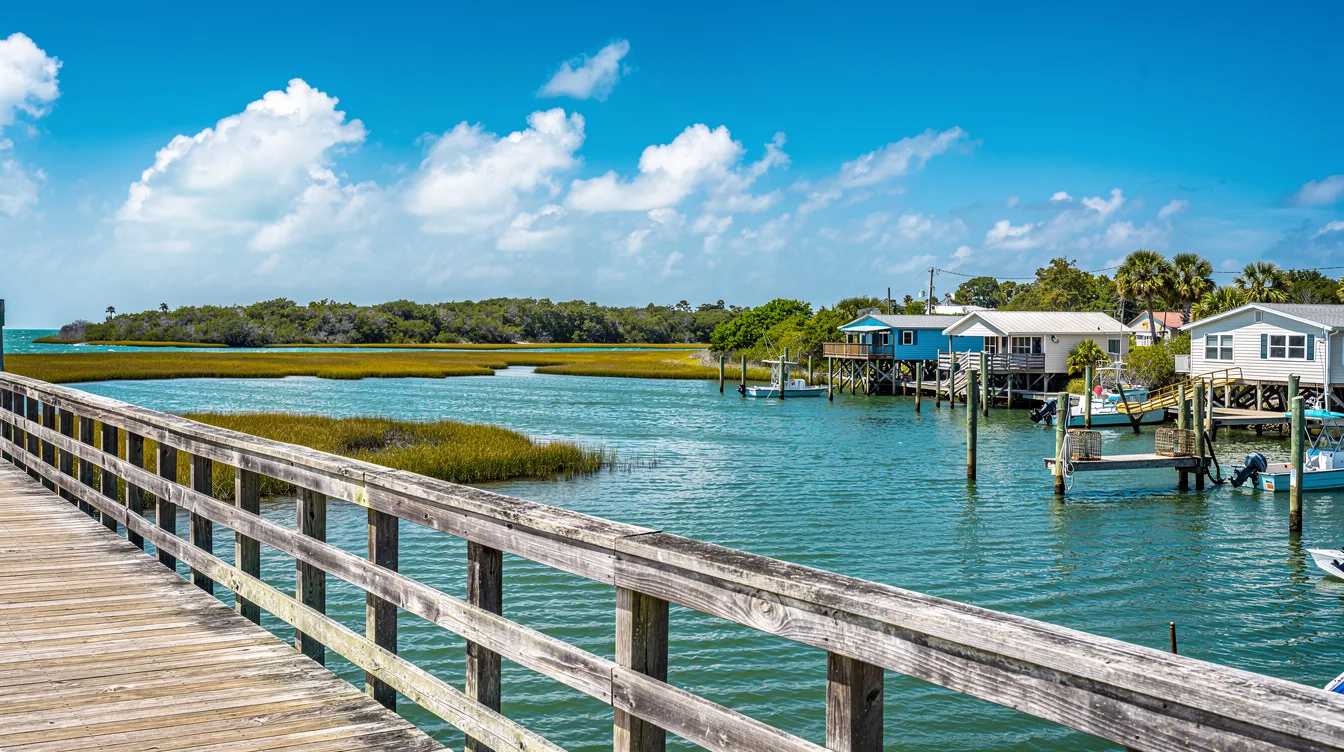
Cedar Key faced a 10-foot storm surge when Hurricane Helene hit on September 26, 2024. It broke the record set during Hurricane Idalia the year before, a hard fact that should shape any visit to this small Gulf Coast town.
This is not a place to treat casually. Cedar Key sits low on Way Key, and its road connection crosses salt marshes before State Road 24 ends in town. You come for quiet water, working seafood culture, and an unhurried pace, but weather gets the final word.
A town of 687 people knows the water is close
The 2020 census counted 687 residents in Cedar Key. That small number matters because the town feels personal even before you leave the car. The storefronts, docks, galleries, and seafood restaurants gather close together, so you can cover the developed area without much effort.
And the Gulf is never background scenery here. It is beside the docks, beyond the western edge of town, and part of the daily calculation for boat trips and meals. You can smell salt near the waterfront, then hear gulls over the softer clatter of golf carts.
Cedar Key is often described as Old Florida, which is fair if you mean fishing, oysters, clams, and a town that has resisted the tempo of larger resorts. But don’t expect Miami or Key West with fewer people. This place has little interest in performing for a crowd.
Helene changed the way visitors should plan
Hurricane Helene’s September 26, 2024 surge was not an abstract forecast. It pushed water roughly 10 feet above normal levels and exceeded the record from Hurricane Idalia in August 2023. Cedar Key is exposed to Gulf storms, coastal flooding, and rising water.
That makes a practical habit nonnegotiable: check weather alerts and the condition of SR-24 before you go. And check again before a kayak outing, fishing charter, or boat ride. Wind, tide, and thunderstorms can change the day faster than a restaurant menu does.
You should also confirm lodging and operating hours before committing to the drive. The supply of rooms is limited, and some restaurants, excursions, and shops keep reduced hours outside their busier periods. It is remote enough to feel restorative, but not forgiving of loose plans.
Can you still visit after a major storm surge?
Yes, but go with current conditions, not a romantic idea of a coastal escape. The town’s vulnerability is part of its reality, and it deserves that respect. If access warnings are in place, turn around and save Cedar Key for another day.
SR-24 is the only approach that matters
From Gainesville, Cedar Key is about 50-60 miles away via State Road 24, or roughly 1 hour 15 minutes to 1 hour 30 minutes by car. The last stretch passes over small bridges above marshes, which gives the arrival a pleasing sense of separation.
But the road’s simplicity is also the limitation. There is no alternate route to casually substitute when conditions deteriorate. If you’re coming from a larger Florida city for a weekend, build in flexibility and treat the road report as part of your departure routine.
Once you arrive, leave the car parked when you can. Cedar Key’s total area is about 2.17 square miles, much of it water, and the town is easy to cover by bike or golf cart. That compact scale is one of its strongest arguments.
The draw is seafood and marsh water, not a resort beach
Cedar Key is one of the country’s leading areas for clam aquaculture, and local oysters and seafood sit at the center of the experience. Order seafood here because it belongs to the town’s working identity, not because a menu needs a coastal theme.
And the best afternoons may involve almost no agenda. The waterfront faces west toward the Gulf, so sunset is an obvious ritual. The light fades behind low water and scattered islands, while the docks quiet down in a way that feels earned rather than staged.
The trade-off is clear. Cedar Key has small natural beaches, not broad white-sand strands, and it has no real nightlife or resort circuit. If you want shopping and organized entertainment, choose somewhere else.
If you want a calm meal after time outdoors, you’re in the right town.
Atsena Otie Key gives the visit a second horizon
Atsena Otie Key lies nearby and can be reached by boat or, depending on conditions, by kayak. It has historic remains and natural beaches, so it offers a useful change of scene without changing Cedar Key’s basic rhythm.
Beyond town, the Cedar Keys National Wildlife Refuge protects surrounding islands and marshes that suit birdwatching, kayaking, and boat travel. You’ll get more from this coast if you like looking outward from the shoreline rather than claiming a fixed spot on it.
There is no need to force a packed itinerary. Check the weather, confirm SR-24, eat the local catch, and let the western sky decide the evening. By the time the light slips across the Gulf, Cedar Key’s docks are quiet again.