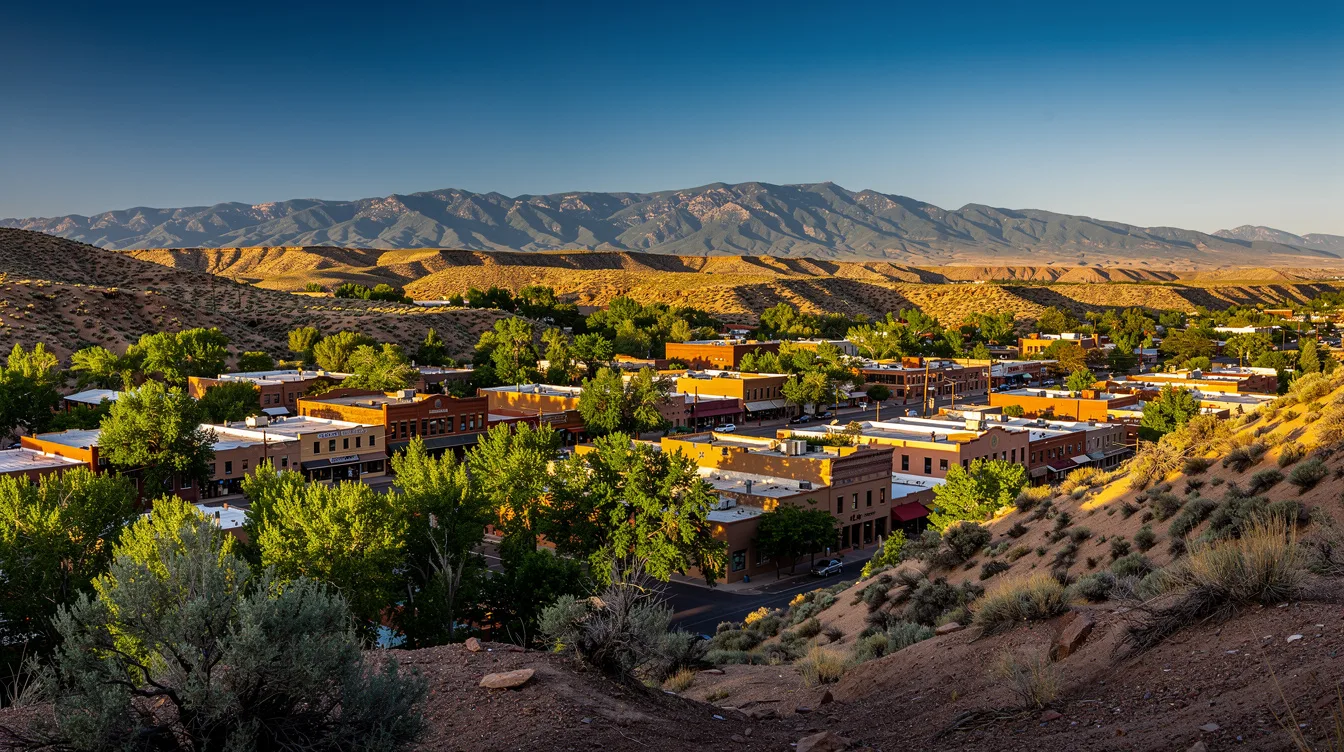
Silver City began with a silver discovery in 1870, and that origin still gives the town its sharpest edge. You come for a real mining story, then find a lived-in place where galleries and old storefronts face the high desert.
It was incorporated in 1878. But this isn’t a stage-set Old West stop, and that’s the appeal: Silver City feels independent, a little rough around the corners, and more interested in daily life than reenacting its past.
A silver discovery still shapes downtown
The title’s promise is simple: the town grew after silver was found here in 1870. Later regional copper mining also shaped the area, so the story isn’t frozen in one boomtown chapter.
And downtown gives you the clearest place to feel that history. Victorian-era and adobe-influenced buildings sit alongside murals, galleries, studios, and local restaurants, which makes a walk feel less like a museum circuit and more like a town still arguing with its past.
The Silver City Museum occupies the former H.B. Ailman House. You can pair it with the surrounding streets, where old facades meet working shops and the visual contrast does most of the talking.
But don’t expect a polished historic district with every detail sanded smooth. The town’s best quality is that it remains a regional hub, with mining and ranching history sharing space with a university and a creative community.
At 5,900 feet, the Southwest feels different
Silver City sits in Grant County in southwestern New Mexico, near the foothills of the Pinos Altos Range. Its 5,900-foot elevation changes the feel of the trip, because this is mountain-edge high desert rather than the hotter low desert many visitors expect.
And that altitude generally makes summers more comfortable than Phoenix or Las Cruces. Nights can turn cool in winter, though, so you’ll want layers even when the afternoon light makes the streets look warm.
The town had 9,704 residents in the 2020 census. That small scale works in your favor if you like places where galleries, pottery, and craft events don’t feel detached from the people who actually live nearby.
But Silver City isn’t a resort town. It’s quiet, but not empty, and you’ll get more from it if your ideal afternoon includes a slow downtown walk rather than a packed schedule.
Is Silver City a good base for the Gila?
Yes, especially if you want town comforts before and after time outside. The nearby Gila National Forest covers roughly 3.3 million acres, giving Silver City a serious claim as a gateway rather than just a historic detour.
Gila country is the bigger reason to stay
Beyond downtown, hiking, mountain biking, camping, birding, and scenic drives pull travelers toward Gila country. You’ll need a car, because the region’s remoteness is part of the experience and not a detail you can plan around.
And the Gila Cliff Dwellings add another layer. The caves were once used by Mogollon people, so a backcountry outing can also become a visit with archaeological weight rather than simply another overlook.
The forest access is excellent, but it asks something of you. Trails and drives can feel genuinely remote, which is wonderful when you want space, yet less appealing if you prefer frequent services and easy alternatives.
But that’s exactly why Silver City works. You can leave town for wild public land, then return to an actual restaurant, a gallery window, and the low-key rhythm of a community that doesn’t revolve around visitors.
The road in tells you what kind of trip this is
Most road travelers arrive on US 180 from Deming or NM 90 from the Lordsburg and I-10 area. NM 152 offers a scenic eastern approach, though its mountain curves aren’t a relaxed choice for large vehicles or nervous drivers.
And flying doesn’t remove the need to drive. Grant County Airport has had limited regional or charter-style service, while the larger scheduled-airline options are farther away, so a rental car is effectively essential for a nature-focused visit.
You should treat Silver City as a destination for road-trip travelers who enjoy the gaps between stops. It’s remote, but reachable, and that distance keeps the town from feeling overmanaged or overrun.
By late afternoon, the high-desert light catches the old downtown walls, and the road toward Gila country starts to look less like an exit than an invitation.