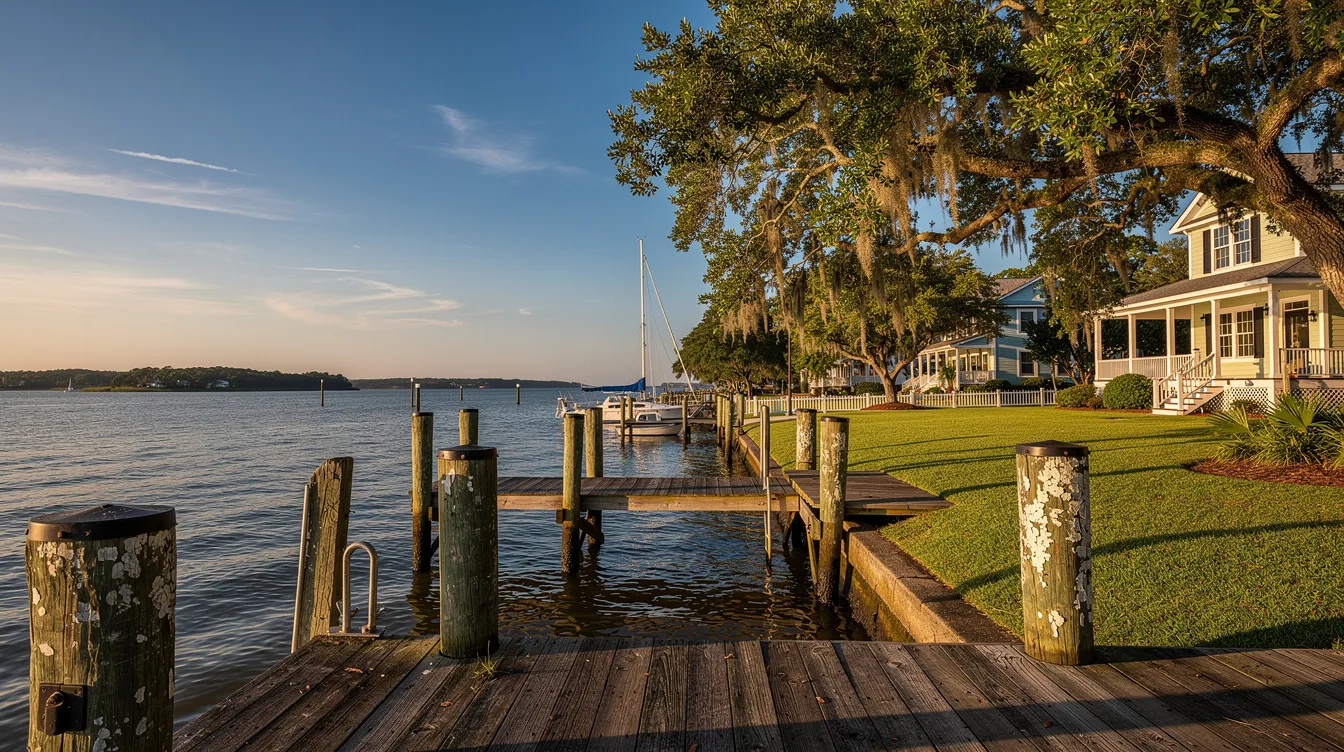
Southport began as Smithville in 1792, then took its current name in 1887. That gap is the town’s best story, because it explains why this coastal stop feels older than the polished beach destinations around it.
You’ll find it in Brunswick County, where the Cape Fear River reaches toward the Atlantic. Southport sits inland from the ocean, so the water views come with boat traffic and working-harbor energy rather than a wall of beach hotels.
A town with two names and a slower pace
Smithville sounds like a place you might pass without stopping. Southport sounds like a harbor, and that later name fits the streets better. Historic houses, broad old oaks, and shaded blocks give the downtown a settled feeling that no resort construction can fake.
And the town stays small. The 2020 census counted 3,971 residents, which is why a walk through downtown feels residential even when visitors fill the waterfront. It’s tourist-friendly, but it doesn’t seem built solely for tourists.
For you, that means Southport works best as a place to linger rather than conquer. Browse the shops, pause by the river, then leave room for seafood. The pace is the point, though travelers seeking beach bars and late nights may find it too quiet.
The waterfront is where Southport makes sense
The Southport Waterfront and Yacht Basin puts the town’s geography in plain view. Boats move through the Cape Fear River, marina masts click in the breeze, and the restaurants face water that looks busy without feeling rushed.
But don’t come expecting sand directly outside every door. Southport is more harbor town than beach town, which is exactly why the waterfront has character. The riverfront walk rewards an unplanned afternoon better than an itinerary packed by the hour.
Historic downtown runs naturally from the basin. You can move between galleries, local stores, old homes, and river views without needing a major attraction to justify the walk. My opinion: this is the kind of town where sitting still for twenty minutes is a better use of time than checking off sights.
Use Southport as a launch point, not a beach substitute
Oak Island is nearby and reachable by car, making it the smarter choice when you want a full beach day with swimming, surfing, or fishing. Southport gives you the quieter evening afterward, with the river replacing the ocean’s open horizon.
And ferries expand the choices. You can depart for Bald Head Island and its Old Baldy lighthouse, or take the Southport-Fort Fisher ferry across the Cape Fear River toward Fort Fisher and Kure Beach. The crossing turns transportation into part of the day.
Can you make Southport your base for the islands?
Yes, especially if you prefer a historic downtown and waterfront meals over sleeping beside the sand. But choose Oak Island, Carolina Beach, or Wilmington instead if immediate beach access and a busier nightlife matter most to you.
That trade-off makes Southport unusually useful. You can spend the morning around boats and old streets, then head toward beaches when you want more open water. Few coastal bases make the contrast feel so easy.
July changes the town’s volume
Around Independence Day, the North Carolina Fourth of July Festival brings several tens of thousands of visitors to town. For a place with fewer than 4,000 year-round residents, that’s a dramatic shift from the usual calm.
If you enjoy crowds, the holiday period gives Southport a communal buzz and a reason to see its waterfront at its busiest. But book expectations accordingly: this isn’t the week for solitude, quiet parking, or the town’s everyday residential rhythm.
Outside that holiday surge, Southport’s appeal is less about spectacle than atmosphere. It has appeared in films and television, including Safe Haven and A Walk to Remember, yet the real draw is simpler: old streets leading back toward the river.
By late day, the boats sit in the basin, the oak shade stretches across downtown, and Southport feels most convincing as exactly what it is: a former Smithville that found a name suited to the water.