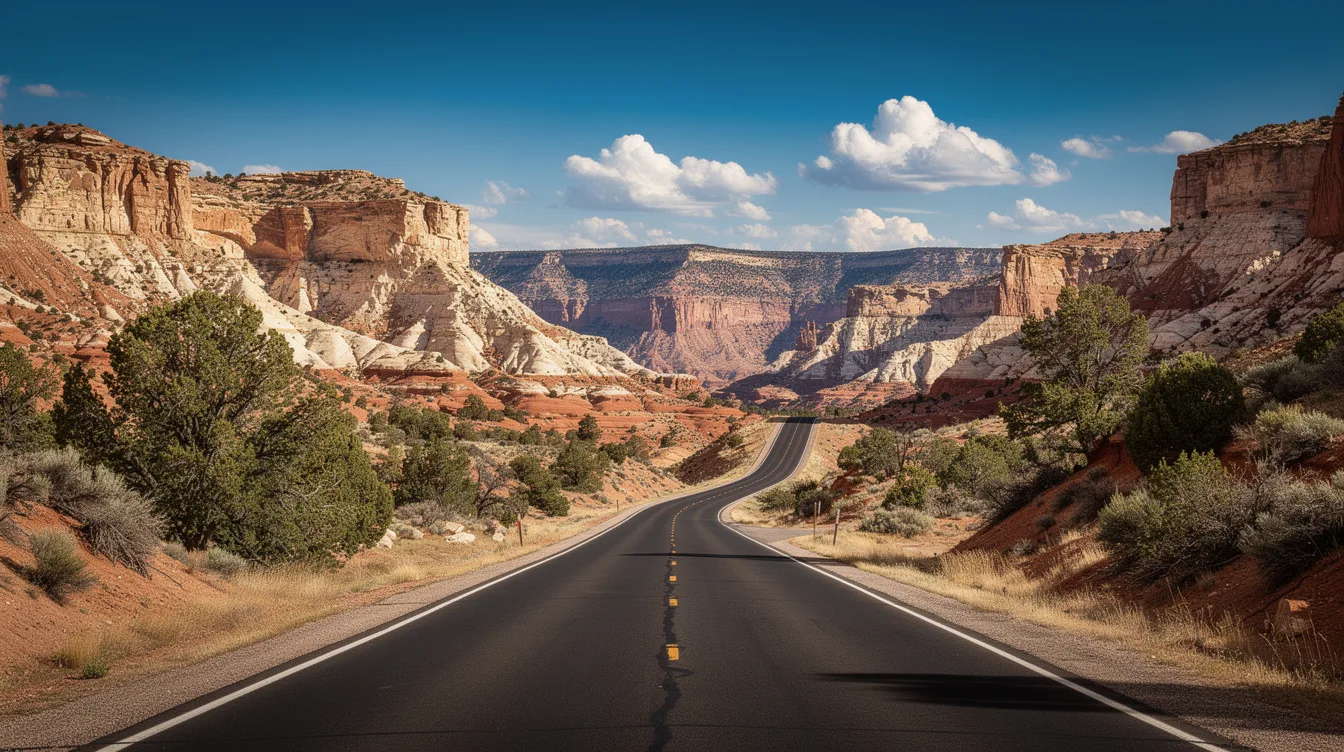
Escalante has 786 residents, but it sits on a route built for big empty country. The town lies on Utah’s 120-mile Scenic Byway 12, between Bryce Canyon and Capitol Reef, and it opens directly toward the Canyons of the Escalante.
That’s the appeal. You don’t come for a busy downtown. You come because the road keeps pulling you past cliffs and canyon rims, then drops you into a town where you can fuel up before the pavement gives way to dust.
A small Utah stop with a very large backyard
In southern Utah’s Garfield County, Escalante is the practical gateway to Grand Staircase-Escalante National Monument. The monument’s desert plateaus and red sandstone country begin close to town, so you can leave a motel or cafe and be headed for a trailhead without losing half the day.
And the Canyons of the Escalante are the reason to linger. Their narrow passages, dry washes, and tall sandstone walls reward travelers who prefer walking boots to souvenir shops. It feels remote, but Escalante still has gas, groceries, restaurants, lodging, RV parks, and an interagency visitor center.
That balance matters. You can read about other [Utah road-trip stops](https://example. Com/utah-road-trips), but Escalante works best as a base because the town gives you services before the real isolation begins.
Byway 12 is part of the trip, not just the route
Scenic Byway 12 runs through Escalante and links Bryce Canyon with Capitol Reef. Its curves move between cliffs, canyon views, and changing desert terrain, so it’s the kind of drive that makes a planned lunch stop feel negotiable.
But don’t rush it. The road is scenic because it follows difficult country, and the changing grades and bends ask for attention. Pull over when it’s safe, then let the dry air and wide-open silence do some of the work.
Beyond town, Burr Trail Road heads toward Boulder, Capitol Reef, and Lake Powell. Hole-in-the-Rock Road reaches many hiking access points, though it is a long dirt route and conditions can change fast after rain.
The canyon hikes require better judgment than bravado
Lower Calf Creek Falls is one of the area’s popular walks, leading toward a waterfall beneath sandstone cliffs. It offers a welcome contrast to the surrounding dry country, especially when the day feels hot and bright.
And then there are Peek-a-Boo and Spooky Gulch, two narrow slot canyons known for tight walls and dramatic light. They’re memorable, but never enter a slot canyon when storms or flash flooding are forecast, even if the sky above your trailhead looks calm.
Devil’s Garden offers rock formations and small arches off Hole-in-the-Rock Road. Escalante Natural Bridge asks more of hikers in a canyon setting, so it’s a better choice when you have experience, water, and a clear weather window.
Do you need a four-wheel-drive vehicle?
For exploring many back roads, a high-clearance four-wheel-drive vehicle is recommended and can sometimes be necessary. After rain, the clay roads can become slick or impassable, including for ordinary SUVs.
That said, you don’t need to force a back-road adventure. Byway 12 and town-based planning can still make a satisfying visit, while the rougher routes are best saved for dry conditions and drivers prepared for them.
April, May, and fall make the strongest case
April through early June brings more comfortable hiking conditions and more vegetation. September through November offers cooler air, autumn light, and often lighter crowds, which makes Escalante feel even quieter after the day-trippers leave.
Summer has its price. Low areas and canyons can get very hot, while monsoon storms can create flash-flood danger. Winter can bring cold, snow at higher elevations, and roads or tracks that no longer cooperate.
On a practical note, bring water, fuel, and offline maps before heading out. Cell coverage is uneven, distances are large, and the nearest hospital is in Panguitch, about 70 miles west of Escalante.
Stay for the road’s quieter hours
Escalante isn’t polished in the way Utah’s busiest gateway towns can be. It is a ranching town with motels, small cafes, galleries, guides, and outdoor services, and that plainness fits the terrain better than a curated resort ever could.
But the town earns its place on the itinerary because it gives you access to country that still feels immense. By the time evening settles on Byway 12, the canyon walls turn dark, the traffic thins, and the road seems to belong to the desert again.