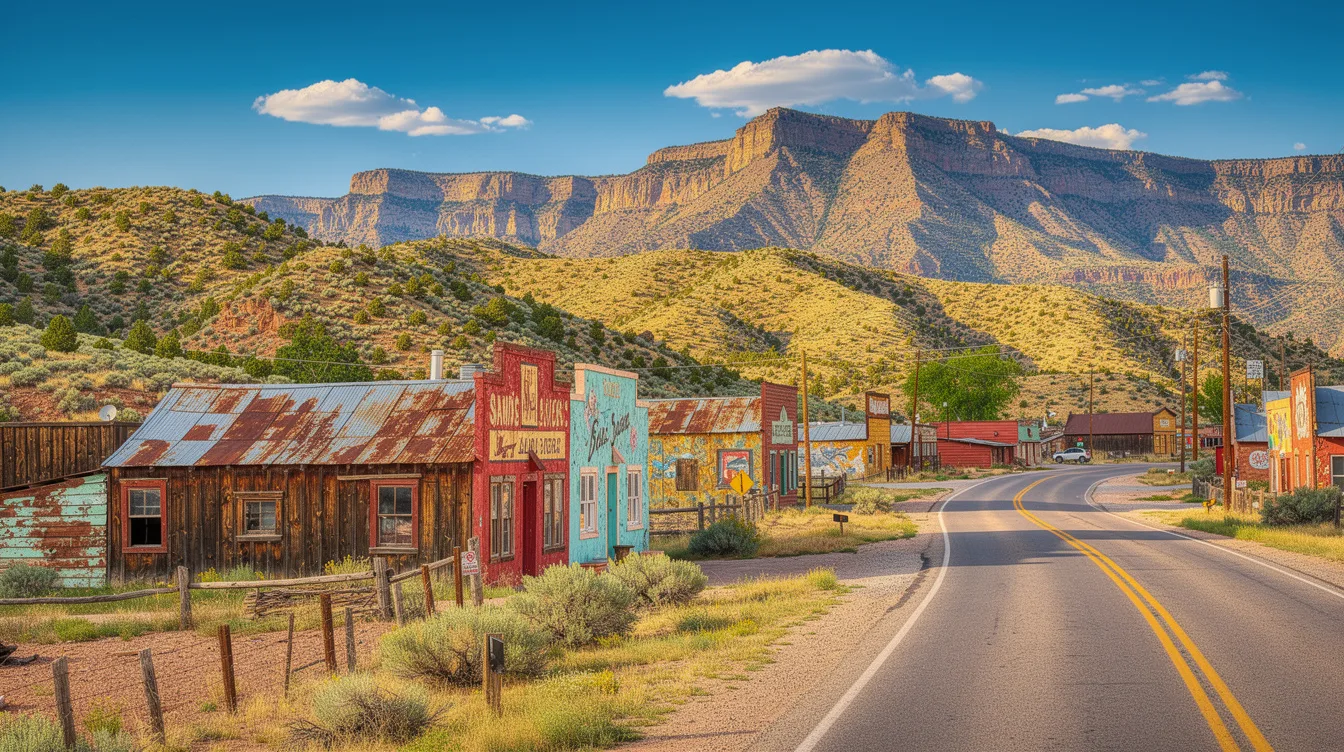
Madrid, New Mexico, sits about 27 miles from Santa Fe, yet it feels far removed from the city’s polished galleries and museum crowds. This former coal-mining town was largely abandoned after the mines declined, then remade by artists beginning in the 1970s.
And yes, you say it “MAD-rid,” not like Spain’s capital. That small correction matters here, because this is a place with its own stubborn character, built around a long roadside stop rather than a grand arrival.
A 30-minute detour with a different rhythm
From Santa Fe, Madrid is roughly 30 minutes away on the Turquoise Trail, State Road 14. The route runs between Santa Fe and Albuquerque, so you can fold the town into a drive without turning the day into a logistical project.
But don’t come expecting a conventional attraction-packed stop. Madrid works best when you let the road slow you down, browse what catches your eye, and accept that the point is the atmosphere.
The town has only 247 residents, according to the 2020 census. That explains the scale: old miners’ houses, small galleries, independent shops, cafés, and workshops gathered along the main road.
The mining past is still under your feet
Madrid grew as a coal-mining town in the late 19th and early 20th centuries. When mining faded, much of the community emptied out, which is why the place still carries the slightly improvised feeling of a town that had to invent a second life.
And that reinvention began in the 1970s, when artists started restoring and occupying the remaining buildings. You’ll see the result in handmade work, eccentric decorations, and storefronts that look more personal than polished.
The Madrid Old Coal Town Museum is the clearest stop for grounding the visit in local history. Go there early in your wander, because it gives the weathered buildings around you more weight.
Art here feels roadside, not precious
Madrid’s appeal is that art isn’t sealed behind a formal district. Galleries and craft shops occupy historic buildings along NM-14, so browsing feels closer to drifting through a lived-in neighborhood than following a museum map.
But availability can be uneven. Some businesses keep reduced or variable hours depending on the day and season, so this isn’t the place to build an itinerary around one exact storefront.
You should give yourself one to two hours, then decide whether lunch, coffee, or another gallery deserves more time. That flexibility is part of the charm, although travelers who want a tightly scheduled day may find it frustrating.
Can you visit Madrid as a day trip?
Yes. It’s an easy day trip from Santa Fe and about an hour from Albuquerque, especially if you want the slower Turquoise Trail route instead of a more direct highway drive.
And the surrounding high-desert scenery does some of the work. The road passes foothills of the Ortiz Mountains, where the dry air and open distance make the drive feel less like transit and more like the first part of the outing.
Where to pause when the road gets hungry
The Mineshaft Tavern is closely tied to Madrid’s old mining-town identity. It’s the kind of stop that makes sense after a few galleries, when you want to sit down and watch the steady trickle of road-trippers outside.
Music is also part of the town’s mix, along with cafés and small shops. Lively, but rarely city-busy, Madrid feels most convincing when you stop trying to “do” it and simply take a break there.
Some scenes from the 2007 film Wild Hogs were filmed in town, a detail that gives Madrid a little pop-culture recognition. Still, it doesn’t turn the place into a movie-set spectacle.
Make Madrid part of the drive
Madrid isn’t a destination for a full weekend unless you’re using it as one stop among nearby places. It’s better as a deliberate pause between Santa Fe, Albuquerque, Cerrillos, and the wider Turquoise Trail.
But that limited scope is exactly its strength. You can arrive without a checklist, walk the old road, and leave before the detour starts feeling overworked.
By the time you pull back onto State Road 14, the galleries thin out behind you, and the former mining town returns to its usual role: a small, art-filled interruption in the high desert.