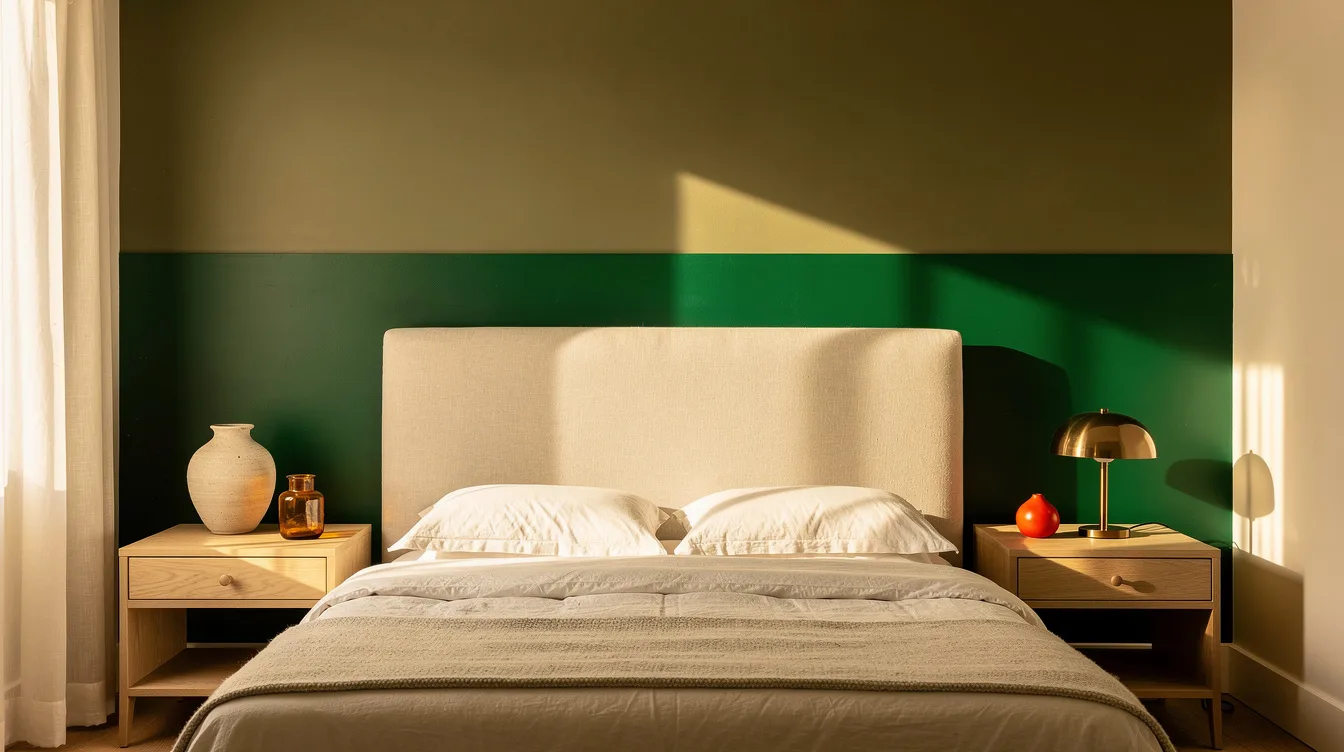
I thought a headboard had to be expensive furniture until my blank bedroom wall kept making the bed look undersized. Behind my 63-by-79-inch bed, a painted block about 240 centimeters wide and 150 centimeters high gave the room a focal point for far less than a built-in.
The important part was proportion, not a trendy color. Painter’s tape, a level, and one restrained shade did more than another pile of pillows ever could.
Measure Past the Mattress Edges
My 63-by-79-inch bed needed breathing room, so I centered a 240-centimeter painted rectangle behind it instead of tracing the mattress width. The extra space made my nightstands feel included.
For a bed around that size, a block roughly 220 to 260 centimeters wide usually looks intentional. I marked the outer lines with FrogTape before opening a paint can, because correcting a crooked edge after drying is miserable.
Set the Block at a Useful Height
I stopped the first version too low, and the bed looked chopped in half. Raising the color block to about 150 centimeters from the floor gave the wall enough presence above my upholstered headboard.
A headboard around 95 to 110 centimeters tall needs roughly 35 to 55 centimeters of paint showing above it. That visible band turns linen upholstery into part of the composition instead of letting it swallow the color.
Choose a Muted Matte Finish
I skipped sharp black and bright cobalt in favor of a smoked olive, which gave the room depth without making bedtime feel busy. A matte Behr Premium Plus finish from Home Depot helped hide tiny wall flaws that sheen would spotlight.
Warm ivory walls with sage, clay, tobacco brown, or blue-gray all feel calmer than high-contrast pairings. I’d spend about $60 to $120 for a typical small DIY feature wall when paint, primer, rollers, and prep supplies are included.
Paint an Arch When the Room Needs Softness
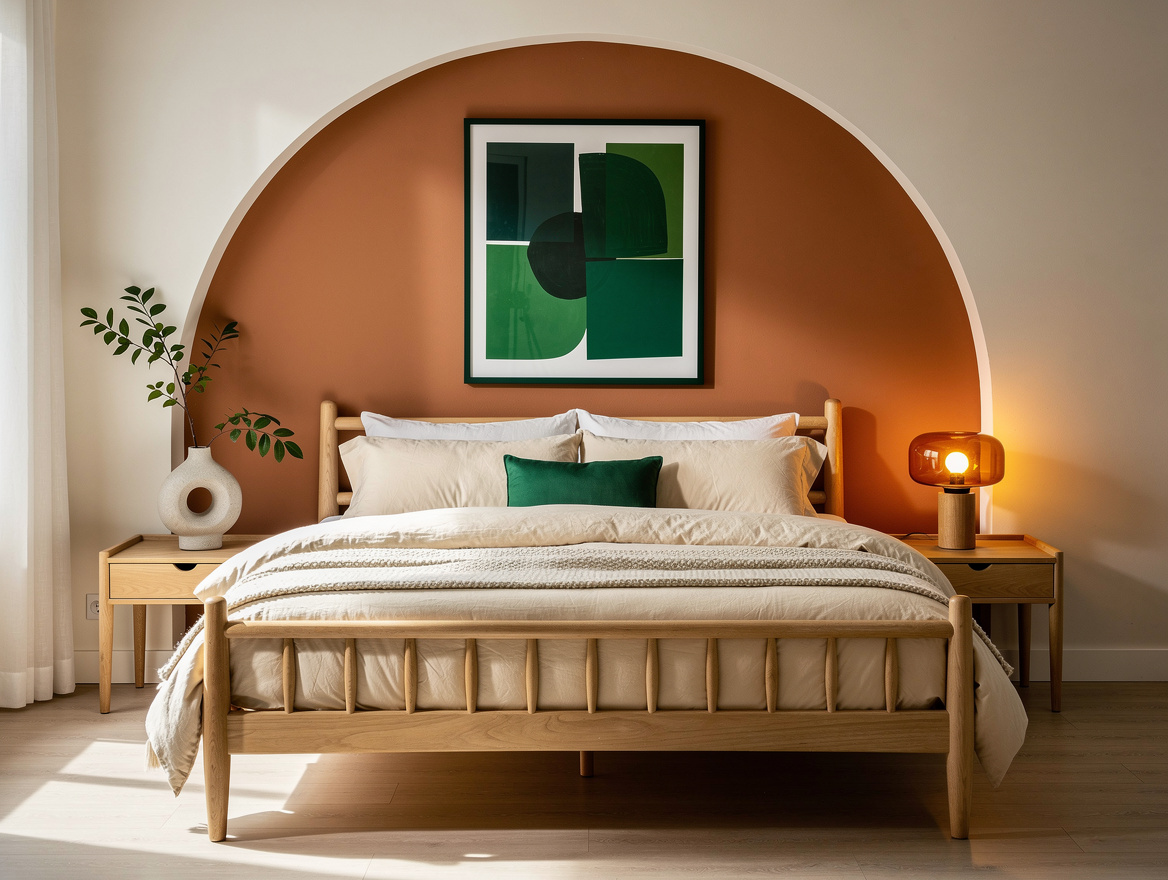
A rectangle is my choice for tailored rooms, but an arch adds welcome softness around pale wood. I made mine roughly 220 centimeters wide and let the curve rise toward the ceiling behind a light oak spindle headboard.
Use a pencil tied to string for the curve, then fill it with Valspar Reserve from Lowe’s. Keep the arch broad enough to cover both nightstands, or it starts to resemble a decorative sticker.
Keep the Bedding Quiet
The painted wall already does the visual work, so I stopped adding loud patterned bedding. An ecru cotton duvet, warm gray sheets, and one rust-colored pillow let the block read as architecture.
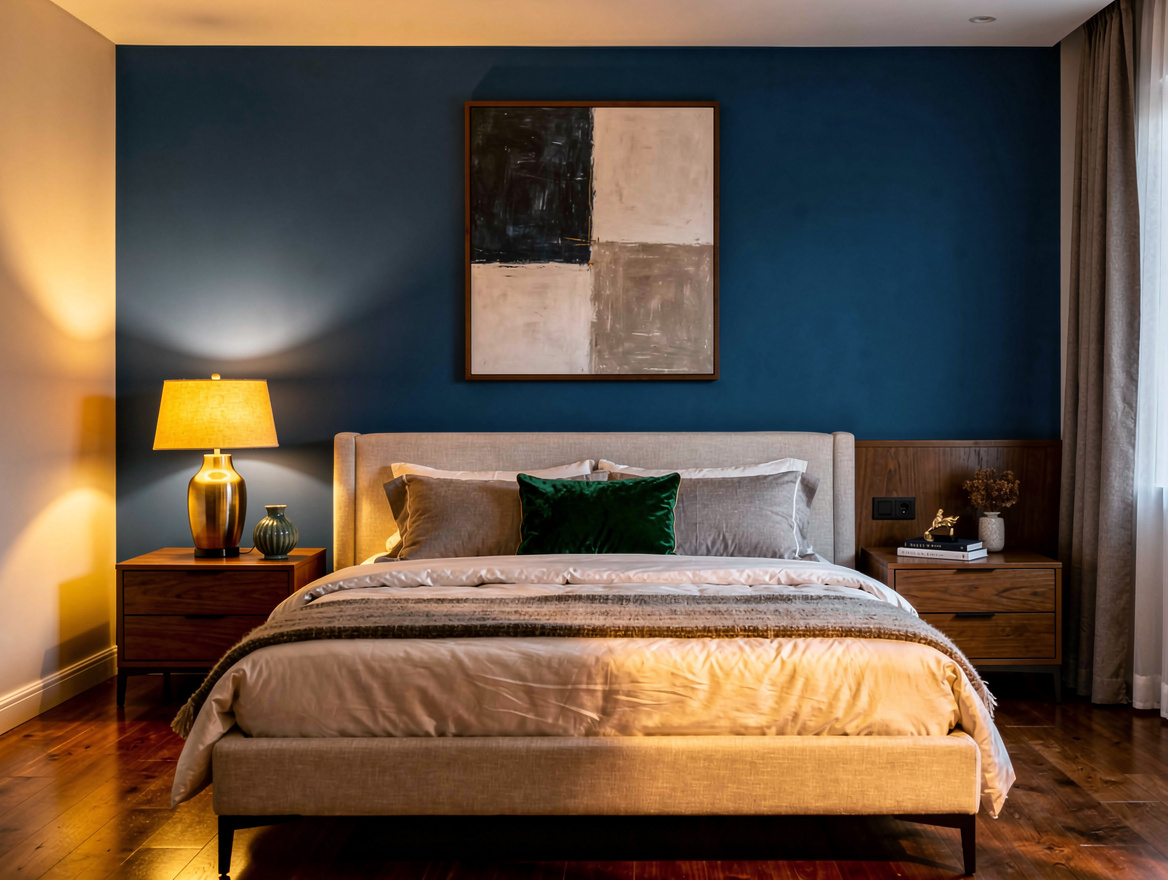
I like a woven headboard against clay or olive paint, while cream bouclé works better with mineral blue. A Threshold quilt from Target is an easy layer when the bed needs texture without another competing print.
Anchor It With Real Wall Lighting
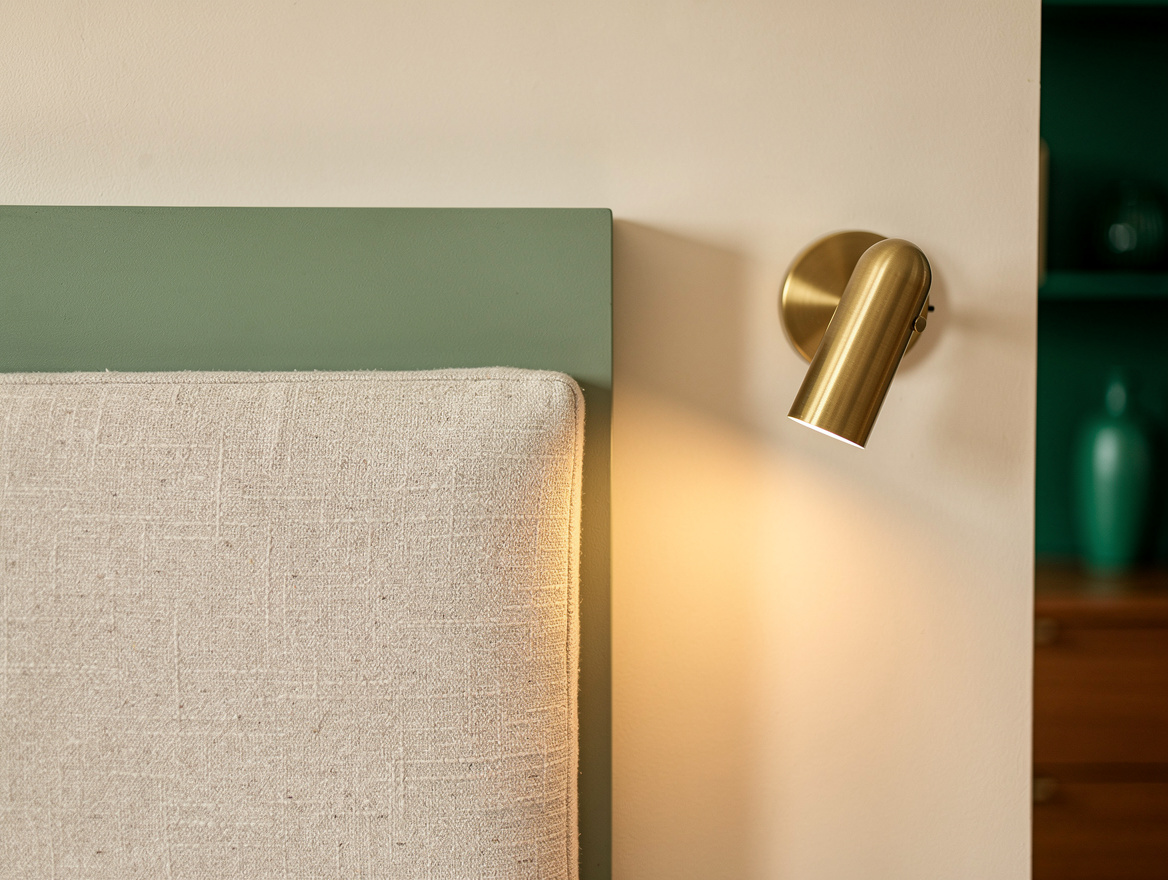
The block looked unfinished until I gave it a purpose beyond decoration. Two plug-in brass sconces mounted inside its edges made the bed wall feel planned, especially when the overhead light was off.
Place lighting high enough that pillows will not block it, and keep both fixtures inside the painted shape. A pair of Amazon wall sconces typically costs less than rebuilding a wall with a large custom headboard.
Start by taping a 240-centimeter-wide outline behind the bed and live with it for one evening before painting. The right width will make your existing headboard look more substantial, even if you never replace it.
Mia Carter writes about small-space living and budget home makeovers. She has restyled three rentals and tests most ideas in her own 45 sqm flat.