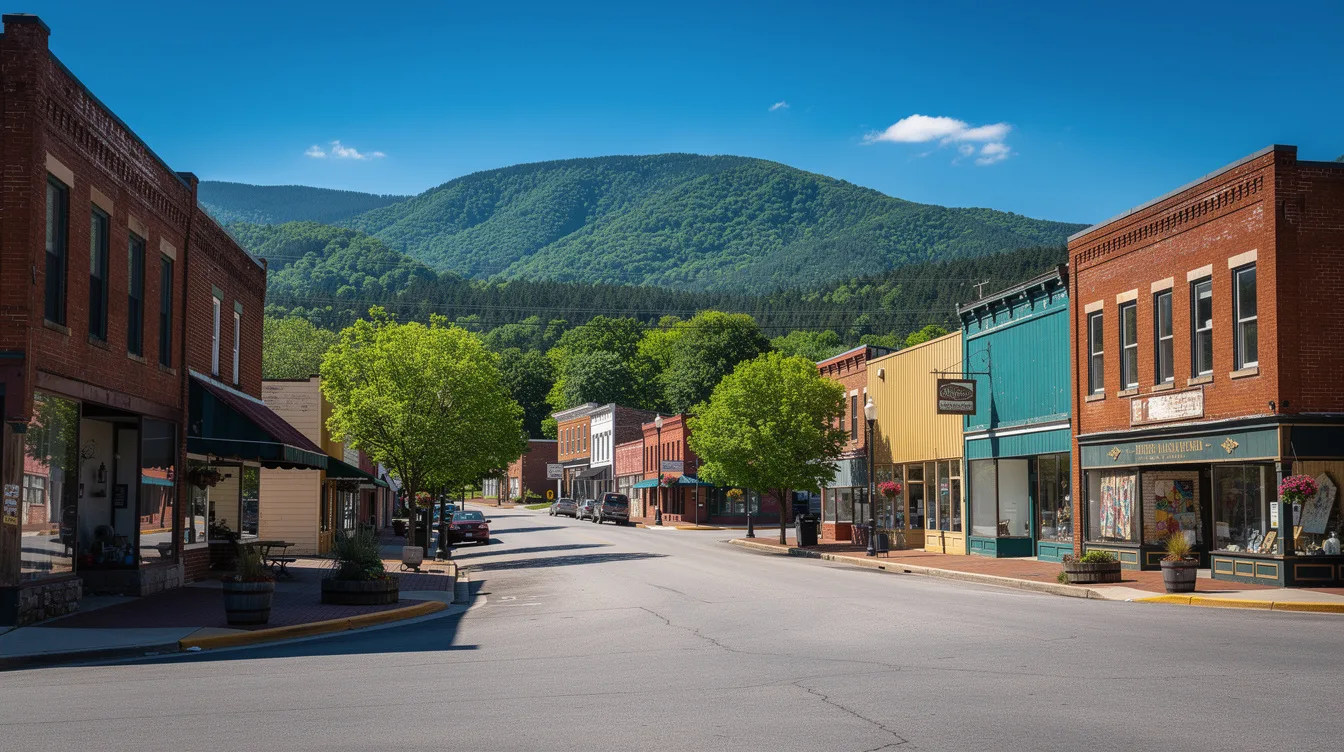
Thomas, West Virginia, is a small mountain town where the last mine closed in 1956. The work did not come back. Art, music, and access to the Allegheny Mountains did, which gives this former coal town a sharper second act than you might expect.
But Thomas isn’t polished into a theme park. Its compact downtown still carries the weight of an industrial past, while galleries, independent shops, and cafés now fill the old commercial buildings.
And that shift makes sense once you arrive in Tucker County. The town sits near Davis, Blackwater Falls, Canaan Valley, and the Monongahela National Forest, so you can spend the morning outside and still come back for a warm room and live music.
A mine town that found another reason to stay
Thomas grew through coal, timber, and the West Virginia Central & Pittsburgh Railway. The Davis Coal and Coke Company employed as many as 1,600 people, including many European immigrants, and the town reached about 2,354 residents in 1910.
But the mining economy collapsed after the final closure. Today, roughly 600 people live here, which is part of Thomas’s appeal and part of its limit: you’ll find personality, not endless choices.
And the change feels earned rather than decorative. The town was incorporated in 1892, and its old storefront row gives the arts scene a setting with real texture, from brick facades to the cool shade of a mountain evening.
But don’t come expecting a packed urban itinerary. Come because a small town with galleries and a serious outdoors backdrop can make a simple weekend feel unusually full.
Downtown Thomas is small, but it has a pulse
The cultural anchor is The Purple Fiddle, part of a downtown scene built around music, art, food, and independent businesses. You can walk the core easily, which matters after a long day on a trail or a bike.
And this is where Thomas has an opinionated edge. It is more bohemian than many nearby rural towns, but it never feels disconnected from the working history that shaped its streets.
At 3,035 feet, the town is also higher than much of West Virginia. That elevation generally keeps it cooler than lower places nearby, so the air can feel crisp when other valleys are still holding heat.
But mountain weather has a price. Winters can be cold and snowy, and the same elevation that makes Thomas pleasant in warmer weather asks you to plan for real mountain conditions.
Use Thomas as your basecamp, not your finish line
Thomas is near Davis, with US-219 and WV-32 nearby. That close connection makes it easy to pair its downtown with the larger outdoor options around it.
And Blackwater Falls State Park is only a few minutes south. The park has waterfalls, overlooks, and trails, making it the obvious first outing if you want a quick reminder of why this corner of West Virginia pulls people outdoors.
Beyond town, Canaan Valley offers hiking, mountain biking, skiing, and nature watching. Dolly Sods Wilderness asks more of you, but it delivers a wilder day of walking among high-country terrain, rocky outcrops, and wetlands.
But don’t treat every outing as interchangeable. The Blackwater Canyon Rail Trail works well for walking or biking through the river corridor and old industrial setting, while Dolly Sods is better when you want the day to feel remote.
There is skiing nearby, though Thomas stays its own place
Can you build a winter trip around Thomas? Yes. Canaan Valley Resort and Timberline Mountain are about 13 miles away, so skiing can sit alongside the galleries, cafés, and music that make town more than a place to sleep.
And that combination is Thomas’s best argument. You can spend daylight in the mountains, then return to a town that still has a roomful of conversation and the low sound of a band warming up.
The Thomas Commercial Historic District reflects the town’s revival, which works best when you notice what remains, not only what arrived after the mines.
But keep your expectations proportionate to its size. By night, the downtown lights catch on old windows, and the mountain air settles over a town that learned how to continue after coal.