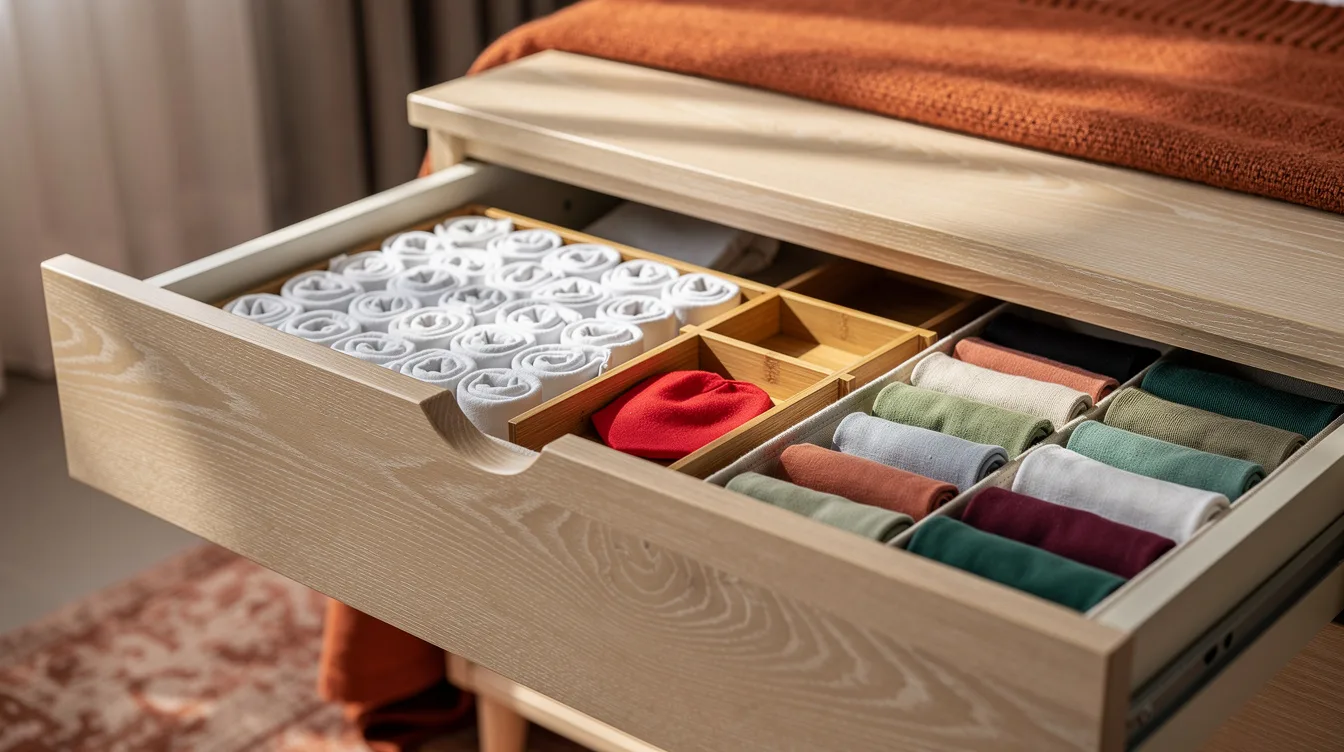
I used to lose a matching sock inside a dresser drawer that was only about 5 inches deep, even after folding every pair. The fix was giving each category a physical boundary instead of making one oversized pile behave.
A strong drawer combines one adjustable divider system for lanes with smaller cells or trays for items that can slip, tangle, or disappear.
Measure the Usable Interior Before Buying
Measure the drawer’s interior width, depth, and usable height after it is fully open, then subtract space for any curved sides or hardware. A divider that looks close enough on a product page can buckle a drawer or slide loose every morning.
Most bamboo spring-loaded dividers come in a short roughly 12.5-to-17-inch span or a wider roughly 17-to-22-inch span. Narrow bedside chests usually need the shorter version, while a wide dresser can handle the larger range.
Check height too. Dividers are often roughly 2.3 to 4.7 inches tall, and a tall divider inside a shallow drawer will snag knit socks and make the drawer feel overstuffed.
Build Lanes With Bamboo Dividers
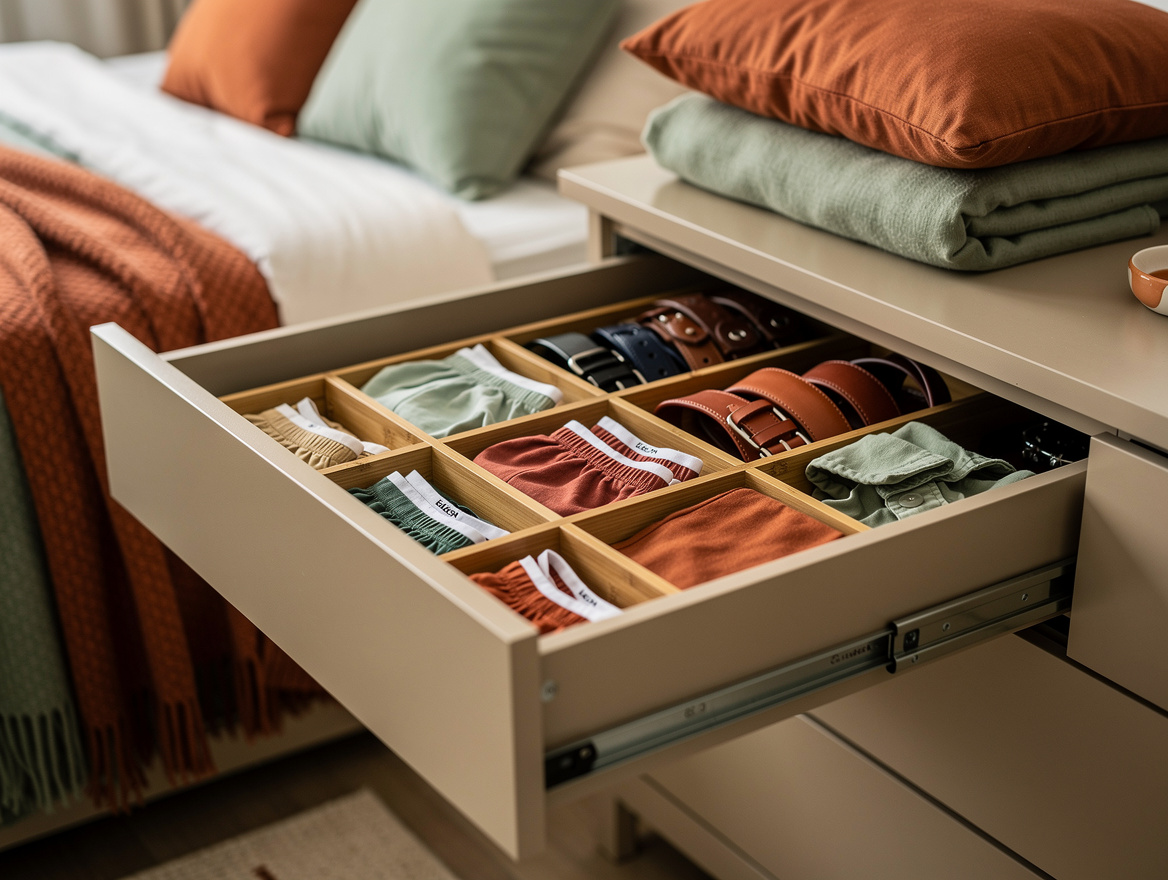
Use crosswise Brightroom bamboo dividers or a similar foam-padded bamboo set to create broad lanes for underwear, T-shirts, scarves, and belts. About $15 to $40 for four to six dividers is a typical retail range, depending on size and pack count.
Place the dividers first, then assign each lane a job. One lane for everyday underwear, one for workout gear, and a slimmer lane for tights gives the drawer a clear hierarchy without turning it into a rigid grid.
Keep spring-loaded dividers away from delicate veneer if the end pads feel abrasive. A thin strip of felt under each end can quiet the drawer and protect a finish that already shows wear.
Stand Socks Upright in Honeycomb Cells
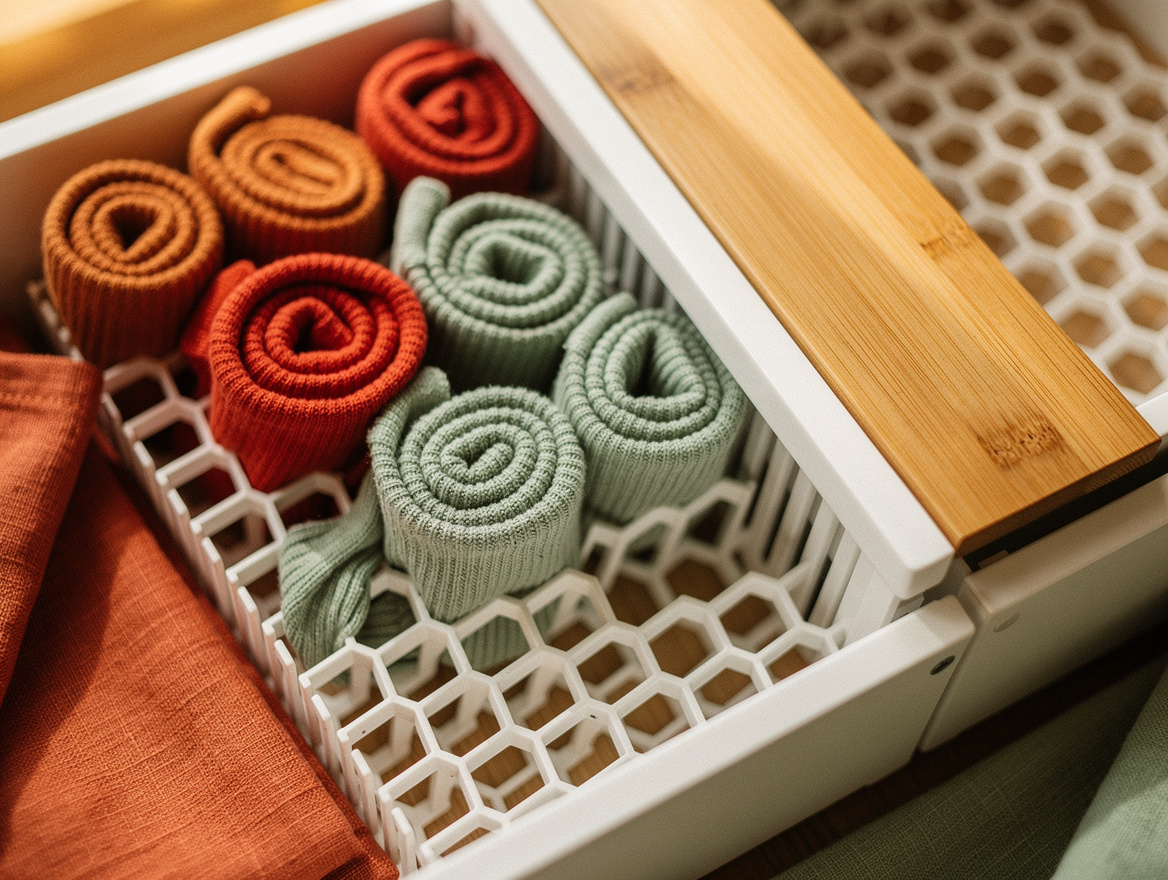
A Brightroom polypropylene honeycomb insert makes the most sense for everyday socks because each rolled pair stays visible. Its listed footprint is about 14.02 by 18.09 inches, so measure depth before committing to it.
Reserve roughly 70 to 80 percent of a sock drawer for the pairs you reach for weekly. Put dress socks, compression pairs, or seasonal wool socks in a separate lane behind one divider rather than letting rare items take the prime cells.
Skip a honeycomb grid for bulky hiking socks if the cells pinch them into lumpy bundles. A shallow fabric bin is better for thick pairs that need breathing room.
Give Underwear Its Own Soft Compartments
For briefs, bras, swimwear, and smaller underlayers, a six-piece IKEA SKUBB fabric-bin kit creates flexible compartments without hard edges. Typical modules are about 5.5 by 5.5 inches, 11 by 5.5 inches, and 11 by 11 inches, with heights around 4.5 to 5.1 inches.
The soft non-woven fabric works especially well in a drawer that holds mixed textiles. Roll underwear vertically, fold bras flat when possible, and leave one open bin for pieces that should not be compressed.
A fixed IKEA SKUBB compartment box is the cleaner choice when the drawer has one permanent purpose. Its listed size is about 17.3 by 13.4 by 4.3 inches, and typical pricing is roughly $8 to $15 where sold.
Stop Accessories From Sliding Under Each Other
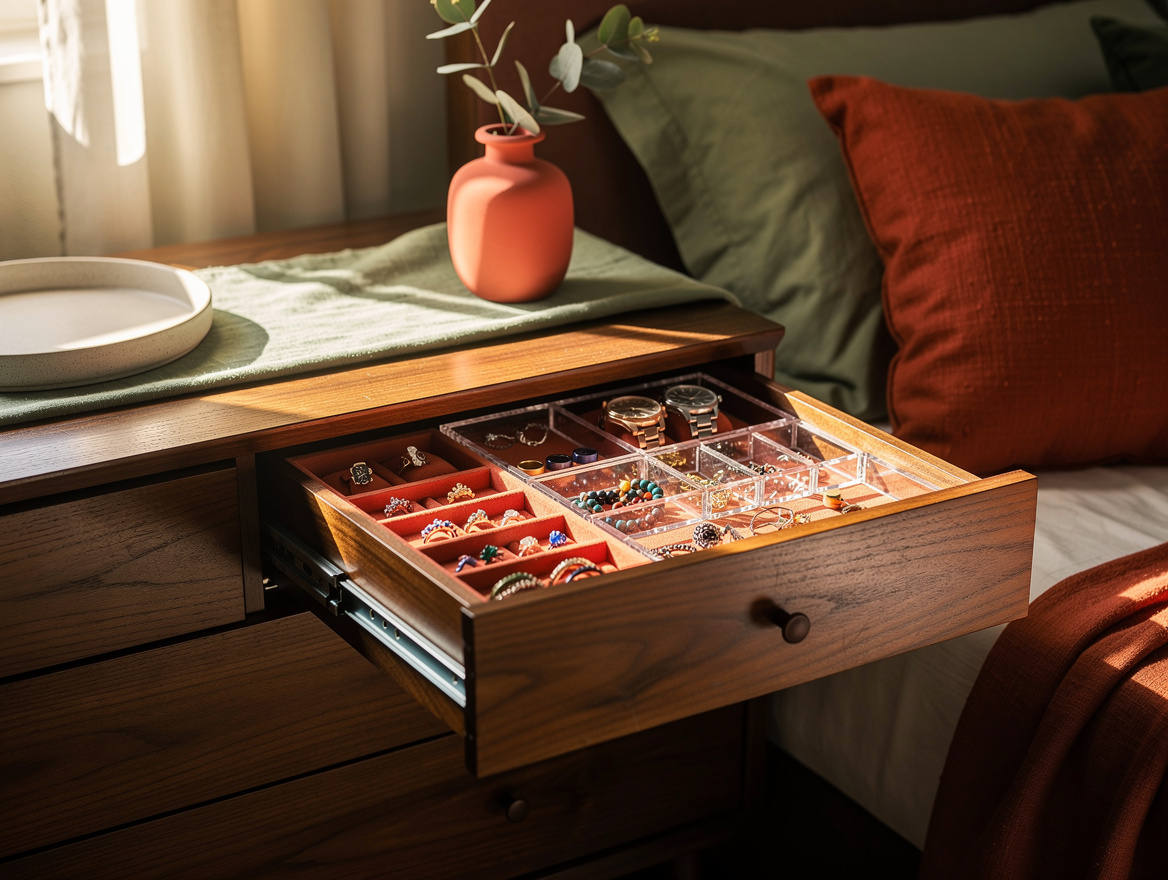
Watches, rings, hair clips, charging cables, and sunglasses need shallow rigid compartments, not loose fabric cells. Choose clear PET plastic trays from mDesign or iDesign-style sets so small items stay in sight when the drawer opens.
Multi-tray sets typically cost about $15 to $45, and common pieces run roughly 3 to 6 inches wide and 6 to 12 inches long. Buy for your drawer’s usable clearance, because a tray that is even slightly too tall can scrape the underside of the drawer above.
Use one acrylic tray for watches and jewelry, then give cables their own compartment. Mixing metal accessories with charging cords creates a messy-looking tangle fast.
Upgrade One Drawer With a Quiet Custom Insert
A drawer that holds jewelry, ties, cufflinks, or nicer lingerie deserves a more deliberate finish. Stackable polyester felt bins soften sound, keep hardware from rattling, and look warmer than bare plastic.
Small budget felt bins are typically about $1 to $5 each, while sets often run roughly $15 to $35. A square bin around 11.81 by 11.81 by 4.72 inches works for folded belts or larger accessories if the drawer is deep enough.
For a permanent dressing-room feel, commission a birch plywood insert sized to the drawer interior. Bespoke wood organizers typically start around $50 and can exceed roughly $200 with lining, divided watch slots, or solid-wood construction.
Start with the drawer you open before work, then measure it and buy dividers only after the measurements are written down. A honeycomb insert for socks plus one bamboo lane divider is usually the most useful first purchase.
Mia Carter writes about small-space living and budget home makeovers. She has restyled three rentals and tests most ideas in her own 45 sqm flat.