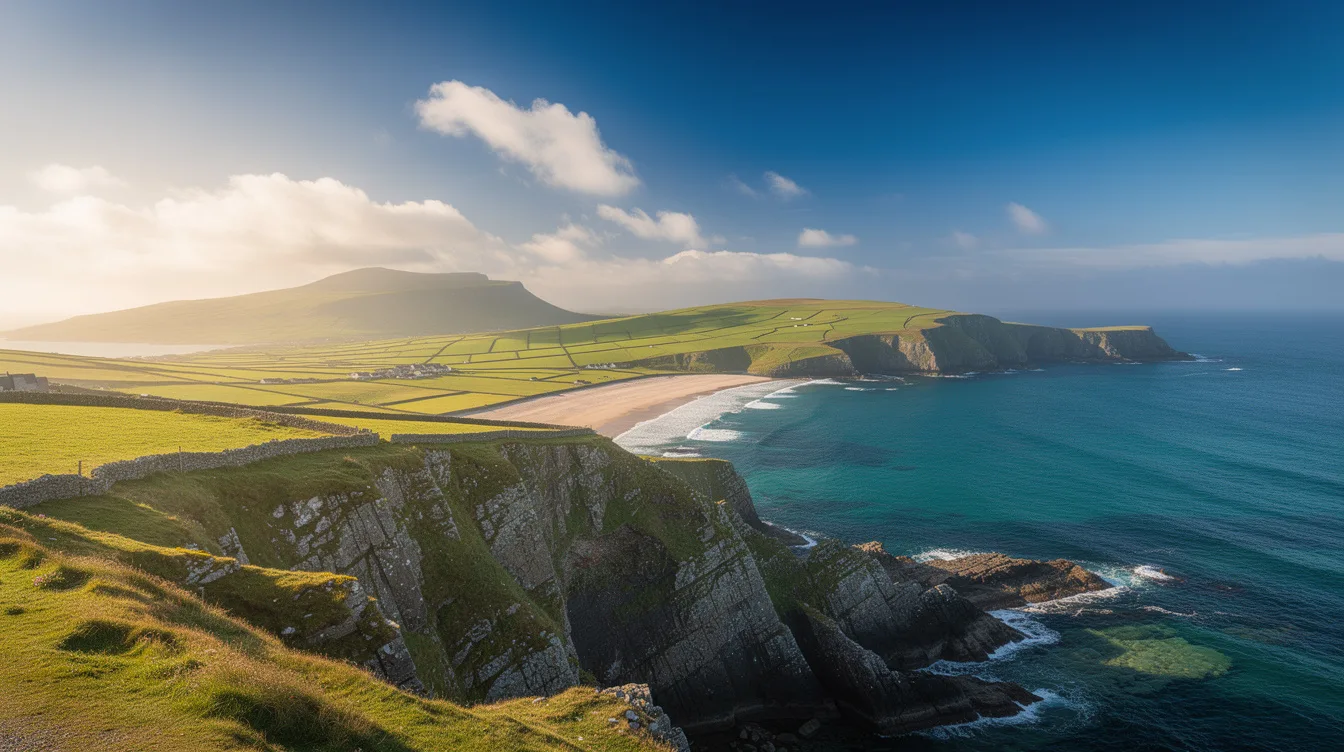
Achill Island sits off County Mayo’s west coast, and it has been joined to mainland Ireland by a bridge since 1887. That fact changes the trip completely. You can drive onto Ireland’s largest offshore island, then watch the road give way to peat bog, hard Atlantic light, and mountains.
But don’t mistake bridge access for ease. Achill feels exposed from the first gust, which is why it suits travelers who prefer a weather-led day over a tightly scheduled one.
The bridge makes Achill easy, the Atlantic keeps it wild
The crossing is the Michael Davitt Bridge, between Achill Sound and Polranny. It’s a small threshold with a large effect: mainland logistics stay simple, while the island quickly feels far from the usual Irish road trip.
And you don’t need a ferry timetable to reach it. Drive across, or use Bus Éireann route 450 from the Westport and Newport area, then let the weather decide how much ground you cover.
Achill has traditional villages and broad open stretches rather than a dense town center. That makes it quiet, but not empty. Keel is the practical base for beach access, food, surf culture, and lodging; nearby Dooagh is the calmer choice.
Accommodation can tighten up in summer, so book early if you want to stay on the island. Dugort feels more remote on the northern coast, though that remoteness comes with fewer convenient reasons to linger indoors.
Atlantic Drive earns more than a quick lap
The Atlantic Drive runs for more than 24.9 miles along the coast. It works by car, but cycling it is the better idea if your legs and the wind cooperate. The views keep changing because the road keeps turning toward the sea.
But this isn’t a route to rush through for a photo and a checkmark. The air can swing from sun to rain quickly, and the Atlantic wind has a way of making even a short stop feel colder than expected.
Bring waterproof layers and sturdy shoes. You’ll be happier for it, especially if you leave the car for a beach walk or a climb. Achill rewards motion, but it doesn’t pretend the coast is tame.
For a longer pedal, the Great Western Greenway and Achill-Westport route links the island region with the mainland. The Achill-to-Westport section is commonly described as about 27 miles, though your actual ride depends on your start point and the wind.
Keem Bay is the stop that resets the day
Keem Bay waits at the end of a dramatic road, with white sand and turquoise water tucked into a sheltered cove. It is one of Achill’s signature Wild Atlantic Way stops, and frankly, it’s the kind of place that makes you cancel the next item on your plan.
And late-afternoon light is a smart time to arrive. A rushed day trip can reach Keem and the Atlantic Drive, but the island’s real appeal is watching cloud, sun, and rain rotate over the same water.
Can you make Achill a day trip?
Yes, but two nights is the better call. One visitor guide suggests at least 2.5 hours for a quick look, yet two or more days give you time for beaches, walks, and the slower rhythm that a drive-through visit misses.
Keel Beach is broad and surf-oriented, so it’s convenient for a long walk or a surf session. It’s active without feeling polished. If you want fewer decisions, base yourself nearby and let the beach set the pace.
Croaghaun and Slievemore show Achill’s harder edge
On the island’s northern side, Croaghaun rises to roughly 2,257 feet. Its Atlantic-facing cliffs and mountain scenery give Achill its scale, but the exposed conditions mean you should treat every outdoor plan as flexible.
But Achill isn’t only about looking outward toward the water. Slievemore Deserted Village holds stone ruins on the mountain’s slopes, tied to the island’s historic seasonal booley settlement pattern. The setting is spare, and that restraint is part of its pull.
What should you pack for the island?
Pack waterproof layers and sturdy shoes, even in summer. Wind is part of the experience here, and clouds can move fast. You may get sun at Keem Bay, then feel rain on the northern coast before the afternoon is over.
Parts of Achill are Gaeltacht areas, where Irish remains in use. That gives the island a distinct local character, though English is the daily language for most residents.
There are hikes, cycling routes, surf sessions, fishing, horse riding, diving, golf, and beach walks. Still, the best plan is usually the simplest one: cross the bridge, leave room in the day, and listen for the wind shifting over the sand.
By the time you head back across the bridge, the road is behind you and the Atlantic is still pushing against the shore.