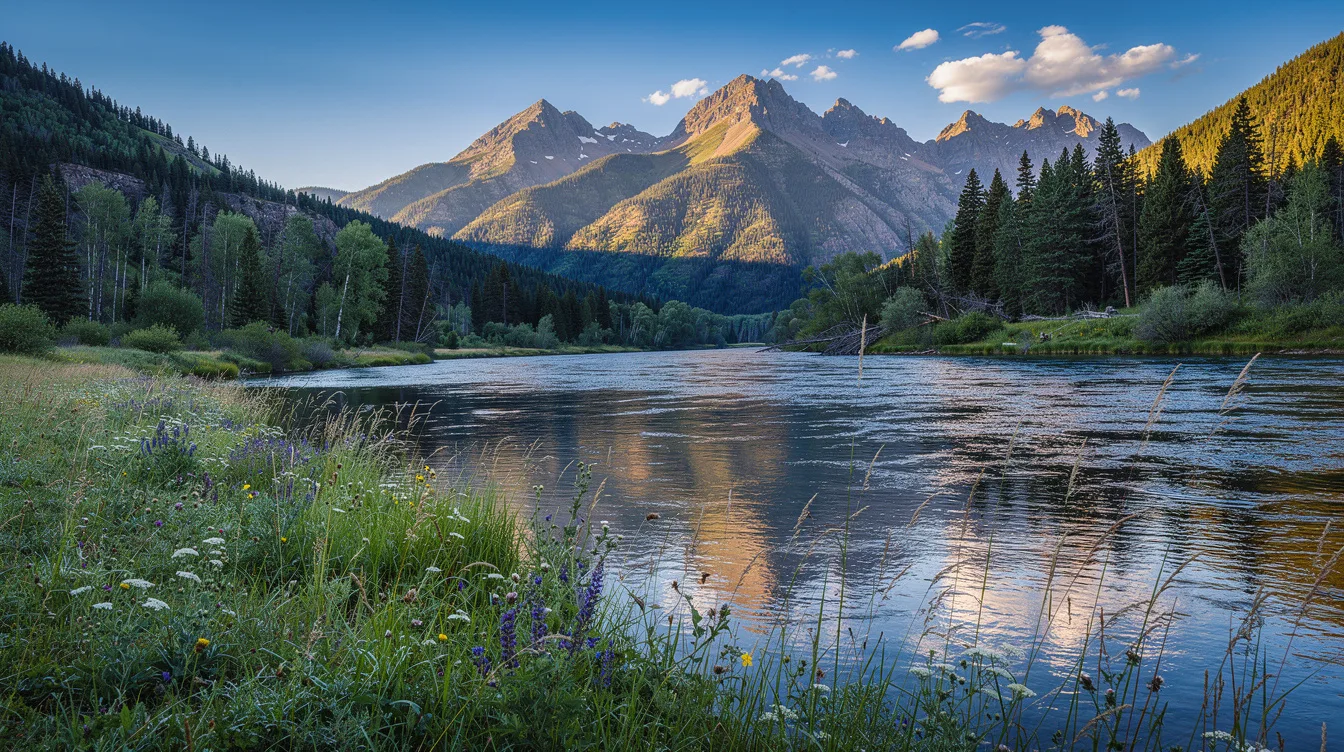
Ketchum, Idaho, earned its International Dark Sky Community designation in 2018, placing this small mountain town inside America’s first International Dark Sky Reserve. That matters after dinner, when the resort-town glow gives way to a darker, quieter sky than you’d expect near Sun Valley.
It’s a place built for daylight pursuits, then surprisingly persuasive after sundown. You can ski Bald Mountain in winter or spend summer hiking, riding mountain bikes, and fishing, but don’t rush back indoors once the air cools.
The reserve changes the town after dark
Ketchum sits in central Idaho’s Wood River Valley, beside Sun Valley, and its dark-sky status gives the trip a second act. The mountains frame the town, so nighttime feels less like an extension of a busy resort day and more like a reason to slow down.
And that’s the appeal. You don’t need to turn a night under the stars into an expedition, because Ketchum is a lived-in town with cafes, restaurants, shops, and galleries close at hand.
But don’t confuse easy access with bargain travel. This is an upscale mountain destination, and stays can cost more during ski season and major holiday weekends. If price matters, build that reality into the plan before you fall for the idea of a spontaneous winter escape.
Bald Mountain gives Ketchum its daytime pull
Bald Mountain rises over town as the main ski area for Sun Valley, one of the historic names in American destination skiing. In winter, that makes Ketchum a smart base if you want mountain time without sleeping inside a resort compound.
You can walk to food and shops more easily here than from a resort-focused stay next door. Ketchum feels active and polished, but it doesn’t read as a sealed-off ski village. That distinction is worth paying attention to when you choose where to stay.
And the setting keeps working once the snow is gone. Summer brings hiking, fly fishing, and mountain biking, so the town avoids the strange off-season emptiness that can make some ski destinations feel like movie sets.
The mountain climate is dry, with noticeable shifts between daytime and nighttime temperatures. Bring a layer even after a warm afternoon, because the cool evening air is exactly when a dark-sky designation starts to feel personal rather than promotional.
At 2,559 feet, the town has room to breathe
Ketchum has about 3,555 residents, according to the 2020 census, which helps explain its scale. It has enough going on for dinner and a gallery stop, yet the surrounding outdoor access keeps the town from feeling crowded into its own reputation.
But it isn’t a rustic backcountry outpost. The streets carry the polish of a high-end alpine destination, with expensive real estate and visitors drawn from Western cities. You’ll notice that contrast in the storefronts, then look up and remember why the town still feels grounded.
The town began in 1880 as a mining community, later passed through a sheep-ranching era, and changed again as Sun Valley developed from 1936 onward. Its past is present, though not in a museum-piece way. Outdoor life is still the main conversation here.
Can you reach Ketchum without a long final drive?
Yes. Friedman Memorial Airport near Hailey is about 14.9 miles south of Ketchum. That proximity makes the destination more practical than many mountain towns, especially if you’re traveling for a short ski break or a summer weekend outside.
And once you arrive, you can decide how much effort you want to spend. Skiers can focus on Bald Mountain. Summer visitors can choose trails, bikes, or fishing.
The best plan leaves some unclaimed evening time, because the reserve is the point of this particular Idaho stop.
Choose Ketchum for town life, not resort isolation
Sun Valley is more directly tied to resort amenities, golf, and ski-in/ski-out convenience. Ketchum is the better fit if you want to step outside for coffee or dinner, then return to a place that feels occupied year-round rather than only during a vacation week.
That said, the town’s appeal isn’t loud. It’s the kind of mountain base where the day can be full, then suddenly quiet. By the time the evening cold settles into the Wood River Valley, the lights are restrained and the sky gets the final word.