Chatham has about 6,600 residents, yet water shapes nearly every direction you look. At Cape Cod’s southeastern tip, the Atlantic sits east and Nantucket Sound lies south, so this town feels built around the edge of a map.
That geography is the promise. Chatham is surrounded by water on three sides, and the effect is less about isolation than atmosphere: salt air, harbor movement, and streets that seem to lead toward another strip of blue.
But don’t come expecting a bargain beach town. Chatham is polished, calm, and expensive in peak season, which is exactly why it works best when you want a slower Cape Cod stay with good meals and long walks.
Water on three sides changes the whole day
The Atlantic-facing side gives Chatham its exposed character. At Chatham Lighthouse Beach, the beach sits near the historic lighthouse, and strong currents and tides can make the water less casual than it first appears.
And that’s the town’s useful contrast. The shore looks inviting, but you should treat the conditions seriously rather than assuming every sandy stretch is suited to an easy swim.
If swimming is your priority, you have alternatives. Harding’s Beach, Cockle Cove Beach, and Ridgevale Beach are generally better suited to family swimming than the more exposed area around Lighthouse Beach.
Can you make Chatham a beach-first trip?
Yes, if you’re willing to choose your shoreline thoughtfully. You can spend a morning near the lighthouse, then shift to one of the more family-friendly beaches when you want calmer water and fewer decisions.
Beyond the beach, the town’s water access changes the rhythm of sightseeing. Boat outings, seal watching, and seasonal whale-watching excursions from Cape Cod give you a reason to leave shore, though availability depends on the season.
Main Street keeps the town walkable
Main Street is where Chatham feels most compact. Independent shops, galleries, cafes, and restaurants line a walkable center, so you can park once and let the afternoon unfold at an unhurried pace.
But the town isn’t only retail and restaurant tables. Its fishing-village past still shows at Chatham Fish Pier, where you can watch harbor activity and may spot seals in the area.
You’ll notice the difference from a louder resort strip quickly. Chatham is lively in summer, but it doesn’t chase nightlife, and that restraint suits travelers who’d rather hear harbor sounds than amplified music.
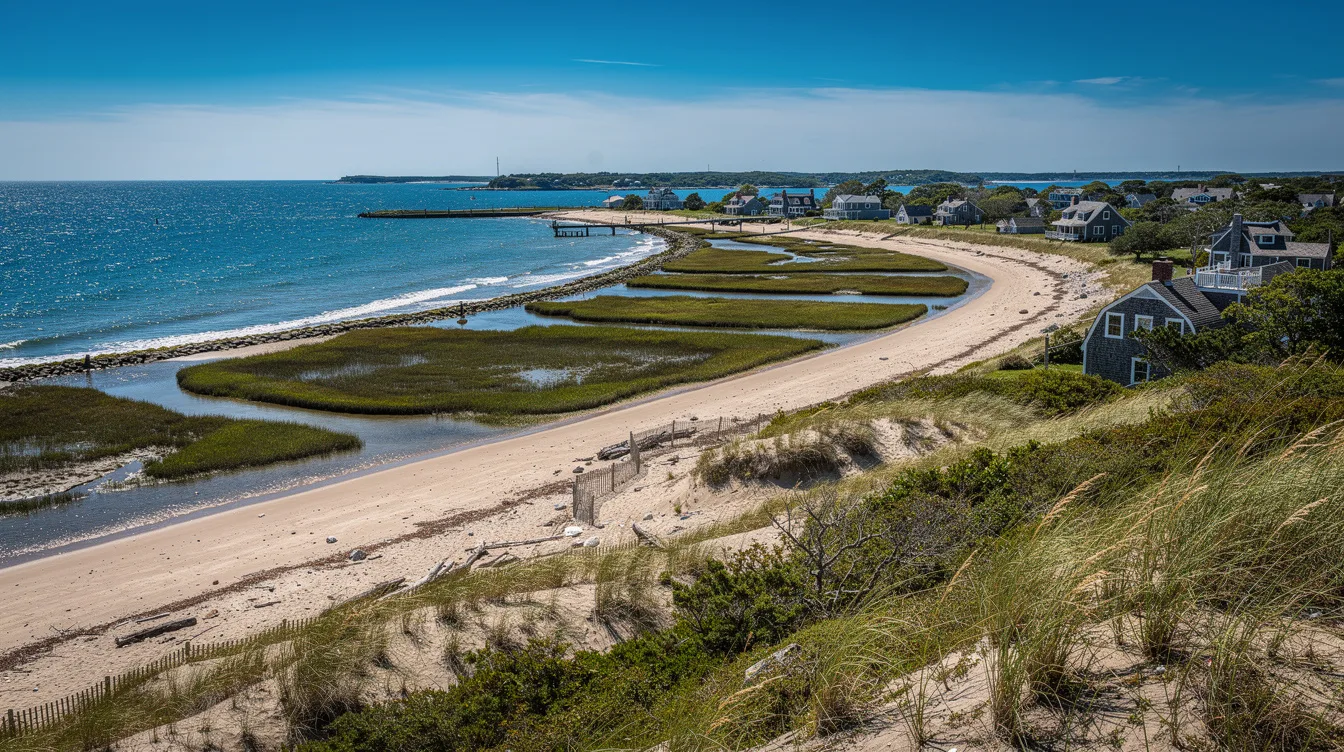
And the visual appeal is real without being accidental: New England-style houses, working-waterfront scenes, dunes, salt marshes, and beaches all sit within the same small-town frame. It can feel carefully kept, because it is.
Summer brings the crowds, and the cost
The prime stretch is June through September, when Chatham becomes heavily visited. Its year-round population can rise from roughly 6,600 to about 20,000 to 25,000 people in summer, which changes restaurant reservations and lodging availability.
That said, summer energy has a clear price. Hotels cost more, popular tables can book well ahead, and a car remains useful if you want to move between beaches instead of staying close to the center.
You should plan around that reality rather than fight it. Chatham rewards a loose itinerary, but not a last-minute one, especially if your ideal day includes both a beach stop and dinner on Main Street.
And this is not the part of Cape Cod for cheap, spontaneous weekends. It is more of a coastal splurge, with enough walkability to soften the logistics once you’re settled.
Getting there is easy, until traffic says otherwise
From Boston, the drive to Chatham generally takes 1.5 to 2.5 hours, depending on traffic. Friday and summer-weekend congestion can be heavy, so the trip is simple in theory and less predictable in practice.
Chatham Municipal Airport is local, while Boston Logan and Hyannis/Barnstable are the more practical larger-airport options depending on flights. For most visitors, though, driving still makes the most sense.
Once you arrive, Chatham can work as a base for Cape Cod’s east coast, Harwich, Orleans, National Seashore beaches, and even Provincetown. But you don’t need to race outward every day, because the town’s point is its water-bound pause.
By evening, Main Street quiets down, the harbor keeps moving, and the Atlantic air follows you back from dinner.