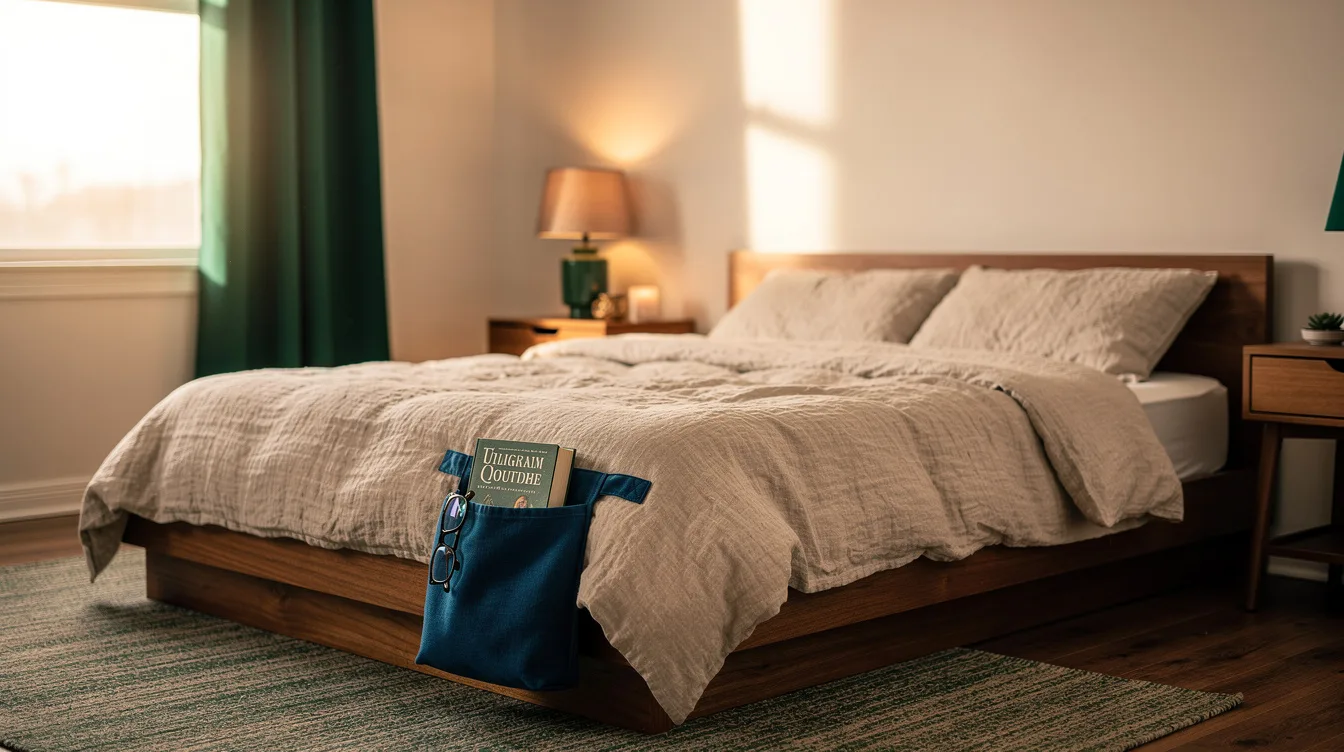
A 29½-inch fabric organizer can solve the bedside problem in a rental where a nightstand would block the only path around a full-size bed. The catch is that many caddies get treated like tiny tables, then sag under a water bottle, charger, paperback, and the clutter nobody wants to see before sleep.
Designers favor a bedside setup that matches the bed frame, the mattress clearance, and the items you actually reach for at 11 p.m. For renters, the smartest version often hangs over the mattress, slides beneath it, or clamps onto an existing rail without leaving a single wall hole.
Measure the Bed Edge Before Buying
Don’t order a caddy because its listing calls it universal. A IKEA MÖJLIGHET bed pocket is 29½ by 10¾ inches, which is generous for a bed end or an uninterrupted side, but awkward beside a compact frame with brackets or a thick upholstered rail.
Check where the fabric will hang, where the insert will sit, and whether the mattress can still lie flat. For a tighter zone, the IKEA STICKAT bed pocket, at 15¼ by 11¾ inches, has a more believable footprint for a phone, reading glasses, remote, and charging cord.
Soft pocket caddies typically cost roughly $6 to $25, so measuring first is the easiest way to avoid buying two inexpensive organizers that both fail. A tape measure. Your actual pillow position.
Five minutes of honesty.
Match the Caddy to What It Can Safely Hold
A fabric pocket is storage, not a cocktail ledge. The consensus among designers is firm here: keep drinks, wax candles, and anything breakable off a hanging textile organizer, even when its rigid insert feels secure.
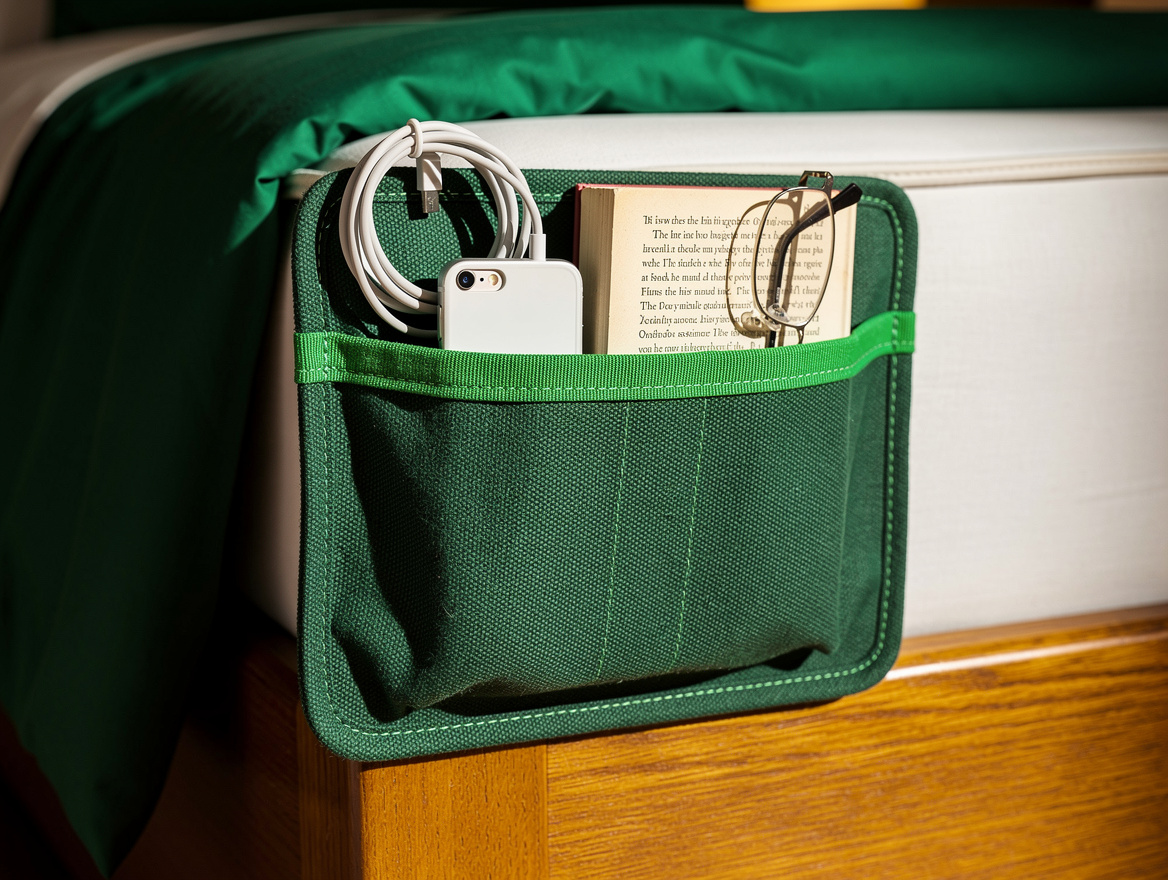
Use a heavy cotton canvas caddy for the light nighttime lineup: paperback, charger, sleep mask, headphones, and a small tablet. An mDesign-style four-pocket version with a wire insert usually sells for around $13 to $15, and it looks more intentional than a loose tote wedged beside the mattress.
Need a stable surface for an e-reader or water glass? Choose an under-mattress slide tray instead. Those rigid platforms typically run roughly $20 to $45, provided your mattress has enough weight and the frame leaves room for the insert.
Clamp Only Onto a Compatible Rail
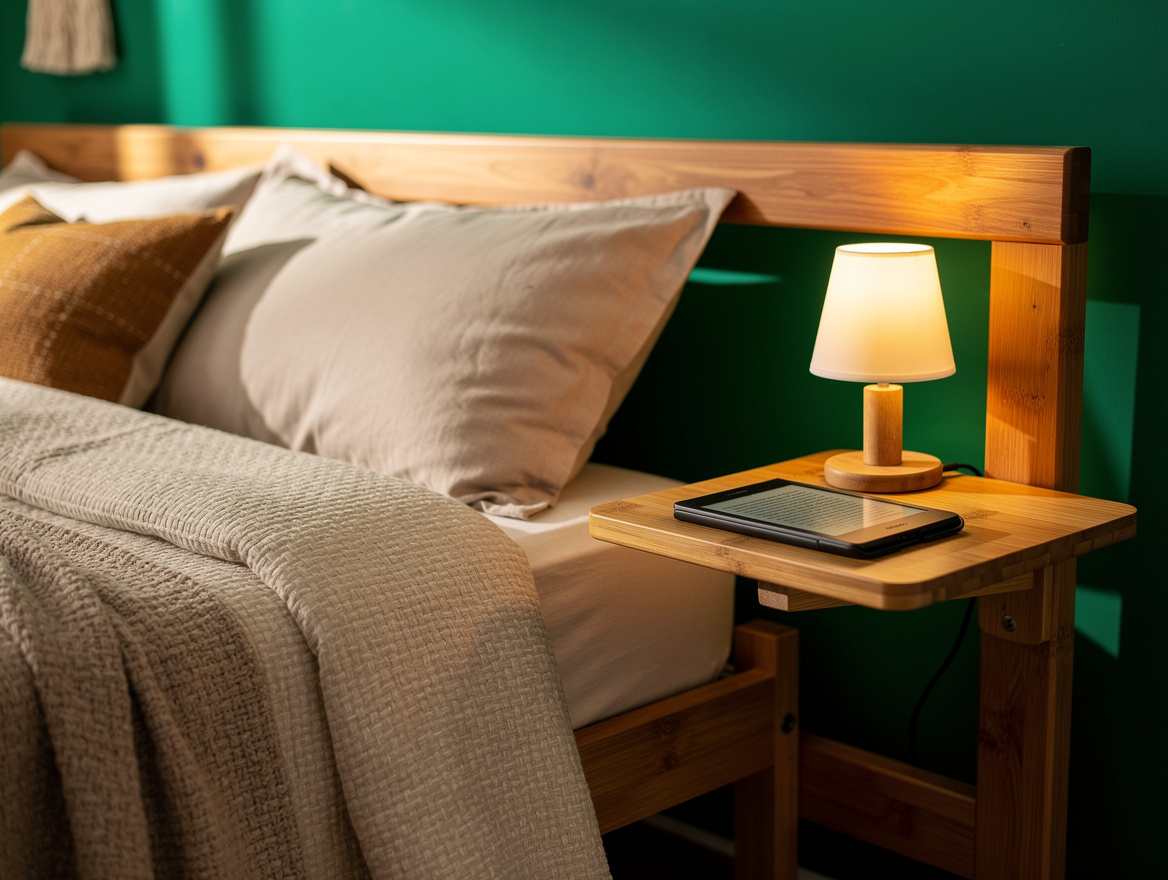
A clamp-on shelf can give a renter a real mini nightstand, but it cannot grip every bed. Round metal tubing, extra-thick upholstered frames, decorative curves, and slatted sides can all defeat a clamp, no matter how polished the product photos look.
Measure the rail thickness and inspect the underside before choosing a bamboo clamp-on shelf or a metal tray. These pieces typically cost roughly $25 to $50, while larger premium bamboo shelves can reach roughly $25 to $65 depending on finish and retailer.
I’d choose warm bamboo beside a simple wood or linen bed, and black metal beside an industrial frame. A clamp should feel invisible in use, not become the most noticeable hardware in the room.
Keep Cords From Taking Over the Pockets
One charging cable draped across a pillow is enough to make a bedroom feel temporary. Route the cable down the back of the caddy or frame, then leave only the connector accessible near the top pocket.
A fabric cable sleeve and a small adhesive cord clip on the bed frame can keep the visual mess contained without touching the wall. Place the phone in its own pocket, rather than stacking it over a book where it can slide out when the mattress shifts.
Don’t cram a power strip into a soft caddy. Heat, weight, and dangling adapters make it a poor choice; a low-profile surge protector belongs on the floor beside the bed, with its cord kept clear of the walking path.
Let the Caddy Respect the Room’s Sightlines
The caddy should disappear from the doorway, especially in a studio or a bedroom with a bed pushed against a wall. Choose blue textile storage only when it relates to the bedding, rug, or a nearby accent, because a random bright organizer can read like dorm overflow.
For adults, heavy canvas in charcoal, natural, or deep navy usually settles in better than thin shiny polyester. A black wire basket is useful on an exposed metal frame, but its contents remain visible, so it demands a stricter edit.
Keep the visible inventory small: one current book, one device, one pair of glasses, one charger. A bedside caddy earns its place by reducing visual noise, not by becoming another open bin.
Choose a Slim Cart When the Bed Has No Rail
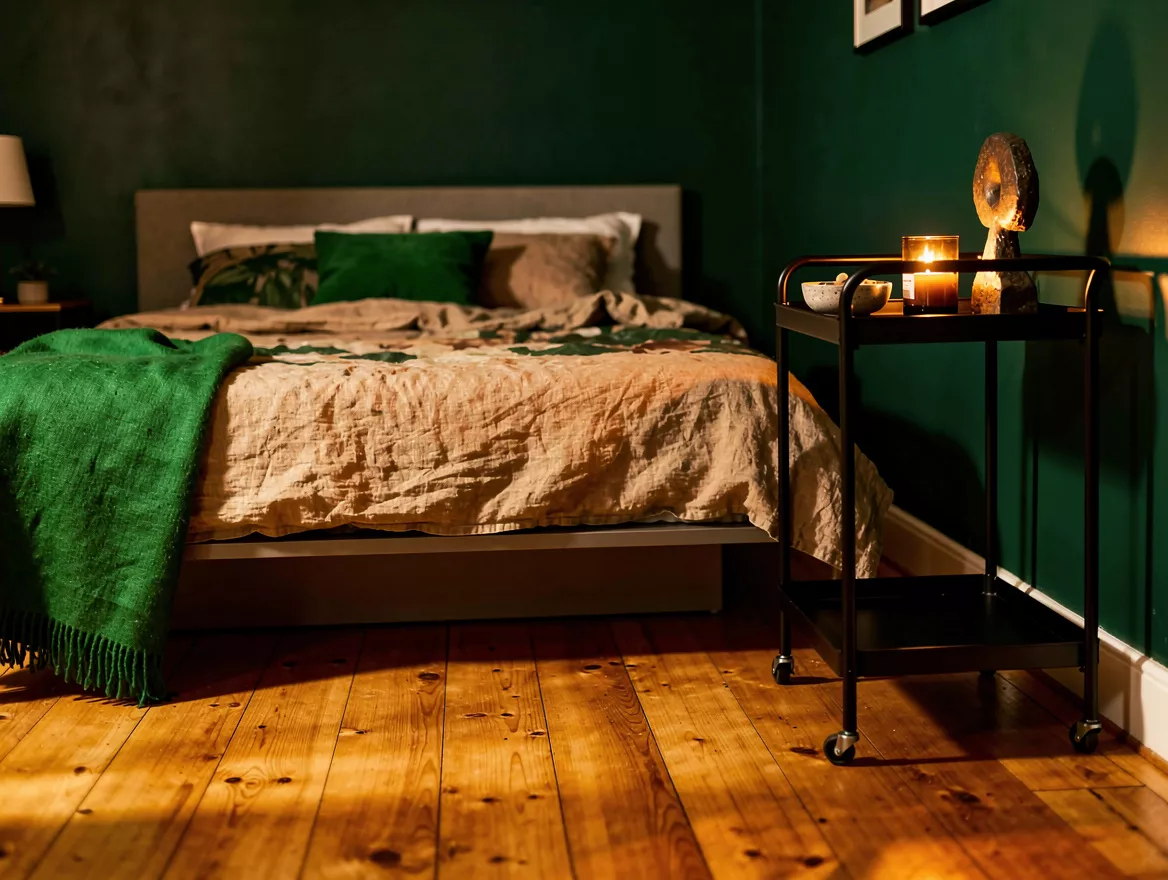
Some beds simply offer nothing to hang from or clamp onto, and forcing a caddy onto them looks worse than a small freestanding solution. A narrow rolling cart or standing organizer is the practical answer for a platform bed with no usable rail.
Look for a slim metal utility cart that can sit flush beside the mattress while leaving enough passage to make the bed. These usually cost roughly $20 to $80 or more, and they use floor space, so they work best when the room has at least a modest gap beside the bed.
Give the top tier only nighttime essentials and use the lower shelf for spare reading material or a folded throw. That layered arrangement feels like furniture, while an overfilled cart feels like unfinished moving day.
Start by placing your most-used bedtime item where your hand naturally lands from the pillow. That one measurement will tell you whether a soft pocket, rigid slide tray, clamp-on shelf, or slim cart deserves the space beside your bed.
Mia Carter writes about small-space living and budget home makeovers. She has restyled three rentals and tests most ideas in her own 45 sqm flat.