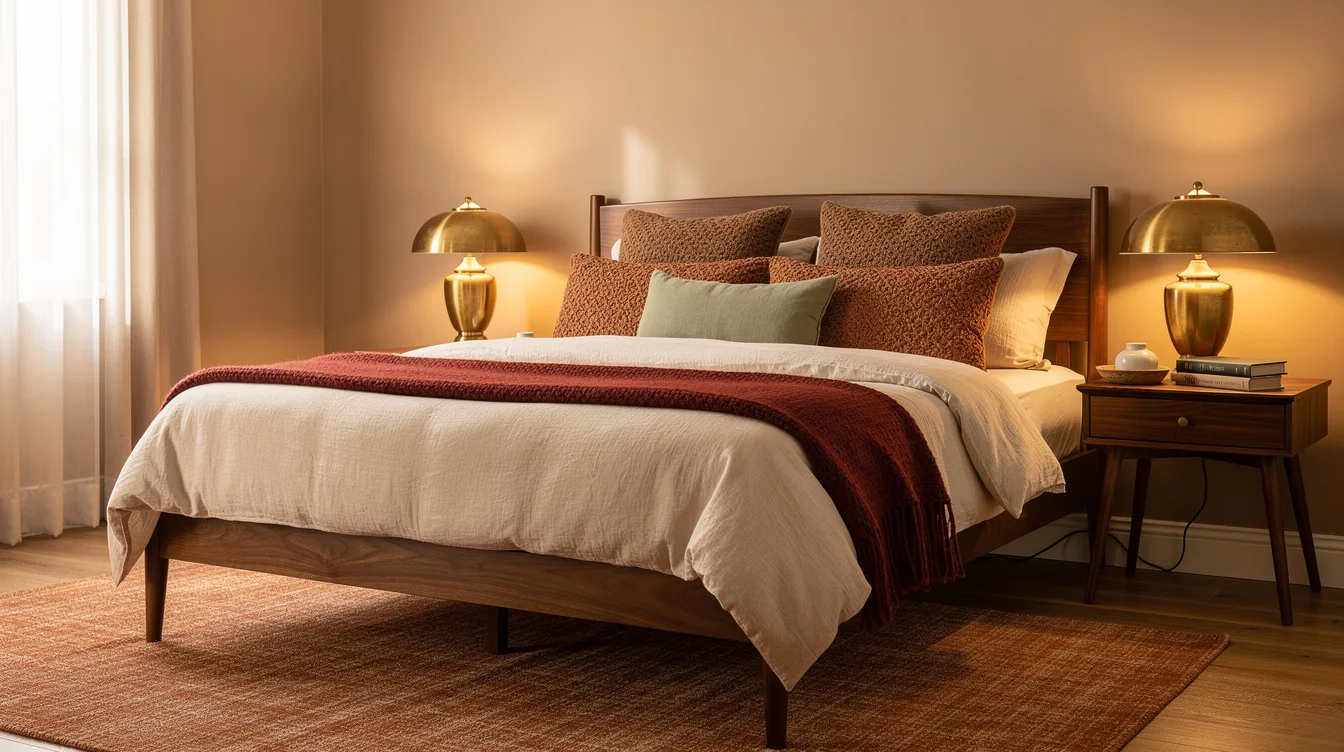
A beige bedroom can look finished at noon and strangely blank by 8 p.m., when every warm surface collapses into one beige blur. The fix is not more pillows, it is one concentrated color with enough weight to hold the room together.
For a typical 54-inch-wide full bed, even a single 14-by-36-inch lumbar pillow can make the color decision feel intentional. Sand, oat, camel, putty, and khaki have more life than gray-beige when the accent has nerve.
Concentrate Oxblood at the Bed
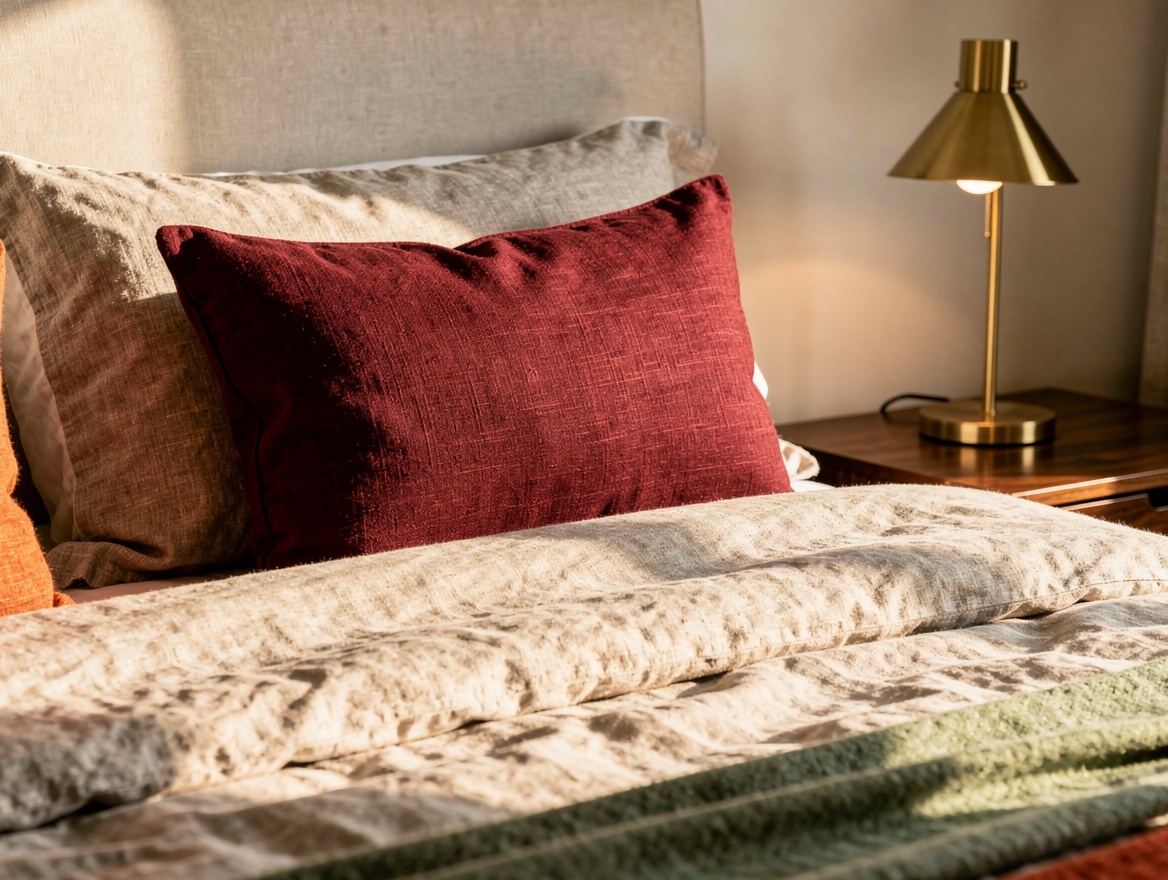
Scatter burgundy across beige and the room starts to feel themed. Designers keep the color concentrated: an oxblood wool throw at the foot of the bed, then one elongated lumbar pillow.
Start with Sherwin-Williams Accessible Beige SW 7036 on the walls and bring in walnut nightstands. A typical queen bed needs tables roughly 24 to 30 inches wide, and their tops should sit within about 1 to 3 inches of the mattress height.
This palette has the quiet polish of a boutique hotel without black furniture making the room feel severe. Aged-brass lamps and ivory sheets keep the wine note rich rather than theatrical.
Ground Sand With Mossy Wood Tones
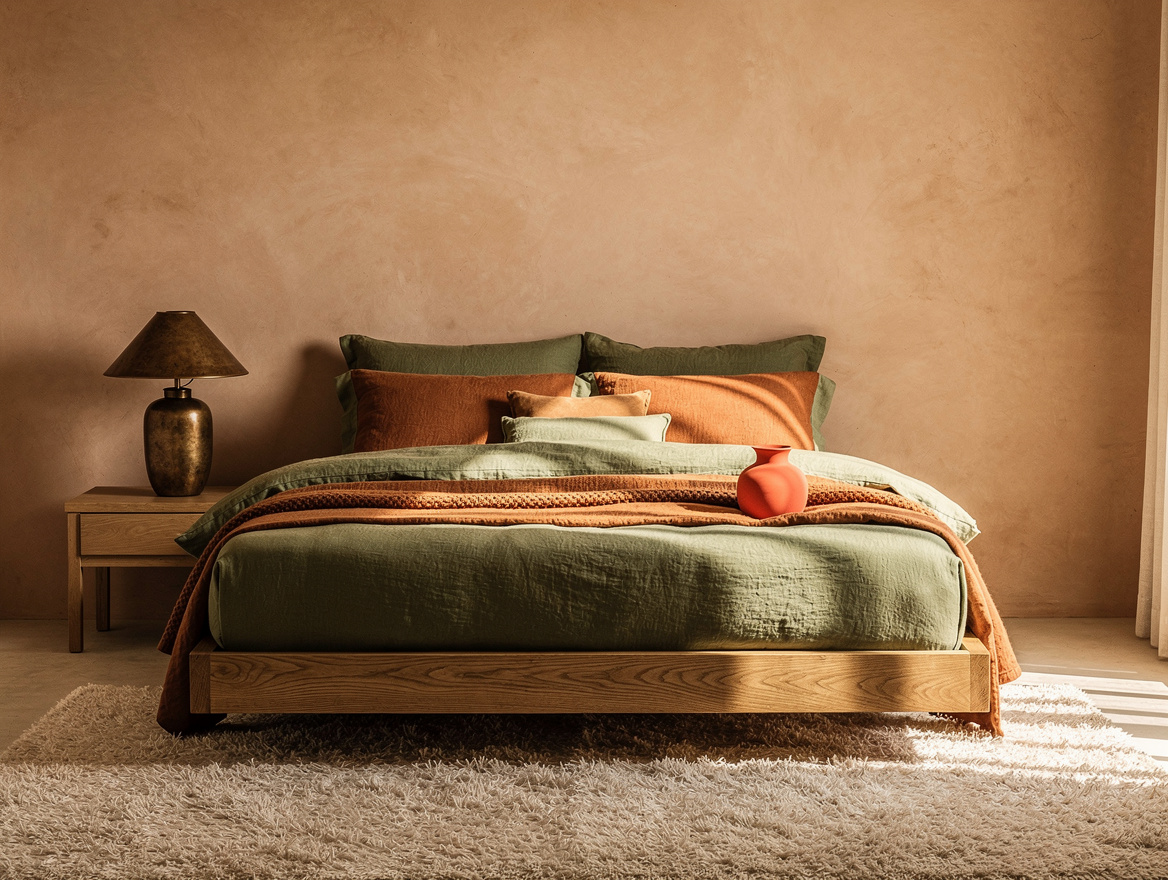
Sand beige needs a darker natural note, otherwise it can read flat under evening light. Use moss green linen on a duvet cover or a single oversized bench cushion, then let warm oak do the rest.
Sherwin-Williams Universal Khaki SW 6150 is a strong 2026 starting point because it has more earthy depth than cold gray-beige. Pair it with an oak platform bed, aged bronze hardware, and a wool rug with a low, tactile pile.
Skip bright leaf green and fake tropical prints. Moss, juniper, and deep olive make beige feel grounded, especially in a bedroom that gets little direct sun.
Sharpen Cream With a Single Indigo Note
Sunny bedrooms can handle more contrast than most people give them. A pale cream wall behind a white oak bed looks crisp with an indigo linen quilt folded across the lower third of the mattress.
Keep the blue in one substantial gesture, not a fleet of tiny accessories. A large ceramic lamp base or a 24-inch square pillow works better than several small cobalt frames competing for attention.
Nickel or chrome is the right metal here because it echoes blue’s clarity. This scheme is especially good for people who want beige to feel clean and awake, not sugary.
Limit Citron to One Graphic Moment
Khaki can take a jolt of yellow, but citron needs discipline. Let an acid-yellow lacquer tray or one slim bolster supply the charge against mushroom beige bedding.
Use bouclé, smoked glass, and olive wood to soften the sharpness. A Target Threshold bouclé accent chair, priced typically around $180 to $300 depending on the style, gives the palette texture without adding another loud color.
Do not buy a citron duvet unless you enjoy waking up to visual caffeine. The accent should feel deliberate from the doorway, then almost disappear once the lights are low.
Deepen Putty With Dusty Violet
Putty beige becomes far more interesting beside a violet with some gray in it. Paint a small alcove in Benjamin Moore Silhouette AF-655, an espresso brown with a muted violet cast, or choose a dusty lilac velvet pillow instead.
Dark-stained ash and antique brass give this soft palette enough edge. A silk-shade lamp, one framed charcoal drawing, and a nubby linen coverlet are plenty.
Keep roughly 70 percent of the room in beige, cream, and wood; about 20 percent can be tobacco, walnut, or charcoal; reserve around 10 percent for the accent. That ratio lets the bedroom keep its sleep-friendly calm while still looking considered.
Begin with the surface you see first from the door: a throw, painted alcove, or upholstered bench. Give that one object the entire accent-color job before adding anything smaller.
Mia Carter writes about small-space living and budget home makeovers. She has restyled three rentals and tests most ideas in her own 45 sqm flat.