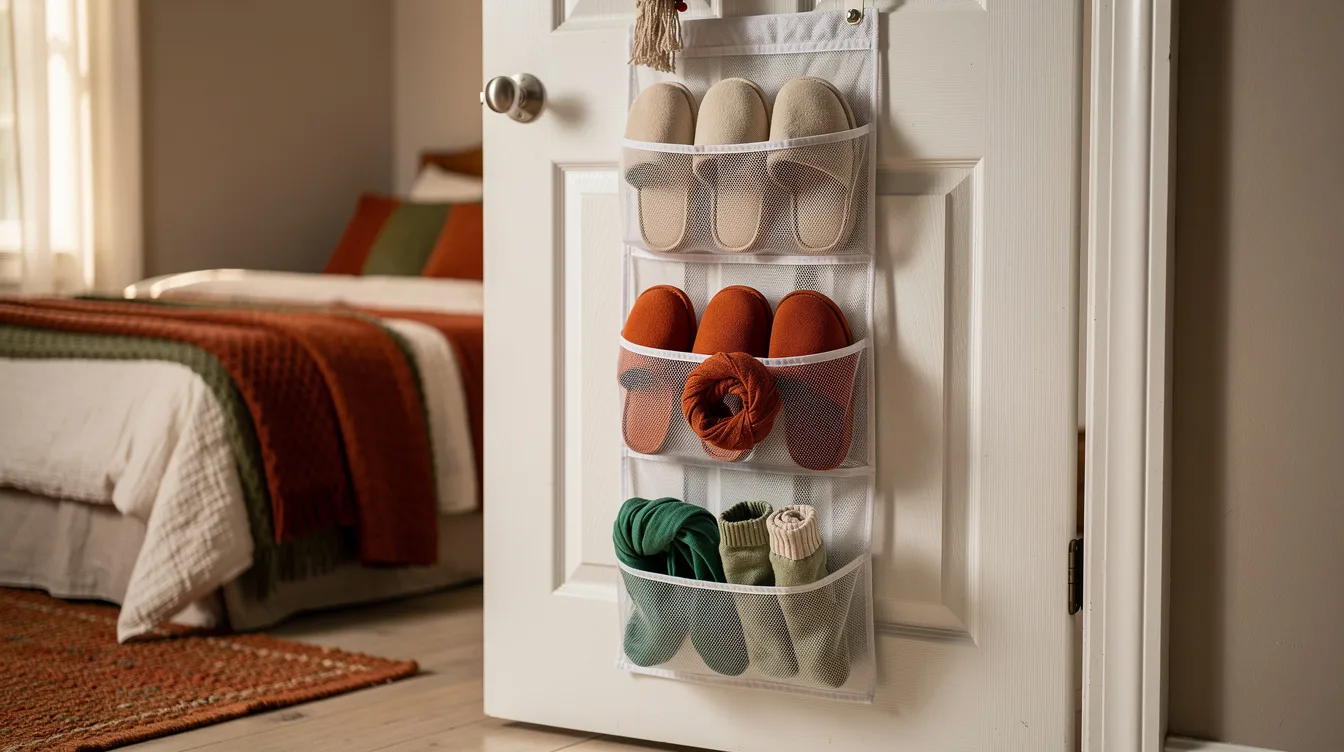
I used to leave my slippers beside the bed and my belts looped over a chair, until a 64-inch closet door gave me a much better place to put them. An over-door organizer costs roughly $13 to $20 in its simplest form, and it can clear the small items that make a bedroom feel permanently unfinished.
The key is choosing a format for what you actually own. Thin sandals and rolled socks behave very differently from bulky sneakers and folded sweaters.
Start With a Clear 24-Pocket Panel
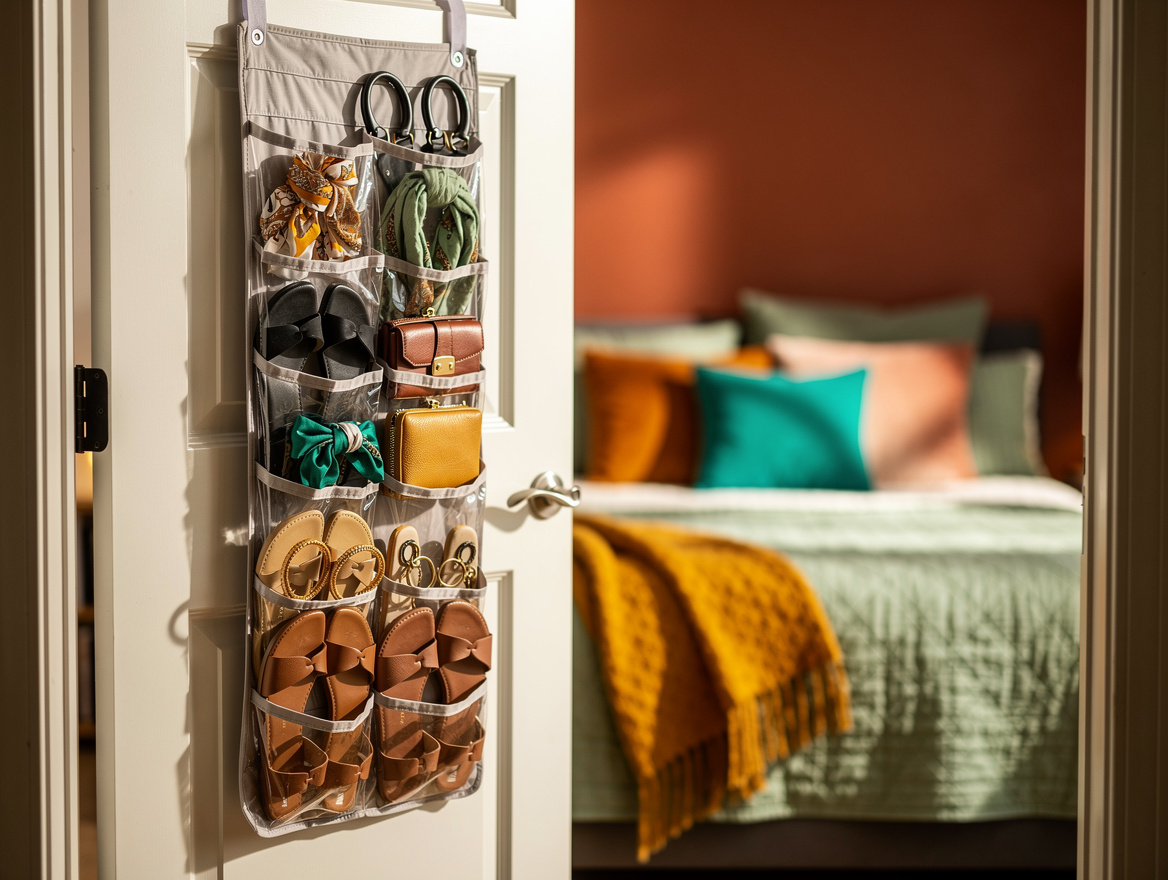
A clear vinyl 24-pocket panel is the best low-cost choice for flats, flip-flops, slippers, and small folded accessories. A typical 19-inch-wide by 64-inch-high version from Amazon costs about $13 to $18 and takes up virtually no floor space.
Give the bottom rows to footwear, then use the middle for rolled socks, underwear, belts, and hair accessories. Clear fronts keep the contents visible, which matters because forgotten storage quickly becomes clutter with a door attached.
Be realistic about the word “shoe.” Twenty-four pockets can hold many slim pairs, but thick running shoes and larger men’s sizes will crowd the panel and make the door swing awkwardly.
Choose Mesh for Frequently Worn Shoes
Use breathable mesh pockets when shoes come off slightly damp after a commute, workout, or rainy walk. The airflow is more useful than a glossy finish for sneakers, house shoes, and anything you wear several times a week.
Target sells a 24-pocket mesh organizer for around $19, typically with no assembly required. I prefer mesh on a bedroom door because it looks softer than clear plastic and doesn’t turn every sock into a visual announcement.
Keep each pocket simple: one pair of sandals, one rolled set of workout gear, or one small accessory category. A chunky knit throw. One brass candle.
Those belong elsewhere, not stuffed into an organizer that needs to hang flat.
Reserve Upper Pockets for Seasonal Pieces
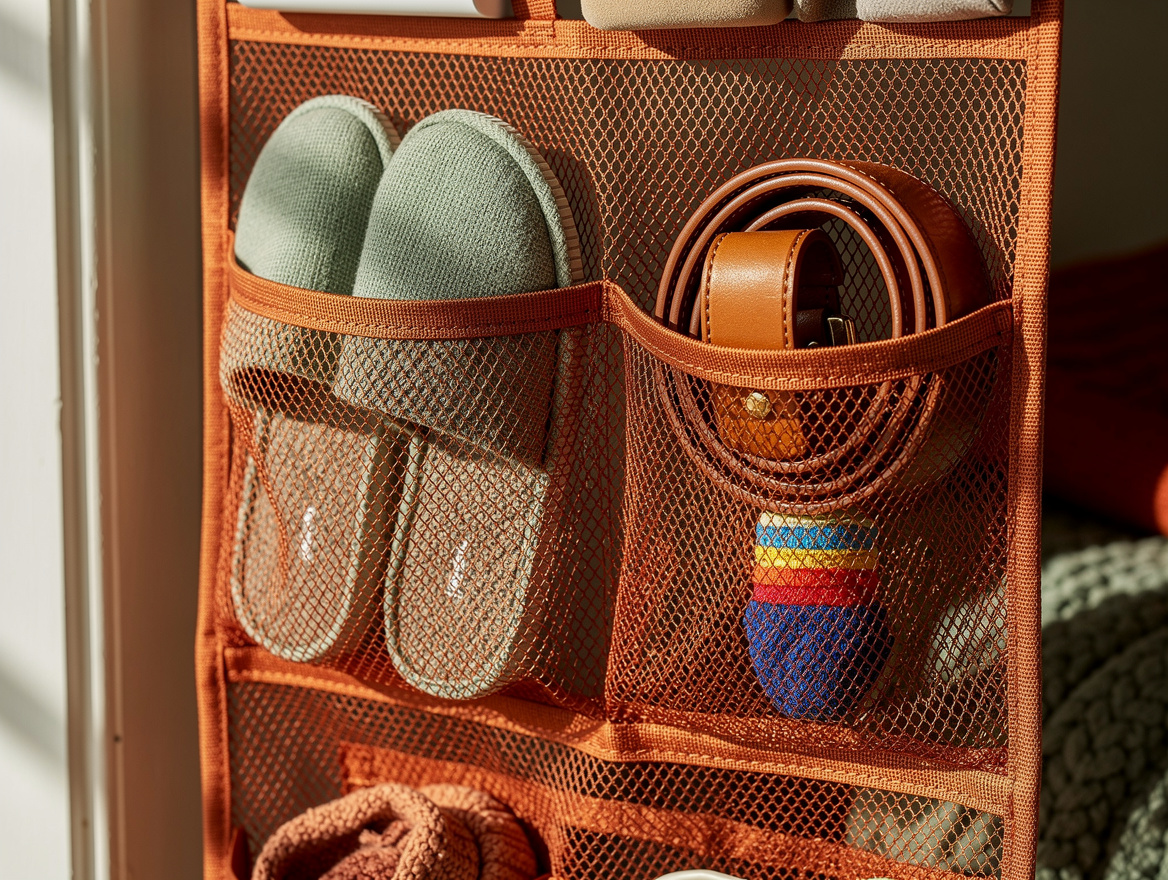
Put low-use items in the upper rows of a polyester hanging organizer: sunglasses in cases, swim accessories, travel cables, scarves, or off-season gloves. The top pockets are inconvenient for daily grabbing, so they work best as quiet backup storage.
Use one full vertical column for accessories currently in rotation. A leather belt, a cap, a folded silk scarf, and a small clutch can all live there without forcing you to search through a drawer.
Skip loose receipts, random batteries, and items without a category. The door is prime real estate, and it should solve a morning routine rather than hide a tiny junk drawer.
Step Up to Deep Shelves for Folded Accessories
For leggings, clutches, hats, light sweaters, and thicker folded pieces, buy a deep shelf-pocket organizer. Typical versions are around 64 inches high, with pockets roughly 14.5 by 6.5 by 6.5 inches, and usually cost about $28 to $40.
The reinforced fabric, rigid inserts, and metal hooks make this format feel more like a narrow hanging cabinet than a shoe bag. It earns its higher price when your accessories need shape, not compression.
Fold each item to the pocket width before loading it. Overfilling creates a lumpy front that catches on the frame and makes even an organized closet look tired.
Use a Metal Rack for Real Sneakers
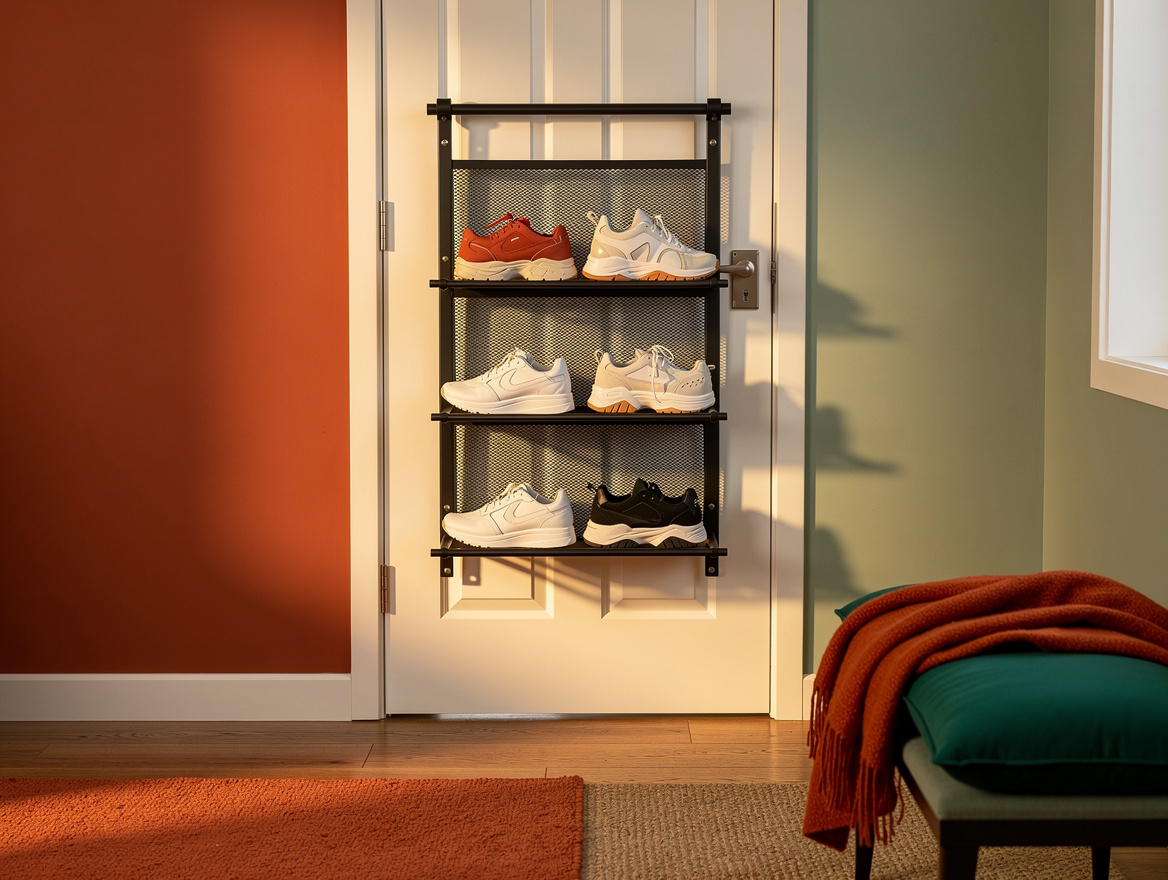
A powder-coated steel rack is the honest answer for sneakers, high-tops, and shoes that need ventilation. These organizers are typically about 21 to 22 inches wide, 62 to 69 inches high, and 7 to 7.5 inches deep, with prices around $20 to $50 or more.
The open mesh shelves let shoes breathe and give soles a stable surface, so you are not cramming a pair into a fabric square built for ballet flats. This is the version I’d choose for a shared entry closet or a teenager’s room.
Measure door clearance before ordering. That extra depth is useful, but it can interfere with a nearby wall, closet rod, or bedroom furniture in a narrow room.
Style the Door Like Part of the Room
An organizer on the back of a door still affects the room, especially when the door stays open. Choose black mesh for a modern closet, neutral fabric for a softer bedroom, or clear pockets when quick visual access matters most.
Keep the visible load consistent rather than perfectly matching. Rows of folded cotton socks, neutral slippers, and a few small pouches look intentional because every pocket has a job.
Wipe vinyl fronts, shake out mesh, and edit the contents every few weeks. A door organizer stays cozy when it holds useful things, not every object you cannot decide where to put.
Begin with the shoes currently on the floor, then fill only the pockets they truly need. Once that works, add folded accessories one category at a time instead of buying a larger organizer before the first one is doing its job.
Mia Carter writes about small-space living and budget home makeovers. She has restyled three rentals and tests most ideas in her own 45 sqm flat.