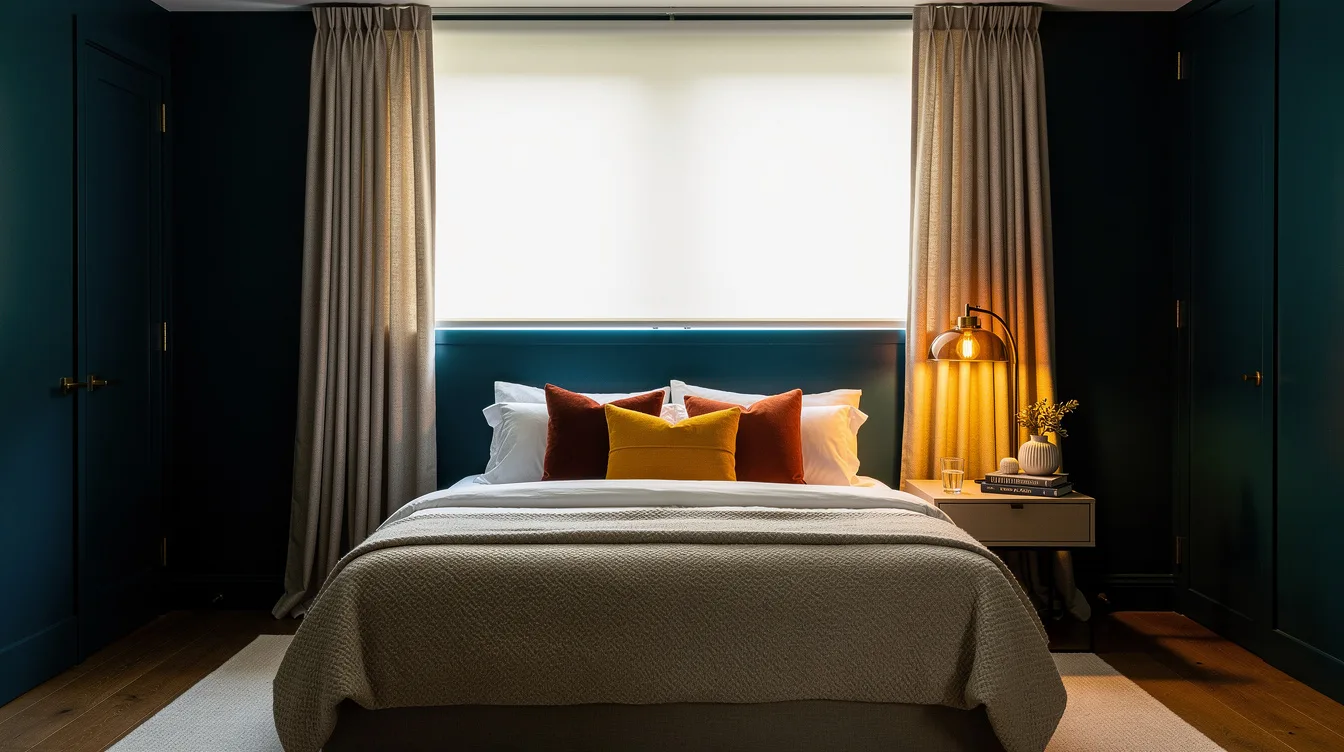
I once slept in a guest room with a 54-inch-wide window facing east, and the narrow glow around the curtains arrived before the alarm. The bed was comfortable, but the room never felt restful.
Blackout treatments work best when they solve both light control and the view from inside the room. A layered window can do that without making the space feel heavy.
Layer a Shade Behind Soft Drapes
The strongest all-around setup pairs an outside-mounted blackout roller shade with decorative curtains. The shade blocks daylight; the fabric layer makes the window feel considered and covers the small bright seams at the edges.
Choose a warm white or soft gray roller shade, then hang oatmeal or muted olive panels from a ceiling track. For most guest rooms, this reads more like a calm hotel room than a utility-focused sleep cave.
Mount the Hardware Beyond the Glass
A rod that stops at the window trim leaves a stripe of morning light exactly where a sleeping guest will notice it. Extend a wraparound curtain rod roughly 4 to 8 inches beyond each side, then set it high enough that the panels nearly meet the ceiling.
This is the lowest-cost effective correction for a rental-friendly room, and it makes a modest window look wider. A typical pair of blackout panels costs about $40 to $130, while basic rod hardware often adds roughly $25 to $100.
Choose a Cellular Shade for Drafty Rooms
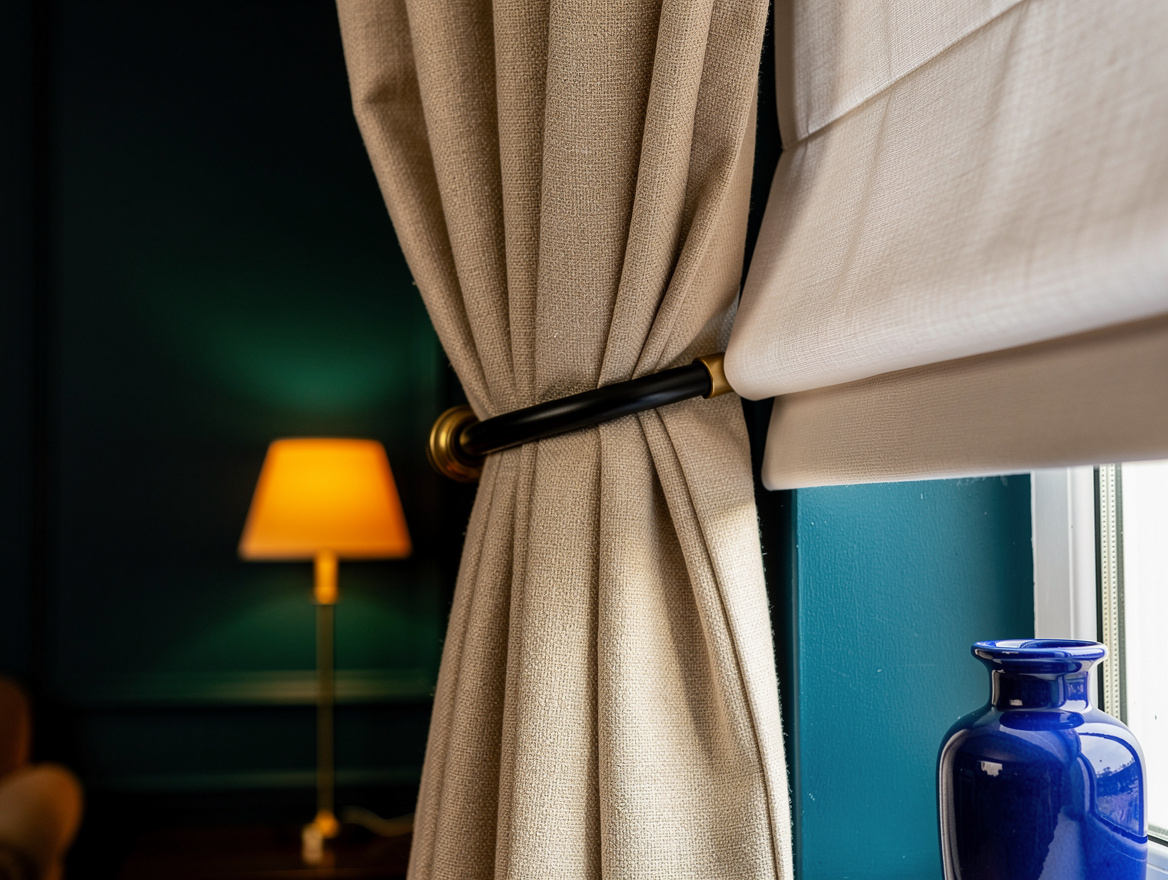
For a room that gets hot in the afternoon or chilly overnight, use a blackout cellular shade behind drapes. Its honeycomb pockets add insulation and look gentler than a bare roller blind.
A warm-white, mushroom, or pale-gray cellular shade disappears into a neutral room while doing real work. Custom-sized options typically run about $150 to $500 or more before curtains, so reserve this choice for a room guests use often or one with a genuinely difficult window.
Use Longer Panels to Make the Room Feel Finished
Short curtains make even a good blackout plan look temporary. A typical pair of 96-inch blackout panels gives a guest room more height when the ceiling allows it, while 84-inch lengths suit many standard windows.
Skip oversized metal grommets when you want a quieter, more tailored effect. Back-tab panels, rod-pocket styles, or pinch-pleat-look headers create softer folds and keep the focus on the bedding instead of the hardware.
Let the Shade Handle Darkness
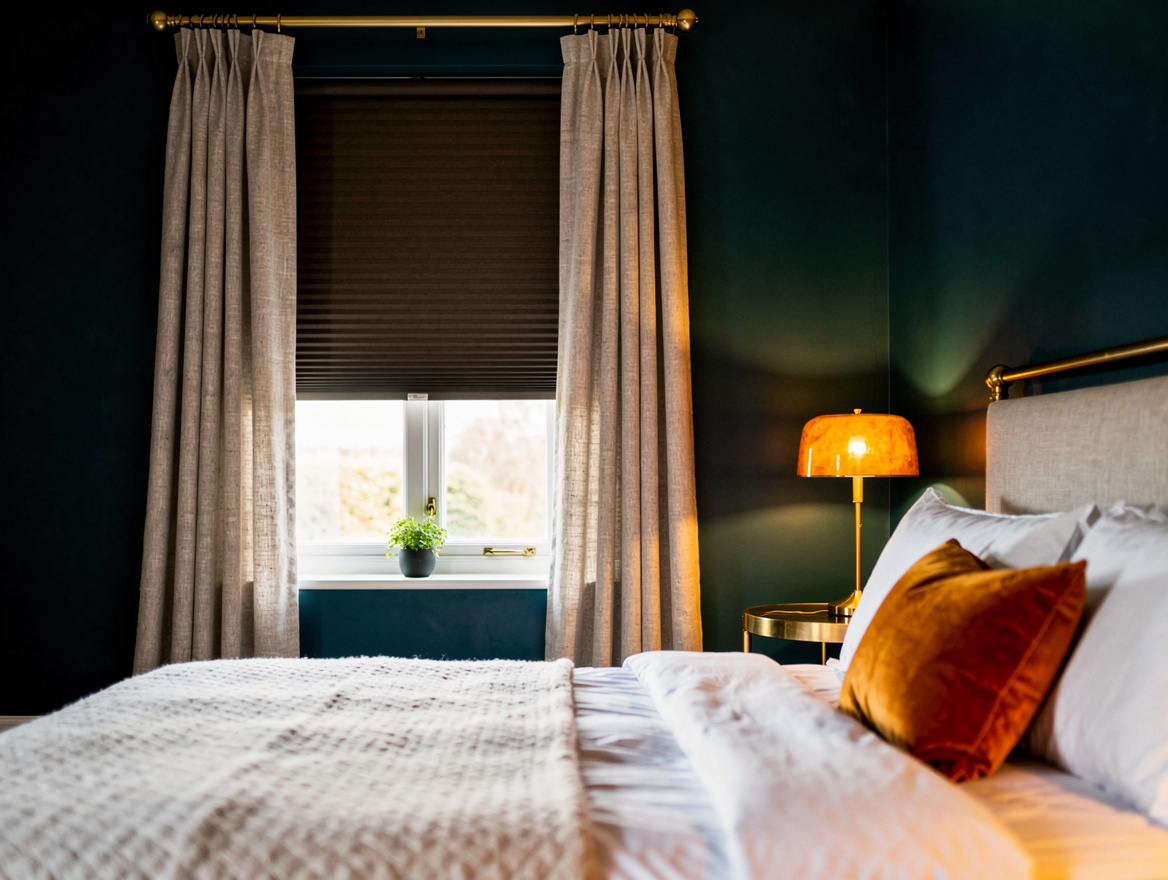
Thick curtains alone can look convincing at noon, then leak light across the top and sides at sunrise. Put the real blackout duty on an outside-mounted IKEA FRIDANS blackout blind or another blackout shade, and treat the curtains as the room’s finishing layer.
This division of labor prevents the common cheap-looking result: stiff, dark panels pulled tightly across a window all day. Linen-look polyester drapes in flax, sand, or stone stay relaxed even when they are open.
Make the Controls Obvious After Dark
A guest should not have to hunt behind a nightstand to close the window treatment. Place the wand, pull, cord, or remote for a motorized blackout shade where someone can find it from the bed, and test it with the bedside lamp off.
Motorized options typically cost roughly $400 to $1,500 or more per window before professional installation. They are worthwhile for tall windows or a premium guest suite, but a clear wall control matters more than a flashy app.
Start with the window’s edge gaps before buying new bedding or paint. A properly extended rod and a true blackout shade will change the guest experience on the very first night.
Mia Carter writes about small-space living and budget home makeovers. She has restyled three rentals and tests most ideas in her own 45 sqm flat.