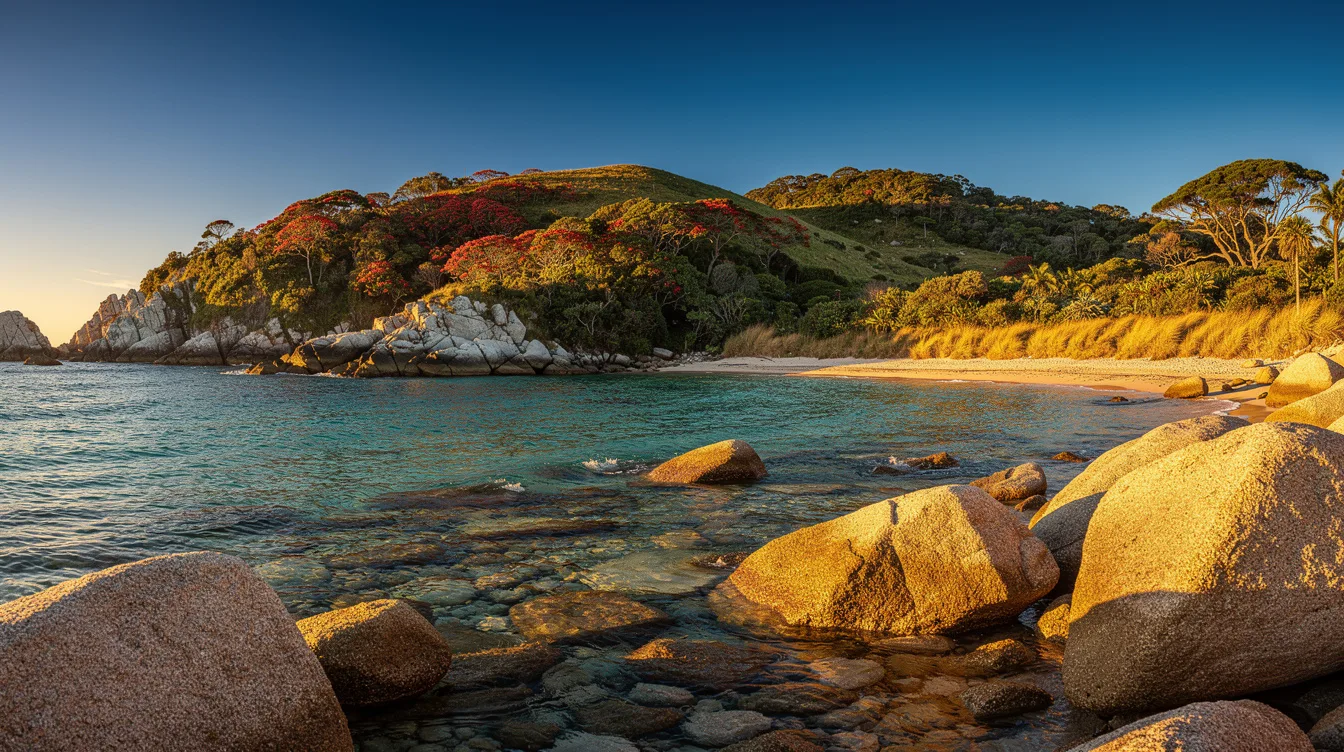
Aotea / Great Barrier Island sits 62.1 miles northeast of central Auckland, yet it feels far removed once daylight slips away. On a clear night, the lack of city glow lets the stars take over, and that is the whole reason to come.
You can fly here in 30 minutes from Auckland, which makes the island unusually easy for a short escape. But its off-grid character asks you to slow down after landing, not race through a checklist.
Auckland’s fast escape leads to a darker night
Flights arrive at Claris or Okiwi, while the ferry reaches Tryphena. If you have only two or three nights, flying to Claris and arranging a rental car is the sensible choice, because it leaves more of your trip for the island itself.
The alternative is a 4.5-hour ferry from Auckland’s Hamer Street in Wynyard Quarter. It can take your vehicle and luggage, so it suits a longer camping or self-drive stay, though schedules are more limited in winter.
And summer brings more ferry departures, which helps if you want the car along. Reserve ahead either way, especially for a vehicle, because this isn’t an island where last-minute logistics feel charming.
The 2017 designation changed what happens after dark
In 2017, Aotea became an International Dark Sky Sanctuary. It was the third sanctuary designated worldwide at that point, and the first one located on an island.
That accreditation recognizes a protected dark-sky environment rather than a staged attraction. On clear nights, you don’t need an itinerary to understand it. Step outside, let your eyes adjust, and look up.
But clouds can cancel the show, so build your plans around the forecast instead of promising yourself a single perfect evening. The island is still worth the crossing, yet dark-sky travel depends on patience.
Great Barrier feels wild because services stay limited
Much of the island is lightly developed, with native forest, natural hot pools, hiking, and beaches pulling attention away from screens. You’ll notice the practical side quickly: mobile coverage can be inconsistent and late-night services aren’t a given.
Bring groceries if you care about particular meals, and download offline maps before departure. That preparation pays off, because the quiet is better when you are not hunting for a signal or a forgotten dinner.
And the island’s scale helps explain its split personality. Its eastern shore has long sandy beaches, dunes, and at times heavy surf, while the western side has calmer sheltered bays.
Medlands and Port Fitzroy give you two different islands
Medlands, Kaitoke, and Whangapoua are among the major beach draws on the exposed coast. They have the wide-open feel you want when you came for salt air and space, but the surf can be serious.
Beyond the harbor side, the bays around Port Fitzroy are calmer. The contrast is the island’s best trick: one coast feels wind-brushed and broad, the other feels made for a slower day near the water.
You can choose a base near Tryphena for more restaurants and services, near Medlands for beach access, or Claris for central-island logistics. None is perfect for every plan, which is why choosing your priority before booking matters.
Mount Hobson gives the island its hard-earned view
Mount Hobson / Hirakimatā reaches 2,057 feet, the island’s highest point. Aotea Conservation Park also contains the Auckland region’s only multi-day wilderness walk, with Department of Conservation huts and campsites.
If you want the island to feel properly remote, spend time on the tracks rather than only driving between beaches. But plan the overnight side early, because huts, campsites, transport, and supplies need more thought here than they do in Auckland.
About 60% of the island is managed as a nature reserve, so the interior has room to feel less built-up. The forest and hill country make the night sky feel even more immediate once you return to your base.
Stay long enough for the sky to decide
This is not the place for a rigid hourly schedule. You can arrive by plane, wander a beach, take a walk, and still spend the evening waiting for cloud cover to break.
And that waiting is part of the appeal. By the time the island goes quiet, the dark above Aotea has room to do what Auckland’s lights usually prevent.