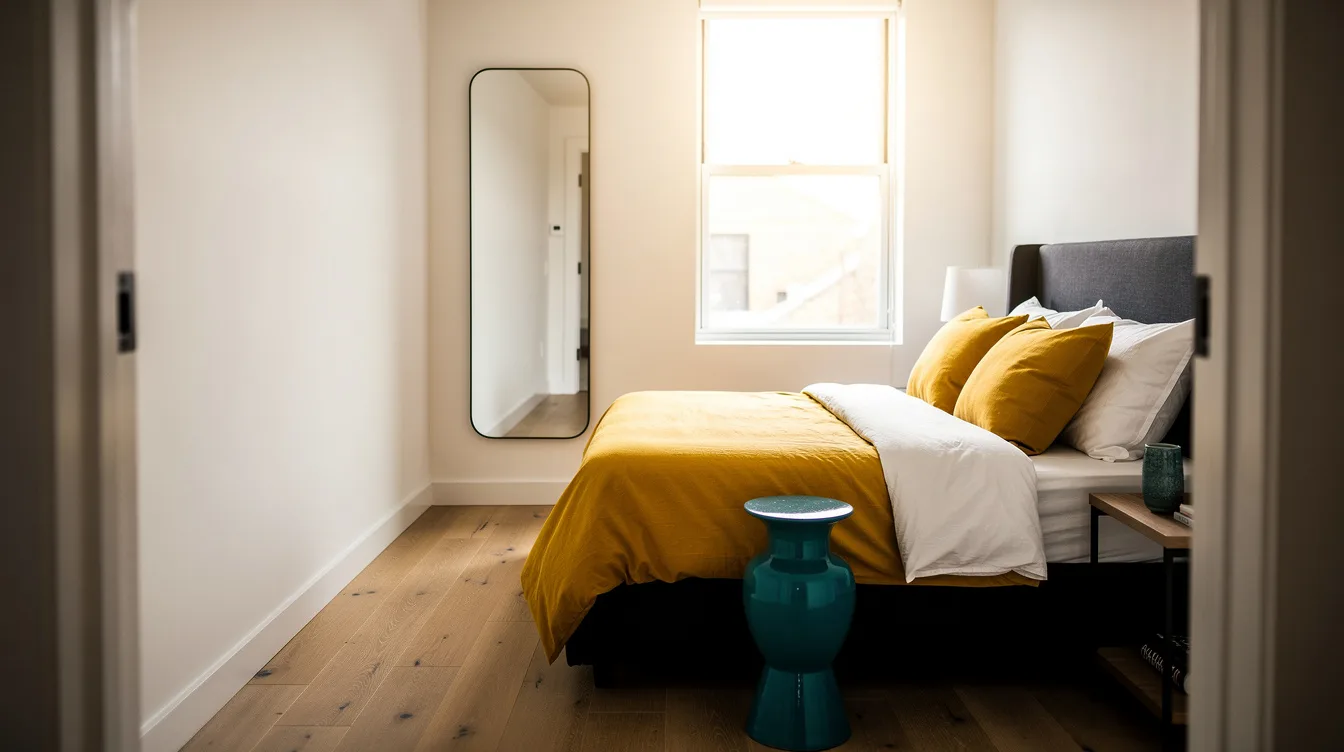
My narrow bedroom had a window, a bed, and barely around 24 inches to walk beside it, so a floor mirror was never going to be the answer. I wanted the room to feel wider without turning every spare wall into decoration.
The change came when I treated the mirror as part of the layout, not an accessory added at the end. Its reflection needed to show light and breathing room, not the bed and whatever I had dropped on the chair.
Anchor It on the Long Wall
I stopped treating my longest wall as blank space and used it to hold a tall wall-mounted mirror. In a narrow bedroom, that placement adds visual width without taking an inch from the route around the bed.
The strongest version sits opposite a window, where it reflects daylight and a calmer view of the room. A vertically hung mirror roughly 16 to 24 inches wide feels proportionate in a bedroom under about 8 feet wide.
Choose a thin aluminum frame or a narrow painted edge. A bulky carved frame pulls the wall toward you and makes the room feel tighter.
Reflect Daylight Instead of the Bed
My first mirror faced the bed head-on, and every morning it doubled the largest object in the room. I moved it to catch the window and a clear stretch of wall, and the room immediately read as more open.
A mirror should return something useful: sky, curtains, a lamp, or an uncluttered wall. It should not spotlight an unmade linen duvet, laundry, or shelves packed with chargers.
Place the mirror where daylight hits it at an angle rather than straight on. That softer bounce has more impact than adding another lamp to a crowded nightstand.
Use the Foot Wall to Lengthen the Room
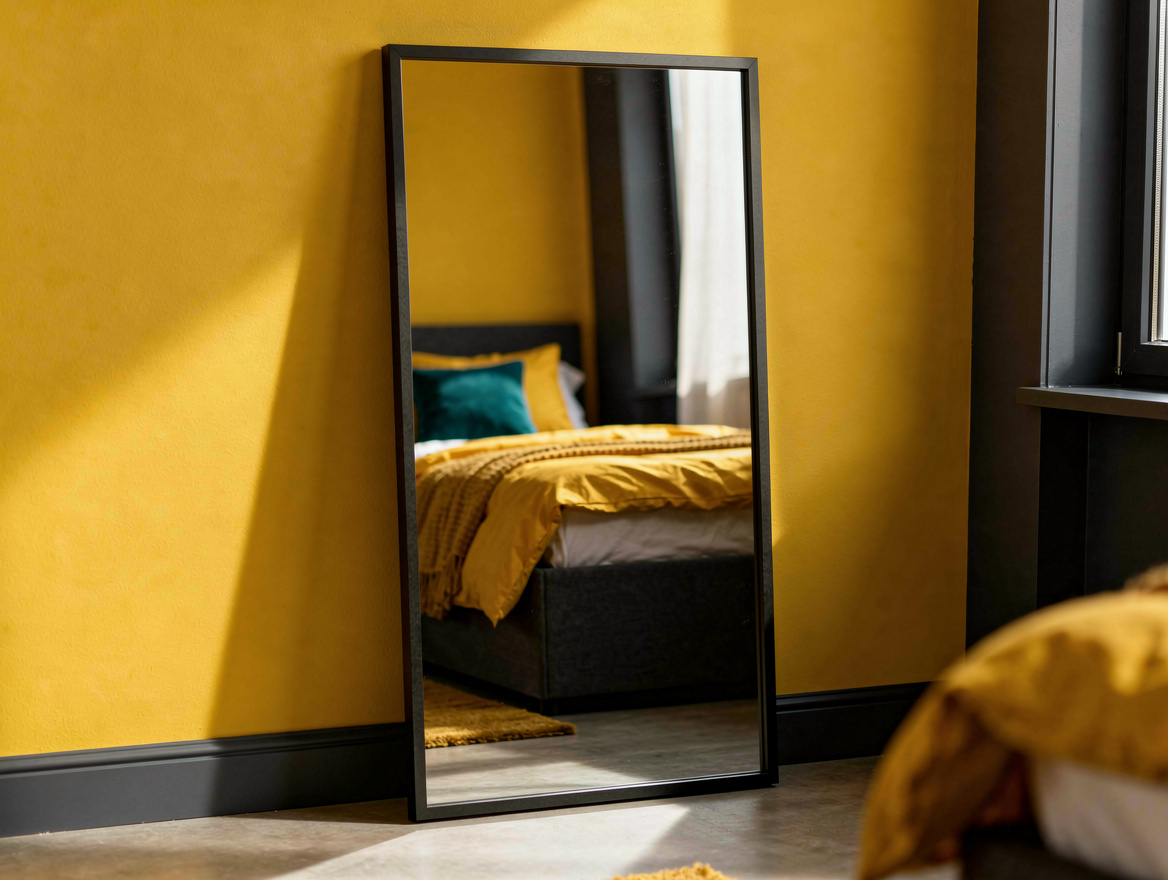
When the bed runs along the long wall, the wall at its foot becomes the best candidate. A full-length glass mirror there extends the central sightline and makes a corridor-shaped room feel less boxed in.
For this layout, a mirror around 24 to 30 inches wide and roughly 59 to 67 inches tall is usually enough. Wider pieces can overpower a tight aisle, especially when the room has a dresser or wardrobe nearby.
Keep its bottom about 6 to 12 inches above the floor when possible. That bit of visible wall keeps the mirror from looking like an extra piece of furniture parked in the way.
Build a Dressing Zone at the Wardrobe
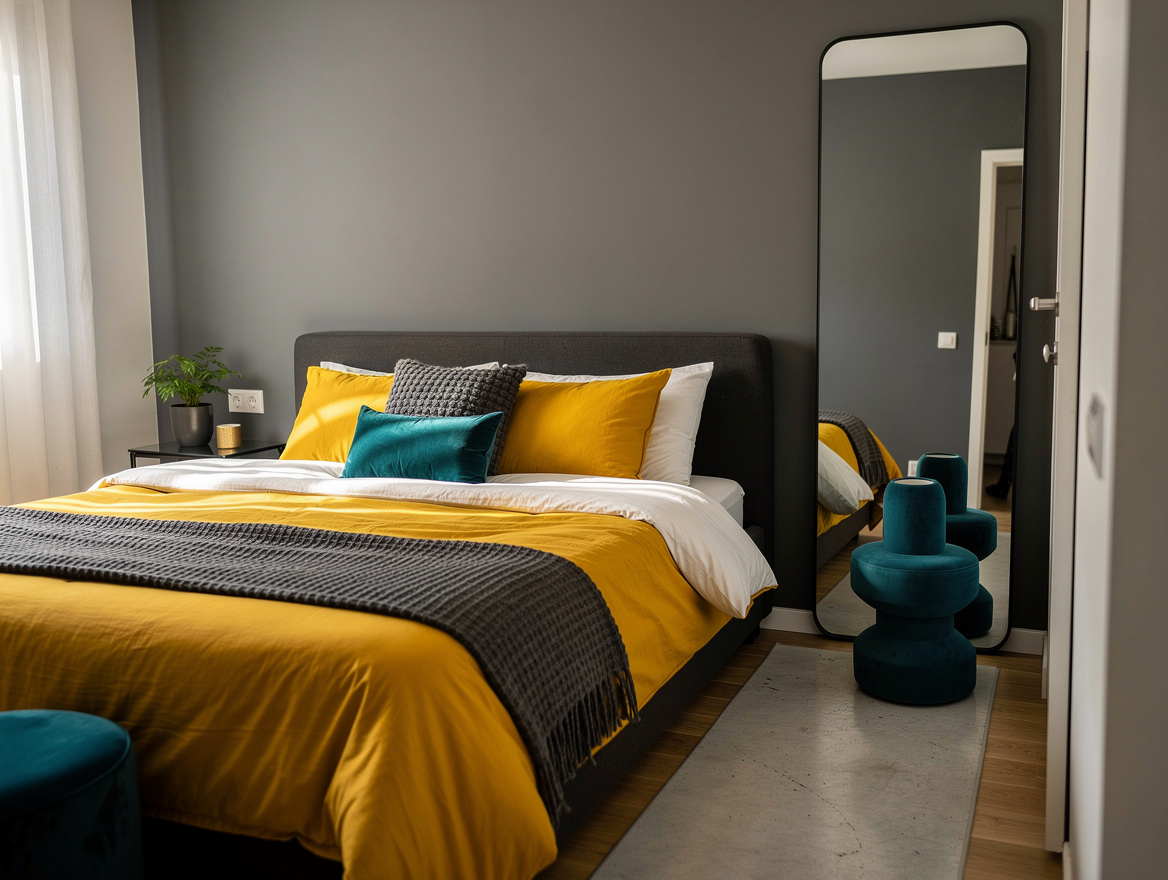
A mirror beside the wardrobe makes getting dressed easier without introducing another stand or console. I like a narrow black-framed mirror mounted beside the closet door, where it creates a deliberate dressing spot.
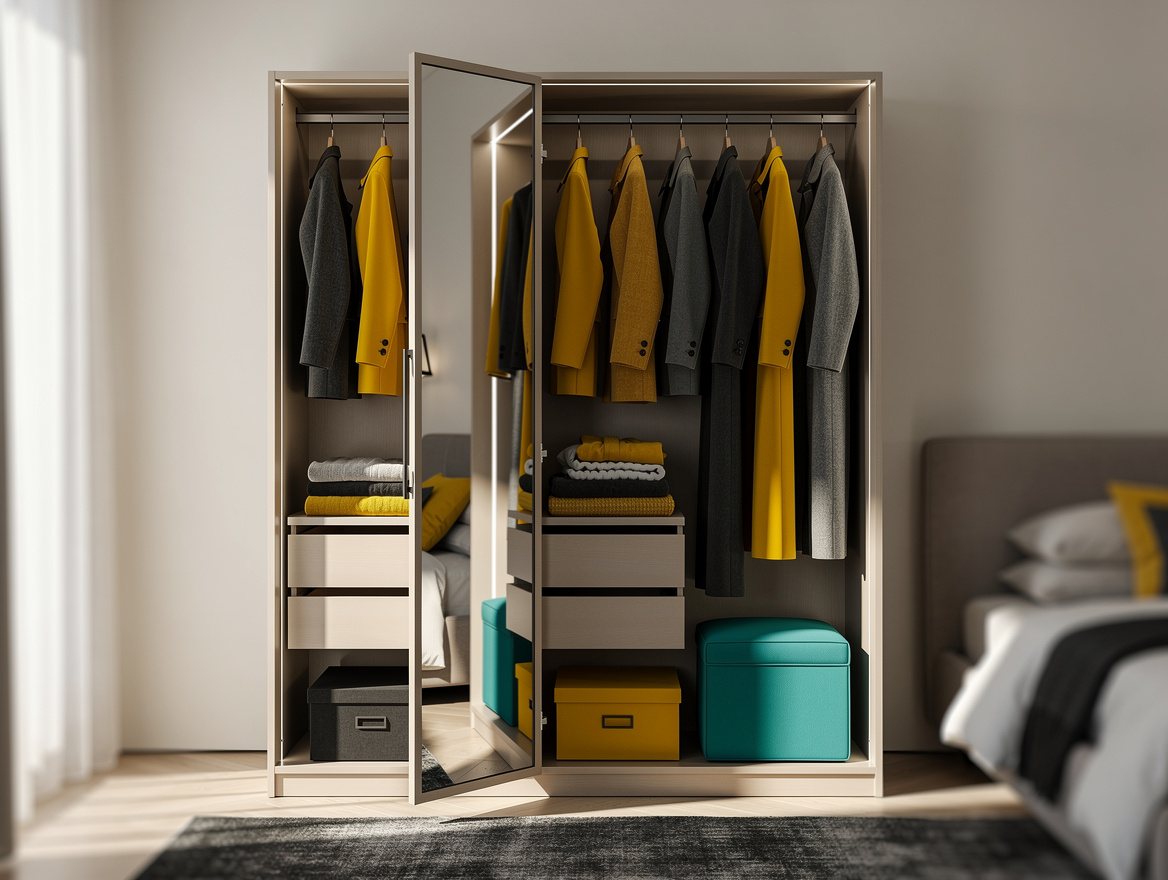
If your wardrobe faces the bed, hide the reflection inside it instead. IKEA’s KOMPLEMENT pull-out mirror fits compatible 22⅞-inch-deep PAX frames, measures 11 by 51⅛ inches, and is listed at $50 in the U.S. Store.
Its rotating, adjustable design earns its place in a narrow room because it disappears after use. An exposed mirror is decorative, but a pull-out version protects the visual quiet that small bedrooms need.
Claim the Space Behind the Door
The back of a bedroom door is often the cleanest answer for renters or rooms with awkward walls. A thin over-the-door mirror gives you a full-body check without consuming the walking lane.
Look for a lightweight model around 12 to 16 inches wide and about 47 to 59 inches tall. A thick wood floor mirror can steal roughly 12 to 20 inches of circulation space, which is a terrible trade in a narrow layout.
Check that the door clears rugs, hooks, and trim before buying. Use renter-appropriate mounting hardware only when the mirror’s weight and your wall type allow it.
Protect the Walking Clearance
I measure the passage beside the bed before I even shop for a mirror. Keeping around 24 inches of walking space makes a narrow bedroom function far better than squeezing in a dramatic freestanding mirror.
Skip the tempting leaner mirror along the main route, even when it looks great in a product photo. Its feet, tilt, and frame create a daily obstacle near the bed, closet, and laundry basket.
Mount the mirror vertically and keep the center around 57 to 61 inches from the floor for a comfortable view. Full-length versions can start roughly 6 to 12 inches above the floor, depending on baseboards and the look you want.
Start with the long wall opposite your window, then tape out the mirror’s width before mounting anything. A slim vertical mirror that protects your walking path will make the room feel larger every single day.
Mia Carter writes about small-space living and budget home makeovers. She has restyled three rentals and tests most ideas in her own 45 sqm flat.