A 40-45 minute passenger ferry from central Auckland puts Waiheke Island in a different rhythm. The city drops behind you, then Matiatia arrives with low hills and a salt-clean breeze. You can do it in a day, but the island makes a strong case for staying longer.
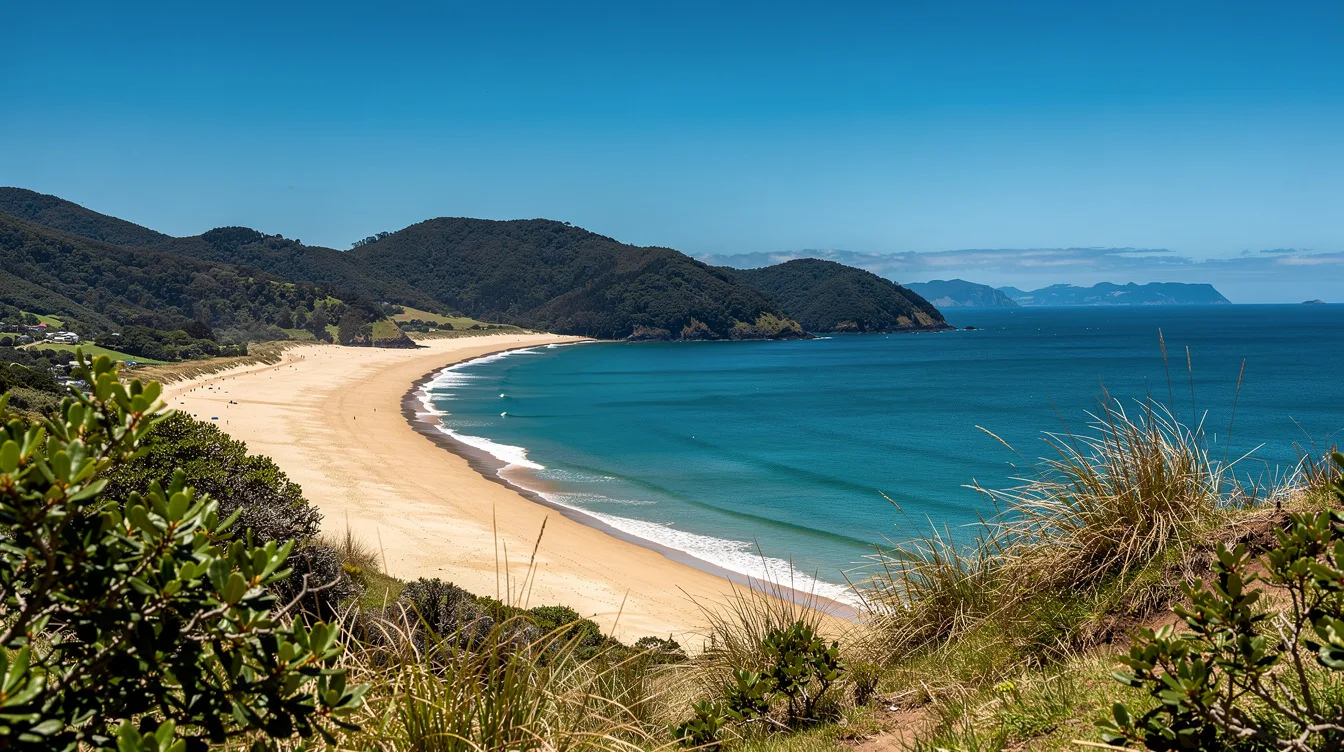
Its headline beach is Onetangi Beach, a 1.2-mile strip of north-facing sand where a walk can take as long as you want it to. This isn’t a beach for rushing between attractions. It’s where you kick off your shoes and let the waterline decide the afternoon.
Onetangi gives the island room to breathe
At 1.2 miles long, Onetangi is Waiheke’s longest beach. You can walk its full curve with the sea on one side and the hills behind you, then turn around because the view changes with every few steps.
But it isn’t empty wilderness. Public facilities and free barbecues make it easy to settle in, and the sand is known for annual sandcastle contests. The western end can be inaccessible at high tide, so don’t assume every stretch will stay open.
You’ll find swimming beaches at Oneroa and Palm Beach too. Onetangi is the better choice when you want space, though, because its long shore feels built for walking rather than simply arriving and sitting down.
Waiheke is close to Auckland, but it doesn’t feel urban
Waiheke Island is the second-largest island in the Hauraki Gulf, and it has a noticeably slower pulse than Auckland. Rolling hills, olive groves, galleries, and broad water views take over soon after the ferry docks.
And that contrast is the point. You can leave downtown in the morning, take the passenger ferry to Matiatia, and spend the day somewhere that feels rural without needing a complicated transfer.
The ferry is practical for day visitors, while public buses, taxis, rental cars, bikes, and tours connect Matiatia with beaches and vineyards. But check the operator timetable before you go, especially on weekends and holidays.
62.1 miles of paths make a beach day optional
The Te Ara Hura network links about 62.1 miles of walking routes around the island. That gives you a real choice: stay close to the water, or trade the beach for a longer look at Waiheke’s hills and bays.
And you don’t need to commit to a major trek. The coastal section from Matiatia ferry terminal toward Oneroa is a shorter option, which works well if you want to walk before coffee or lunch.
It’s an island that rewards leaving gaps in your schedule. A trail can pull you away from the beach, then a sea view can pull you back. But the network is extensive enough that you should choose one route rather than trying to conquer it all.
Can you fit beach, wine, and walking into one day?
Yes, if you keep the plan modest. Start at Matiatia, spend time in Oneroa Village, choose two wineries, then make Onetangi your final stop. Trying to fit five or six tastings into the same day turns the island into a transport schedule.
Waiheke has more than 50 wineries, with a warmer and drier microclimate that suits reds, especially Syrah and Bordeaux-style blends. Mudbrick, Cable Bay, Stonyridge, Tantalus, Te Motu, and Man O’ War are among the better-known stops.
But a long vineyard lunch is often the smarter move. You’ll enjoy the food and the setting more when you’re not watching the clock, and a wine tour or hop-on-hop-off service saves you from driving after tastings.
Choose your season according to the day you want
December through February brings the best beach weather, but it also brings busier and generally pricier days. If swimming is the whole plan, that trade-off may be worth it.
And March through May works especially well for vineyards and harvest atmosphere. Crowds are more comfortable, so you can pair a walk with lunch and still feel like you’ve escaped Auckland for more than a few hours.
Spring is greener and quieter for hiking, while winter is peaceful but less reliable for swimming. You don’t need perfect weather for Waiheke, but you should be honest about what you came for.
Make the return ferry part of the plan
The easiest first visit is Oneroa, a vineyard lunch, and Onetangi. It gives you the island’s beach-and-wine appeal without asking you to race across every corner of it.
And if you stay one or two nights, the ferry ride stops feeling like a deadline. By the time you head back toward Auckland, the beach sand has dried on your feet and the harbor light has begun to soften.