
Storybook library playroom ideas for little readers work best when books are within reach, seating feels soft, and the room invites a child to stay awhile. I once bought matching bins before planning where anyone would read. Wrong order. Start with the reading spot, then let storage build around it.
- Build the Book-Facing Wall (for a home library playroom)
- Layer a Floor Nest for a kids reading room
- Paint a Pink Ground Reading Alcove
- Try the Two-Wood Rule With Open Shelves
- Hang a Canopy That Makes Reading Feel Private
- Skip Toy Mountains and Use Low Library Bins
- Use the Three-Height Light Stack
- Frame a Window Seat With Book Covers
- Can a Tiny Library Playroom Hold a Real Reading Chair?
- Float a Twin Bed Beside the Library Playroom
- Mix Old Picture Books With New Storage
- Make the Reading Ladder Earn Its Space
- Choose Curtains Over a Busy Feature Wall
- Anchor the Make-Believe Corner With a Play Rug
- Build the Cover-Out Rule Into Every Shelf
- Add a Map Mural, Not a Cartoon Parade
- Let a Book Cart Follow the Child
- Give the Room One Grown-Up Detail
1Build the Book-Facing Wall (for a home library playroom)
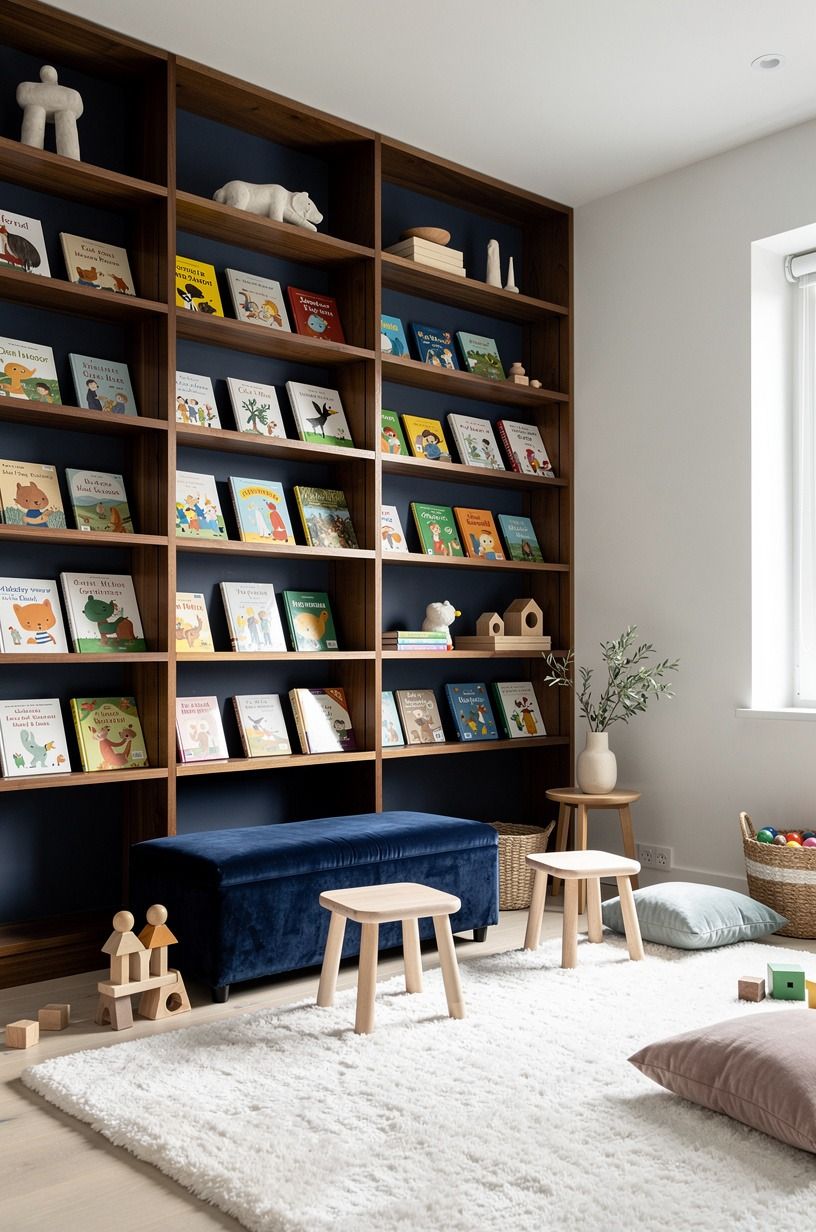
Put your most-loved covers front-facing on IKEA MOSSLANDA picture ledges so your child can choose a book without pulling out a whole shelf. You’ll want the lowest ledge at child height, around 36 to 48 in, because the point is independence.
Keep the wall calming with Benjamin Moore Hale Navy HC-154 behind the books. I’d skip rainbow-sorted spines here, since a busy wall can make a small reading corner feel like a classroom.
Add a narrow walnut bench beneath it, then borrow more layout ideas from this under-stairs playroom guide. Your child gets a library that feels close, warm, and usable every day.
Typical cost by tier (US averages):
2Layer a Floor Nest for a kids reading room
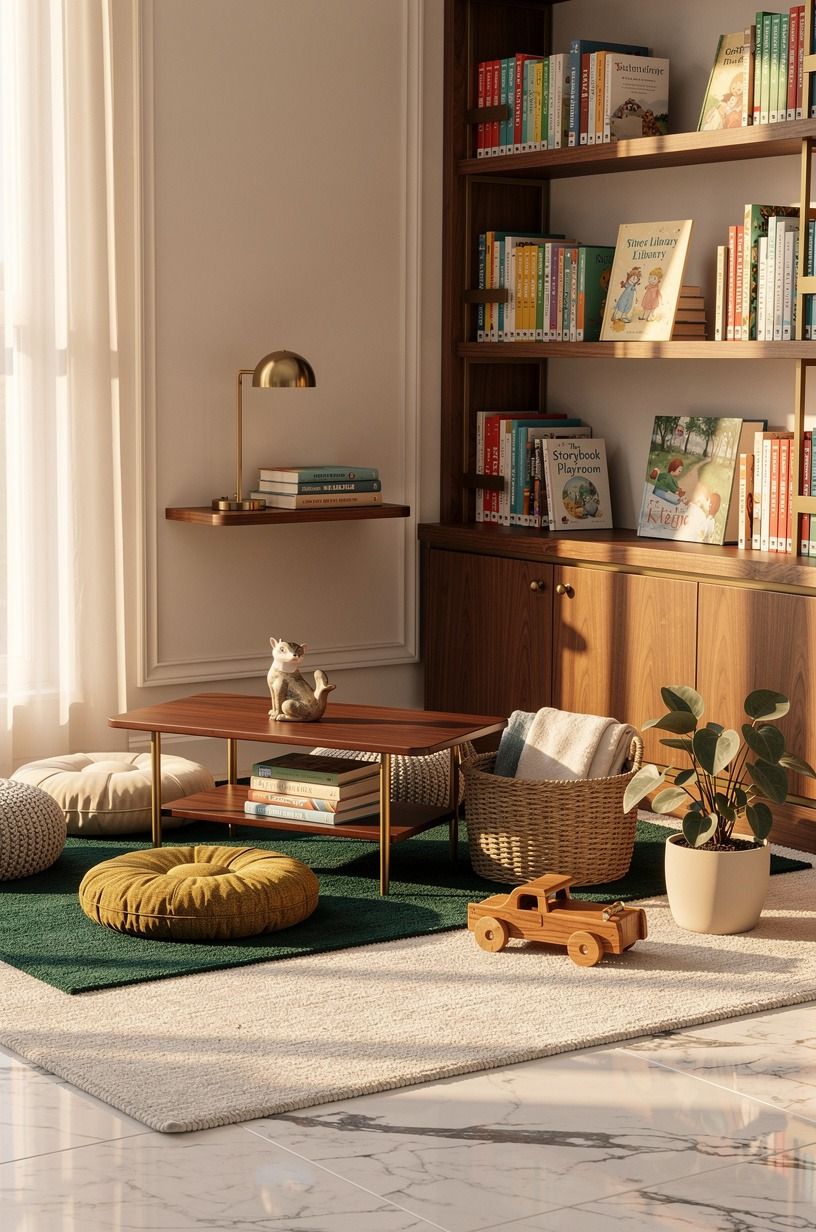
Start with a 5×7 ft cotton play rug and make it the soft landing zone for books, blocks, and sleepy afternoon reading.
3Paint a Pink Ground Reading Alcove
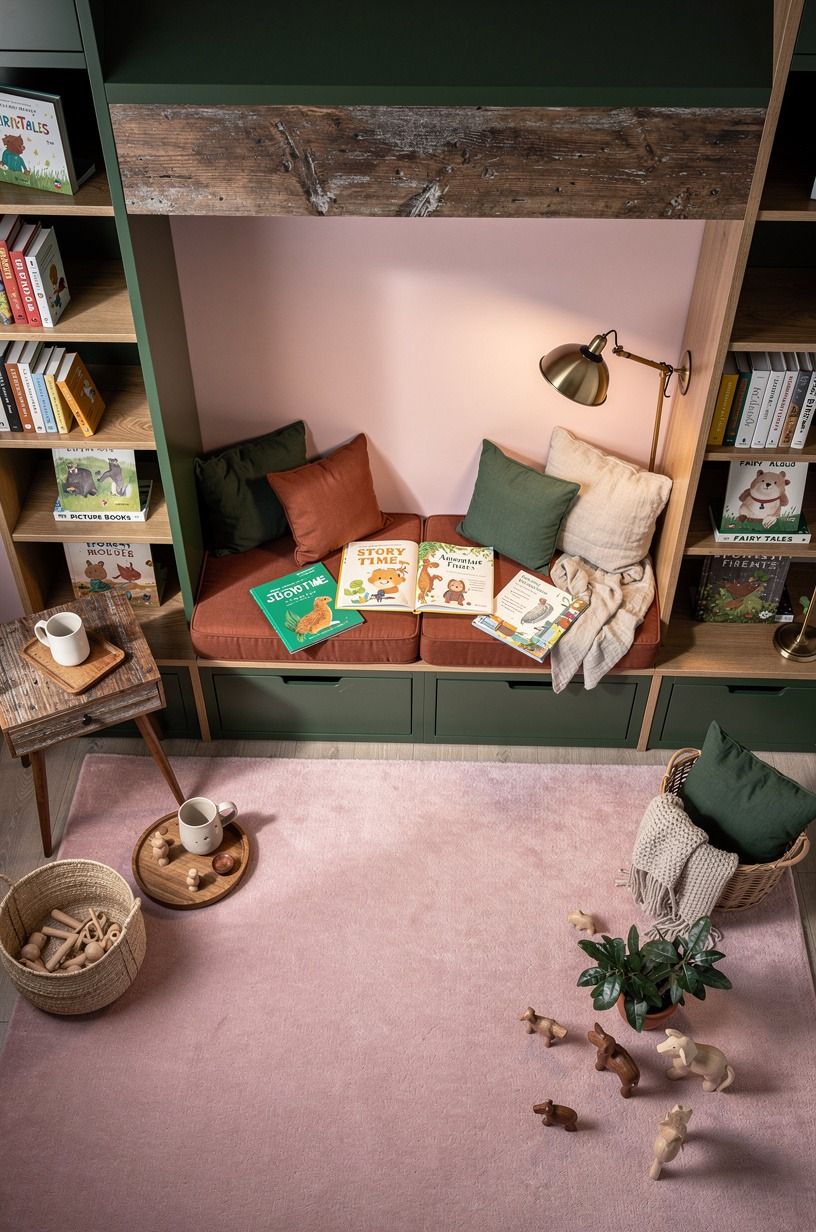
A reading nook deserves its own weather. Farrow & Ball Studio Green No. 93 gives an alcove a deep, cocooning feel that works beautifully beside natural oak and rust-toned accents.
Paint only the recess, not every wall. You’ll get a bold little destination without making your whole library playroom feel boxed in. But don’t pair it with icy white trim, which can turn the color chalky.
Choose a Target Pillowfort natural wood bookcase nearby, then echo the color with one faded rust cushion. Your child will read there because it feels like their own small room inside the room.
4Try the Two-Wood Rule With Open Shelves
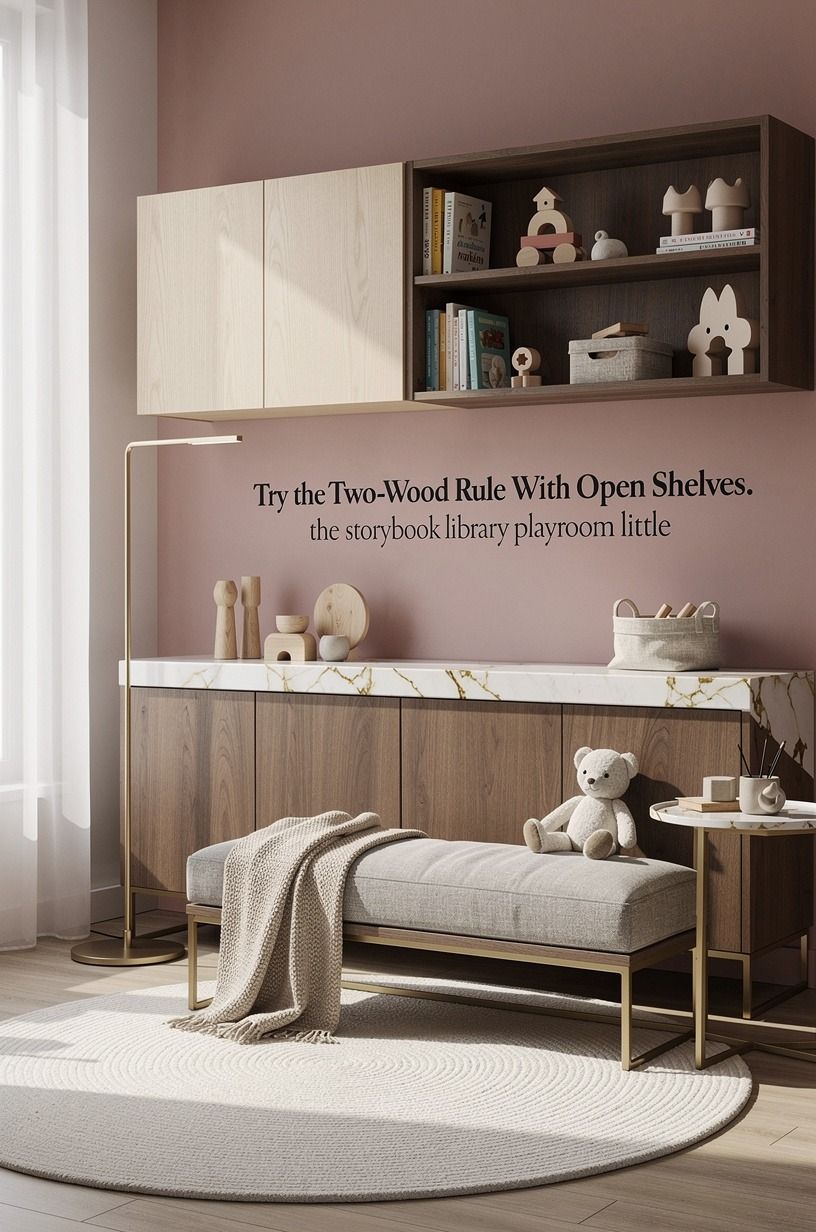
The Two-Wood Rule is simple: use one pale wood and one darker wood, then stop.
5Hang a Canopy That Makes Reading Feel Private
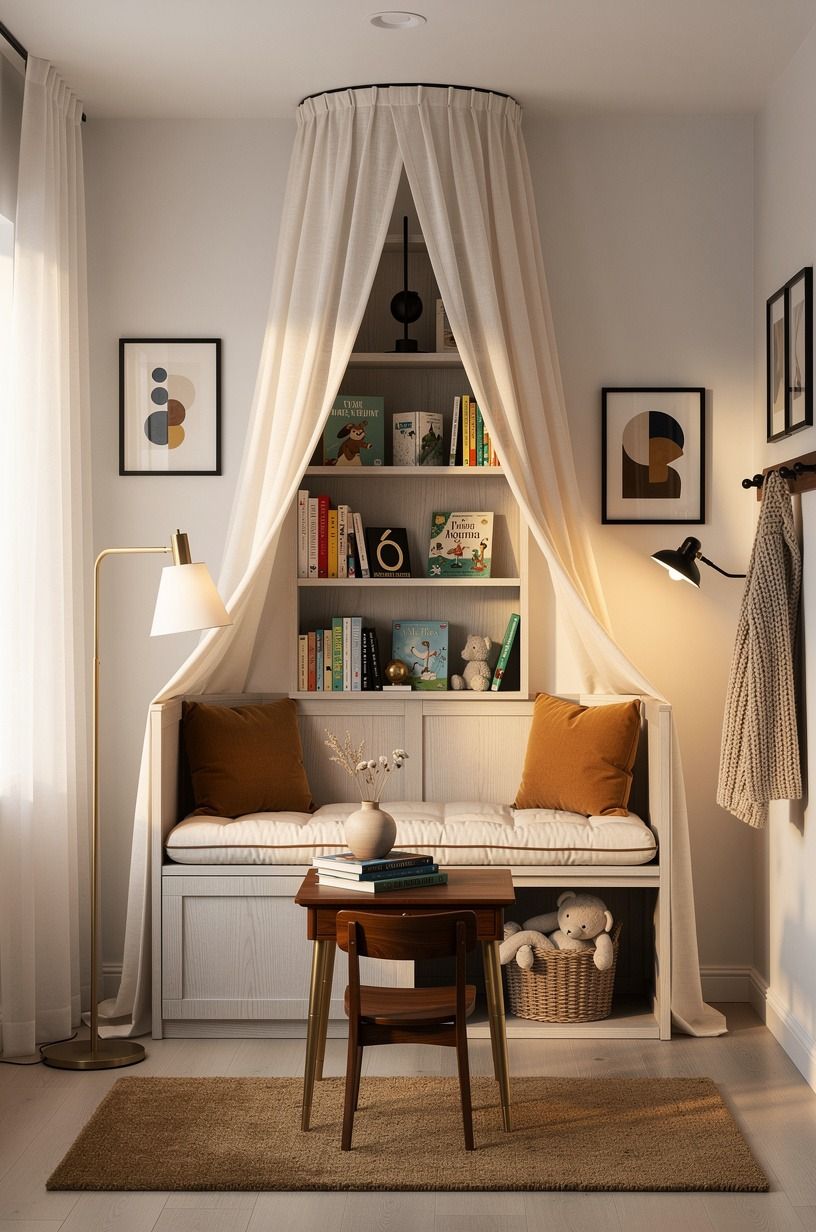
A ceiling-hung cotton voile canopy can turn an ordinary corner into the spot your child asks to visit after bath time. Keep it airy, not overly frilly, with a soft cream fabric and a low reading mattress.
You’ll want the canopy outside the path of a door or toy shelf. And use a tension-mounted option if you’re renting, because holes in the ceiling are a terrible trade for a temporary room.
Underneath: a slim lamp, three board books, one stuffed fox. That’s enough! The tiny boundary gives your child a serene place to settle without shutting them away.
6Skip Toy Mountains and Use Low Library Bins
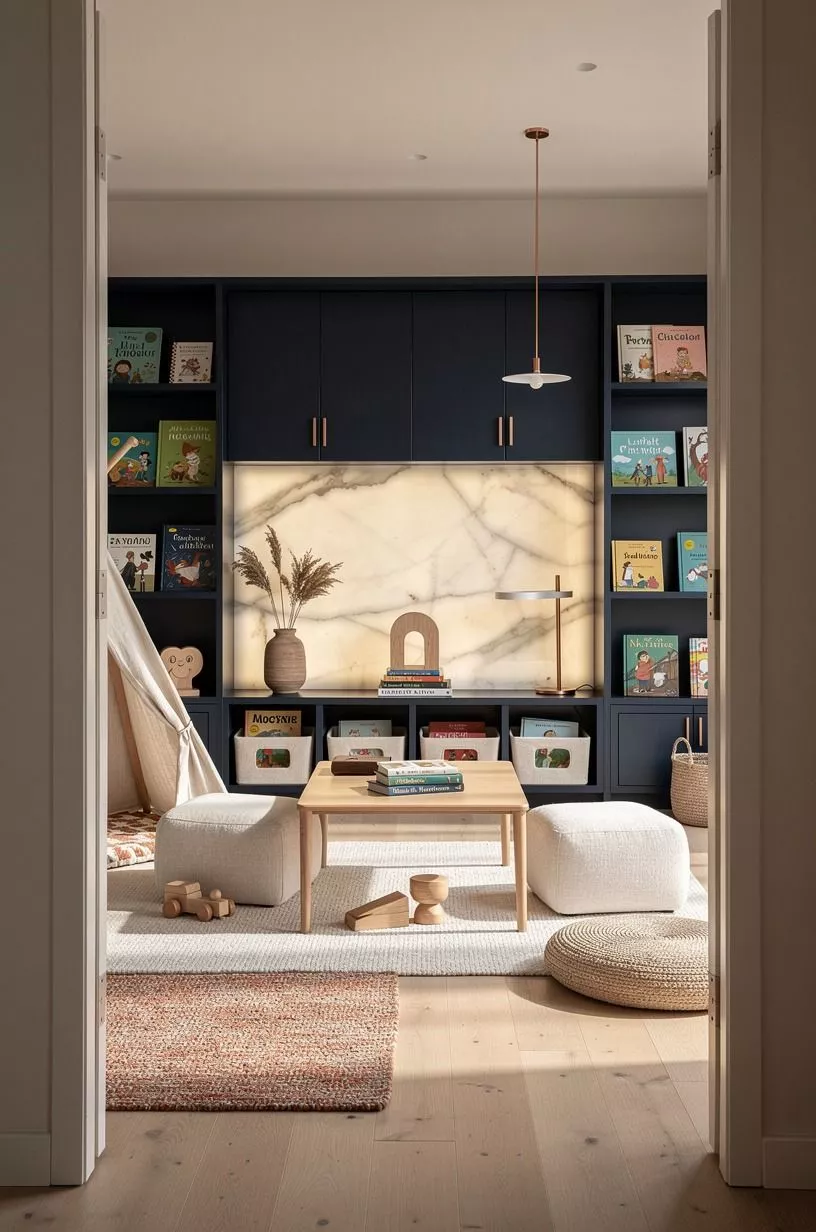
Books should win the first glance, while toys can live lower in backlit translucent onyx storage bins. I’d skip clear plastic tubs in the reading zone because their visual noise makes every book cover fight for attention.
Give each bin one job: dress-up pieces, wooden animals, building parts. Your child can help reset the room because the choices are obvious, even if the reset lasts only seven minutes.
Try a Studio McGee x Target cube bin in one muted color, then leave one cube empty. That empty cube matters. It gives your eyes a pause and makes the whole library playroom look more peaceful.
7Use the Three-Height Light Stack
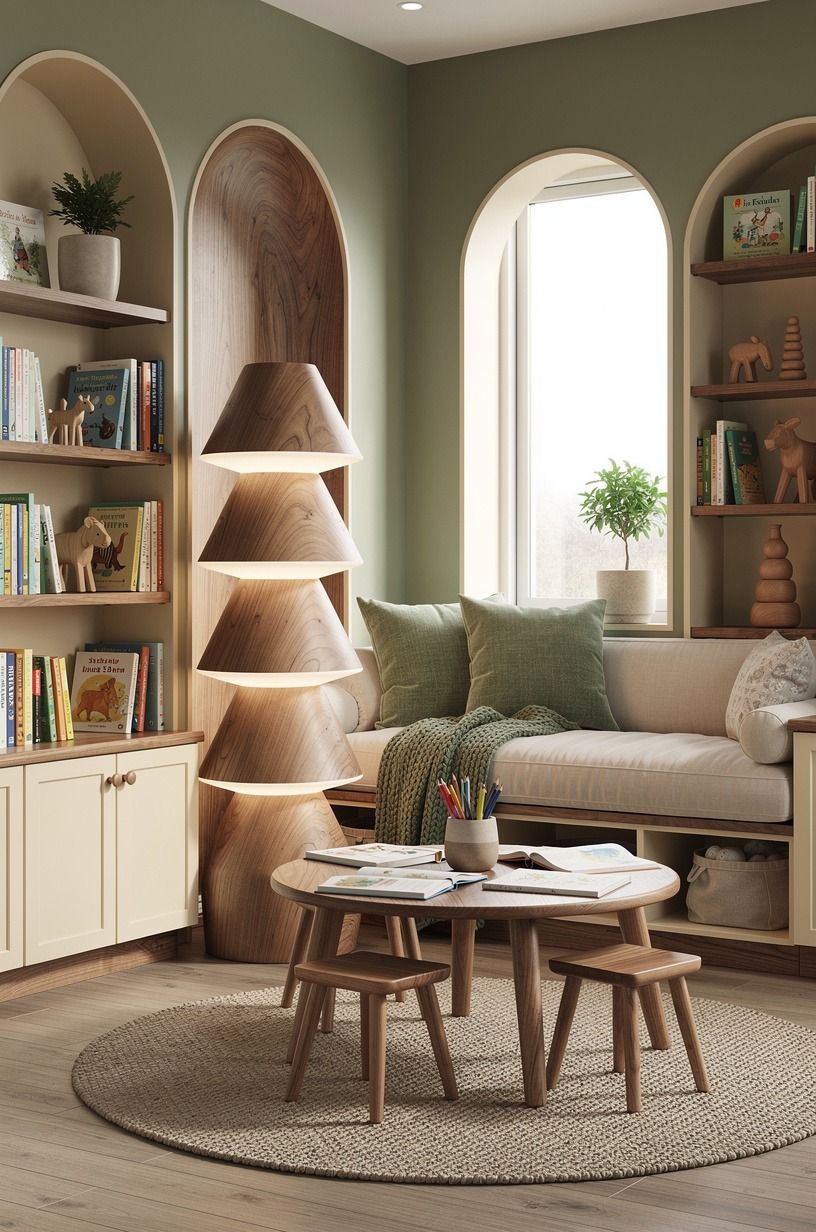
The Three-Height Light Stack means one ceiling light, one lamp at chair height, and one small glow near the floor.
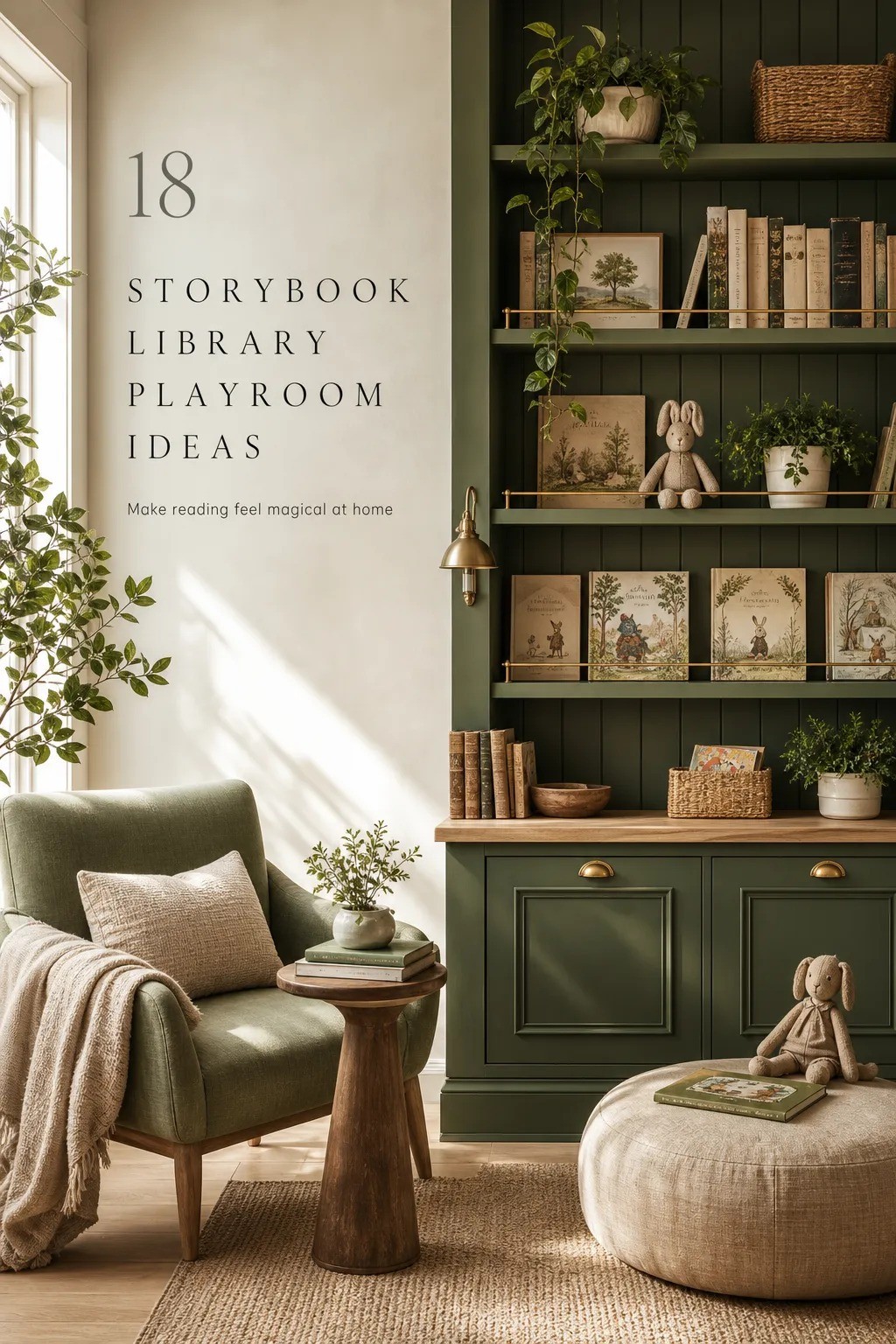
8Frame a Window Seat With Book Covers
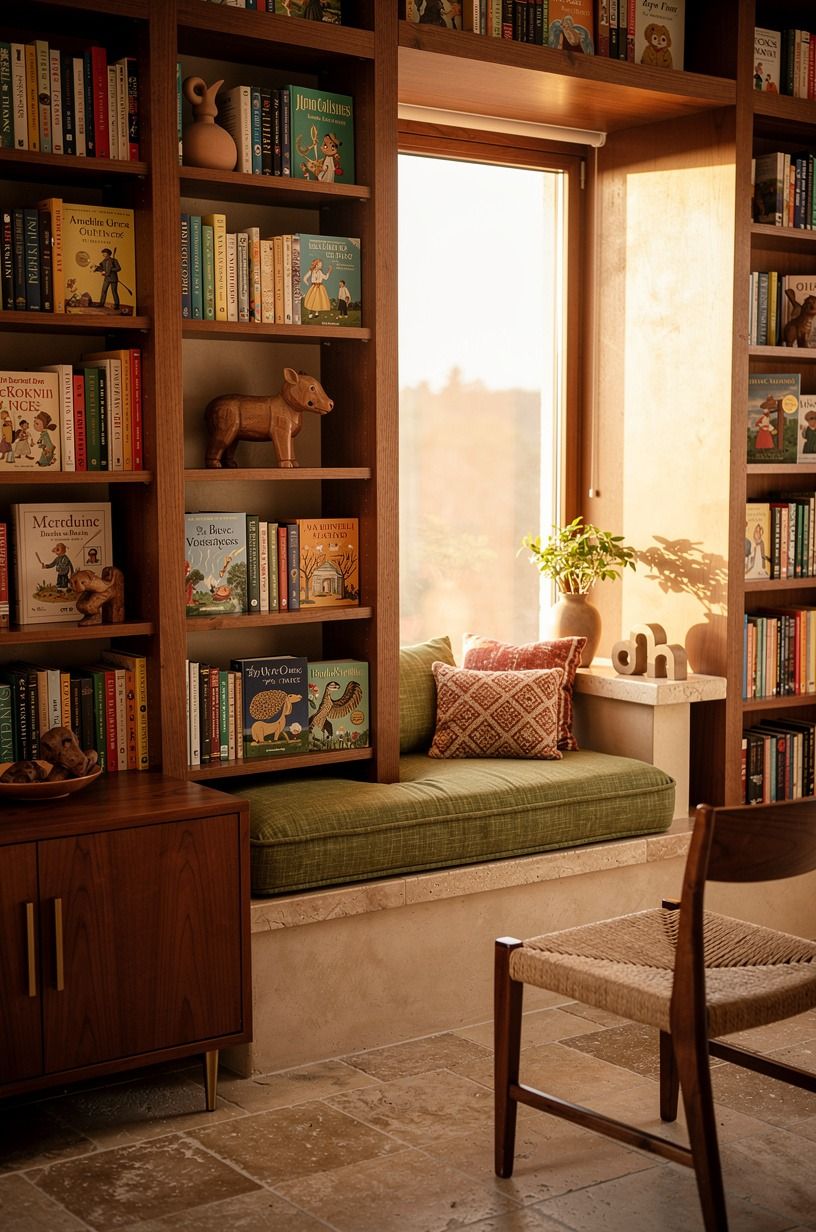
If you have a low window, frame it with pine book ledges and a firm bench cushion in washable fabric. Your child gets daylight, a view, and a place to flip pages before dinner.
Keep the cushion depth modest so the window still feels open. I prefer warm travertine accents over slick faux velvet here, since they add quiet texture without making the nook feel fussy.
Use a pair of curtains in Sherwin-Williams Open Air SW 6491 nearby if you want a blue note without committing to blue walls. You can find more small-space inspiration in this little Broadway village story.
9Can a Tiny Library Playroom Hold a Real Reading Chair?
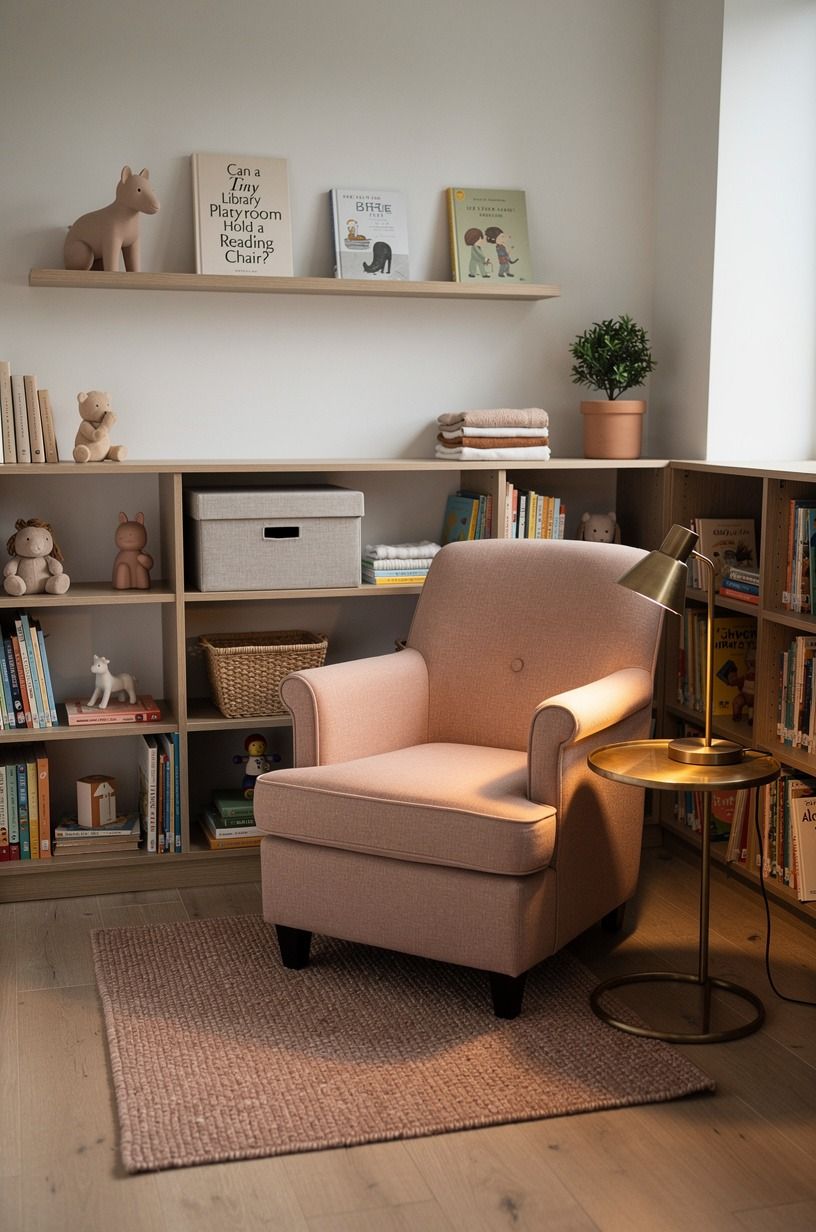
Yes, if you choose a chair with a compact footprint and place it beside, rather than in front of, storage.
10Float a Twin Bed Beside the Library Playroom
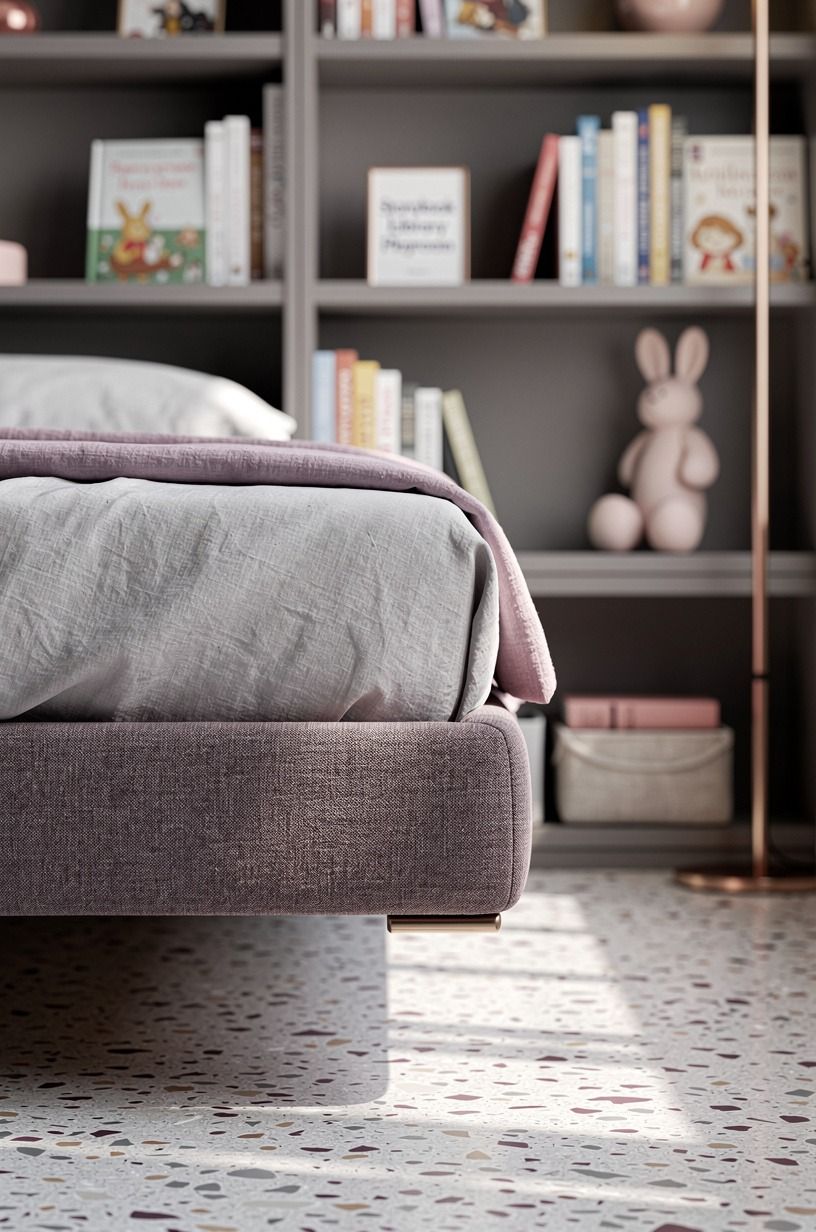
A twin bed measures 38×75 in, which leaves little forgiveness in a shared playroom. Float the bed along one long wall, then reserve the opposite wall for a HEMNES bookcase and reading rug.
Use washed Turkish cotton bedding in plum, soft grey, or muted rose. I’d avoid character bedding as the room’s main pattern because it dates the whole space faster than your child outgrows the character.
Place books at the foot of the bed in a low crate, then let the upper shelf hold grown-up-only art supplies. Your layout stays practical, and bedtime reading doesn’t require a room reset first.
11Mix Old Picture Books With New Storage
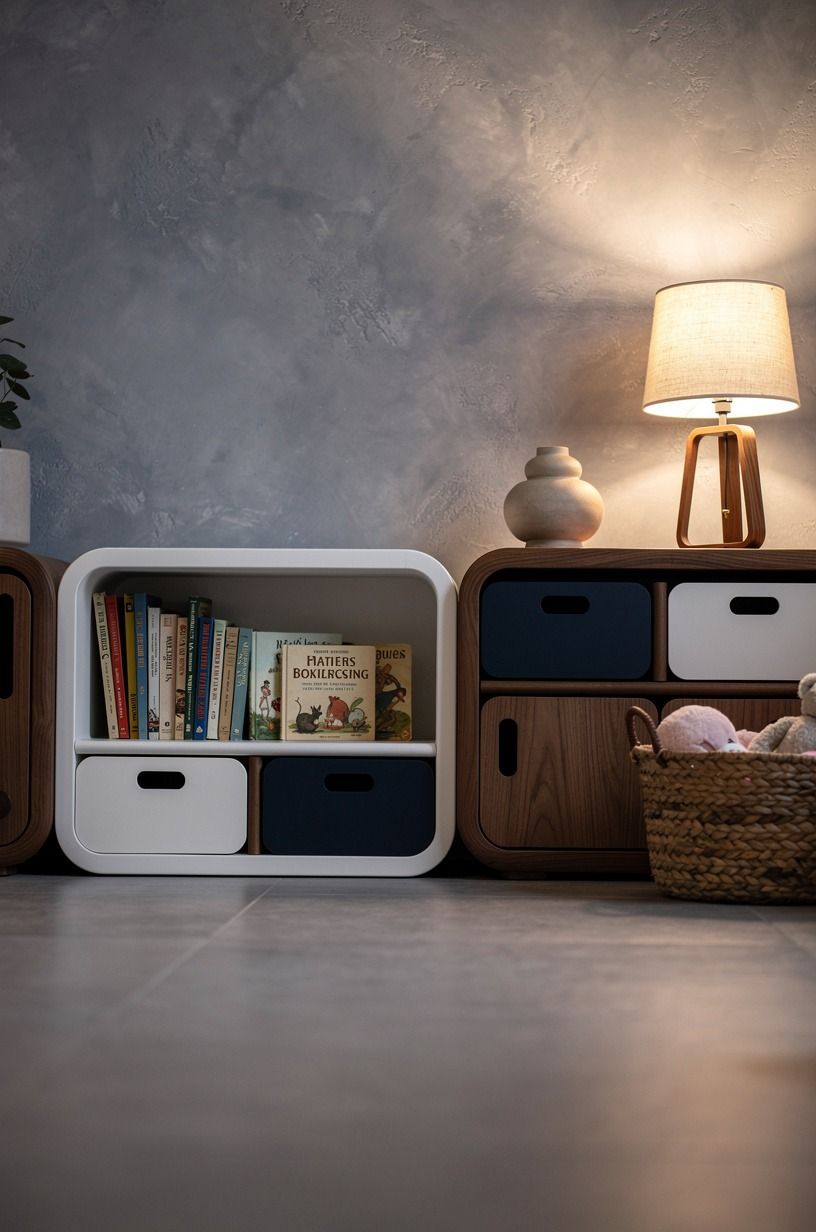
A storybook playroom gets more character when it includes a few worn hardcovers, framed family pages, and one practical modern storage piece. Article Lenia oak shelving can sit beside thrifted books without looking staged.
You don’t need every book to match. The faded reds, mossy greens, and old paper edges are what make the room feel lived-in. But remove damaged books that shed pages, because nostalgia isn’t worth a mess.
Try a small stack on a low table, covers facing up. Your child can touch them, and you can rotate them with the seasons without buying a single new object.
12Make the Reading Ladder Earn Its Space
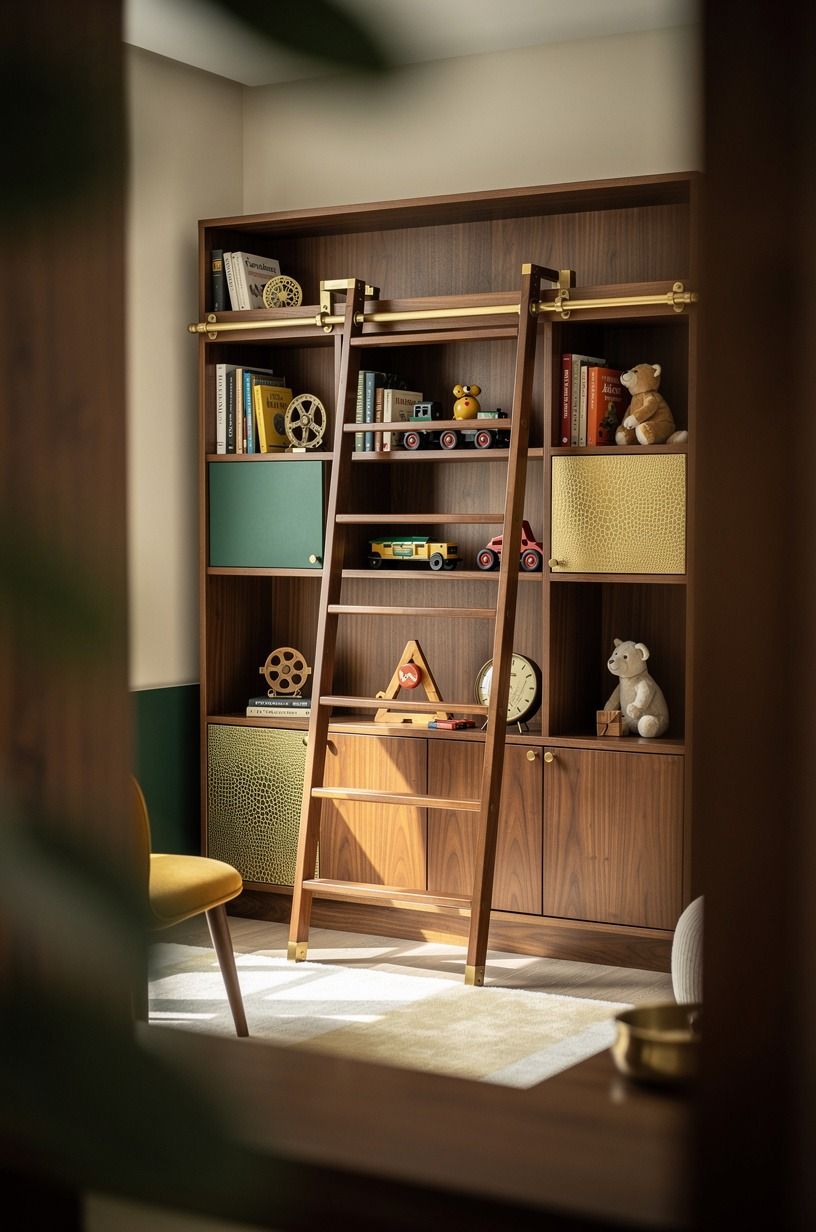
A rolling library ladder is dramatic, sure, but it’s rarely smart in a child’s room.
13Choose Curtains Over a Busy Feature Wall
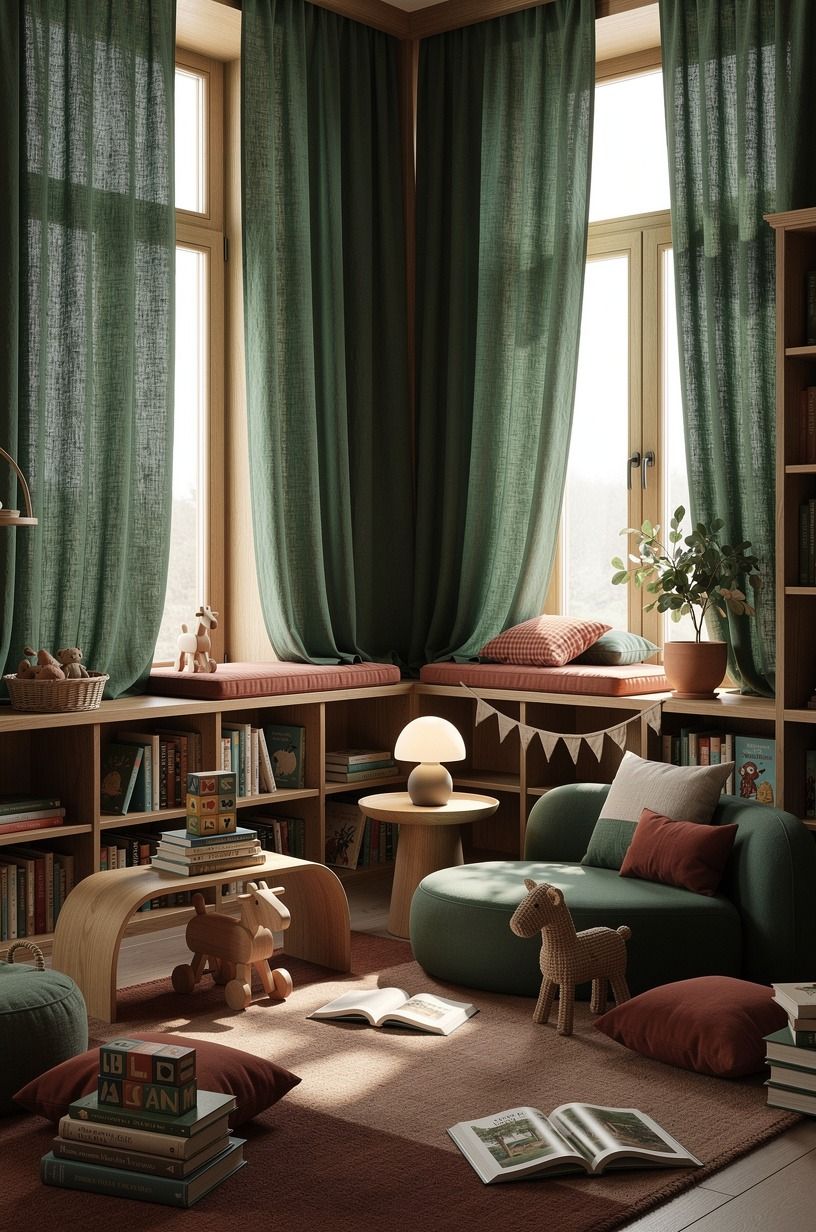
Curtains are the better move over a busy feature wall if your room needs warmth and sound softness. Blackout Belgian linen curtains can cost $40 to $150, and they make nap time less of a negotiation.
Hang them high and wide so the window feels taller. You’ll get a more refined look than short panels perched right at the glass.
I’d skip a giant vinyl quote on the wall. It tells the story before your child gets to. Instead, let patterned curtains, book jackets, and a brass curtain rod bring the room’s visual rhythm.
14Anchor the Make-Believe Corner With a Play Rug
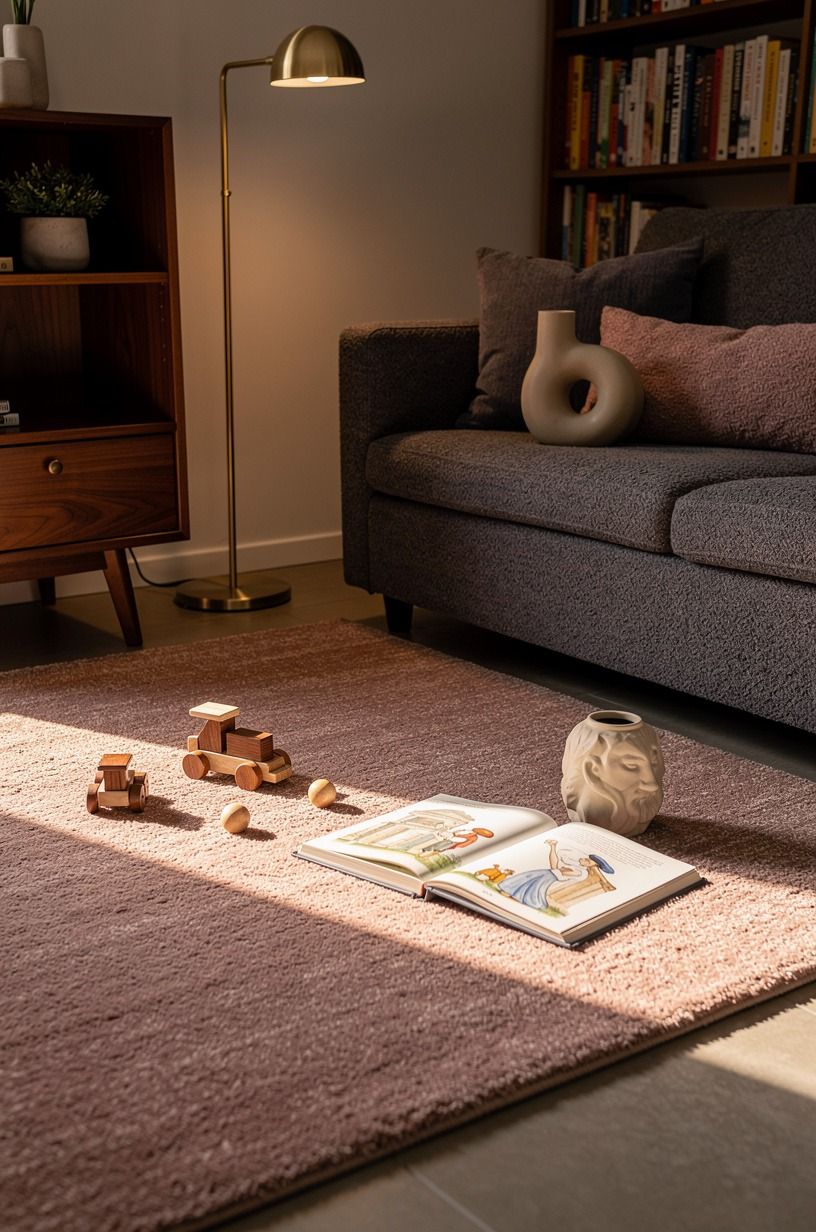
A play rug tells your child where building, drawing, and sprawling belong.
15Build the Cover-Out Rule Into Every Shelf
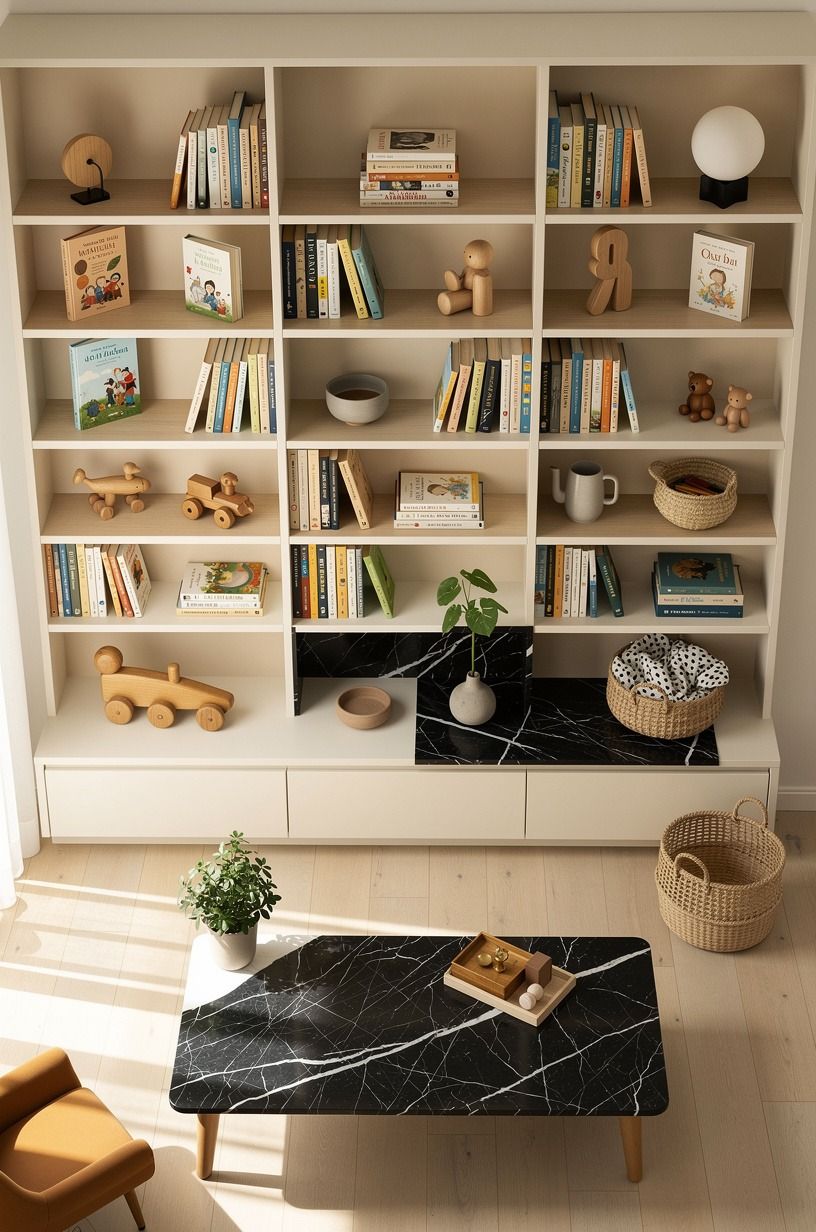
The Cover-Out Rule means showing a few book covers face-forward, then filing the rest spine-out. Your child sees choices immediately, and you don’t have to sacrifice every inch of storage.
Use cane-webbing wall pockets for thin picture books and a deeper shelf for chapter books. I’ve found that too many front-facing covers can make selection harder, not easier.
Rotate five or six titles after a library visit. You’ll keep the shelf fresh without spending money, and the room will stay charming instead of looking like a retail display.
16Add a Map Mural, Not a Cartoon Parade
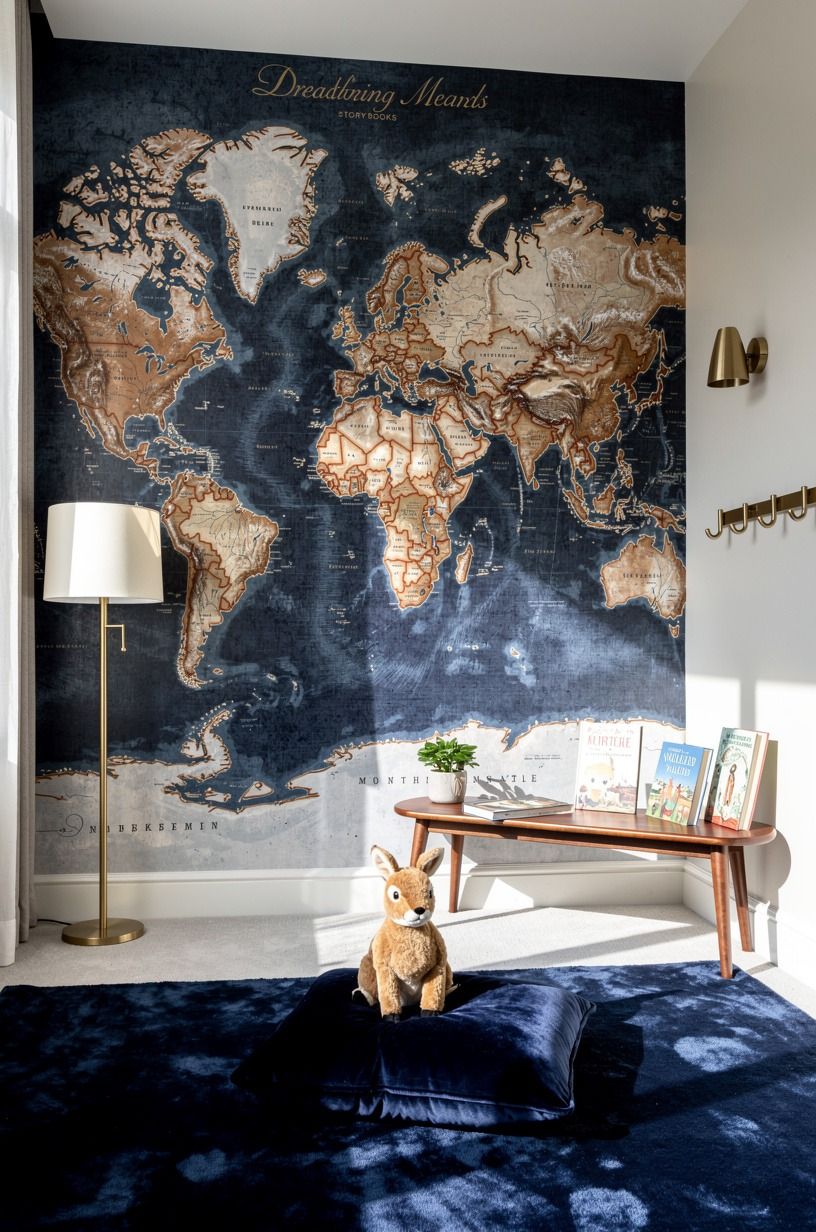
A hand-painted map or soft landscape mural can make a kids reading room feel like a place where stories begin.
17Let a Book Cart Follow the Child
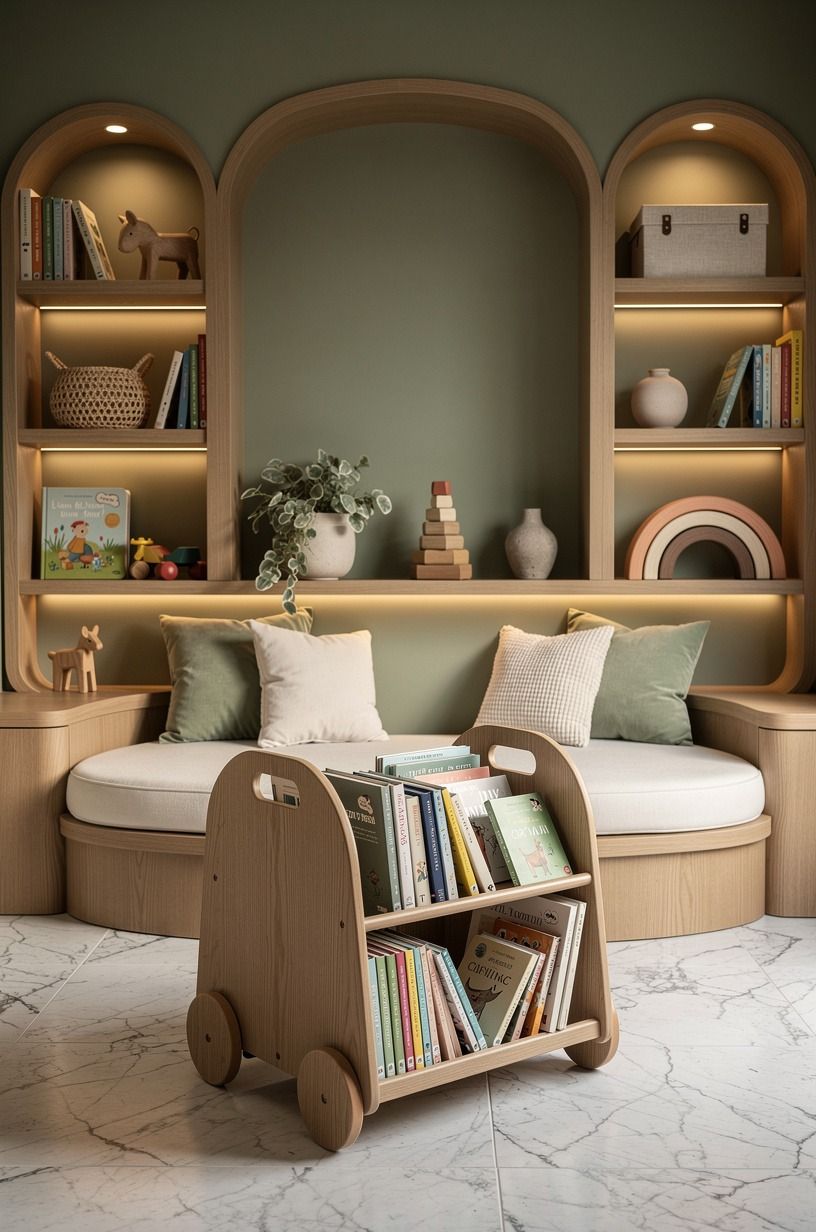
A book cart works because it follows real life. Roll a three-tier IKEA RÅSKOG cart from bedroom to playroom, then fill it with library books, a blanket, and one small reading light.
Keep the top tier almost empty. You’ll need a place to set down the book your child suddenly abandons for a dinosaur emergency.
I’d choose a cart over another fixed shelf in a rental or shared room. It’s flexible, it’s cheap compared with built-ins, and your child can claim it as their own little traveling library.
18Give the Room One Grown-Up Detail
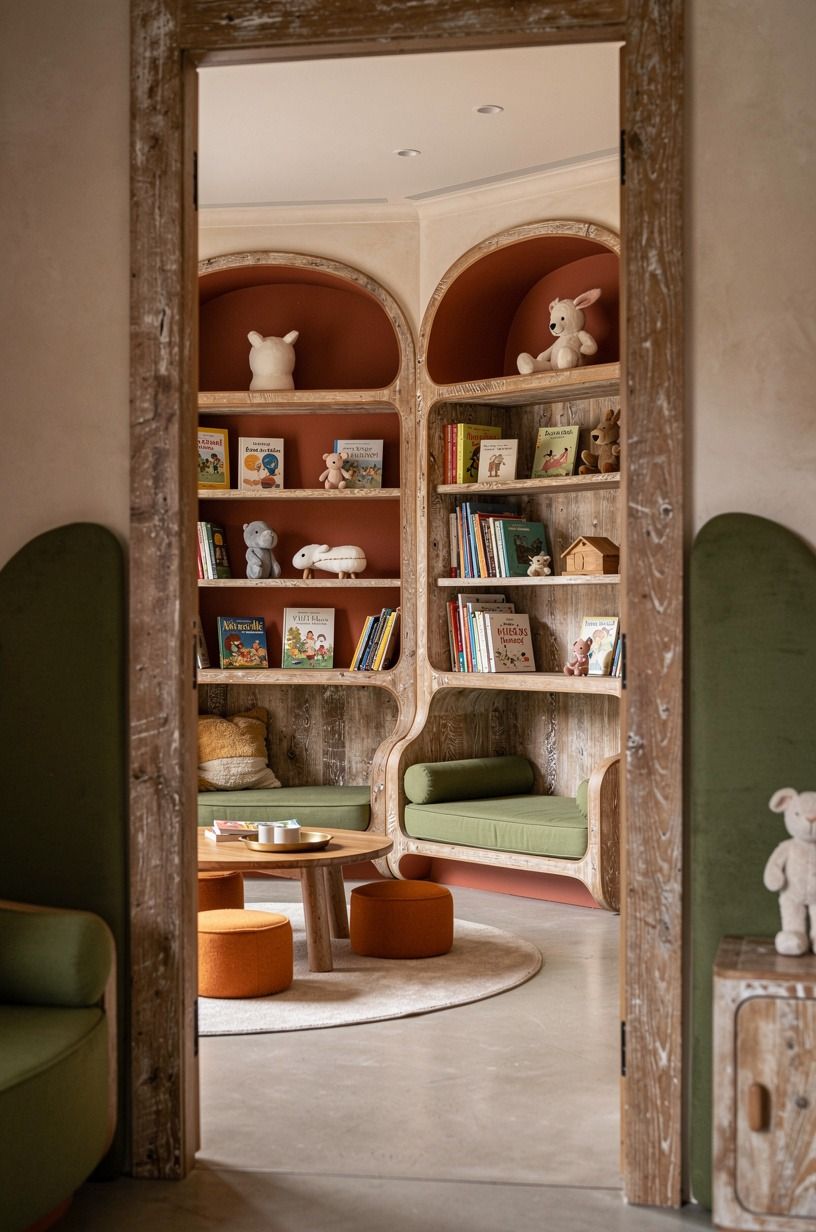
Every storybook library playroom needs one element that isn’t child-sized: a framed print, a reclaimed weathered teak side table, or a small vintage lamp placed safely out of reach. It keeps the room from feeling disposable.
Your child won’t care about the lamp’s patina today. You will. And that matters, because you’re more likely to maintain a room that gives you something back too.
Choose one grown-up detail, not five. A Pottery Barn Kids woven shade can be the quiet anchor, while too much polish makes play feel like a photo shoot.
Why I Think Reading Rooms Matter More Than Perfect Playrooms
I used to think a playroom had to contain everything. Every toy category, every art supply, every oversized plastic thing that arrived with a birthday or a well-meaning relative. The room looked full, which I confused with successful.
It wasn’t successful. It was loud, hard to reset, and nobody stayed there for long unless I was actively managing the mess.
What changed my mind was watching a child choose the same small corner over a much larger toy area. There was a floor cushion, a basket of books, and a lamp that made the late afternoon feel softer.
Nothing expensive. But that corner had a purpose, and kids read purpose better than adults do. They know where they can sprawl, where they can whisper, and where they can bring a book they’ve asked to hear four nights in a row.
I don’t think every family needs built-ins or a mural. I do think children deserve a place where books aren’t stored like supplies.
Put them where little hands can reach them. Let the room look a bit imperfect after an afternoon of reading.
A bent cushion, a book left open, a blanket half on the rug. That’s evidence the room worked.
And yes, your home can still look like yours. The best version has a child’s point of view and an adult’s restraint.
Fewer toys on show. Better light.
Books with worn covers. The room doesn’t need to perform for visitors.
It needs to make your child want one more chapter.
A Few Things Worth Answering
What is the best storybook library playroom idea for a small room?
A front-facing book wall is the best choice because it uses vertical space while keeping books visible. IKEA MOSSLANDA ledges take up very little depth, and your child can choose titles without moving heavy furniture.
Where can I buy storybook library playroom pieces on a budget?
Start with IKEA, Target, Wayfair, then check Facebook Marketplace for solid wood shelves. Secondhand bookcases often need only cleaning and paint, while your child gets a room with more character than flat-pack furniture alone.
How much does a storybook library playroom makeover cost?
A basic makeover typically costs about $150 to $600 if you use paint, bins, decals, and a rug. Low-cost storage is the place to save, while you can spend more later on a durable chair or shelving.
Can I create a storybook library playroom on a budget?
Yes, and you can begin with what you own. Free book rotation, a moved floor lamp, and a basket from another room can create a reading corner before you buy anything. Your child only needs a clear invitation to sit.
Is a storybook library playroom worth it in a small space?
Yes, because a small room makes zones easier to define. One focused reading corner helps your child settle, especially when the shelf, rug, and lamp sit close together instead of scattered around the room.
Is a storybook library playroom a good idea for a rental?
Yes, if you use removable choices. Peel-and-stick wallpaper, tension rods, and freestanding shelves let you build warmth without losing your deposit. For more adaptable layouts, browse this under-stairs playroom inspiration.
Where I’d Start First
If I had to pick one, I’d start with the front-facing book wall. You can’t build a reading habit around books your child can’t see. Pin the book wall for later and save this small-space playroom layout for your next room shuffle.