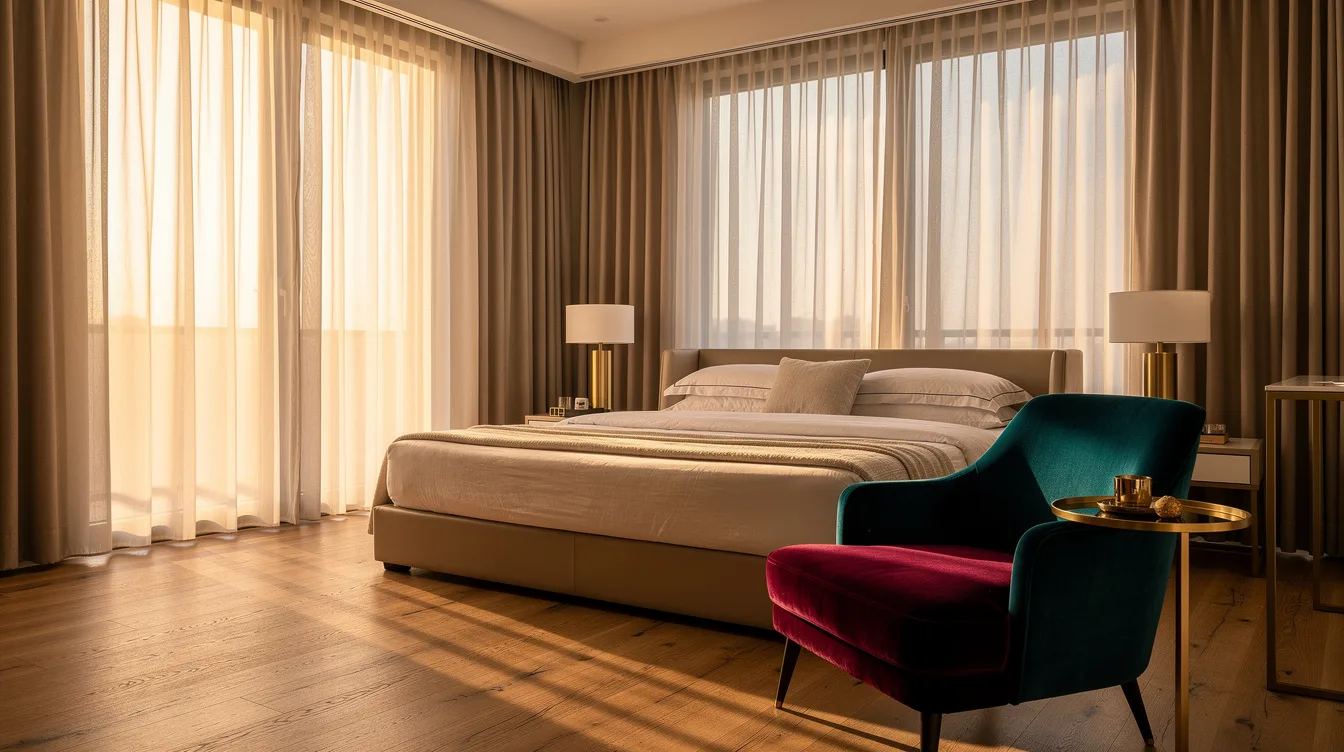
I used to think a hotel bedroom felt polished because of the mattress and expensive lighting, then I noticed the fabric starts at the ceiling and finishes within about 1 cm of the floor. That uninterrupted drop makes even a standard bed wall look taller.
The mistake is treating curtains as window accessories. A discreet double ceiling track, full-width fabric, and a sheer-blackout pairing create the quiet, enclosed feeling that makes a bedroom feel ready for sleep.
Run the Track Across the Entire Wall
A full ceiling track turns an ordinary window wall into a deliberate architectural feature. Run it wall-to-wall, even when the glass occupies only part of the wall, to hide uneven window placement, balcony-door frames, and visual clutter near the ceiling.
For blackout coverage, extend the track roughly 20 to 30 cm beyond each side of the window. That extra overlap blocks the thin stripes of morning light that make bedroom curtains feel more apartment-basic than hotel-ready.
Choose Wave Folds Over Eyelets
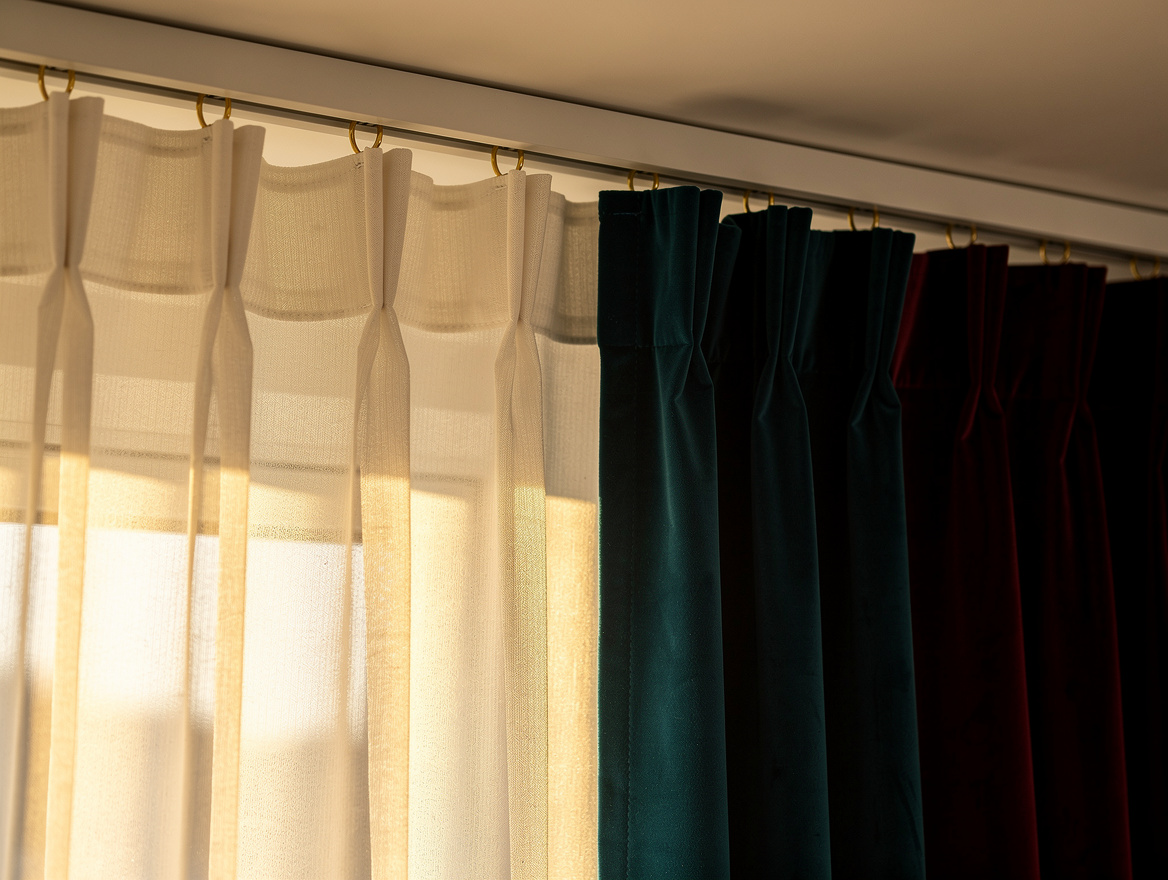
Ask for wave-fold tape, also called ripple fold, when ordering custom panels. Its evenly spaced vertical folds stay neat whether the curtains are open or closed, which gives warm off-white sheers and taupe blackout fabric a tailored boutique-hotel finish.
Eyelet curtains are easy to find, but the visible rings and uneven bunching read more casual. A wave heading costs more in labor than a ready-made panel, yet it is the detail that makes a simple fabric look intentional.
Layer a Sheer With Real Blackout Fabric
Install a front rail for a soft sheer curtain and a rear rail, closest to the window, for blackout drapes. The sheer can stay closed during the day to soften harsh sun while preserving the calm, diffused light people expect from a well-designed hotel room.
Use a true blackout lining rather than a merely dark-colored fabric if you want reliable sleep. In a hot, bright climate, charcoal or taupe blackout panels also make a room feel cooler and more grounded than bright white drapes alone.
Measure From the Finished Track Down
Start at the underside of the installed curtain rail, then measure to about 5 to 10 mm above the floor. With a 2.60 m ceiling, a finished curtain length of roughly 259 to 259.5 cm usually gives the clean near-floor break designers favor.
Do not take the drop from the top of the window, because that leaves a dead band of wall above the fabric. For a 2.80 m ceiling, roughly 279 to 279.5 cm finished panels keep the ceiling line continuous without puddling fabric on a dusty bedroom floor.
Build Enough Fullness Into Every Panel
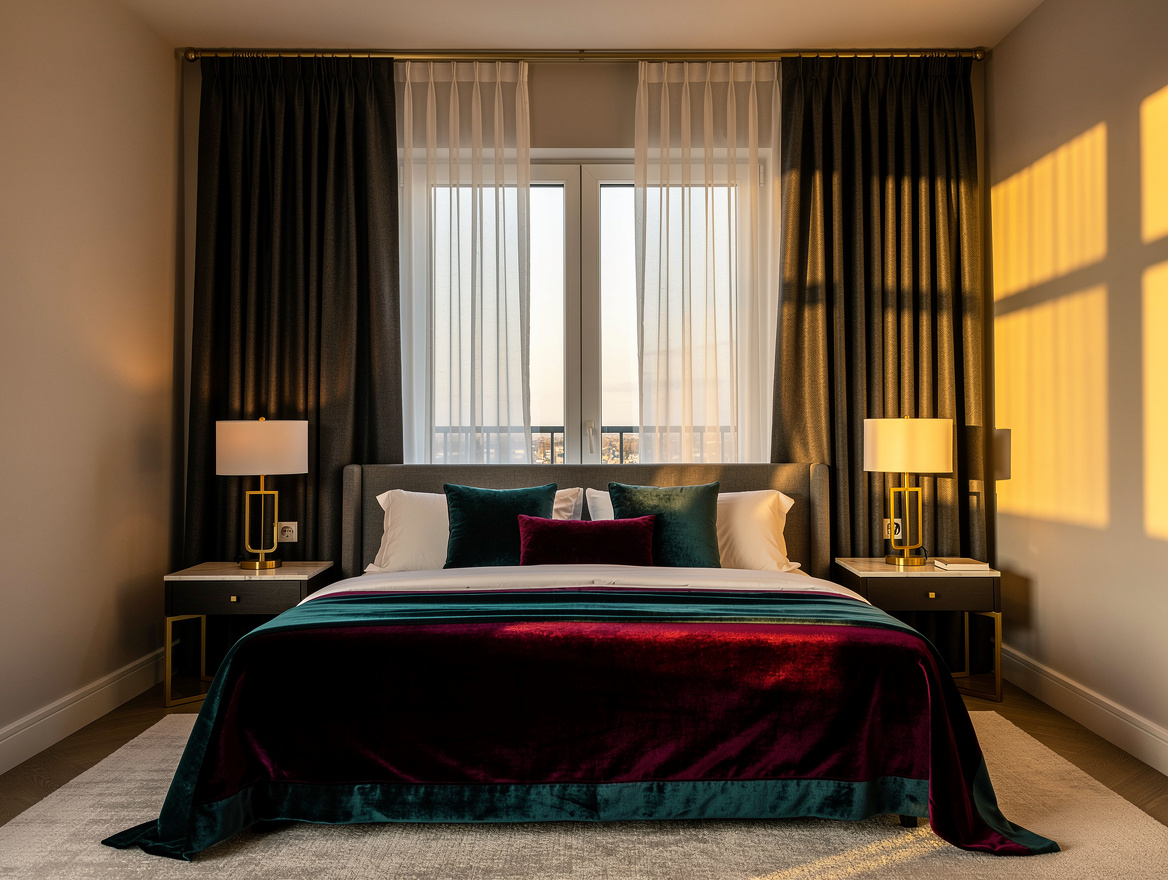
For a ripple-fold curtain, plan roughly 1.8 to 2.2 times the track width in fabric. Sheers need about 2 to 2.5 times fullness so they still look generous in daylight instead of disappearing into a narrow, skimpy stack.
On a 3.6 m bedroom wall, roughly 7.2 to 8 m of fabric per layer creates the right hotel density. Choose a center opening only when the window or door is centered; a one-way draw looks cleaner beside an off-center balcony door.
Leave Room for Tracks and Stacked Fabric
Set the two rails roughly 6 to 10 cm apart so the blackout drapes and sheers glide without catching. A discreet double system, such as IKEA VIDGA, is a practical starting point for a ceiling-mounted installation and avoids the heavy look of a decorative rod.
Plan for the open panels before ordering fabric: stacked curtains typically occupy about 15 to 25% of the track width at the sides. A 4 m wave curtain can take up roughly 70 cm when gathered, so a narrow balcony door needs a clear parking zone.
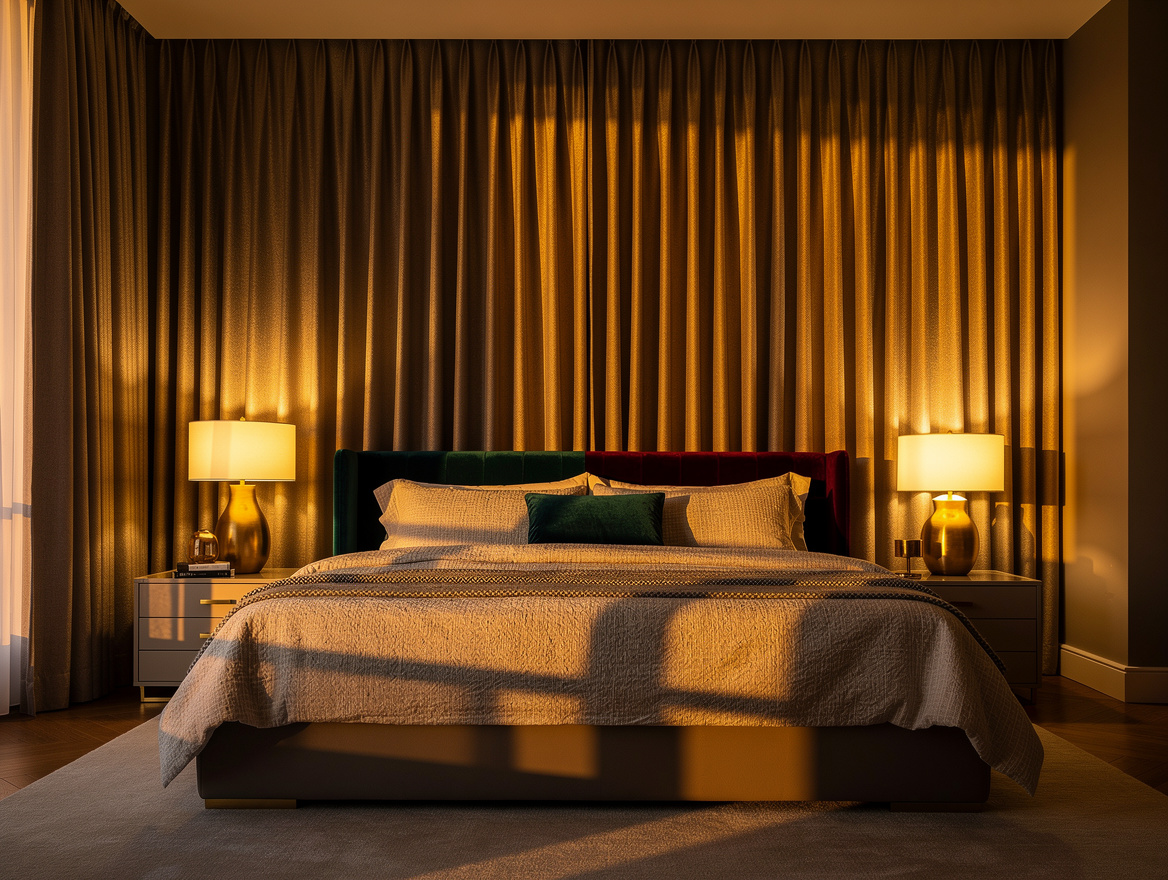
Begin with the track placement, not the fabric color: mark the entire wall width on the ceiling and check where the open panels will stack. Once that line is right, even straightforward off-white sheers and taupe blackout drapes can deliver the hotel effect.
Mia Carter writes about small-space living and budget home makeovers. She has restyled three rentals and tests most ideas in her own 45 sqm flat.