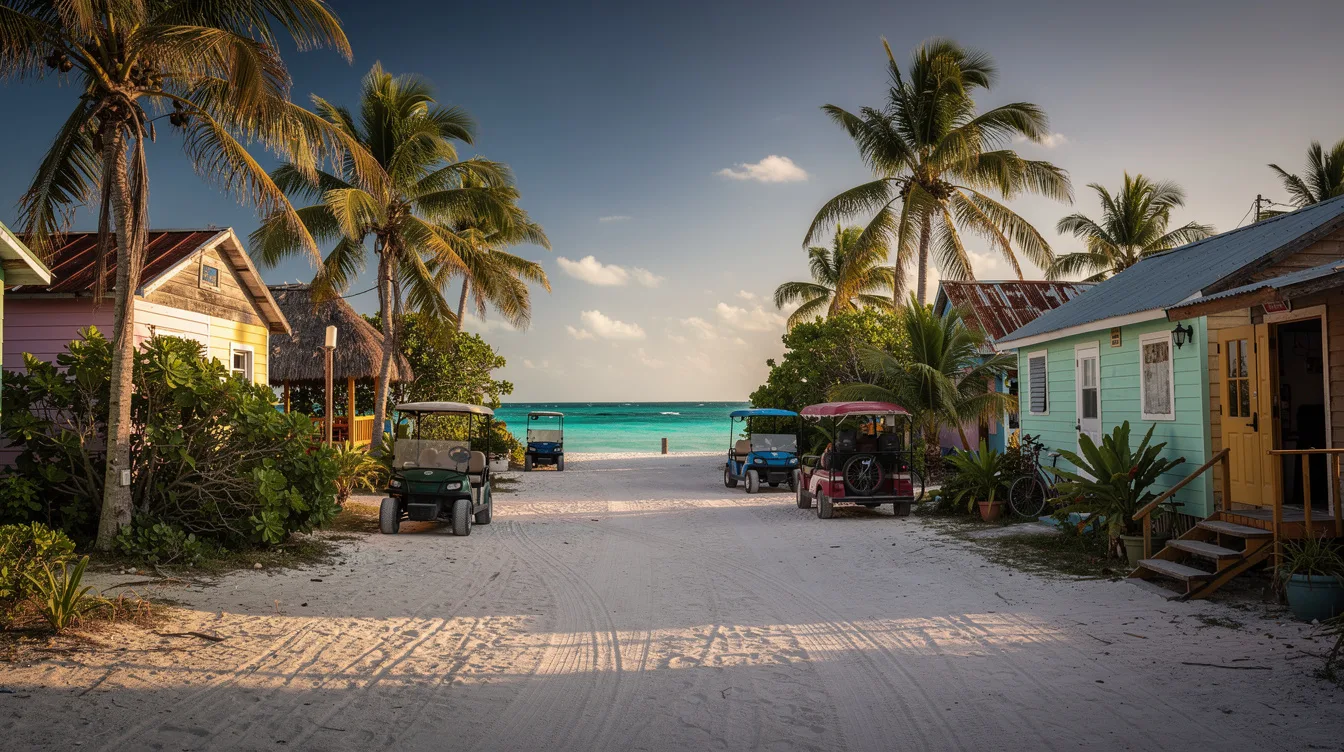
Isla Holbox is 26 miles long, yet its traffic moves at a beach-town crawl. Conventional cars are virtually absent, so you’ll walk sandy streets, rent a bicycle, or climb into a golf-cart taxi with the warm wind in your face.
That pace is the point. This slim island off northern Quintana Roo is only 0.9 miles wide, which makes rushing feel faintly ridiculous once you arrive.
Golf carts turn the island into a slow-motion town
You can reach Holbox from Cancún by driving roughly two hours to Chiquilá, then taking a passenger ferry that takes about 20-30 minutes. The crossing is quick. But the mainland’s resort-road urgency drops away as soon as the ferry docks.
And because vehicle entry is restricted to protect the environment and keep sand from piling into streets, golf carts and mopeds do the work of ordinary cars. You’ll hear tires whispering over sand instead of engines revving at stoplights.
The town has murals, beach bars, seafood restaurants, and an easy evening scene. It’s lively, but never built around rushing from one reservation to the next. For travelers worn down by Cancún’s scale, that’s a persuasive change.
But Holbox isn’t a private retreat anymore. Dry-season visitors fill its sandy lanes, and the island can cost more than its barefoot look suggests.
Punta Cocos and Punta Mosquito reward unhurried days
Start at Playa Holbox, then let the day stretch. Shallow water and pale sand make the shoreline feel broad, and you can spend longer than planned watching small waves flatten near the beach.
Beyond town, Punta Cocos sits at the western end of the island. Dark nights can bring bioluminescence, usually through a guided outing, though nature doesn’t take reservations and conditions matter.
At the other end of the mood spectrum, Punta Mosquito has sandbars and shallow-water areas near wetlands and bird habitat. Flamingos and pelicans are among the birds found around Holbox, so bring binoculars if you’d rather watch wings than screens.
And this is where the island’s narrow shape helps. Water and open sky are never far away, even when you’ve wandered beyond the busier beach bars.
June through September brings whale-shark trips
Whale-shark season runs from June to September, depending on weather, wildlife conditions, and regulations. Swimming with these animals draws many visitors, and it’s the main reason some travelers accept hotter, rainier conditions.
But summer has a real trade-off. Mosquitoes can be more noticeable from May through October, and hurricane season can disrupt plans. Holbox is sometimes evacuated when hurricane winds threaten the island.
If a quieter beach stay matters more than a wildlife excursion, December through April is generally the drier period. You’ll likely trade lower rain odds for higher prices and more people arriving on the same ferry schedule.
Can you get around without renting a golf cart?
Yes. Walking and bicycles work well, especially around town, and golf-cart taxis are a normal option when you don’t want to haul bags over sand. You don’t need a car here because the island was designed, by regulation and geography, to make one unnecessary.
That said, sandy roads can hold standing water after rain. This isn’t polished resort infrastructure, and variable Wi-Fi plus limited cash and ATM convenience can frustrate travelers who expect mainland ease.
Come for the slower rhythm, not a bargain escape
Holbox sits within the protected Yum Balam area, separated from the mainland by a shallow lagoon with birdlife. Fishing remains central to the island, and lobster and other seafood appear often on local menus.
And you should arrive with a loose plan. Take the ferry, settle into town, then decide between a beach afternoon, a wetlands boat trip, or a dark-night outing near Punta Cocos.
By the time the last golf-cart taxi hums down a sandy street, the air smells faintly of salt, and Holbox feels exactly as slow as it should.