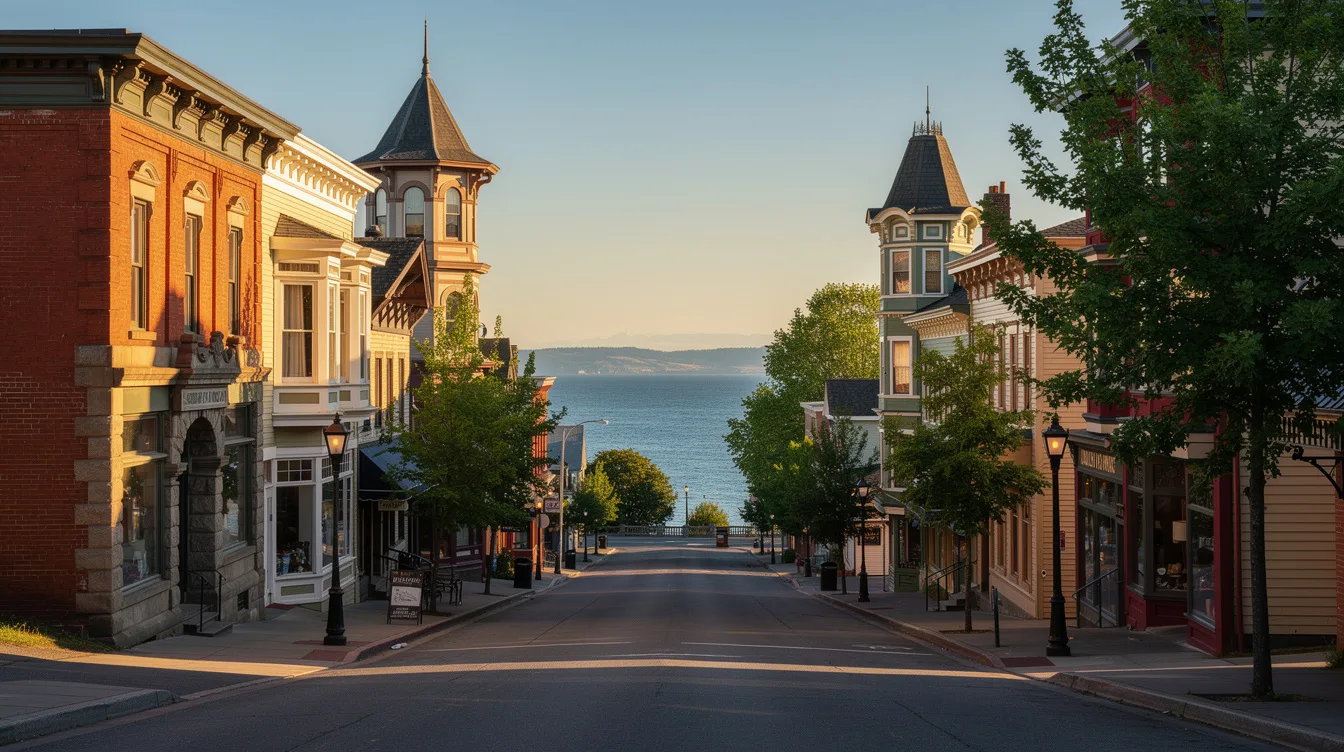
Port Townsend has only 10,148 residents, yet its historic core feels built for a far larger ambition. The payoff is immediate: its downtown Victorian district became a National Historic Landmark in 1977, so you can walk a working waterfront lined with buildings that survived the town’s boom-and-bust years.
And this isn’t a staged historic village. Cafés, galleries, bookstores, shops, and the marina share the streets. But Port Townsend still feels compact enough that you can slow down before lunch.
A Victorian district that survived the crash
The official American city was founded in 1851, then grew around hopes of becoming a major West Coast harbor. Late-19th-century investors built ornate homes and commercial buildings for a future that never fully arrived.
But the railroad did not connect Port Townsend to Tacoma, and the boom ended by the late 1890s. That failure hurt the town, yet it also kept many Victorian buildings from being replaced.
And that’s the reason the historic district works so well today. You aren’t looking at a few preserved facades. You’re moving through public, private, and business buildings from many periods of the city’s past.
Start around Water Street, where the waterfront retail district has galleries, cafés, books, and shops. You can browse without a schedule, then step outside to the smell of salt and the creak of marina rigging.
Port Townsend Bay is the town’s best argument
Port Townsend Bay gives the city its maritime pull, with Point Hudson and the waterfront close at hand. Boats are part of the daily view here, not background decoration for a quick photo.
And the setting makes wandering easy because the town sits on the Quimper Peninsula beside the Strait of Juan de Fuca. The northeast tip of the Olympic Peninsula feels removed from Seattle, though it’s roughly two hours away depending on ferry route and traffic.
But don’t expect a silent harbor. This is a center for independent boatbuilders and related crafts, which gives the waterline a useful, slightly scruffy character that polished resort towns often lack.
You’ll get the clearest sense of that culture around the annual Wooden Boat Festival. Port Townsend is lively around its events, but the boating identity runs deeper than a single weekend.
Fort Worden makes room for a longer stay
Fort Worden Historical State Park sits near town with coastal fortifications, beaches, trails, historic buildings, and cultural programming. It’s the place to go when storefronts start to feel too tidy and you want more sky.
And its former military buildings give the park a different texture from downtown’s Victorian streets. You can move from old artillery installations to beach air without leaving the Port Townsend orbit.
But the park isn’t presented as untouched wilderness. Its architecture and programming are part of the draw, which suits travelers who prefer places where history has practical edges.
You should give it unhurried time. The breezes and fog from the Juan de Fuca Strait can keep the air comfortably humid, even when the town’s drier climate makes the day look deceptively clear.
Why summer and early fall work best
Port Townsend lies in the Olympic Mountains’ rain shadow and receives about 19 inches of annual precipitation. That makes it drier than much of the surrounding Olympic Peninsula, a real advantage when you want waterfront walks without constant rain gear.
And summer and early fall are the most appealing seasons in the research record. The light stays on the water longer, and the town’s arts, shops, and harbor feel made for an afternoon with no hard plan.
But popular weekends have a cost: ferry space and lodging can become constrained. If your trip depends on a precise arrival, leave room for traffic and ferry timing rather than treating the Seattle connection as automatic.
You’ll also find annual cultural programming beyond boats, including a September international film festival and events tied to music, writing, theater, blues, and jazz. The town has an arts community, though it never needs to shout about it.
A small Washington town with big-city layers
Port Townsend is the Jefferson County seat and the county’s only incorporated city. That small civic footprint helps explain its pace, but not its depth.
And you can choose your own version of the visit: Victorian blocks, waterfront watching, Fort Worden, or a gallery stop. The limitation is also the appeal, because the town asks you to linger rather than race between attractions.
But its strongest feature is the accident of preservation. By the time the last ferry decision of the day matters, the marina is still there, the old buildings still hold the evening light, and Port Townsend feels quietly itself.