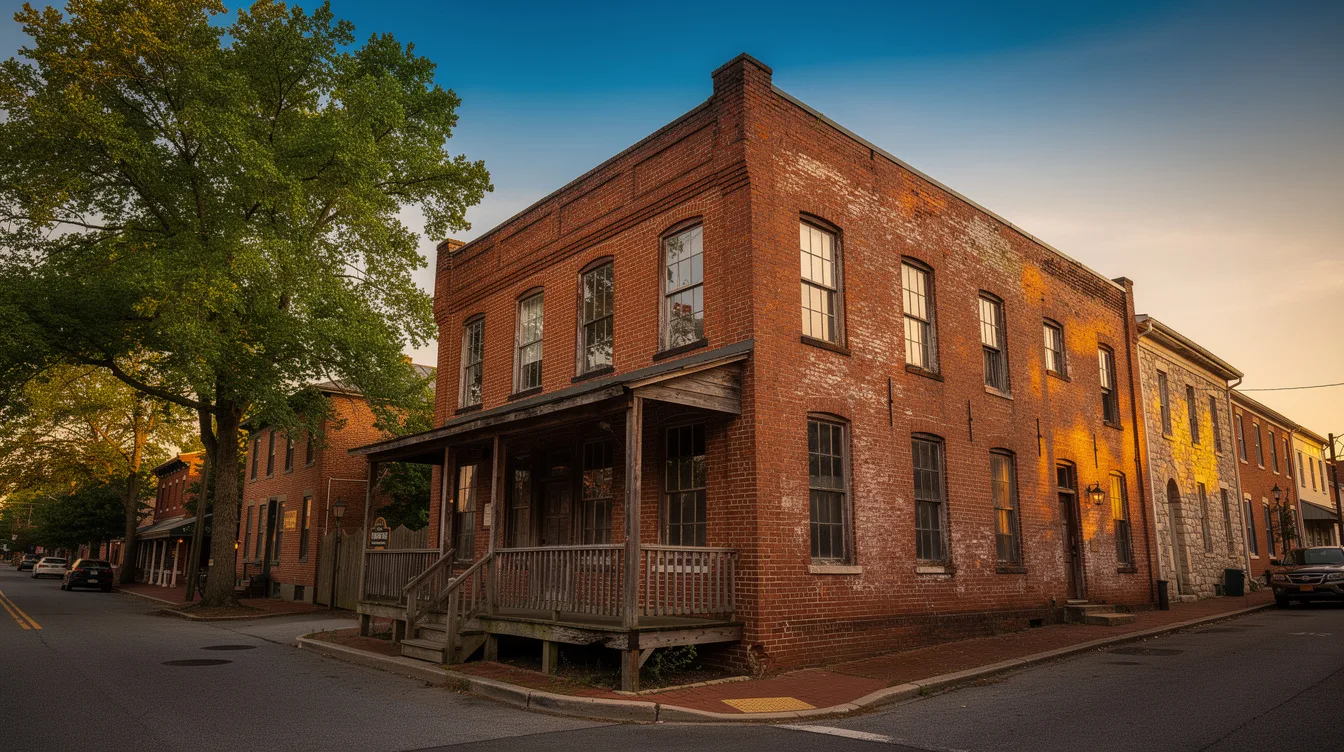
Julius Sturgis Pretzel Bakery began in Lititz in 1861, and it is widely described as America’s oldest commercial pretzel bakery. That claim is the reason to come. The pretzel’s twisted shape turns a small Pennsylvania borough into a food-history stop with real heft.
You don’t need a grand museum wing to feel the age here. The draw is more immediate: the thought that commercial pretzels were being made in this town before most American food brands existed.
1861 is the reason Lititz matters
Lititz sits in northern Lancaster County, about 9 miles north of Lancaster. It has roughly 9,370 residents, which keeps the experience focused. You’re coming for a specific American story, not an oversized attraction built around it.
And the bakery’s founding date changes how you look at an ordinary snack. A pretzel can feel like road-trip food. Here, it becomes evidence of a long-running commercial craft.
The town was founded as a Moravian community in 1756. That earlier history gives the bakery context, because Lititz’s preserved downtown includes English, German, and Victorian-era architecture rather than a single uniform look.
But history alone can turn stodgy fast. Lititz avoids that problem because pretzels and chocolate give visitors something concrete to follow, taste, and bring home.
Why call it America’s oldest commercial pretzel bakery?
The answer is direct: Julius Sturgis Pretzel Bakery was founded in 1861 and is widely described that way. The wording matters. It identifies the bakery as the oldest commercial pretzel bakery in the United States, not simply an old place that happens to sell pretzels.
You can let that distinction guide the visit. This is a stop for travelers who want the origin story behind a familiar food, with the town itself supplying the setting.
A compact town with food at its center
Lititz’s Main Street and Broad Street have independent shops, cafés, and historic buildings. The appeal is lively, but it stays rooted in a small borough rather than a retail district that could be anywhere.
And chocolate is part of the equation. Lititz is associated with Wilbur Chocolate and the Wilbur Bud; the factory is closed, though the retail store and museum remain a visitor draw.
That closure is worth knowing before you arrive. You can still connect with the town’s chocolate legacy, but you shouldn’t expect an operating factory experience.
Lititz Springs Park adds a quieter counterpoint to the food stops. Spring-fed water features, paths, benches, and a pavilion give the center of town a place to pause when the shops start to blur together.
The sound of water changes the pace. You can sit for a while, then return to the bakery and storefronts with less of that hurried, checklist feeling.
Moravian history gives the pretzel a larger frame
Lititz was one of Pennsylvania’s leading Moravian communities, alongside Bethlehem, Emmaus, and Nazareth. For a century, only Moravians could live there, and only congregation members could own houses until the lease system ended in 1855.
But don’t treat that as background trivia. It explains why the borough’s food history and built history feel so closely packed together, even when your immediate reason for visiting is a pretzel.
Brethren’s House, built in 1759, was used as a hospital for Continental Army troops during the Revolutionary War. The town holds older layers than its bakery fame suggests, which makes a short stop feel more substantial.
And Linden Hall, founded in 1746, is locally described as the country’s oldest all-girls boarding school. You don’t have to chase every historic site. Pick the threads that interest you and leave room for the bakery’s central story.
Time the visit around the town’s events
The Fire and Ice Festival takes place each February, with food trucks, entertainment, and ice carvings. It gives Lititz a winter reason to gather, though it also shifts the mood from quiet food-history stop to seasonal community event.
Summer brings an art show and a microbrewery festival. Those events may appeal if you want more activity, but the bakery’s 1861 claim remains the clearest reason to put Lititz on your route.
You can begin at the Lititz Welcome Center for town maps and local activity information. It’s a practical move, especially if you want to connect the pretzel stop with the park, historic district, or chocolate retail store.
Routes 501 and 772 run through town, and Red Rose Transit Route 10 provides bus service toward Lancaster. Access is straightforward, but the real pleasure is slowing down once you arrive.
By the time you leave, the lasting image may be simple: an old bakery, a brown pretzel twist, and spring-fed water moving through the center of a borough founded long before the snack became ordinary.