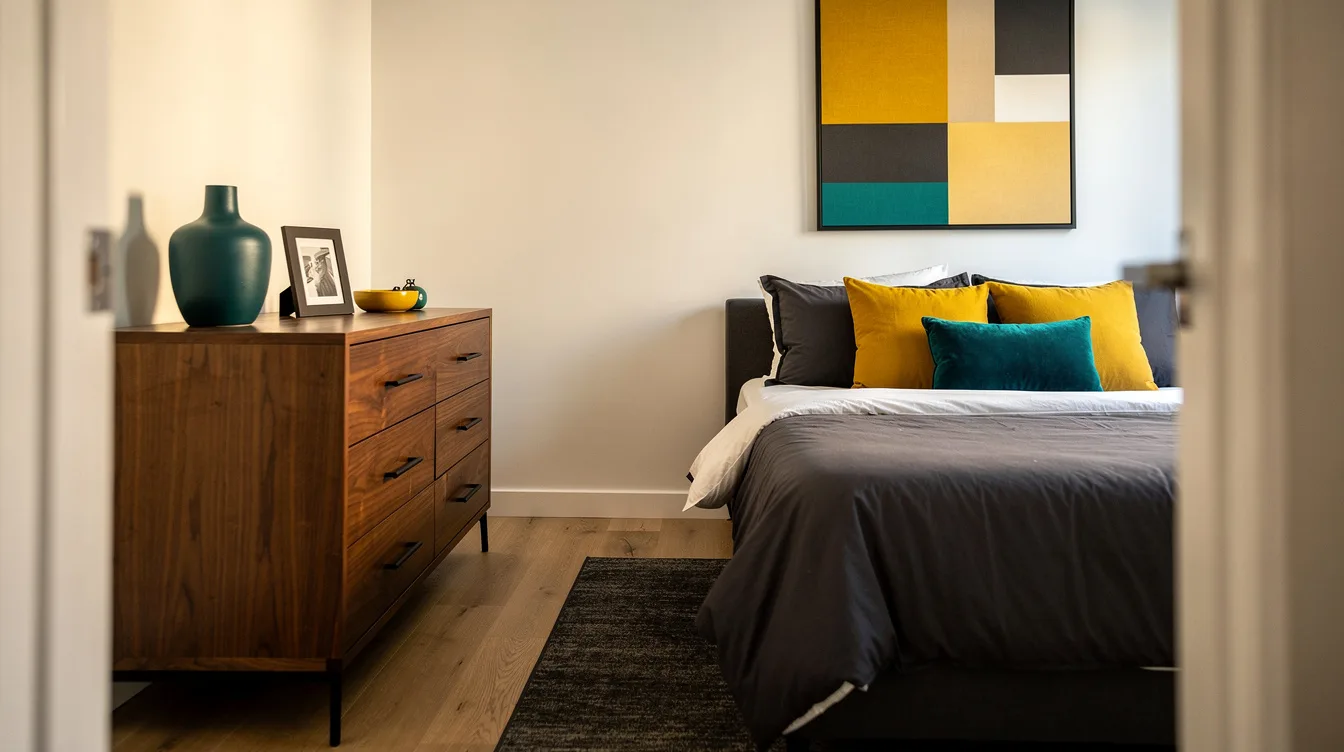
A bedroom can feel crowded long before it is actually full. In a room with about 54 inches from the wall to the bed, a dresser with handles deeper than roughly 18 inches can swallow the aisle you use every morning.
Start with circulation, then shop for storage. A slim oak veneer dresser that lets a drawer open without trapping you is more useful than a larger piece that turns getting dressed into a sidestep.
Measure the Open Drawer Zone First
Give the front of a dresser at least about 30 inches of open floor, with roughly 36 inches feeling far better in daily use. That space has to hold both the open drawer and your body, not merely look acceptable on a floor plan.
Measure from the finished wall to the nearest obstacle, then subtract about 36 inches. A solid wood drawer pull counts in the depth, and overlooking it is how a supposedly slim dresser becomes an annoyance.
Cap Depth Before You Worry About Width
In a cramped bedroom, depth is the dimension that causes trouble. Compact dressers are typically about 16 to 18 inches deep, while many regular models run roughly 18 to 20 inches deep.
A 16-inch-deep painted pine chest can be wider without choking the room. I would take useful drawer capacity across a wall over an extra two inches pressing into the walking path every time.
Center It Opposite the Bed Only With Room to Spare
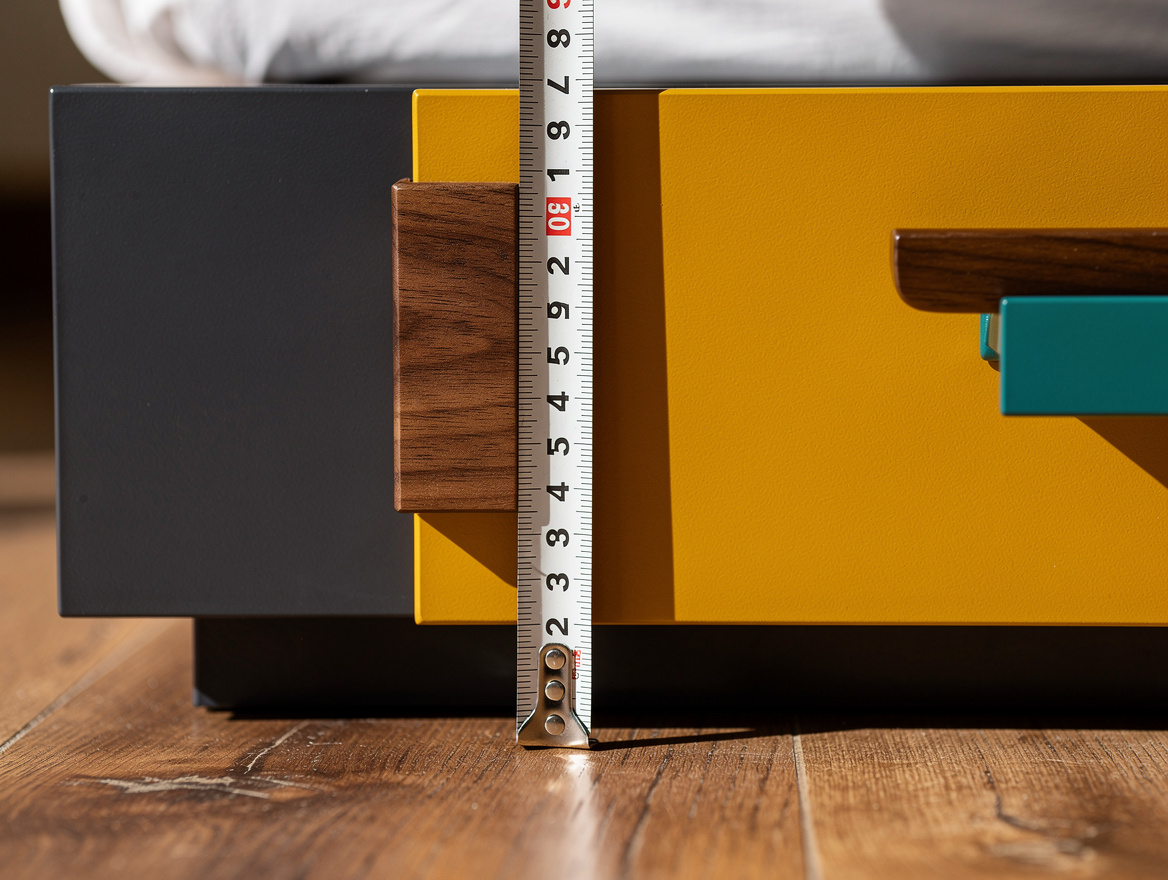
The wall opposite the foot of the bed is the cleanest location for a low dresser, mirror, or television. Keep about 30 inches between the bed edge and dresser front, and aim for roughly 36 inches when the layout allows it.
Check the bedroom door swing before committing. A walnut low dresser looks intentional across from the bed, but it fails the moment an opening door cuts through its drawer clearance.
Use the Quiet Side of the Bed
A tall chest belongs on the less-used side of the bed, where it does not interfere with making the bed or entering the room. Keep at least about 24 inches beside the mattress, with around 30 inches giving you a much calmer passage.
Look for a chest roughly 24 to 40 inches wide instead of a broad double dresser. A matte black vertical chest has more visual discipline here than a 52-inch-wide unit pushed hard against the bedding.
Claim the Narrow Strip Near a Corner
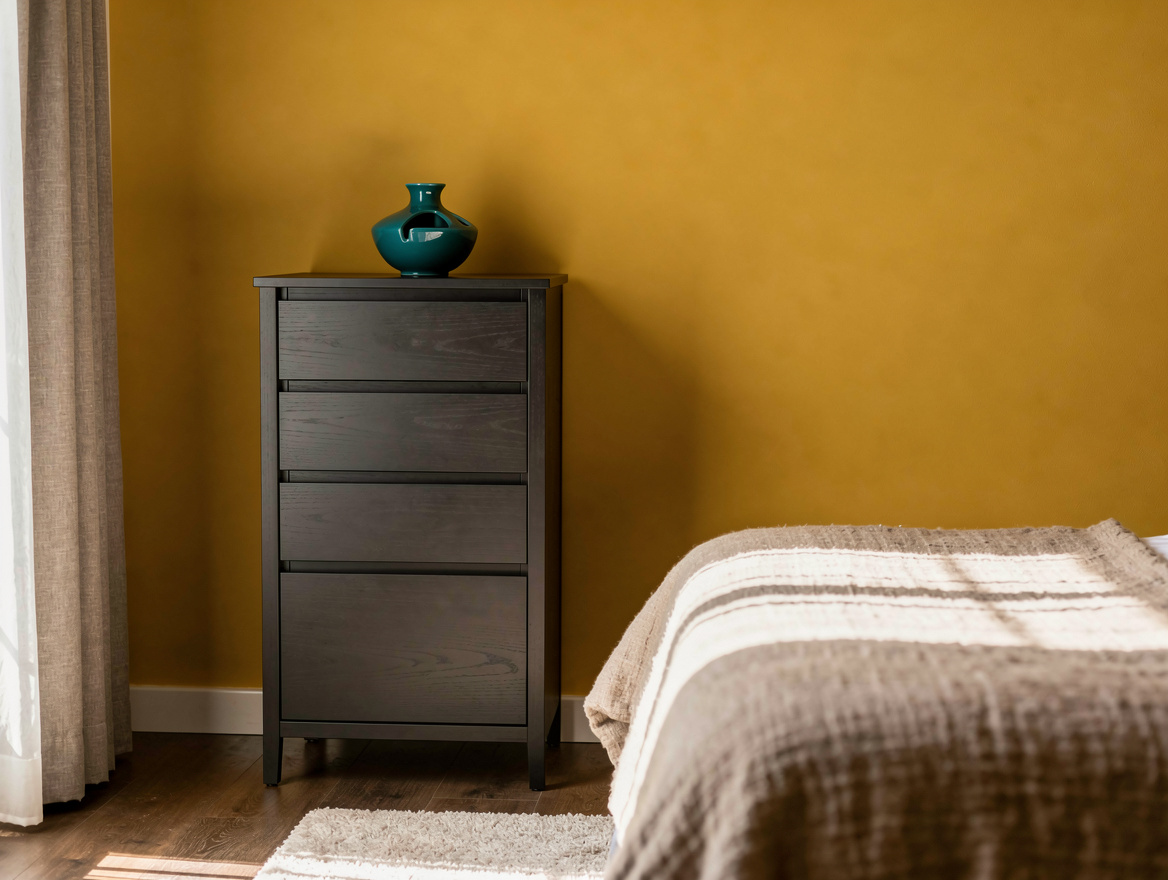
The narrow piece of wall between a door swing and a corner often has a job waiting for it. A tall chest about 15 to 18 inches wide and roughly 40 to 48 inches high can turn that neglected strip into serious storage.
IKEA’s STORKLINTA chest is worth considering for its anti-tip approach, especially in homes with children or uneven floors. Anchor every tall dresser to the wall, even when it feels stable on day one.
Move Storage Into the Closet When Needed
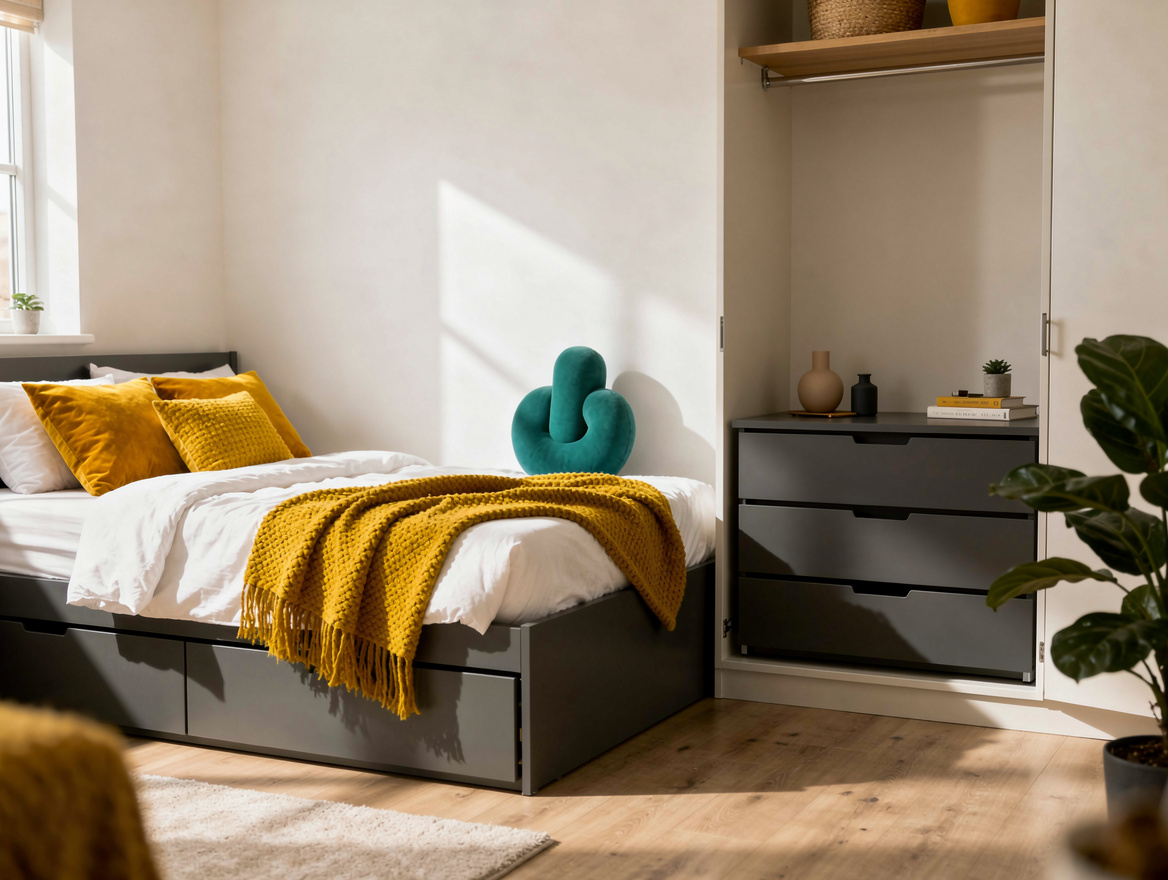
A closet can take a low dresser when its floor depth and hanging setup leave enough room for drawers to open. Measure at floor level and higher up because closet walls, trim, and shelves are often less square than they appear.
If no location preserves the aisle, skip the conventional dresser. Under-bed storage drawers, a narrow wardrobe, and a small chest usually make more sense than forcing one bulky piece into the room.
Put painter’s tape on the floor at the dresser’s full depth, then open an imaginary drawer into a roughly 36-inch aisle. That five-minute test will tell you whether the piece belongs in the bedroom at all.
Mia Carter writes about small-space living and budget home makeovers. She has restyled three rentals and tests most ideas in her own 45 sqm flat.