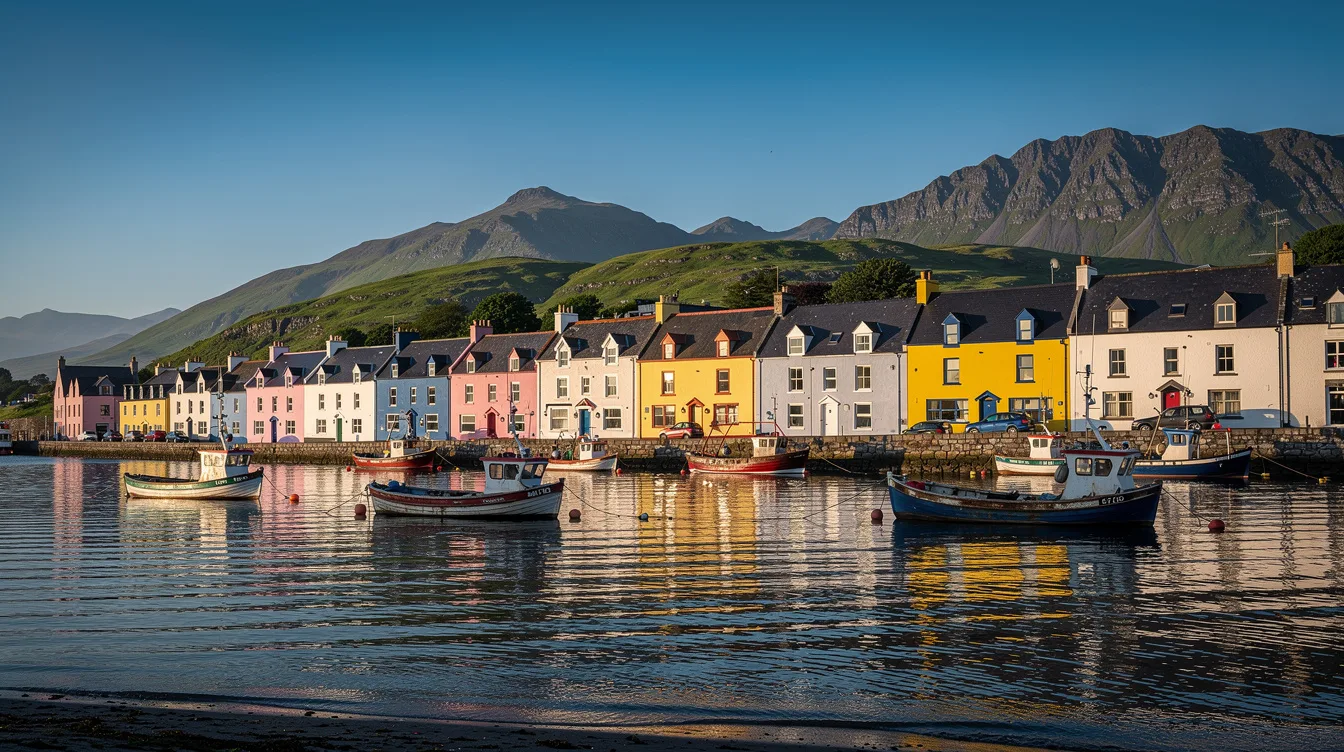
Portree is only 74 miles from Inverness, yet its most curious claim has nothing to do with Skye’s cliffs. This harbor town hosted Britain’s last manual telephone exchange, and it closed in 1976. The detail gives Portree an oddly human scale.
You can picture the old system without needing a museum display: calls once depended on a person making the connection. But Portree is no time capsule. It is Skye’s main town, with the shops, buses, rooms, and restaurants that make the island manageable.
The 1976 phone exchange explains Portree’s pace
The last manual exchange is more than a pub-quiz fact. It explains why Portree feels like a working town first and a visitor base second. You come for the harbor and leave relieved that dinner, groceries, and a bus stop are close at hand.
And the harbor earns the pause. Cliffs frame the water, while brightly painted waterfront houses give the shore its familiar band of color. It is busy in peak season, but the setting still feels compact rather than overwhelming.
2,281 people lived here in 2022, which helps explain the scale. Portree has enough daily life to avoid feeling staged, yet you can walk through its center without the sense that every doorway exists solely for visitors.
Its Gaelic name, Port Rìgh, is often translated as “King’s Port.” That reading is contested, though, and another interpretation points to a harbor on the slope. The uncertainty is more interesting than a tidy origin story, because it leaves room for the town’s own rough edges.
Use Portree as Skye’s practical starting point
Portree sits on Skye’s east coast in the Inner Hebrides, and it is the island’s largest town. That position matters because you can sleep somewhere with services, then spend the day in places where services thin out fast.
Driving gives you the most freedom when weather shifts or a viewpoint pulls you off course. But local buses and coaches connect Portree with Inverness and Glasgow, so you are not stranded without a car. Their frequency can be limited, which means loose plans work better than tight schedules.
The Skye Bridge is roughly 33 miles from Portree, or about 45 minutes by car in light traffic. From there, the A87 reaches town and continues toward Uig. It is a useful route, but it does not turn Skye into an effortless day trip.
And Portree works best over two or three nights. Give one day to Trotternish, then use another for the island’s western or southern side. You will spend less time repacking, which is worth more here than squeezing in one extra stop.
Can you explore northern Skye from Portree?
Yes, and that is Portree’s strongest argument. The Trotternish Ridge lies immediately north, bringing the Old Man of Storr, Kilt Rock, and Quiraing within the same broad part of the island. You can choose a single walk or let the road set the day’s rhythm.
The Old Man of Storr has rock pinnacles and a high viewpoint. Quiraing has a dramatic landslip setting and one of Skye’s memorable drives. But neither is a secret, so start with patience and accept that popular places can feel crowded.
Kilt Rock and Mealt Falls offer sea cliffs and a waterfall dropping toward the coast. Fairy Glen, near Uig, shifts the mood with small green hills and unusual rock formations. The Cuillin Hills lie southwest, where Skye becomes more rugged and demands more of your attention.
Portree has been occupied longer than its harbor suggests
The town’s story reaches far beyond its telephone exchange. Archaeological work found evidence of occupation from the Early Bronze Age through the Medieval period, with the earliest recorded radiocarbon date at 2570 BC. That is a long history beneath a town now associated with coaches and room bookings.
And the finds were not abstract traces. Investigators found timber roundhouses, pottery, pits, and stone tools that suggest even earlier activity in the area. You will not see all of that history from the waterfront, but it changes how the place reads.
Portree’s harbor was also a departure point for Scots leaving for America during hardship in the 1700s and again during the famine of the 1840s. Boats moving between mainland Scotland and the Outer Hebrides used the pier as a rest point, while fish exports supported the local economy.
Book lodging and key restaurants early in high season, because Portree is Skye’s most convenient base and many visitors know it. But linger after the day-trippers move on. By evening, the painted houses hold their color above the harbor, and the water goes quiet beneath the cliffs.