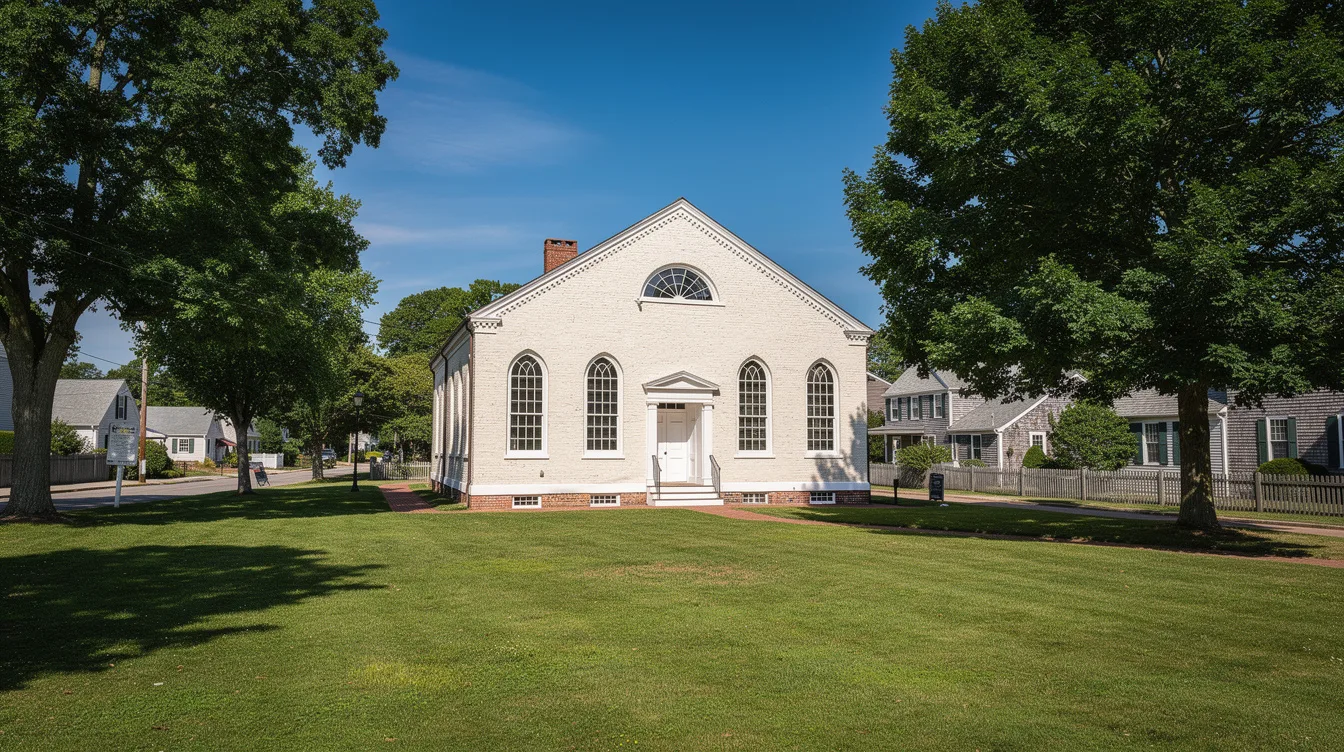
Touro Synagogue, dedicated in 1763, is America’s oldest synagogue still in use. That fact gives a visit to Newport a different weight, especially in a city better known for mansions, marinas, and Atlantic-facing walks.
You can come for the coastal views and still find this is the stop that stays with you. Newport’s grand summer-cottage history gets plenty of attention, but the synagogue offers a quieter reason to slow down.
A 1763 landmark in a city built for wandering
Newport sits at the southern end of Aquidneck Island in Narragansett Bay. Its compact colonial-era downtown makes it easy to combine a historic stop with harbor time, though summer crowds can make the streets feel busier than the town’s scale suggests.
And Touro Synagogue belongs in the first half of your day, not as an afterthought between seafood and shopping. The city has many distractions, but this is the clearest answer to why Newport matters beyond its Gilded Age image.
The contrast is sharp. Bellevue Avenue’s mansions tell the story of wealthy industrial families and their late-19th-century “summer cottages,” while Touro Synagogue reaches back to a much earlier chapter of American life.
Is it worth making time for Touro Synagogue?
Yes, particularly if you prefer places with real historical stakes over another polished photo stop. America’s oldest synagogue remains active, so it isn’t merely a preserved building detached from the life around it.
But don’t treat Newport as a one-note history lesson. Afterward, you can return to the harbor, where boat activity, seafood restaurants, historic pubs, and shops cluster around Thames Street.
Start at the harbor, then choose your Newport
Bowen’s Wharf and Thames Street make a sensible opening move because they put you close to Newport Harbor’s daily motion. You’ll hear rigging and harbor traffic, then catch the salt-heavy air before the waterfront fills up.
From there, pick one major detour. The Breakers and other Bellevue Avenue mansions explain Newport’s famous wealth, while the Cliff Walk pairs ocean scenery with views behind those estates.
The Cliff Walk is the better choice if you want movement with your sightseeing. But it isn’t the same kind of pause as Touro Synagogue, and that difference is exactly why combining both works.
And if you’d rather stay near the water, Fort Adams State Park offers a major waterfront historic site. It also hosts the annual Newport Folk Festival and Newport Jazz Festival, so the mood can shift quickly when festival crowds arrive.
33 miles from Providence, but summer changes the pace
Newport is about 33 miles southeast of Providence and roughly 74 miles south of Boston. That makes it an approachable car trip from either city, though getting there is simpler than finding a quiet table or an easy stroll in peak summer.
Most visitors fly through Providence’s T. F. Green Airport or Boston, then continue by car.
Newport State Airport is nearby, but it doesn’t operate commercial passenger flights, so don’t build an itinerary around flying directly in.
Late spring and early autumn are the smarter seasons if you want Newport with more breathing room. Summer brings the best weather and the heaviest crowds, which is fine if you want the city at full sailing-town volume.
But you should choose deliberately. The busiest version of Newport has energy around the harbor, while the calmer shoulder seasons leave more room for its older stories to register.
Make the day feel like Newport, not a checklist
Pair the synagogue with a short harbor wander, one mansion or a section of Cliff Walk, then dinner near the waterfront. Newport is particularly good for oysters, lobster, and other New England seafood, so there’s no need to overcomplicate the final stop.
Fort Adams State Park is a useful alternative when you want open waterfront space after downtown. And a harbor or sailing cruise can make sense if the boats are what drew you here in the first place.
Newport had 25,163 residents in the 2020 U.S. Census, yet its summer reputation can make it feel larger. Visit outside peak season and the harbor noise softens, leaving the water, the old streets, and the 1763 synagogue to do the talking.