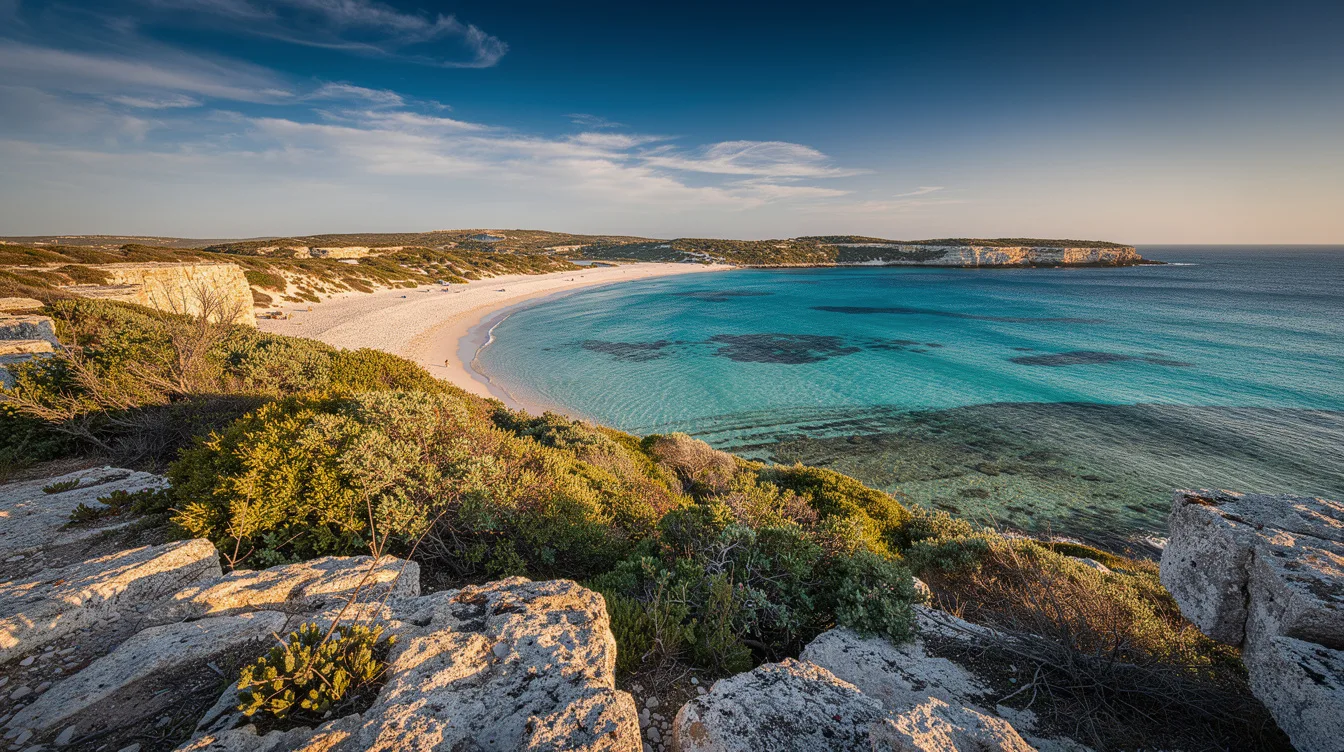
Rottnest Island is marketed through clear bays, bike rides, and quokkas. But its Noongar name, Wadjemup, carries a far heavier history: this island off Western Australia imprisoned more than 3,600 Aboriginal people.
Between 1838 and 1931, Wadjemup operated as an Aboriginal prison and forced-labor camp. That history sits beneath a destination many visitors reach by ferry for an easy day by the water, so you should arrive ready to hold both truths at once.
The 93-year history beneath the holiday island
The prison and labor camp lasted 93 years. Aboriginal boys and men were sent there under harsh conditions, and the former prison area, known as the Quod, deserves more than a quick glance between a swim and lunch.
And the toll was grave. At least 373 people died during the prison’s operation and were buried in unmarked graves in areas north of the Quod. The island is small enough that this past never feels distant for long.
You can enjoy the salt air and bright water here. But treating Wadjemup only as a photogenic stop misses the point, because its holiday infrastructure occupies a place shaped by confinement, loss, and continued cultural significance.
What should visitors do at the Quod?
Start by recognizing it as a former prison area, not simply accommodation with old stone walls. The Quod was used for tourist lodging until 2018, after decades of protests by Aboriginal people. A quieter, more attentive visit is the appropriate one.
Thirty minutes from Fremantle, then a different pace
Wadjemup lies about 11.8 miles off Fremantle, near Perth. The ferry from Fremantle takes about 30 minutes, which makes the crossing deceptively simple. You leave the mainland quickly, but the island asks for more thought than a standard beach excursion.
Ferries also run from Perth’s Barrack Street Jetty in about 90 minutes and Hillarys Boat Harbour in about 45 minutes. Because private cars generally aren’t permitted, you’ll get around by bicycle, e-bike, walking, shuttle, or hop-on-hop-off bus.
And that car-free setup changes the day. Bicycle tires hum over the road, wind catches your shirt, and the pace slows. It’s freeing, but an e-bike is the better call if you want to cover more ground without turning the outing into an endurance test.
Beaches and quokkas are real, but so is the context
The island is roughly 6.8 miles long and has more than 60 beaches. The Basin, Little Salmon Bay, Pinky Beach, Geordie Bay, and Parker Point are among the places visitors seek for snorkeling and sheltered lagoons.
But the appeal isn’t only water. Wadjemup is a protected Class A reserve and important habitat for the quokka, the small native marsupial that draws cameras almost as reliably as the turquoise bays.
If you see one, keep your distance. Don’t feed or touch it, and don’t use food to lure it closer. You’ll get the better memory by watching it on its own terms, with scrub underfoot and the low sound of waves beyond it.
Can you fit history and swimming into one visit?
Yes, if you give both their due. Visit the former prison area with care, then choose one or two swimming stops rather than racing across the island. The temptation is to collect beaches.
The better day has room to pause.
Summer fills fast, winter gives you breathing room
Summer is Wadjemup’s busiest and driest season, and accommodation around Christmas can sell out months ahead. The water-focused itinerary is easiest then, but crowds change the mood, especially around the ferry and popular bays.
Winter is quieter, cooler, and wetter. That’s the trade-off. If you don’t mind variable weather, you may find more room for a slow ride, a considered stop at the Quod, and a less hurried look at the island.
Beyond the beaches, Oliver Hill has World War II coastal-defense guns and tunnels, while West End and Wadjemup Lighthouse are sunset options. By the time the last ferry leaves, the bright water dims, the wind lifts, and the island’s harder story remains.