Jim Thorpe, Pennsylvania, took an athlete’s name in 1954, although he never lived there. The answer is less a hometown tribute than a burial story: the Olympic champion’s remains rest here, and the town made that fact its identity.
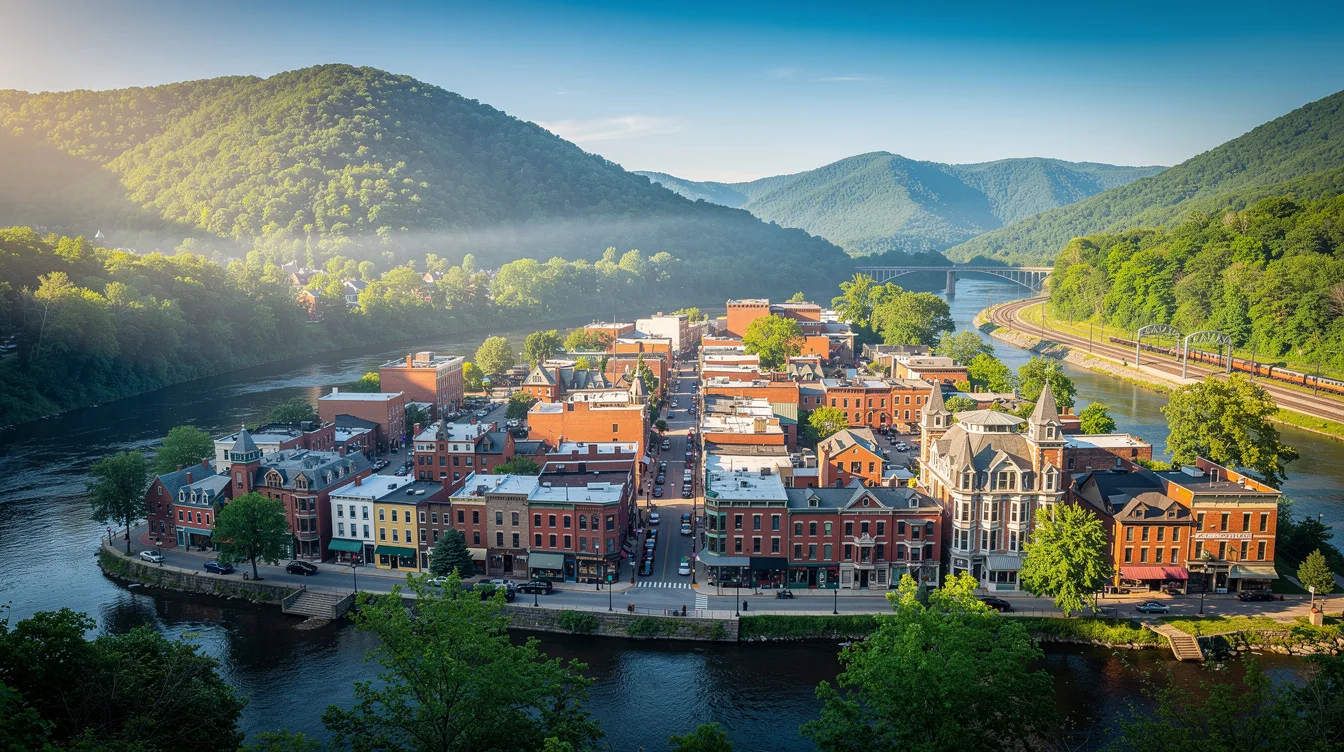
The borough sits in Carbon County, in northeastern Pennsylvania’s Pocono Mountains, along the Lehigh River. Its steep Victorian streets make the place feel more theatrical than most small Pennsylvania towns. But the name on the signs has nothing to do with a childhood home or a local victory.
Two boroughs became one in 1954
Before the new name, there were two separate places: Mauch Chunk and East Mauch Chunk. They merged in 1954, then adopted Jim Thorpe’s name after the athlete’s death. If you come expecting a town shaped by his daily life, you’ll find a more complicated story.
Thorpe had no connection to the town while he was alive. He grew up in what is now Oklahoma and later attended Carlisle Indian Industrial School in Pennsylvania. That distance matters, because this is a memorial town rather than a hometown.
And the choice wasn’t casual. Jim Thorpe was an Olympic champion and a professional football, baseball, and basketball player. His remains are at a monument site in town, so the athlete’s legacy is present even where his personal history was not.
The name is unusual, the setting is not
Mauch Chunk had its own powerful reason to exist long before the renaming: anthracite coal. The industry drove early growth, and the town’s slopes still explain why walking downtown feels like a workout before lunch.
In 1828, a gravity railroad carried coal to the Lehigh Canal. Britannica recognizes it as the first industrial railroad in the United States. That history gives the town more weight than its tidy storefronts initially suggest.
But this isn’t an industrial relic preserved under glass. Victorian architecture, the Asa Packer Mansion, and the Old Jail Museum pull visitors into the older streets. You can browse more of the town’s character through the Jimthorpe. Org/”>local visitor information, then decide how much uphill walking you want.
Why the streets still draw travelers
The downtown is compact, so you can cover it on foot. Its hills are the trade-off. Your calves will notice the grades, especially after a long stop for coffee or a slow look at the ornate facades climbing above the river.
And the setting does much of the work. The Lehigh River runs beside town, while outdoor access to Lehigh Gorge gives the visit another gear. Scenic train excursions, hiking, cycling, and rafting make sense here because the former coal corridor already follows the terrain.
That mix is lively, but it doesn’t need to feel frantic. You can spend the morning inside historic buildings and the afternoon outside. For a place with an athlete’s name, the appeal is surprisingly less about sports history than about the physical act of moving through it.
Is fall the best time to go?
For many visitors, yes. Fall foliage is one of Jim Thorpe’s major draws, and the steep streets give those seasonal colors a natural stage. You’ll see why people make the trip when leaves frame the river valley and the town’s old roofs.
But autumn weekends have a catch: parking is limited. If you’re driving, arrive with patience and don’t assume downtown will offer an easy space. The compact center is an advantage once you’re parked, but not necessarily before.
Plan the approach, then slow down
Jim Thorpe is about 22-29 miles northwest of Allentown. It is also roughly 90 minutes to two hours from Philadelphia, and around two hours from New York City, depending on traffic and route.
Those distances make it an easy weekend target, but the town rewards a less hurried pace. Start with the name, then look past it. The real surprise is how a decision made after an athlete’s death became attached to a river town built by coal and rail.
By late afternoon, the slopes turn quiet, the river keeps moving below town, and Jim Thorpe’s name remains on the station signs of a place he never knew.