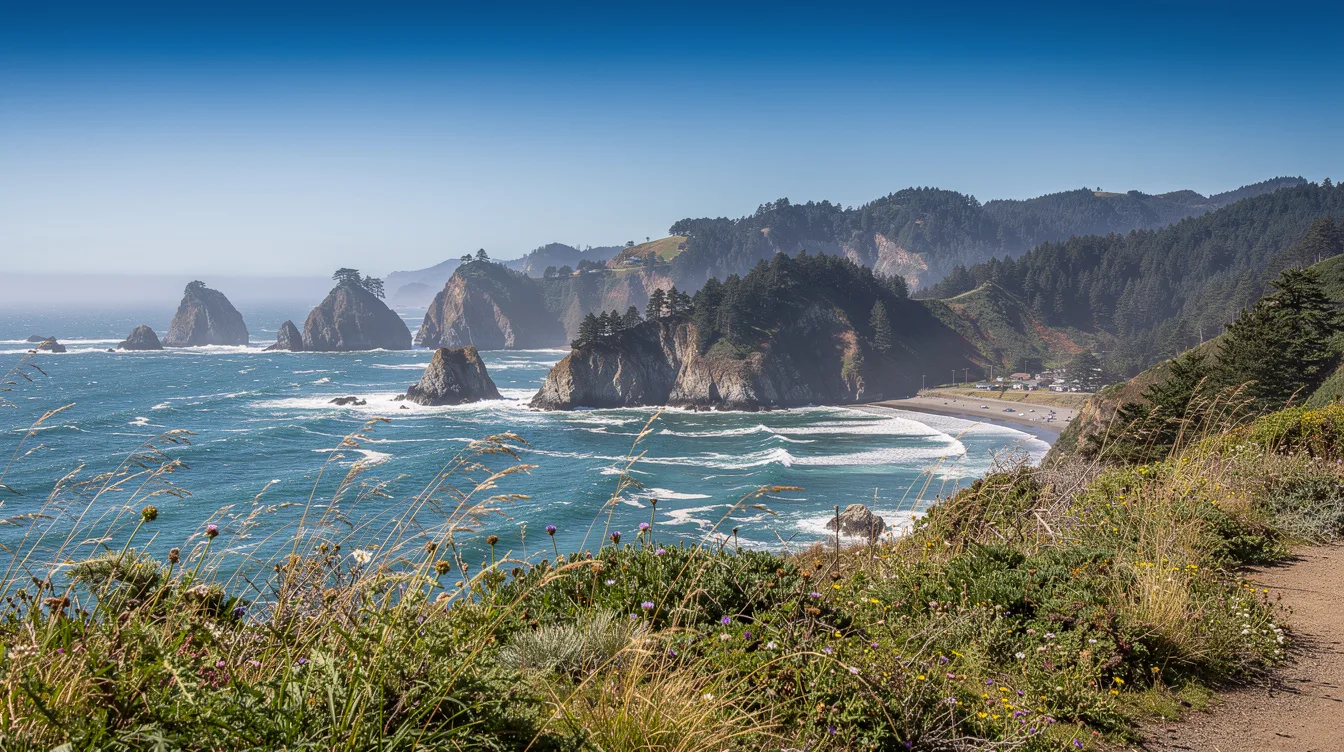
Trinidad, California, has just 307 residents, according to the 2020 census. That makes this Pacific coast town in Humboldt County one of the state’s smallest incorporated cities, which is exactly why it feels so different from a typical California beach stop.
It sits above Trinidad Harbor, where fishing boats, offshore rocks, fog, and redwood country meet. The scale is tiny, but the setting isn’t. You can feel the town’s limits quickly, then spend the rest of the day looking outward.
A town of 307, with a very large horizon
Trinidad is about 14.9 miles north of Arcata via US Highway 101. That short distance matters because Arcata gives you more services, while Trinidad gives you the coast at its most spare and moody.
And this is not hot-sand California. The weather is generally cool to mild, fog is common, and winter brings notable rain. Bring a warm layer even when the calendar says summer, because the air near the water has its own opinion.
The town is also a gateway to the California Coastal National Monument. You don’t come here for a packed itinerary. You come because headlands and sea stacks make it easy to lose track of the afternoon.
But the small population is more than a census curiosity. It explains why lodging is limited, why the harbor still anchors the town’s character, and why you should reserve early for summer and fall if you want to sleep nearby.
Trinidad Head gives you the coast in one walk
Trinidad Head is the obvious first stop, and it earns that status. Its short coastal hike looks over the harbor and ocean, so you get the town’s essential contrast at once: working boats below, open Pacific beyond.
In season, it is also a whale-watching viewpoint. You may see little more than shifting water and a pale horizon, but that’s part of the appeal. This coast doesn’t perform on command.
And you should go slowly. The wind, mist, and sound of water against offshore rocks can make even a brief stop feel absorbing. It is dramatic, but never polished into a resort experience.
Can you pair the coast with redwoods?
Yes. Trinidad is a strong base for the northern California redwood region, including Redwood National and State Parks. That pairing is the real reason to choose it: you can move from tall forest to rough shoreline without turning the trip into a long relocation day.
But a car is effectively essential. US Highway 101 is the practical route, and the town’s small size means you should not expect broad transit options or an endless list of backup plans.
The beaches are varied, not interchangeable
Trinidad State Beach has the rugged version of the coast: caves, arches, offshore rocks, and surf. It suits travelers who want to watch rather than rush, because the scenery has enough texture without needing much interpretation.
Moonstone Beach is broader and known for beachcombing. Indian Beach has tide pools. You can choose between them by mood, but don’t expect a warm-water, umbrella-lined beach day.
The payoff here is salt air and a more untamed edge.
And the town’s harbor adds a different note. Trinidad Pier is California’s northernmost oceanfront pier, and crabbing and fishing are central to local life. The smell of wet wood and sea air fits the setting better than any souvenir shop would.
The harbor supports commercial fishing alongside tourism. That makes Trinidad feel lived-in, not staged, though its limited services can frustrate travelers who want late-night choices or lots of dining options.
Plan around the fog, not around beach heat
Trinidad’s coast is often foggy, and that changes the rhythm of a visit. When the sky closes in, the headlands feel quieter and the trees seem nearer. When it clears, the harbor and sea stacks pull your attention back offshore.
Arcata-Eureka Airport is about 8 miles away, so flying in is possible. Still, a rental car makes the most sense if you want beaches, viewpoints, redwoods, and the freedom to follow the weather.
There is also the Cal Poly Humboldt Marine Lab, a local stop with sea-life displays. It is a useful pause if you want context for the water in front of you, especially after looking into tide pools rather than simply photographing them.
But don’t overplan Trinidad. The best version of this town is often a slow harbor walk, a coastal trail, then a beach where the fog softens every edge. By evening, the boats sit below the headland and the Pacific sounds larger than the town.