Natchitoches, pronounced “NAK-uh-tish,” was founded in 1714 under French Louisiana. That makes it the oldest permanent settlement in the territory later acquired through the Louisiana Purchase, and the fact lands differently when you’re standing beside Cane River Lake.
It’s a town where history isn’t filed away behind a museum door. It sits in the streets, the old buildings, and the slower rhythm along the water. But don’t come expecting a giant historic district with endless attractions.
The appeal is more intimate than that.
1714 still shapes the walk along Cane River
The town’s central claim is unusually direct: 1714 came long before the Louisiana Purchase changed the map. French and Creole influence remains part of Natchitoches’ identity, so a walk through its historic center feels grounded in place rather than packaged for a quick photo.
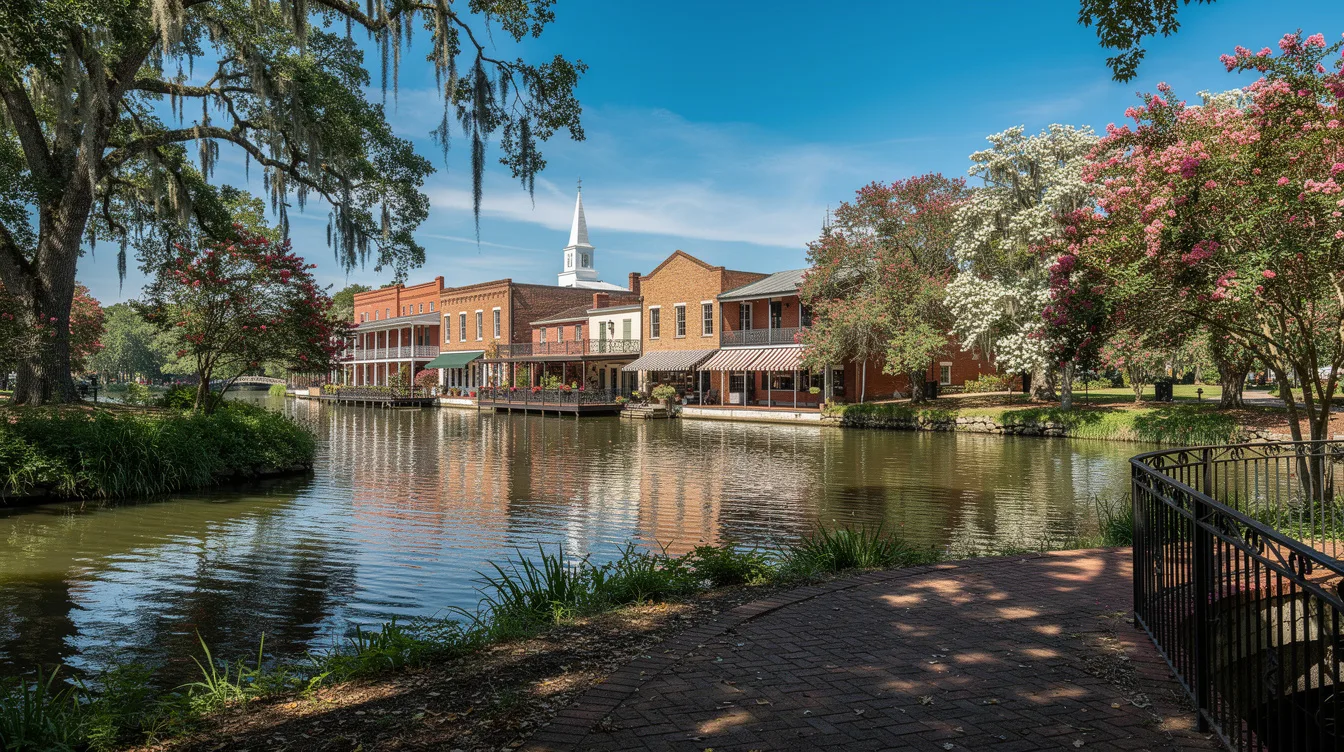
And Cane River Lake gives the town its best frame. Water catches the afternoon light beside the older facades, while the streets nearby make a good case for lingering without an itinerary. You’ll want comfortable shoes, though, because the pleasure here is in wandering at an unhurried pace.
Natchitoches is also the seat of Natchitoches Parish. Its 18,039 residents in the 2020 census give it enough everyday life to avoid feeling frozen in a tourist version of the past. Lively, but not loud.
A Louisiana town with a film memory
The streets of Natchitoches have a connection to the 1989 film Steel Magnolias. That connection brings visitors, and it makes sense: the town has the kind of Southern setting that film crews look for when they need a believable sense of time.
But the movie is only one way into the place. The historic center is known for Creole and French buildings, while the surrounding Cane River area includes plantations that deepen the story beyond a single filming location. You can arrive for the movie connection and leave more interested in the town’s older layers.
Cane River Lake keeps that history from feeling dry. The waterfront gives the town a softer edge, especially when the air cools and the reflections begin to outshine the traffic. It’s the kind of walk that can cancel your afternoon plans.
Christmas is when the riverfront changes character
Natchitoches is especially known for its annual Christmas festival, when lights and entertainment gather along Cane River. The riverfront becomes the center of the evening, so visitors who want the town at its most animated should plan around that recurring season.
And this is the trade-off: holiday crowds change the experience. The lights bring a reason to visit, but they also mean less solitude on the streets. If you prefer the town quiet, another time may suit you better.
The festival works because the setting already has texture. Reflections on the water, older buildings nearby, and the sound of people moving along the riverfront do more than a temporary display ever could. The decorations add energy, but the town supplies the mood.
Getting there starts with Shreveport
Natchitoches lies about 67.7 miles southeast of Shreveport. That distance makes it a practical Louisiana side trip, especially for travelers who want a smaller town after time in a larger city.
But it isn’t a place to rush through between appointments. Give yourself room for the waterfront and the historic center, then let the town’s compact scale work in your favor. You can cover ground easily, yet the best moments tend to arrive when you stop moving.
Is Natchitoches only for history fans?
No. History is the reason the town matters, but the experience is more physical than academic. You notice the water first, then the buildings, then the fact that this small Louisiana city has been here since French Louisiana.
Northwestern State University of Louisiana also gives Natchitoches a living local presence. Students, residents, and visitors share the same streets, which keeps the town from becoming a period set.
By the time evening settles over Cane River Lake, the water goes dark, the older facades hold the last light, and 1714 feels less like a date than a long shadow across the river.