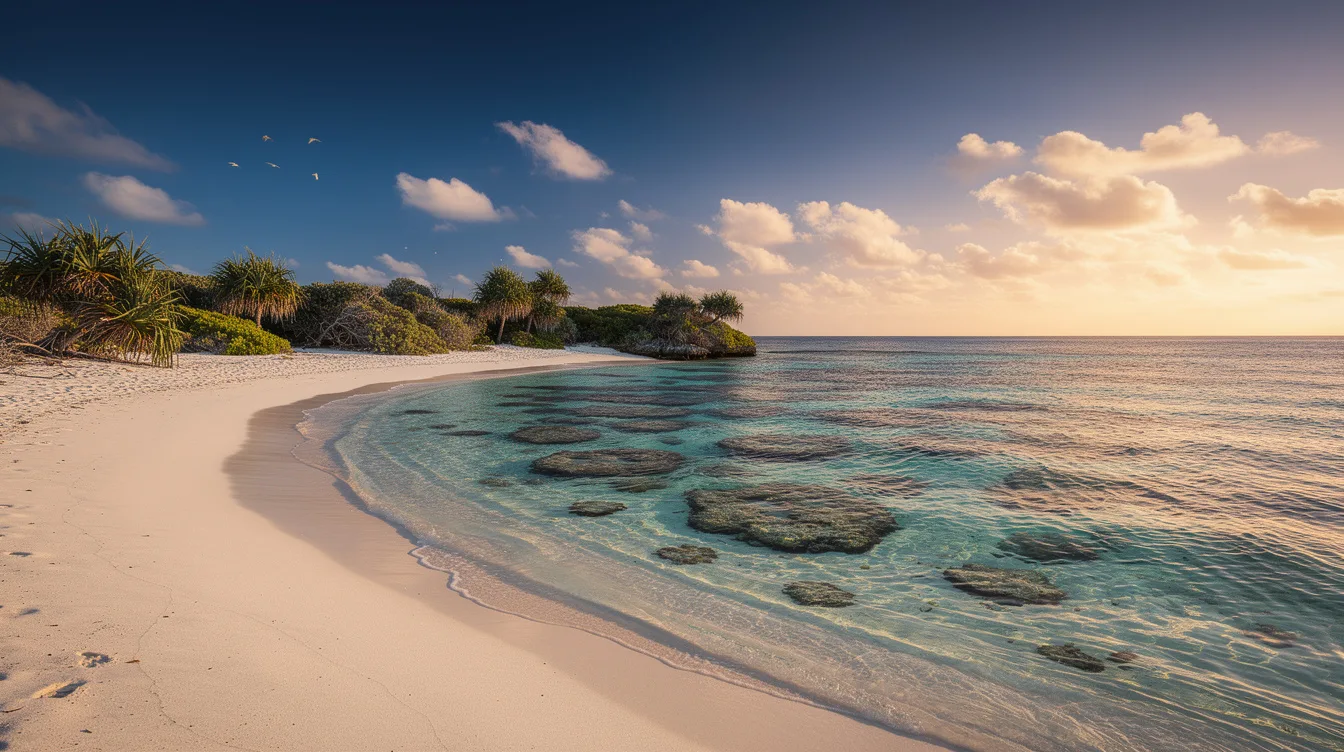
Lady Elliot Island sits at the southern end of the Great Barrier Reef, and its strongest claim is protection. This coral cay lies inside a Marine National Park Green Zone, the park’s highest classification. That means no fishing or taking from the surrounding water, so the reef has room to remain a nursery.
You reach it by small charter aircraft over the Coral Sea, 52.8 miles northeast of Bundaberg. The flight is part of the point. Land, step onto the cay, and the usual mainland noise falls away fast.
A Green Zone changes what you see in the water
The Green Zone designation protects breeding and nursery areas across the marine park. Around this cay, the total ban on taking marine life helps explain why snorkeling starts right from the beach. You don’t need a long boat ride to get into the action.
And the water is known for its clarity because the island sits far offshore. That makes this a better pick for travelers who want reef time without building every day around a vessel schedule. It’s remote, but the flight makes the arrival surprisingly direct.
The island has no cars, so you’ll walk it quickly. But don’t mistake small for empty. The reef walls and cleaning stations draw divers, while shore snorkeling gives non-divers a real reason to come.
From June to September, manta rays take over
June through September brings the highest manta ray concentrations. If rays are your priority, that is the window to protect on your calendar. The encounter can feel almost absurdly close, with a broad shadow passing through clear blue water above the reef.
And there’s a useful trade-off here. A day trip lets you see the place, but two to four nights gives you better odds of favorable sea conditions and wildlife encounters. I’d stay longer if the budget allows, because weather has the final say offshore.
You can also dive the reef walls or join a snorkel tour. The island supports more than 1,200 marine species, yet the appeal isn’t a checklist. It’s the quiet concentration of life in water you can enter from shore.
Turtles return from November through March
This is where the title earns itself. From November to March, green and loggerhead turtles come ashore to nest on the beach where they were born decades earlier. A turtle can nest up to nine times in one season, laying 80 to 120 eggs each time.
But nesting is not a performance for visitors. You’ll need to follow local guidance and give turtles distance. That restraint is the point of a Green Zone, and it makes any sighting feel more meaningful than a rushed photo stop.
Hatchlings generally head for the ocean from January through April. The island’s turtle activity has a seasonal rhythm, so choose your dates according to what you want most: nesting adults, young hatchlings, or the manta-rich winter period.
Can you snorkel without diving?
Yes. The reef sits close to shore, and snorkeling directly from the beach is one of the island’s defining pleasures. You can spend less time gearing up for transport and more time floating above coral, with sunlight flickering over the water beneath you.
That said, conditions still matter. A guided snorkel tour can help you make the most of the reef, especially if you’re new to open-water snorkeling. Glass-bottom boat trips are another option when you want marine life without getting in.
Summer brings more than 100,000 nesting birds
During the summer breeding season, more than 100,000 birds nest on Lady Elliot Island. The cay supports over 50 species of tropical seabirds and wading birds. You may hear them before you see them, a restless chorus above the low vegetation.
And that changes the mood on land. The island is lively, but never urban. A guided island walk pairs birdlife with lagoon views and the historic lighthouse area, giving you a break from masks, fins, and saltwater.
The modern lighthouse sends its six beams 24.9 miles out to sea. At dusk, that detail feels fitting: a small protected cay, birds settling overhead, and light reaching across open water.
The practical case for staying overnight
Lady Elliot Island Eco Resort organizes accommodation and transfers, while charter flights can depart from Bundaberg, Hervey Bay, Brisbane, Redcliffe, and the Gold Coast. You should book around the wildlife season that matters most to you, because access is by small aircraft only.
There is a resort and an airstrip, not a town to wander through. But that limitation is why the place works. By the time the last light reaches the Coral Sea, the beach is quiet again and the birds are still calling overhead.