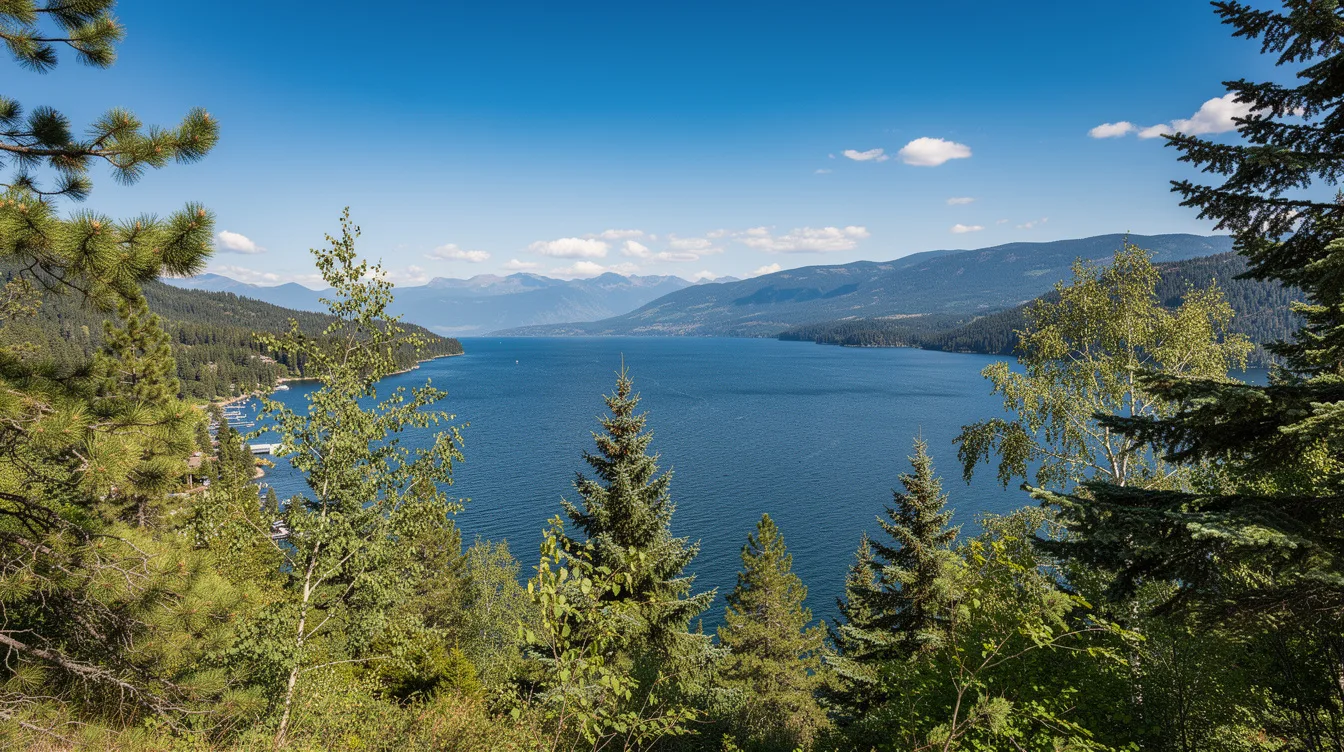
Coeur d’Alene sits on the north shore of Lake Coeur d’Alene because this northern Idaho city grew where water, forests, and regional commerce meet. It is east of Spokane, close enough for a city break but far enough to feel like the lake has changed the pace.
And that shoreline location still explains nearly everything visitors notice first. The water pulls you toward cruises, beaches, and the boardwalk, while pine-covered slopes give the town a firmer, cooler visual edge than a typical resort strip.
The lake is the city’s front door
Lake Coeur d’Alene is not a backdrop here. Its visitor economy revolves around boats, fishing, cruises, and time spent near the shore.
But this is not a remote cabin settlement. Coeur d’Alene is Kootenai County’s seat and a regional hub, so you get lake access alongside restaurants, services, golf, and the practical rhythm of a working city.
The waterfront boardwalk makes that relationship easy to read. You can watch boats move across the lake, then walk toward the resort, which is why the central shore feels active even when you are not on the water.
Why Spokane travelers come this way
For travelers arriving from Washington, the distance matters. Spokane is nearby, so Coeur d’Alene works as an easy change of scenery rather than a major expedition.
And the contrast is the appeal. Spokane has the larger-city pull, while Coeur d’Alene puts the lake in front of you. You can spend your time along the water instead of treating it as a quick detour.
The city is also part of a wider bi-state metro area. About 54,600 residents live in Coeur d’Alene, with roughly 188,000 across the larger metro area, so the town has more daily infrastructure than its resort image initially suggests.
The shore supports a resort town, but not only that
The lake’s north-shore position helped turn outdoor recreation into a local engine. Tourism and service work now sit beside regional commerce, while the area’s older logging and mining history still shapes how people talk about North Idaho.
But the place does not pretend to be all wilderness. The Coeur d’Alene Resort, its floating boardwalk, and its floating golf hole give the shore a polished side. That is enjoyable if you want an easy lake day, though it can feel more resort-focused than wild.
You can also head toward Tubbs Hill for hiking, or look beyond town toward Silverwood Theme Park. The draw is variety, though the lake remains the clearest reason to choose Coeur d’Alene over another inland stop.
Can you make the lake the whole trip?
Yes, if your idea of a good trip includes boating, fishing, beaches, and cruises. Lake Coeur d’Alene gives the city enough activity for a short stay, especially when you want water without giving up restaurants or a central place to sleep.
And you do not need to force a packed itinerary. Walk the boardwalk, watch the light shift on the water, then decide if a cruise or a trail feels right. The city works best when you leave room for that kind of indecision.
A north Idaho city shaped by water and weather
Coeur d’Alene has warm, relatively dry summers and cold, wetter winters, with snow common. That four-season pattern is why the city is marketed around outdoor recreation, though it also means your experience will change sharply with the weather.
The wider setting includes pine forests, mountains, and more than 50 nearby lakes in the region. Still, the city’s own advantage is simpler: you are already on a major lake, not driving toward one after breakfast.
Founded in 1878, Coeur d’Alene has grown beyond its origins around Fort Coeur d’Alene and nearby mining activity. Yet the water remains the organizing fact. By evening, the boardwalk quiets, boats settle into the harbor, and the north shore makes perfect sense.