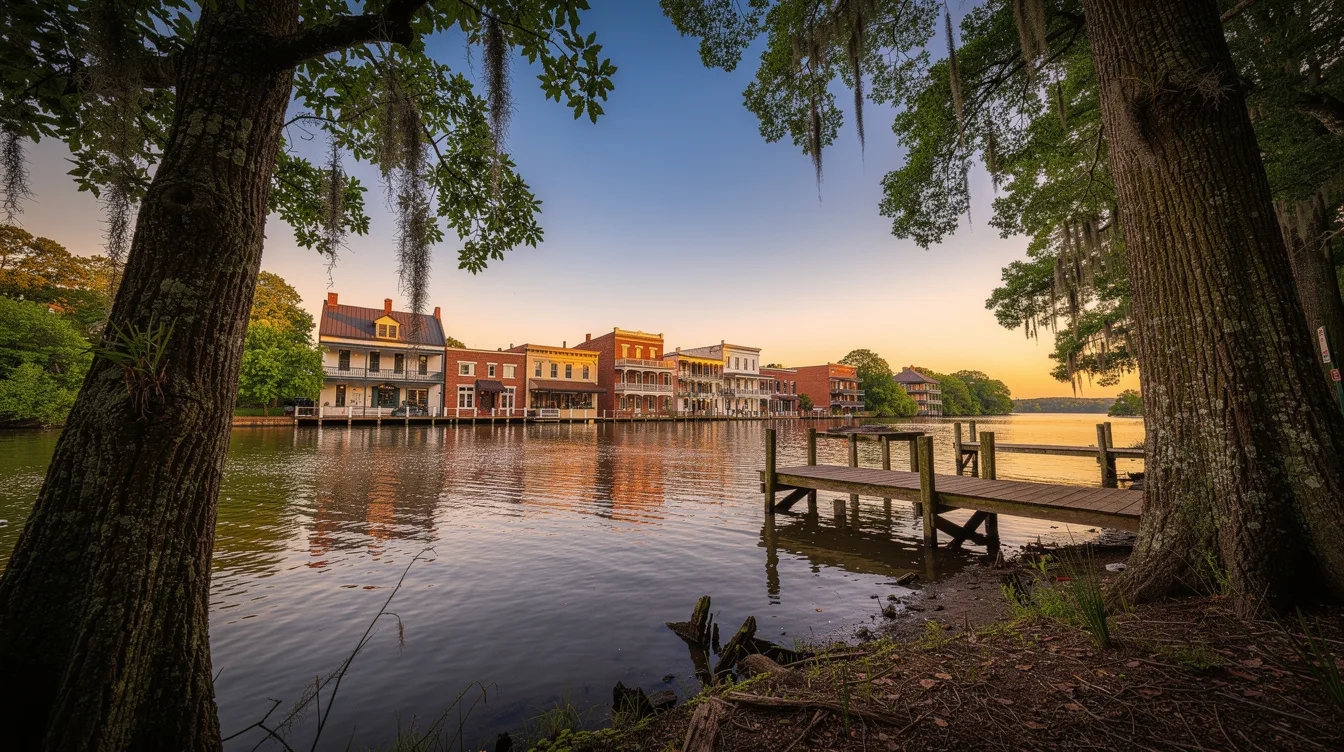
Natchitoches begins in 1714, almost a century before the Louisiana Purchase changed the map. Founded as Fort St. Jean Baptiste, this Cane River Lake town is recognized as the oldest permanent European settlement in the territory the United States later acquired.
That makes the history feel unusually close. You can stand in a small Louisiana city and trace a line back to French-Canadian exploration, long before the purchase turned this region into part of the United States.
A 1714 beginning that still shapes the town
The town was founded around 1714 as Fort St. Jean Baptiste. Its later name came from the Natchitoches people, part of the Caddo confederacy, who inhabited the region before the French arrival.
And that distinction matters. The European settlement has the headline date, but the place already had an Indigenous identity, reflected in the name that remains on the map.
The name is believed to come from an Indigenous phrase for the “place of the Paw-paw or Chinquapin.” It is a small detail, but it keeps the town from reading like a French outpost with no earlier story.
Cane River Lake gives the old center its rhythm
Cane River Lake runs through Natchitoches, giving the town a waterfront setting that feels calmer than its historical weight might suggest. The water softens the edges of the old center, so a history-focused stop can still feel like a slow afternoon.
But the river also explains a hard turn in the town’s fortunes. Natchitoches grew into an important cotton market, then lost much of that commercial advantage after 1825, when the Red River shifted roughly 5 miles east and cut off its main transportation route.
You can feel the logic of that change even without treating the city as a museum. Water made commerce possible, then water moved on. The town had to find another reason to endure.
What remains from the older town?
French Colonial homes still survive in Natchitoches, including the Prudhomme-Rouquier House. That gives visitors a tangible connection to the built past, though the city is also a working parish seat and university town.
And the nearby Cane River National Heritage Area extends the historical frame beyond downtown. It includes plantations and sites tied to Creole culture, so you can follow the story outward rather than stopping at a single historic house.
Incorporation came later, then a university
Natchitoches was incorporated on February 5, 1819. The date came after the Louisiana Purchase, which is exactly why the 1714 origin lands differently: the settlement existed long before the modern municipal structure did.
At the same time, this is not a town frozen at its founding. Northwestern State University of Louisiana was founded in 1884, adding the everyday motion of students and campus life to streets better known for older architecture.
The contrast works in its favor. Natchitoches can feel deliberate without feeling empty, and the university prevents its past from becoming the only thing happening here.
The practical case for going
Natchitoches sits about 68 miles southeast of Shreveport, in northwest-central Louisiana. That distance makes it a realistic detour if you are already traveling through the region, rather than a destination that demands complicated logistics.
Its 2020 population was 18,039, and it is the seat of Natchitoches Parish. Small, but not tiny. You get a city with local services and distinct institutions, not a historical marker beside an empty road.
Tourism now shares space with agricultural processing and wood products. That mix is worth noticing because it keeps the place grounded. The history draws you in, but the town has continued to make a living beyond it.
A history trip with a clear trade-off
The annual Christmas festival is one of Natchitoches’ best-known draws. It may appeal if you want an event-centered visit, but the research does not specify dates, so check current local details before planning around it.
But you do not need a festival to understand the appeal. Start with the old settlement story, look toward Cane River Lake, then give yourself time to notice how a former cotton market became a parish seat, a university town, and a place where old homes still hold their ground.
By late afternoon, the water along Cane River Lake does what water has always done here: it makes you stop, look longer, and wonder what changed after it moved away.