
The short answer: yes, a small rooftop can hold a year-round hot tub lounge, and a budget refresh runs $200 to $900 before you touch the tub itself. I used to think you needed sprawl. You don’t. A tight footprint forces the good decisions.
I spent two winters staring at an empty tar roof convinced it was too small for anything. Turns out the size was the gift, not the problem. Here’s how I’d build a modern rooftop terrace with a hot tub that you’ll actually use in January.
- Set the tub first, then build the room around it
- Wrap the deck in warm woods that shrug off weather
- Do you actually need a full pergola up here?
- Layer the Three-Height Light Stack
- Anchor the seating with an outdoor rug that can drink
- Build a living windbreak with tall planters
- Frame the view instead of fighting it
- Pair hot water with a Cold-Plunge Corner
- Float a low bench along the parapet
- Mix textiles so the hard surfaces soften
- Hang string lights so they actually hold up
- Paint the wall behind the tub something moody
- Add a heat source you can feel on your skin
- Build hidden storage so the roof never looks cluttered
- What do you even do with it in winter?
- Master the Steam-and-Snow Setup
- Skip the full outdoor kitchen, build a drink station instead
1Set the tub first, then build the room around it
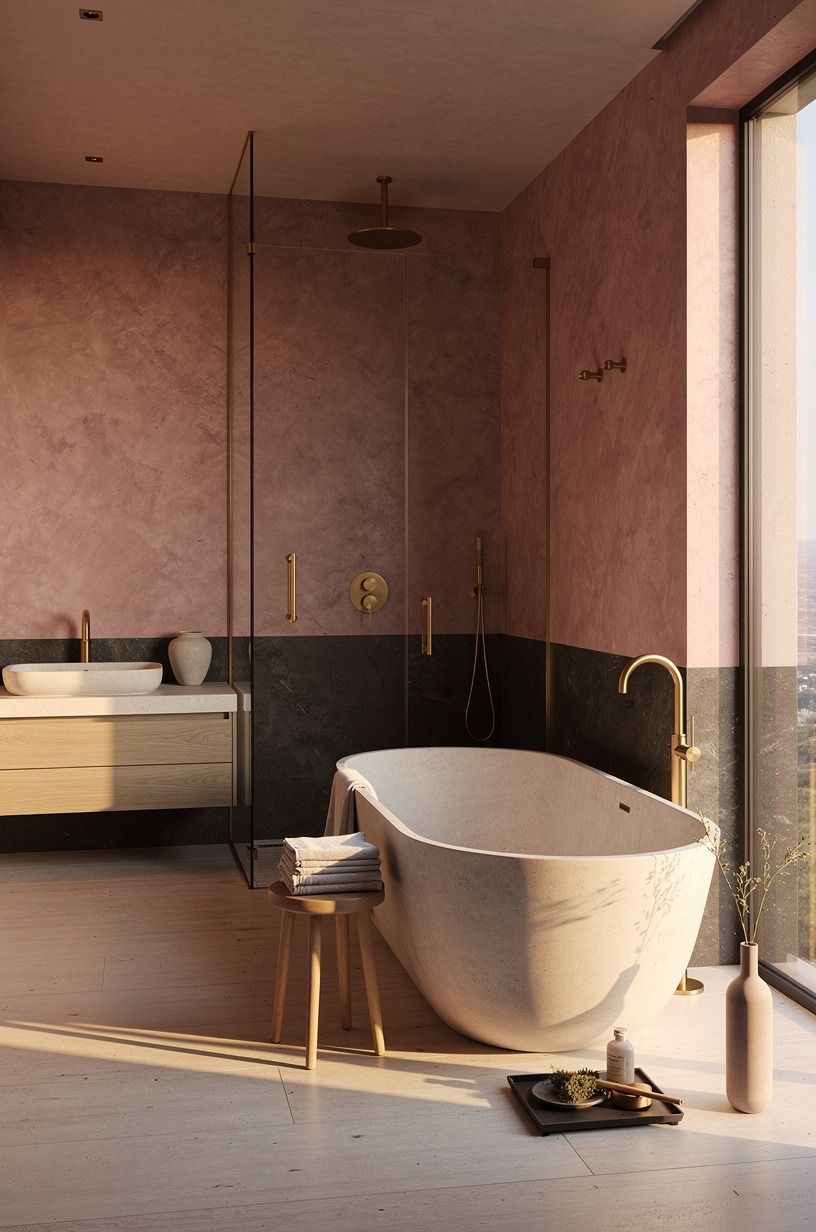
Everyone starts with furniture. That’s backwards.
The tub is the gravity of the space, so you place it, then everything else answers to it. On a compact roof I’d push a plug-and-play Bullfrog Spa A-Series into the sheltered corner, not the center, so you keep an open lane to move around it.
Give yourself the 36-inch walkway clearance code wants on at least one side. You’ll thank me the first time you’re carrying towels in the dark. A dusty-rose, charcoal, and brass scheme softens the practical stuff, while hand-applied Venetian plaster gives the tub corner a finish that feels intentional.
And leave the equipment access panel reachable, because a heater that dies behind a fixed bench is a bad Saturday. Get this one call right and the rest of the layout basically designs itself.
2Wrap the deck in warm woods that shrug off weather
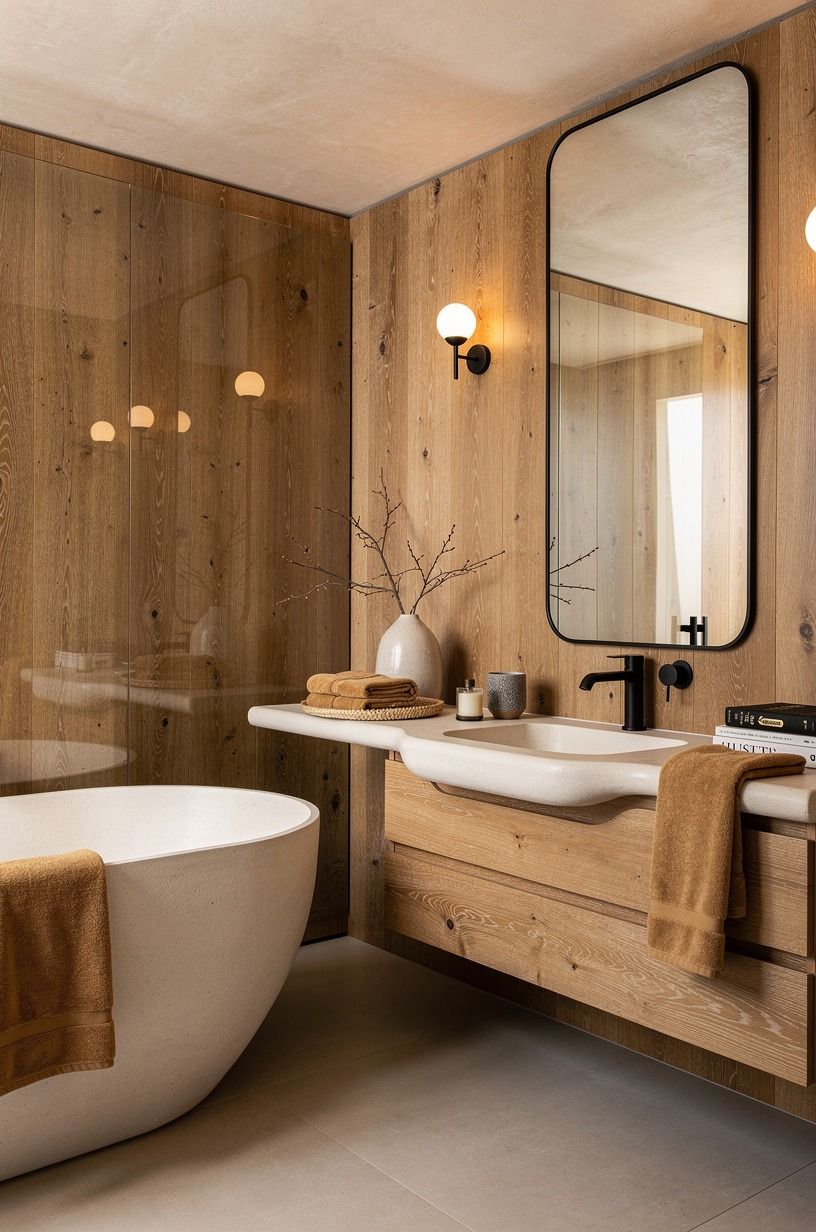
Bare concrete kills the whole mood, so lay a floor with some warmth in it. Keep the surrounding palette warm white and camel with crisp black accents, then bring in a weather-ready shagreen detail on a side table or storage piece instead of piling on more wood tones.
3Do you actually need a full pergola up here?
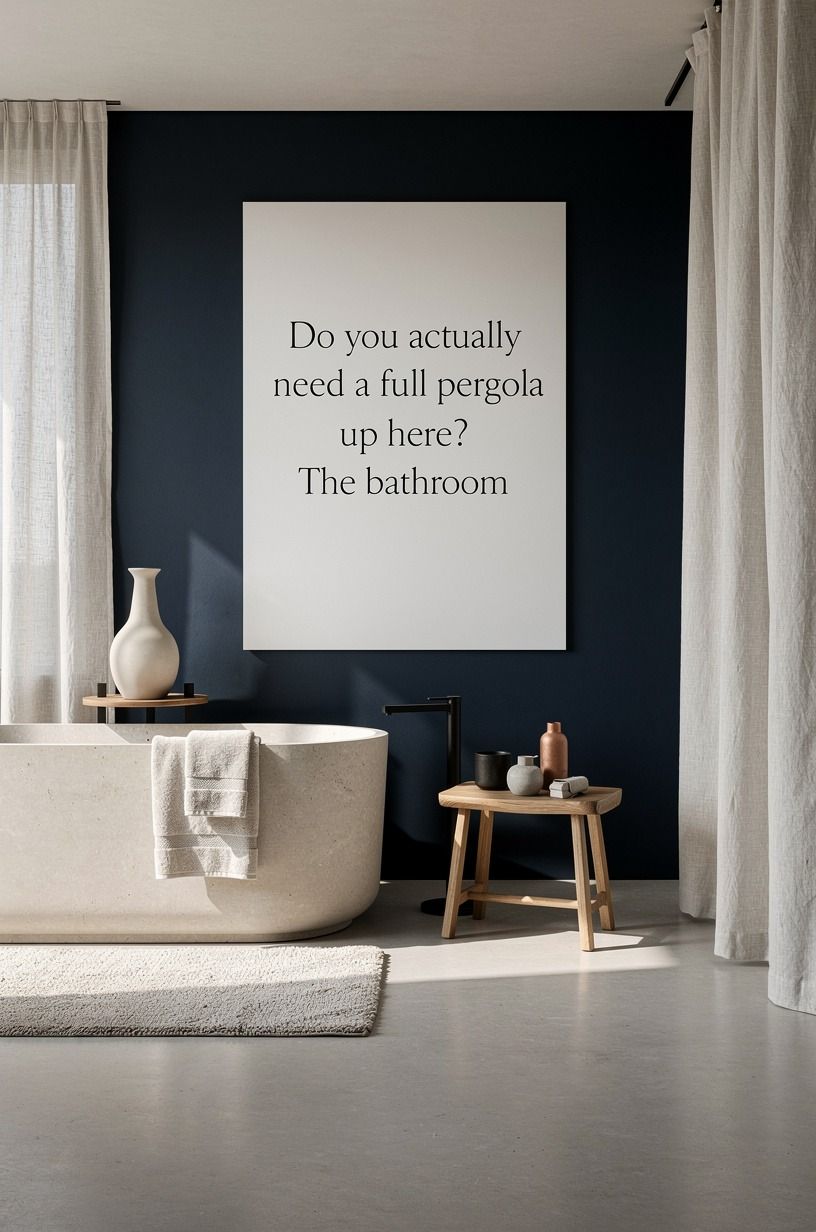
Honestly? Not always.
A pergola looks like the luxury rooftop terrace with a hot tub you saved on Pinterest, but on a small roof it can box you in and block the sky you climbed up for. Ask what you’re actually shading.
If it’s afternoon glare, a single cantilever umbrella that covers the tub plus two feet each side does the job for a fraction of the cost. If it’s privacy, a slatted screen on one edge beats a full frame.
I went back and forth on this for a month and landed on a half-pergola over the seating only. Midnight blue, copper, ivory, and washed Belgian linen keep that sheltered area rich without turning your open-air escape into a cave.
4Layer the Three-Height Light Stack
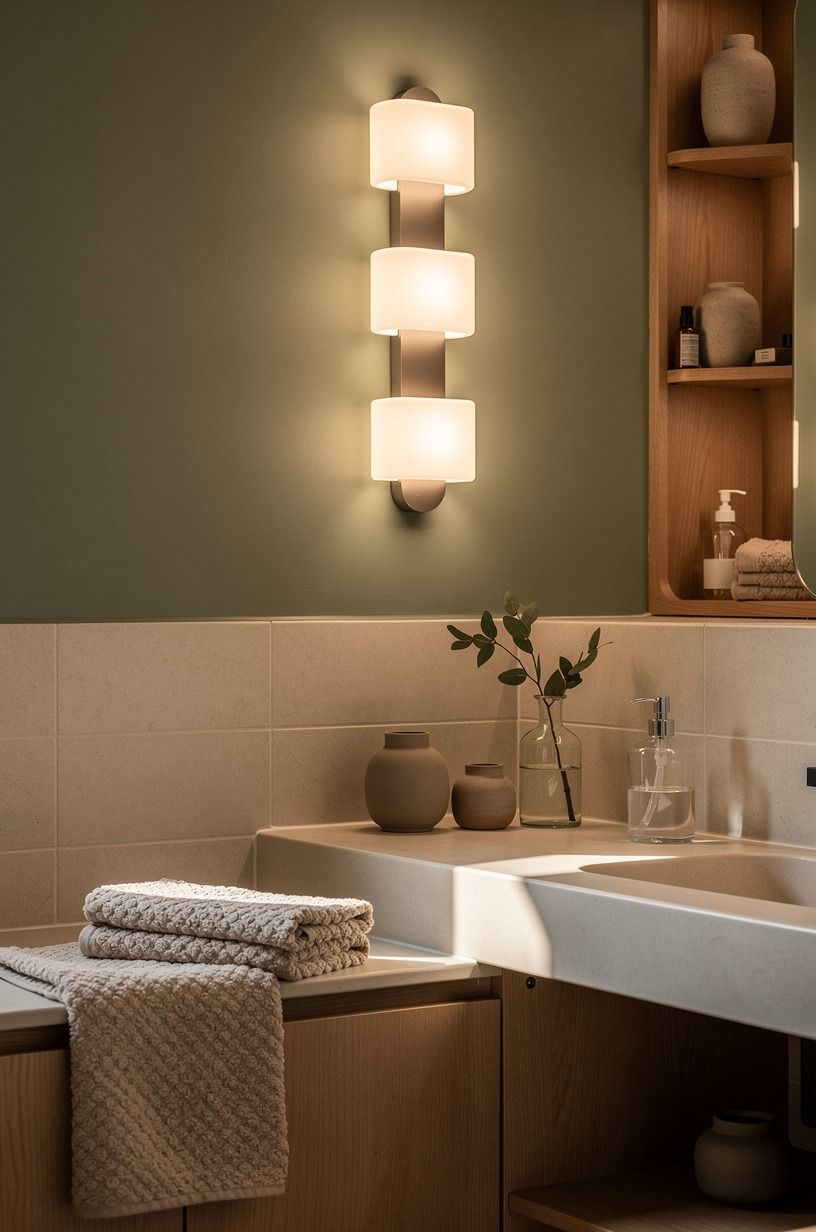
One big floodlight flattens everything and makes the roof feel like a parking lot. The move I swear by is what I call the Three-Height Light Stack: something low, something mid, something overhead, all warm, all dimmable. Nothing blue, ever.
Low is a run of path lights grazing the deck edge. Mid is a pair of lanterns on the parapet at sitting-eye level. Overhead is a loose canopy of string lights.
Layer those three and the space gets depth at night instead of a single harsh pool. Sage green, warm cream, natural wood, and one organic bouclé cushion keep the glow from feeling too polished.
Warm bulbs around 2700K only. The glow should feel like a fire caught the horizon, not like the security lot behind a gas station.
5Anchor the seating with an outdoor rug that can drink
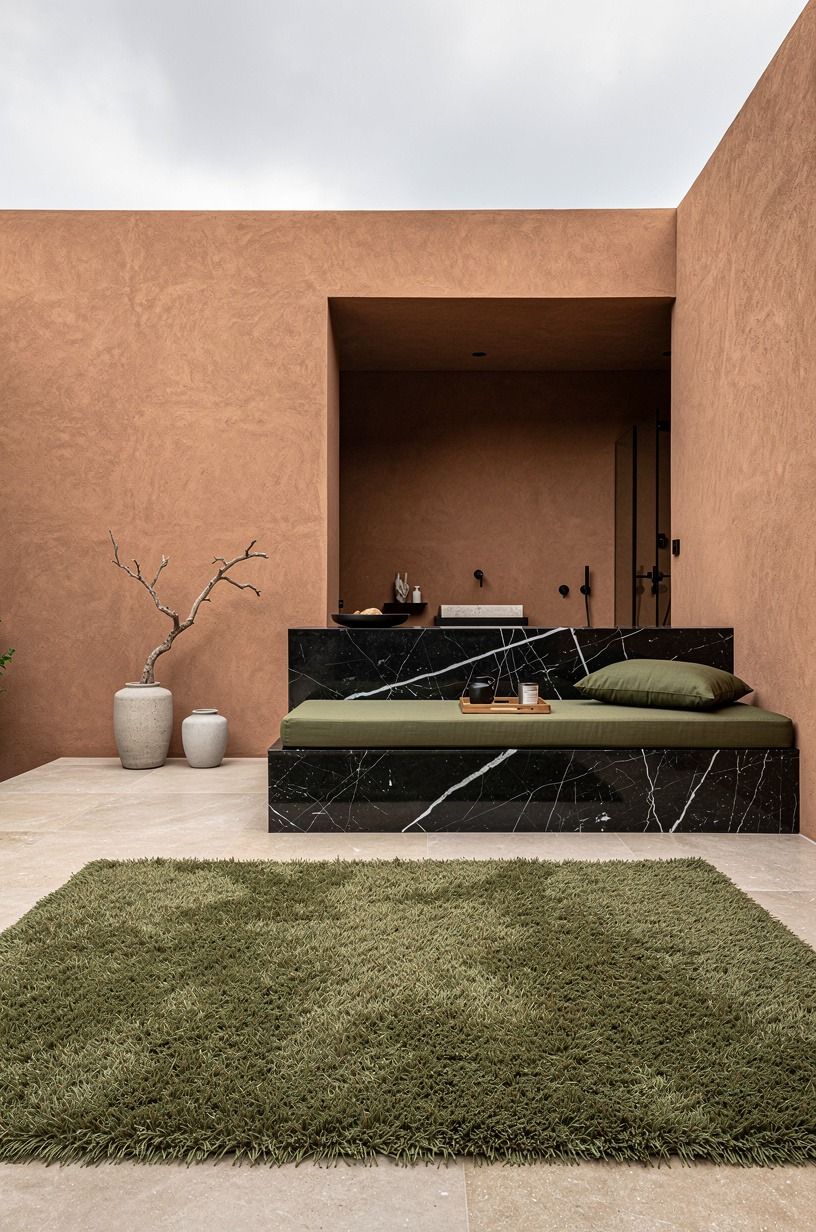
A rug tells your eye where the room stops and the roof begins, which matters more when the whole footprint is small. Float the front legs of your chairs onto it so the zone reads as one gathered piece, not scattered parts.
Use a polypropylene flatweave, roughly $80 to $400 depending on size, because it dries fast and won’t mildew after a soak-and-drip evening. Wool up here is a mistake, it holds water and smells like a wet dog by August.
A faded terracotta, stone, and olive rug sits beautifully beside a Nero Marquina black-marble table with white veining. It’s the cheapest thing that makes the biggest difference.
You’ll want it larger than you think.
6Build a living windbreak with tall planters
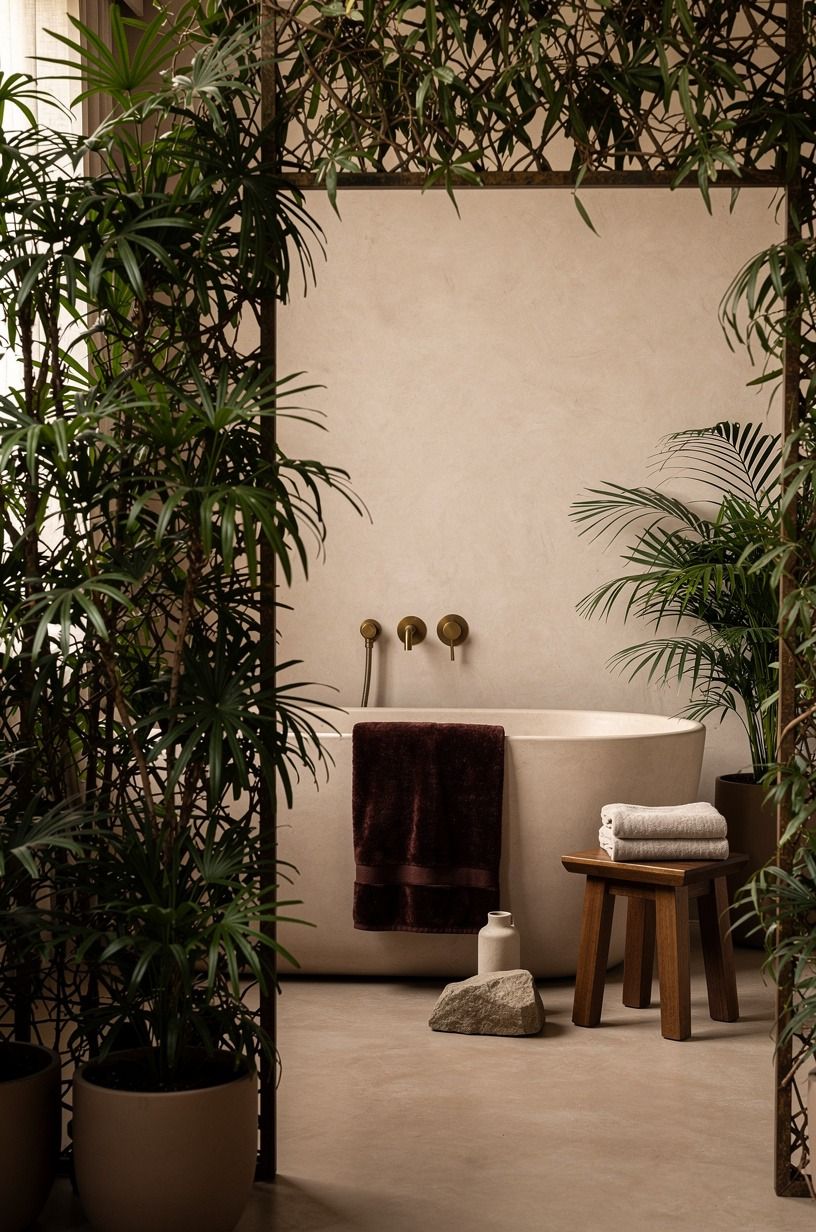
Wind is the thing nobody warns you about on a roof, and it’ll chase you out of a hot tub faster than cold ever will. So build a soft wall. I line the exposed edge with tall fiberglass planters holding structural greenery that takes the gusts.
Go with bamboo, feather reed grass, or a row of boxwood in 24-inch containers weighted with gravel at the base so nothing tips in a storm. Clay, linen, and aged brass keep the planting restrained; deep-pile mohair velvet on one protected lounge cushion adds the softness the hard roof needs.
The plants cut the wind, they green up the concrete, and they buy you privacy from the taller building next door all at once. Real talk: this is the upgrade that turned my roof from a place I visited into a place I stayed.
7Frame the view instead of fighting it
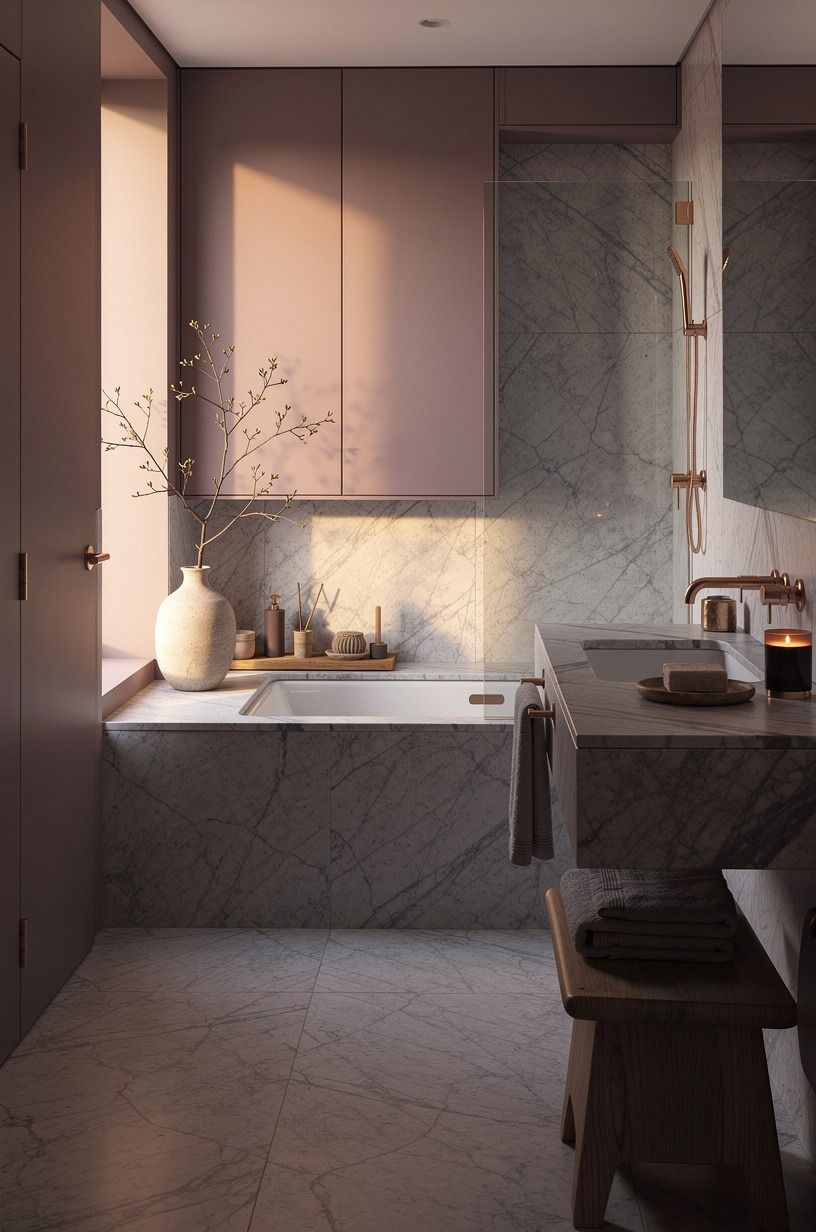
If you’ve got a skyline, a water line, or even one good tree, let that be the art and stop competing with it. Point the tub and the main seat toward the best sightline and keep everything behind you low and quiet.
This is where a luxury rooftop patio with modern furniture earns its keep: clean, low profiles that sit under the horizon instead of chopping it up. A teak platform lounger with slim arms won’t block the view the way a big rolled-arm sectional would. Plum, grey, and rose-gold accents, plus a small Carrara-marble surface, give the seating warmth without competing with the sky.
If your view is a brick wall, that’s fine too, paint it (more on that below) and make the wall the thing you framed on purpose.

8Pair hot water with a Cold-Plunge Corner
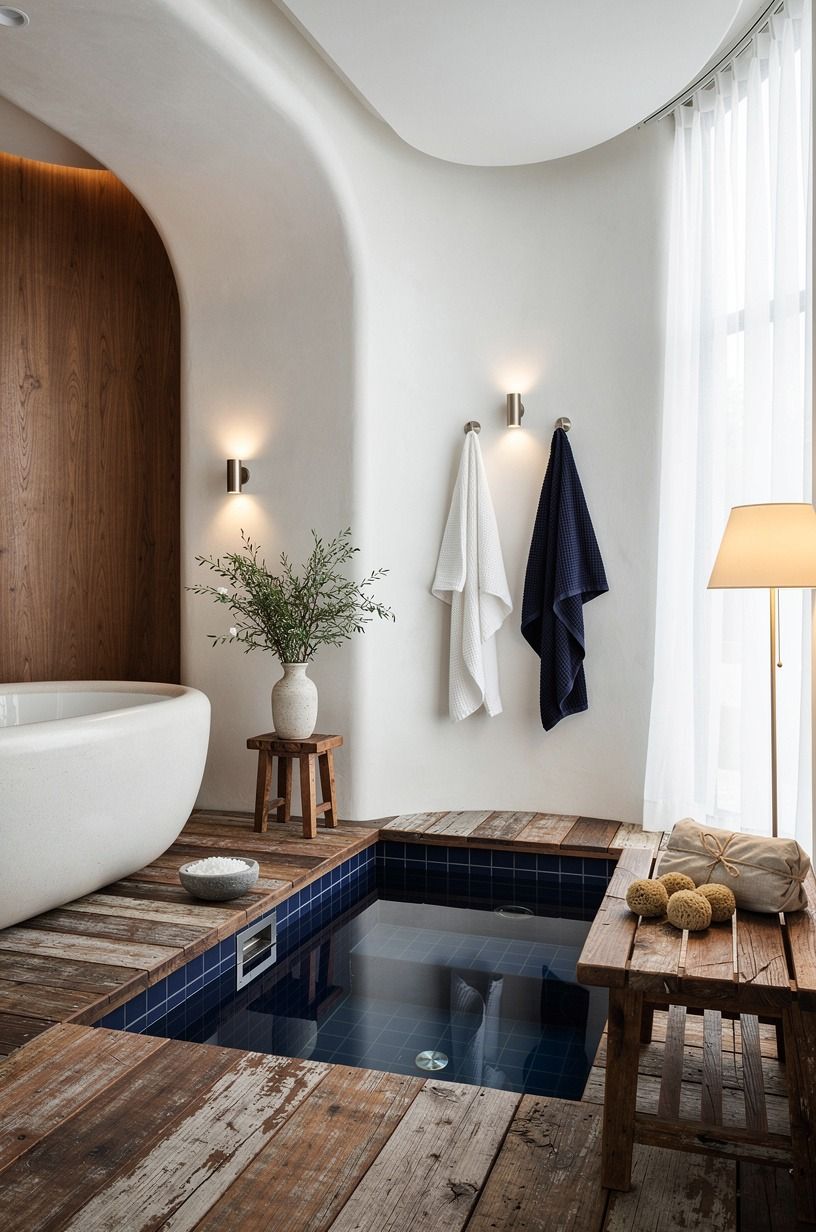
Here’s my favorite move that isn’t a move, it’s just physics you can feel: hot water is twice as good when there’s cold nearby. Keep the cold-plunge area clean in navy, white, and walnut, with reclaimed weathered teak underfoot or around its edge so it feels warm even before you step back into the tub.
9Float a low bench along the parapet
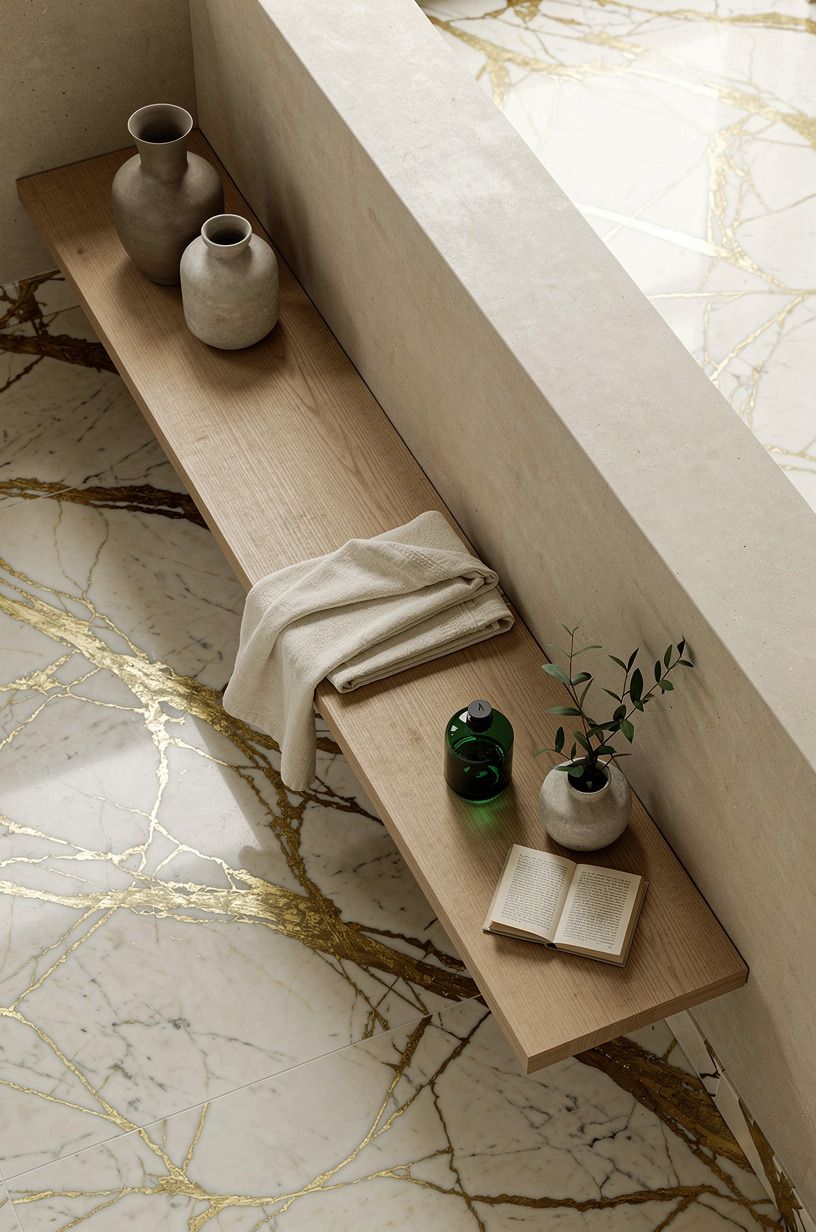
Small roofs can’t afford furniture that eats floor, so stop buying chairs and build seating into the edge instead. A low built-in bench running along the parapet gives you a place to sit, a place to set a drink, and hidden storage all in one line.
Keep the seat at standard 18 inches high and hinge the top so the guts hold cushions and a cover. An emerald, gold, and cream mix looks especially good against a Calacatta-marble ledge with soft gold veining.
Add a couple of Sunbrella bolsters, around $40 to $150 each, and it doubles as the lounge for people who aren’t in the water yet. One built piece doing three jobs is how tiny spaces win.
10Mix textiles so the hard surfaces soften
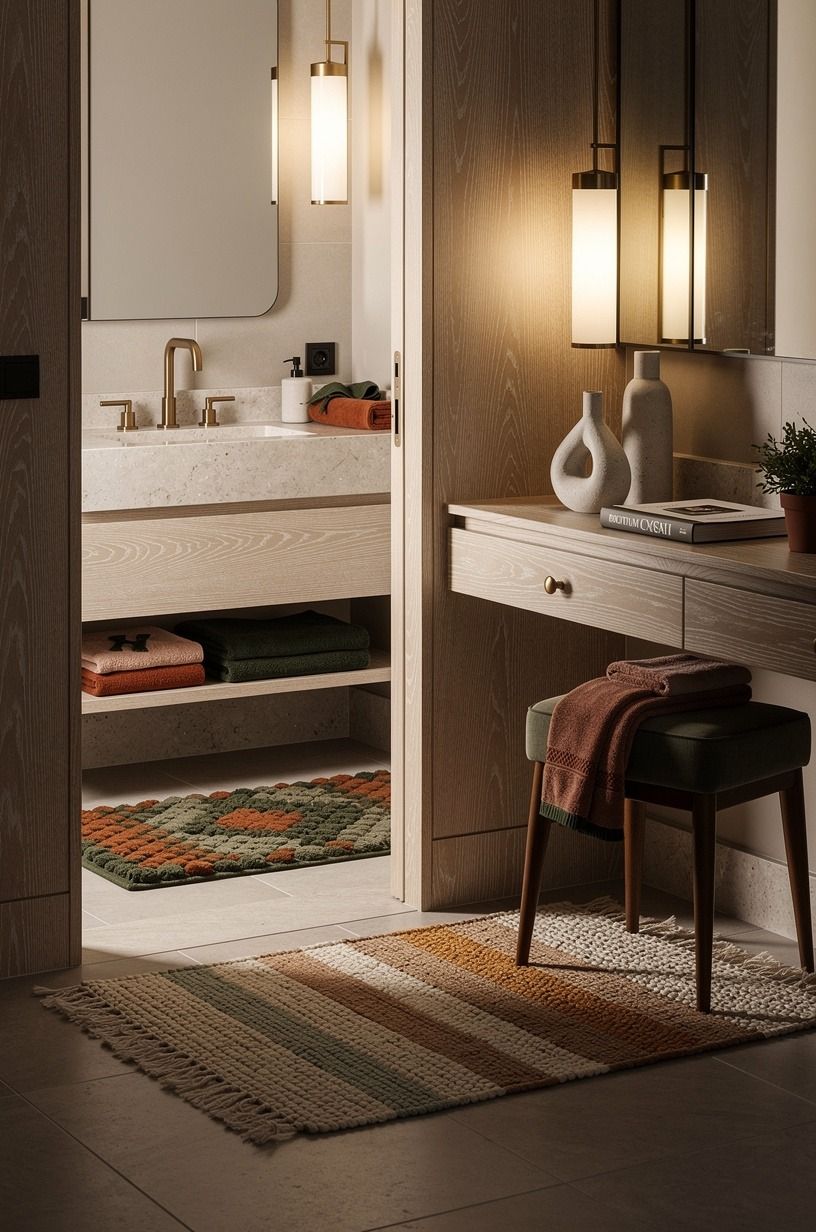
A roof is all hard edges, tile and metal and glass, so the fix is texture you can touch. Layer weatherproof performance fabric underneath and warmer, packable throws on top for the shoulder months.
Base everything in Sunbrella cushions because they take rain and sun without fading. Then, September through November, toss a couple of chunky merino wool throws over the bench for the walk between water and door.
Forest green, rust, natural oak, and a little cerused white oak keep the mix grounded instead of fussy. Store the wool in the bench so it stays dry.
That warm-fabric layer is what makes a rooftop entertainment area feel gathered instead of staged. And it’s the difference between a roof you photograph and a roof you sink into after a long day.
11Hang string lights so they actually hold up
Everyone hangs string lights. Half of them sag, short out, or blow down by the second storm.
The fix is tension and the right bulb. Run a length of stainless guy wire first, zip-tie the lights to that, and the wire takes the strain instead of the cord.
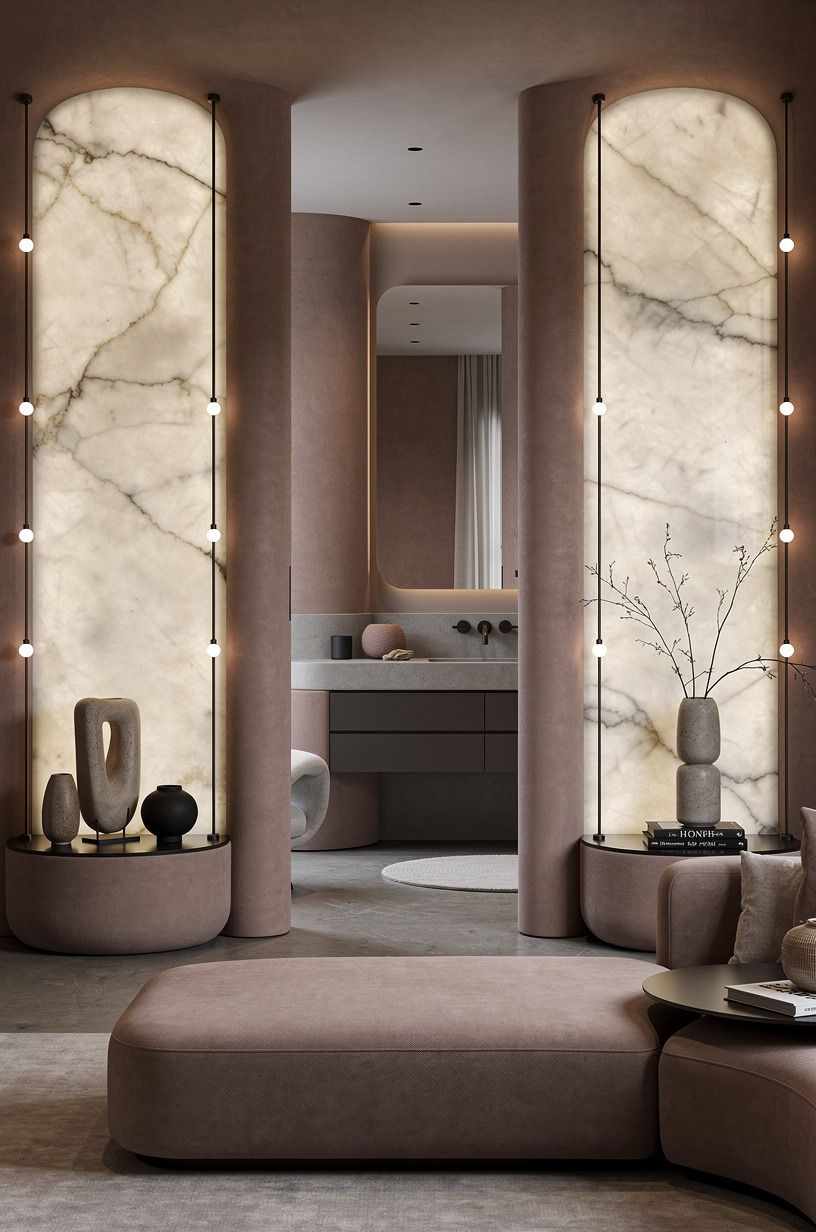
Use commercial-grade LED café lights, roughly $30 to $120 a strand, with shatterproof bulbs rated for wet locations. Crisscross them low over the seating, not way up high, so the glow lands where people sit. Dusty rose, charcoal, brass, and a backlit translucent-onyx accent make the light feel warmer without adding clutter.
Warm white, dimmable if you can swing it. Done right, they’re the ceiling your open-air room never had.
Nothing else makes a rooftop feel finished this fast, for this little money.
12Paint the wall behind the tub something moody
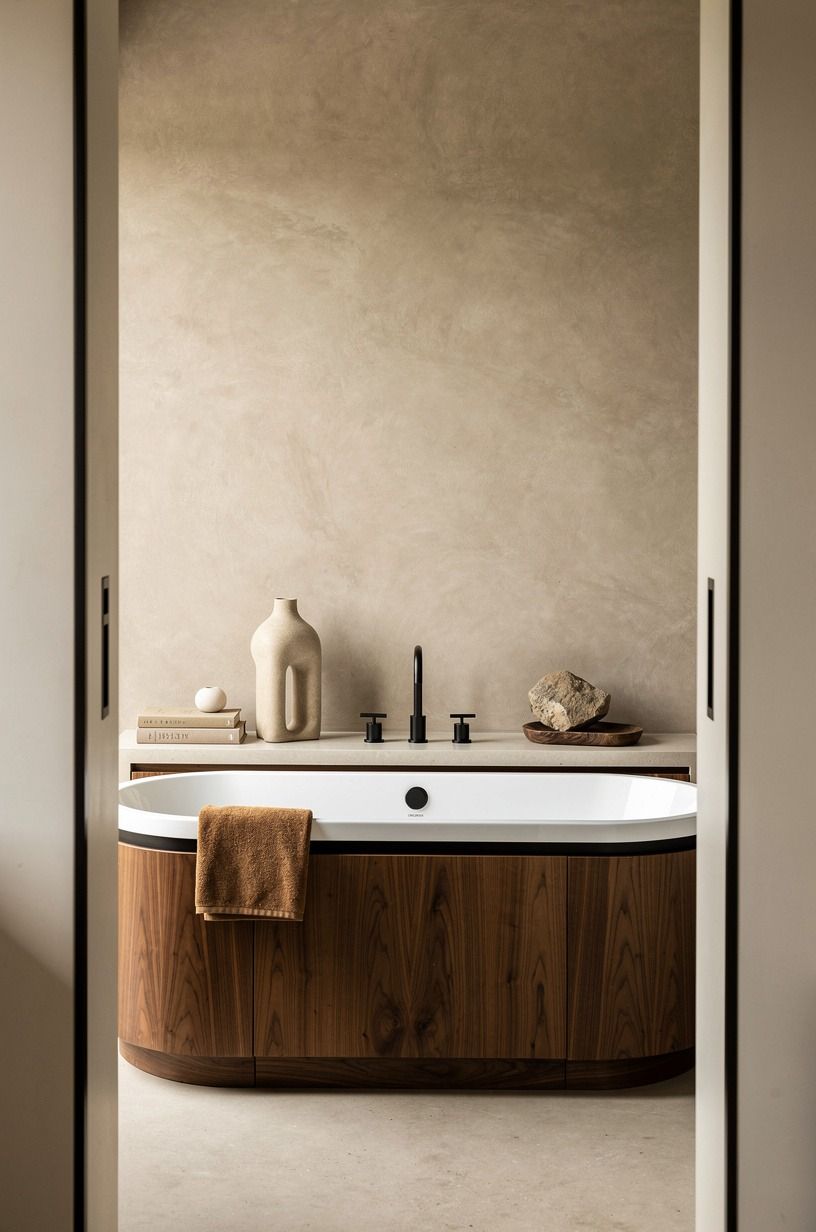
If you’ve got a back wall, a stairwell bulkhead, a chimney, use it. A dark, saturated color behind the water makes the steam and the lights pop and gives the whole corner a backdrop with weight. Flat grey concrete does the opposite, it drains the scene.
Reach for a real exterior-grade paint, not interior leftovers, so it survives the freeze-thaw. Benjamin Moore Aura Exterior in a warm white or camel keeps the area light while black accents give it structure; book-matched walnut nearby adds the mood. Prime the masonry first or it’ll peel by spring, I learned that the hard way on a cinderblock parapet.
One wall, one weekend, and the tub suddenly looks like it was designed in, not dropped in.
13Add a heat source you can feel on your skin
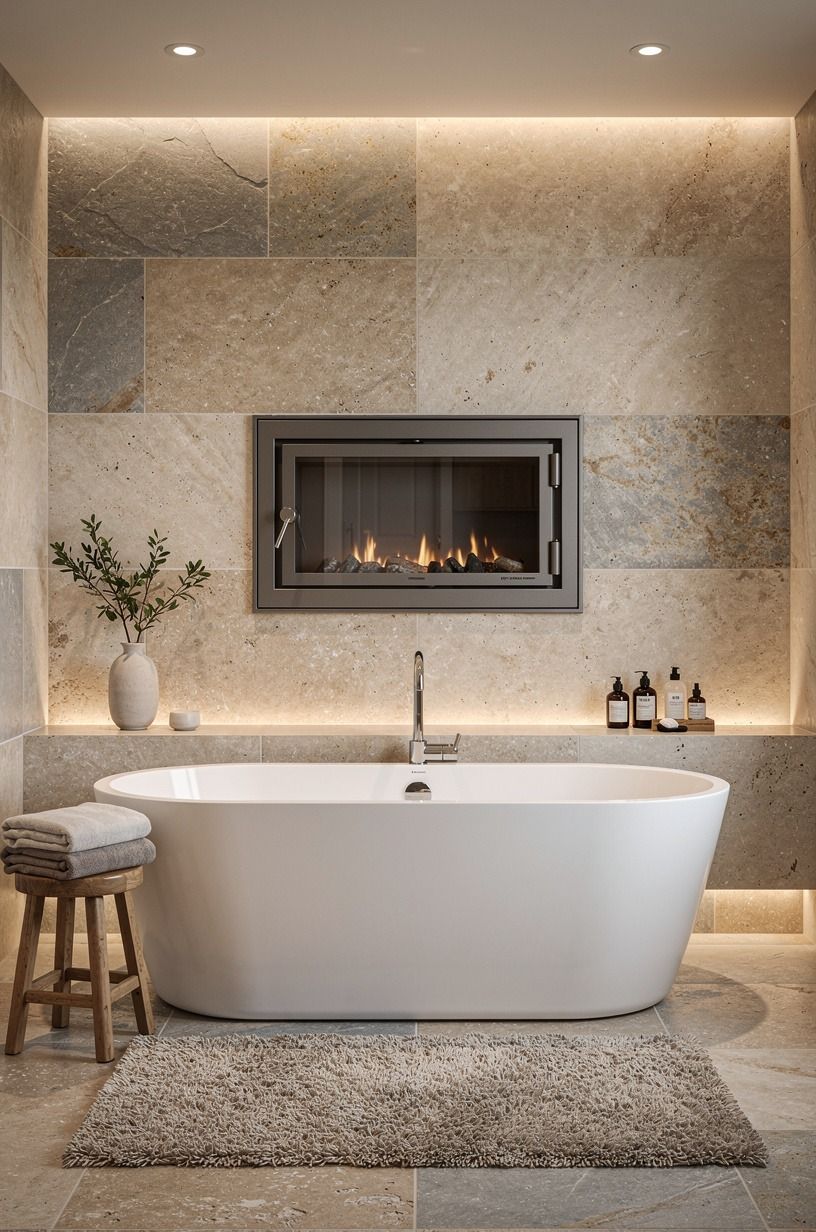
Warm water keeps your body warm, but your face and the air around you still go cold, and that’s what sends people inside. A midnight-blue, copper, and ivory setting with warm travertine around the heat source makes the whole zone feel calmer before you even turn it on.
14Build hidden storage so the roof never looks cluttered
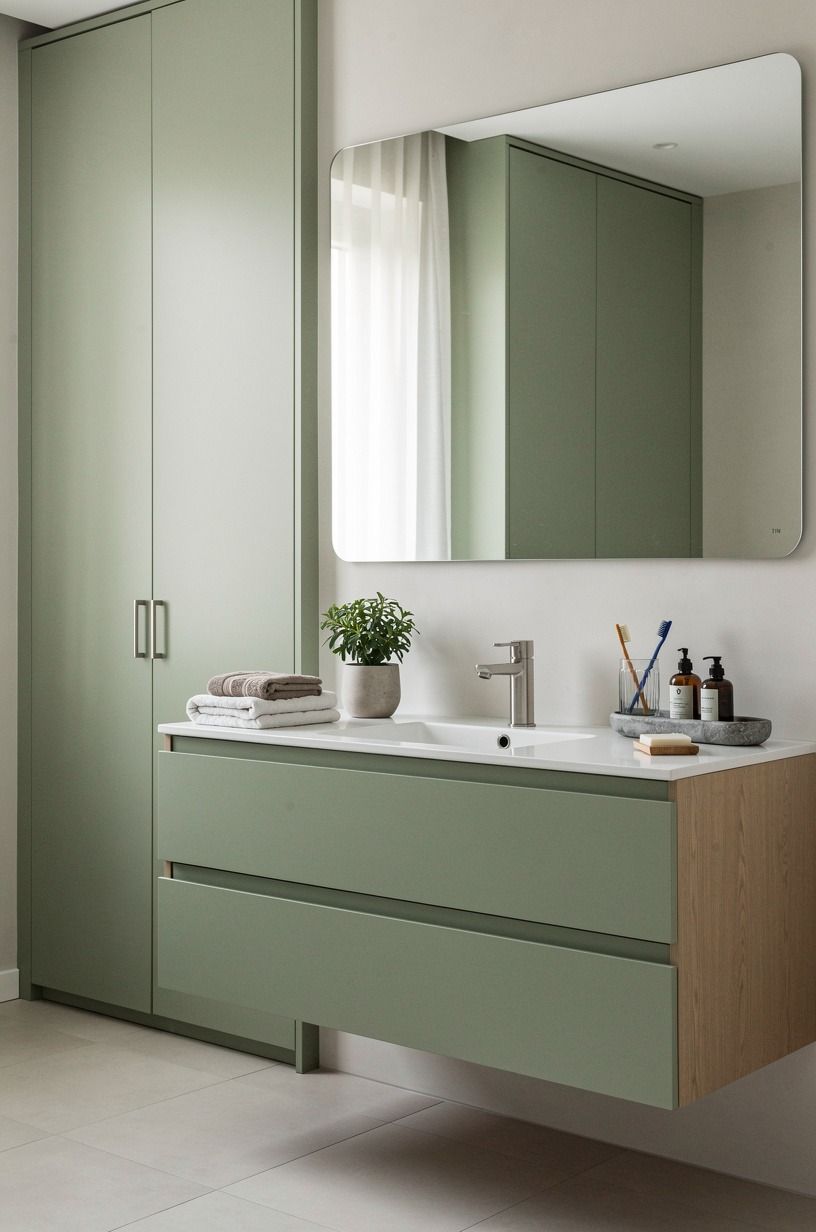
A rooftop with towels, covers, chemicals, and shoes scattered around reads as chaos, and clutter is what makes a small space feel smaller. The answer is storage that disappears. Beyond the bench in idea nine, add a weatherproof deck box that doubles as extra seating.
A resin Keter Eden box runs about $130, holds a season of cushions, and sits pretty under a throw. Sage green, warm cream, natural wood, and unlacquered brass hardware that develops patina keep it from looking like plastic storage.
Keep your spa chemicals in a separate latching bin, out of the sun, away from where kids roam. If you want more on tucking mess out of sight in tight spots, that principle carries over from every small room I’ve styled.
A clear deck is what lets the tub be the star.
15What do you even do with it in winter?
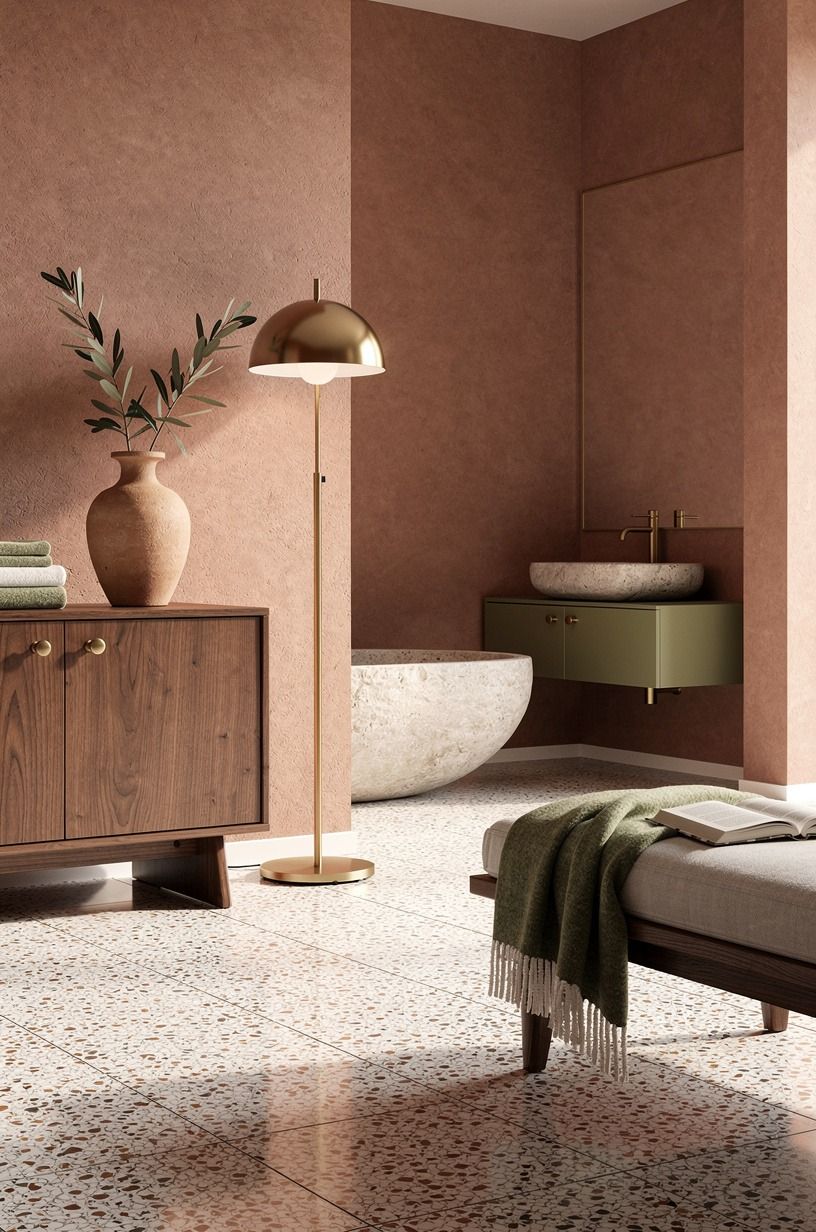
This is the question that stops most people, so let’s answer it straight. You soak in it, that’s what. A well-covered spa holds temperature down to well below freezing, and the plunge from cold air into hot water is the best part, not the obstacle.
The whole play is managing the ten feet between door and water. Keep a weighted spa cover rated R-18 or better so the heater isn’t fighting the cold all night.
Lay rubber deck runners so wet feet don’t hit ice. Terracotta, stone, olive, and oversized-chip terrazzo make that route feel considered instead of purely practical.
Stash robes just inside the door. Do that and winter becomes the season you use the roof most, while everyone else’s patio sits dead under a tarp.
16Master the Steam-and-Snow Setup
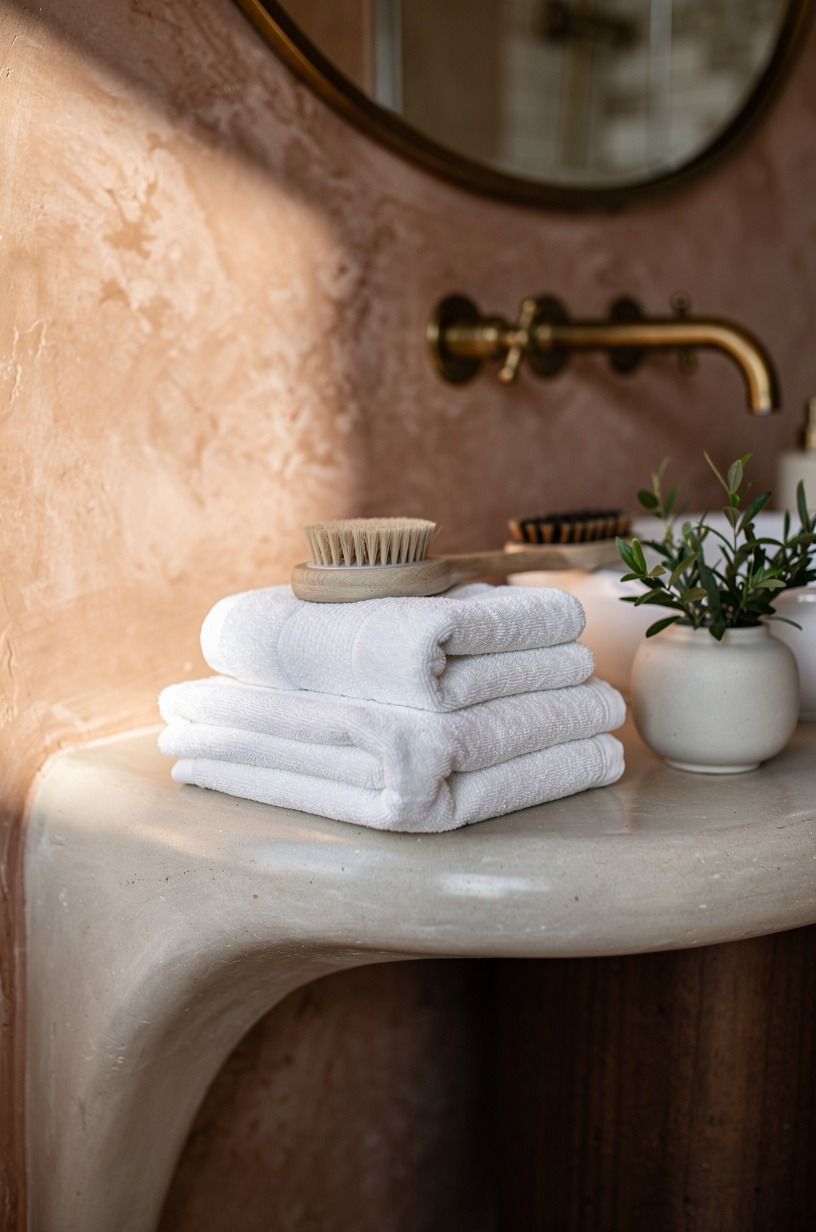
Once you’ve committed to winter, lean all the way in with what I call the Steam-and-Snow Setup: low warm light, a single heat source, and zero clutter so the falling snow is the only decor. This is when a rooftop earns every dollar.
Drop the string lights to their dimmest setting so the steam catches the glow. Kill anything blue or bright.
Clay, linen, aged brass, and hand-applied Venetian plaster make the winter setup feel quieter and warmer. Keep one cast-iron lantern with a real candle on the parapet, and let the snow do the rest.
There’s nothing like sitting chest-deep in warm water watching flakes vanish an inch above the surface. If you dream of that endless-summer feeling instead, these year-round warm-climate escapes scratch the same itch. But honestly?
The snow version wins.
17Skip the full outdoor kitchen, build a drink station instead
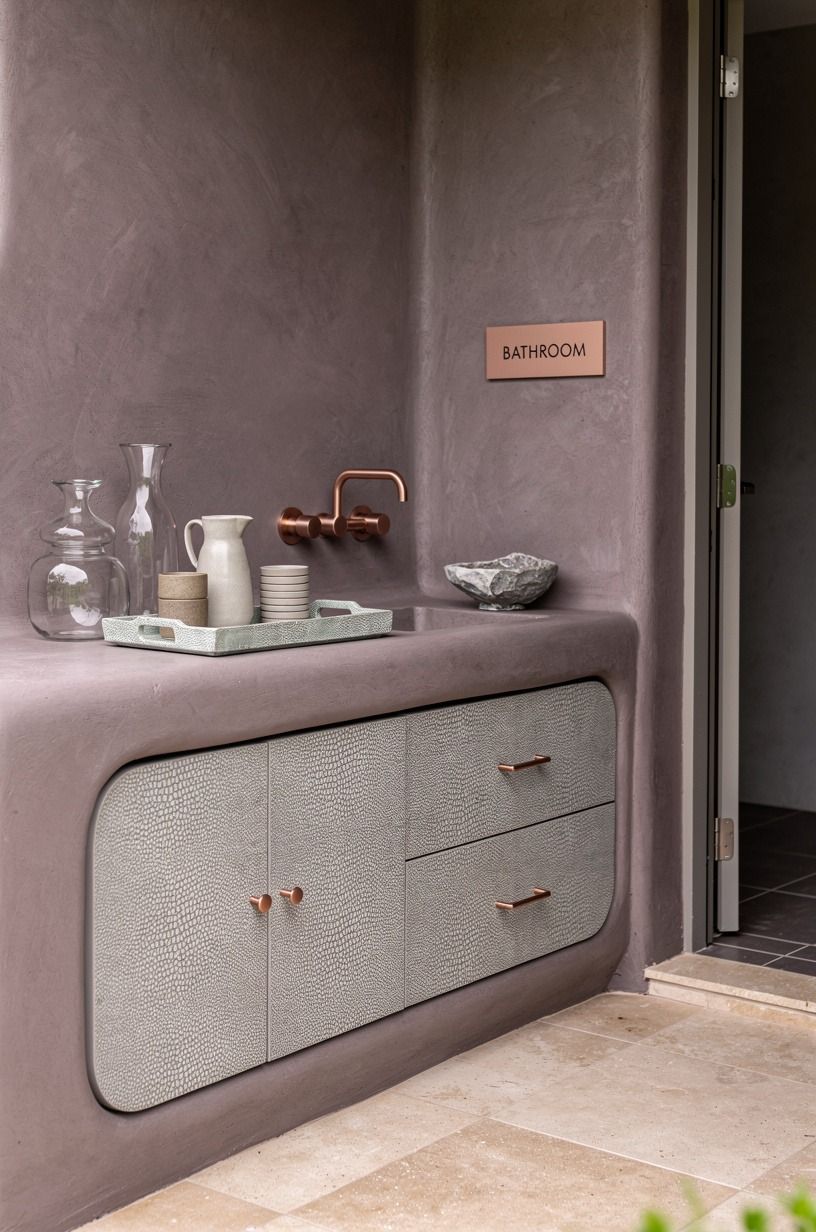
On a small roof, a full outdoor kitchen is a money pit that eats the space you came up here to enjoy. Instead of the built-in grill and counter fantasy, build one tight, useful drink station and call it done.
A slim console against the wall holds a kettle, mugs, a wine chiller, and towels within arm’s reach of the tub. Plum, grey, rose gold, and a small shagreen accent make it feel like furniture rather than leftover patio gear. That’s the whole kit.
You want warm cider in reach, not a second kitchen to maintain. It keeps the budget where it belongs (the water, the light, the comfort) and keeps the floor open.
Less to build, less to clean, more nights actually spent soaking.
What a rooftop hot tub lounge really costs
Before you price the tub, price the room around it, because that’s where budgets quietly balloon. Here’s the honest range I’ve seen for the lounge build itself, tub not included:
Most small-roof setups land beautifully in that budget-to-mid band. A teak set alone runs $1,000 to $4,000, so buy it slowly and start with the textiles and light. You don’t need the high tier to get there.
The part nobody plans for, and it’s the whole game
I want to talk about the ten feet, because it’s what separates a rooftop hot tub you love from one you use twice and abandon. Everyone obsesses over the tub, the decking, the view. Almost nobody plans the walk between the warm water and the warm door, and that walk is exactly where the dream dies.
Here’s what I learned building mine. The first winter, I had a gorgeous setup and I still stopped using it by December. Not because the water was cold.
Because stepping out onto freezing tile, fumbling for a towel I’d left inside, and hobbling barefoot across ten feet of ice was miserable enough to cancel the twenty minutes of bliss that came before it. The math didn’t work, so I quit.
The second winter I fixed the transition, not the tub. Robe hook by the door.
Rubber runners underfoot so my feet never touched ice. A dim lantern already lit so I wasn’t hunting for a switch soaking wet.
A weighted spa cover heavy enough that lifting it felt like opening a door, not wrestling a tarp. Suddenly I was out there three nights a week in January, and I’ve never looked back.
That’s the real design principle up here, and it’s the one Pinterest never shows you: a rooftop hot tub isn’t a product you install, it’s a ritual you have to make frictionless. Every dollar you spend removing friction from that ten-foot walk returns more joy than any dollar spent on the tub’s jet count.
Design the transition first. The soak takes care of itself. If you remember one thing from all seventeen ideas above, remember that the comfort lives in the walk, not the water.
A Few Things Worth Answering
What’s the best hot tub for a small rooftop?
A plug-and-play spa like the Bullfrog Spa A-Series is your best bet, because it runs on a standard 110V outlet and needs no crane or hardwiring. It’s lightweight for a roof and you can place it in a sheltered corner. Confirm your load capacity with an engineer first, always.
Where can I buy rooftop lounge pieces on a budget?
Start with IKEA for deck tiles and planters, Wayfair for outdoor rugs, and Target for string lights and cushions. For the big-ticket teak, check Facebook Marketplace, patio furniture turns over constantly and you’ll find near-new sets for half price.
Thrift the accent pieces. It all reads high-end once it’s styled.
How much does a rooftop hot tub lounge cost?
Plan on about $200 to $900 for a budget lounge refresh (textiles, lights, plants, paint), or $1,500 to $6,000 for a mid-range build with a patio set and real lighting. The tub itself is separate.
The good news? The styling that matters most is the cheap part.
Can I build this on a tight budget?
Yes, and it’s easier than you’d think. Repaint the back wall with exterior paint you already own.
Hang string lights on tension wire for under $50. Fill secondhand planters with cuttings from friends.
Those three moves cost almost nothing and carry 80% of the whole look. Start there!
Is a rooftop hot tub lounge worth it in a small space?
Absolutely, and the small space actually helps. A tight footprint means fewer decisions, less to heat, and a cozier feel that big roofs struggle to fake.
Push the tub to a corner, build seating into the edges, and keep the center open. Small done right beats big done sloppy.
Is this a good idea for a renter?
Yes, if you keep it damage-free. Use interlocking deck tiles that float over the membrane, freestanding planters, and a plug-and-play spa that unplugs and moves out with you.
Skip anything bolted down. Get written landlord sign-off on the water weight first, that part’s non-negotiable.
Where I’d Start Tonight
If I had to pick one, I’d start with the Three-Height Light Stack. Warm light is what turns a cold roof into somewhere you’ll actually sit past dark, and you can’t buy that feeling later with furniture. Pin the light idea for later and go warm.