
I once watched a small bedroom lose all its calm after a bright blue-white ceiling went up above warm cream walls. In a typical 12-by-12 room, that ceiling covers about 144 square feet, enough surface to make the wrong undertone feel louder than every piece of furniture below it.
Ceilings are easy to treat as an afterthought because they sit beyond eye level. That’s exactly why a thoughtful finish has such authority: it quietly sets the room’s light, height, and mood before the sofa gets any credit.
Choose a Softer White First
Keep most ceilings flat white paint or a very soft warm off-white. Stark, icy white can make creamy walls look dingy by comparison, especially when daylight shifts from morning to late afternoon.
Designers tend to favor a ceiling color that is a touch warmer or slightly deeper than the wall color when a room needs more intimacy. It softens the hard line where wall meets ceiling and gives standard-height rooms a more settled feeling.
Pick up sample cards at Home Depot and view them against the wall after dark as well as in daylight. A ceiling color that seems boring on a chip often looks exactly right once it reflects across an entire room.
Use a Truly Flat Finish
A ceiling needs dead-flat interior paint far more often than it needs sheen. Flat finishes absorb light, which helps disguise roller marks, patched areas, and the slight unevenness common on older drywall.
Skip eggshell overhead unless you have a specific practical reason, such as a hard-working bathroom with strong ventilation. Its reflected shine can announce every seam and shallow dent, and that is a fussy look nobody wants above a dining table.
For the main coat, choose a ceiling-specific option from Lowe’s when available. These formulas are generally made to reduce splatter and provide solid hiding power, both of which matter when you are working over your head.
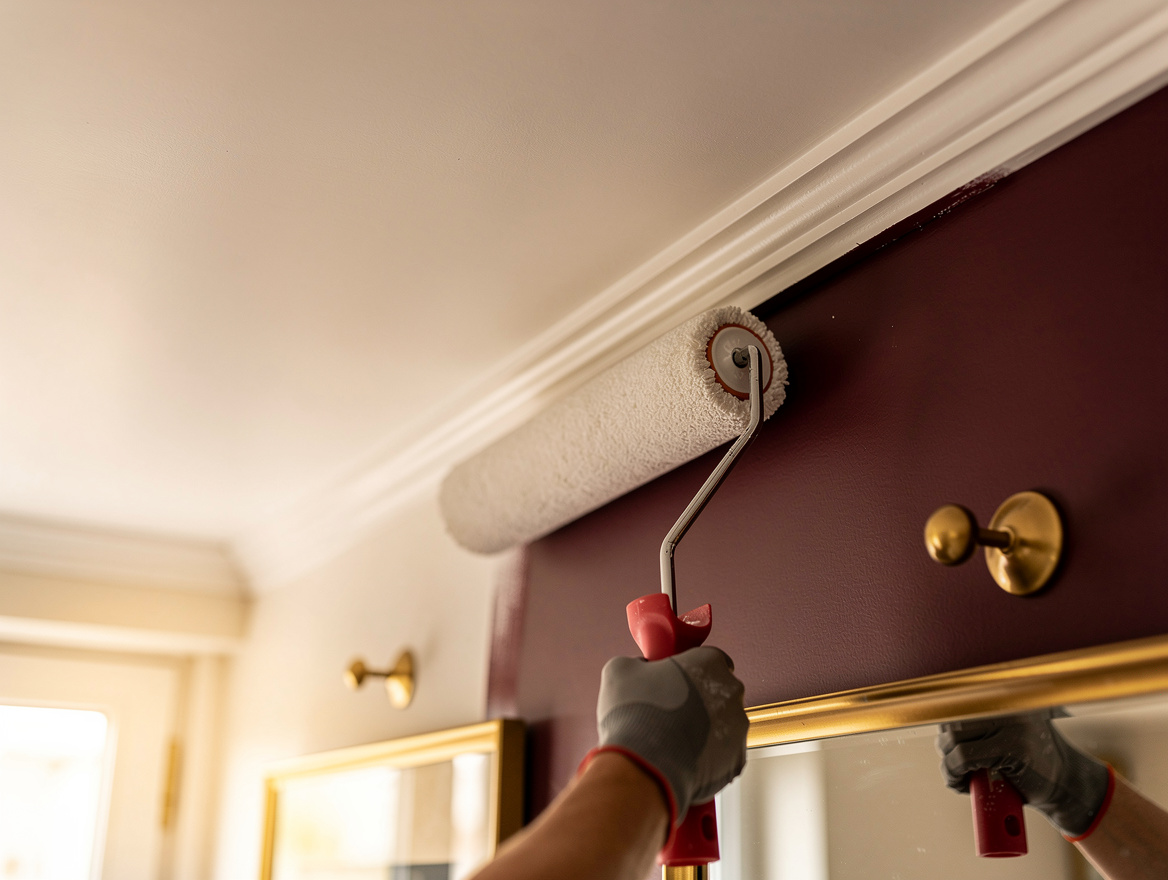
Paint the Ceiling Before the Walls
Start overhead, then move to walls and trim. Paint has gravity on its side, so this order lets you work freely with a roller without trying to protect a freshly finished wall from tiny drips.
Use a 3/8-inch synthetic roller cover on a smooth ceiling and move up toward a 3/4-inch nap for noticeable texture. Load it evenly, work in overlapping sections, and keep a wet edge rather than stopping in the middle for a phone call.
A basic DIY supply run for a small room is typically around $40 to $90 at Ace Hardware, including paint, tape, a roller, and drop cloths. Buy better tape than you think you need, because fuzzy lines are especially obvious where the ceiling meets the wall.
Prime Stains Instead of Covering Them
Water marks, smoke shadows, fresh drywall, and a very dark old color need stain-blocking primer before the finish coat. Regular white paint may hide the mark at first, then let it ghost back through after the room has had time to settle.
Fix the leak or moisture source before painting, or the ceiling will simply advertise the same problem again. A clean repair followed by primer is less glamorous than choosing a new color, but it is the decision that keeps the finish looking crisp.
For a smooth 144-square-foot ceiling, a gallon of ceiling paint typically covers one coat with some room to spare, based on roughly 350 square feet of coverage per gallon. Texture, repairs, and two coats all reduce that cushion, so don’t plan too tightly.

Lower a Tall Room With Color
In rooms with a 9-foot ceiling or higher, a soft beige or muted clay shade overhead can make a seating area feel grounded. The effect is especially persuasive in a bedroom where a bright white plane can make the bed feel visually stranded.
Try color drenching with the same muted shade on walls and the ceiling when you want a cocooning result. It works best with simple trim and a restrained furniture palette, because the paint treatment already carries plenty of presence.
Test one section before committing to a saturated shade from Target decor inspiration boards or a paint sample collection. Darker ceilings can be handsome, but they need enough natural or layered lamp light to avoid reading murky at night.
Reserve Decorative Detail for One Moment
A subtle stripe transition, a geometric border, or a restrained metallic detail can earn its place in one room. Use painter’s tape to map the pattern first, then stand back from the doorway to see whether it supports the architecture rather than competing with it.
I like a decorative ceiling most in a powder room, nursery, or small office, where the gesture feels intentional instead of demanding attention from an entire open floor plan. One strong overhead idea has more impact than repeating a trend in every room.
For professional work, expect roughly $1.50 to $5.00 per square foot depending on height, texture, preparation, and access. A basic flat, good-condition 12-by-12 ceiling typically runs about $215 to $430, while vaulted or textured work can cost more because labor drives the total.
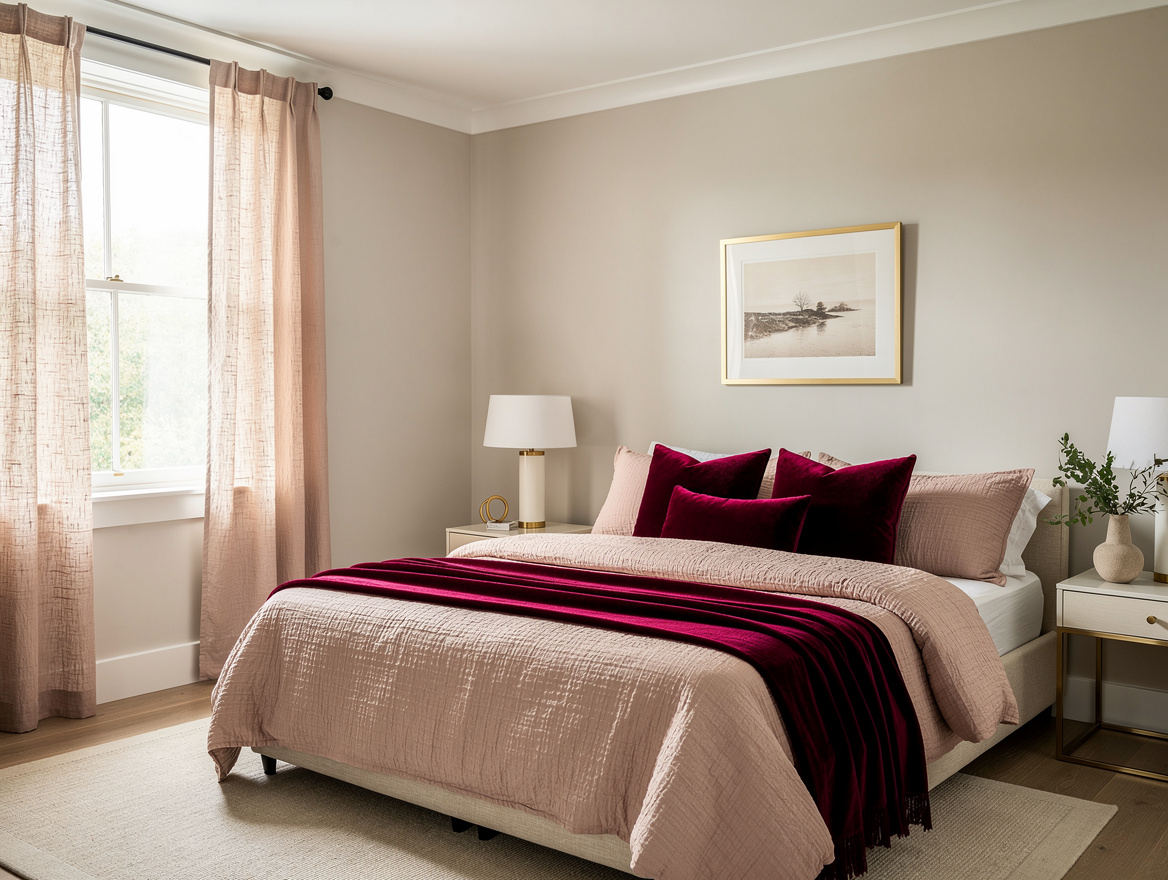
Begin with the ceiling in the room you use most at night: choose a warm flat white, patch every flaw, and paint it before touching the walls. That single decision will make the rest of your color choices easier to trust.
Mia Carter writes about small-space living and budget home makeovers. She has restyled three rentals and tests most ideas in her own 45 sqm flat.