
The first dorm room I helped set up had two beds, two desks, one tiny window, and exactly one free patch of floor after the suitcases came in. By the time we plugged in chargers and dropped a case of sparkling water by the door, the room already felt full.
That is why I think dorm decor has to work harder than regular decor. In a typical shared room, around 12 by 18 feet, every idea needs to save space, hide mess, or make daily routines easier.
Build a Better Twin XL Bed First
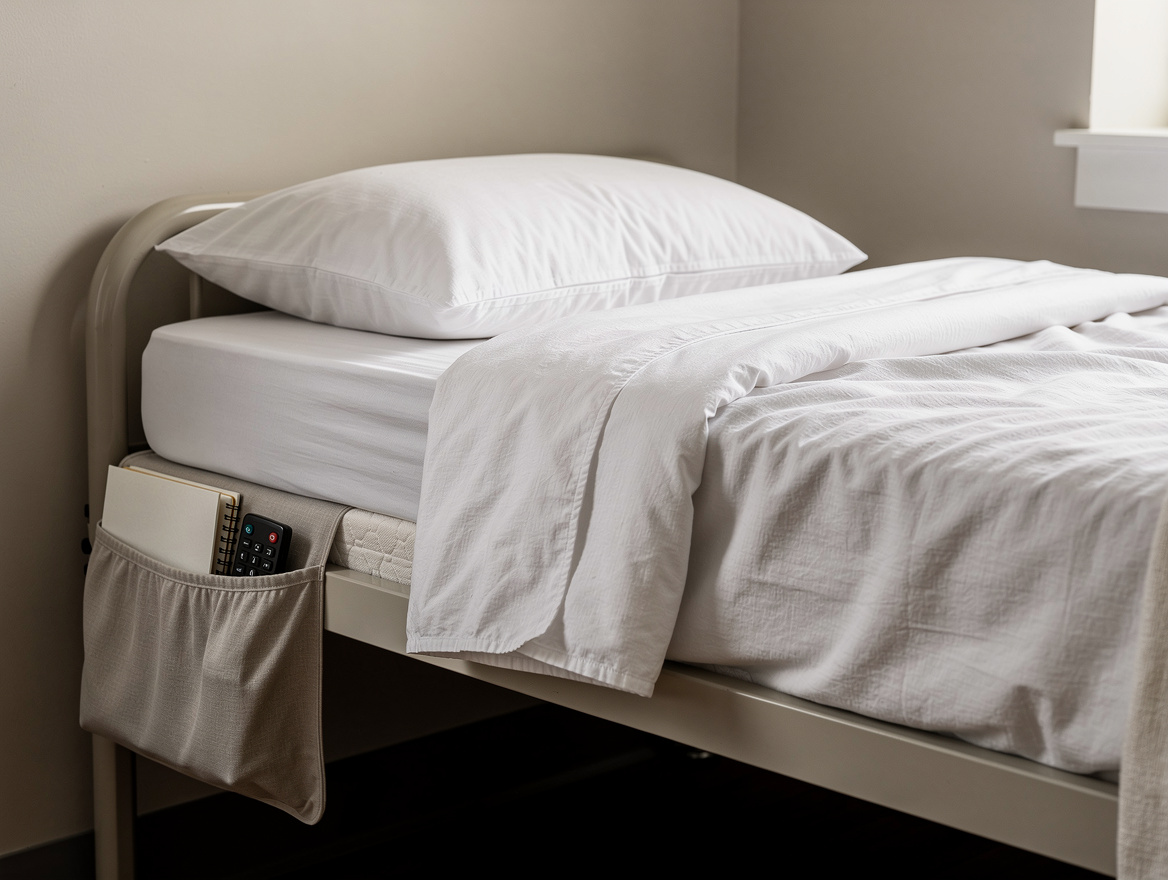
I always start with the Twin XL bed, because a dorm can survive bad art and mismatched bins, but it cannot survive bad sleep. Most campus beds run about 39 inches by 80 inches, and the basic mattress usually feels thin enough that you notice every metal bar underneath by the second night.
A practical sleep stack is worth the money: a zippered encasement, a mattress pad, then a 2 to 3 inch topper. A typical topper from Target or Amazon runs about $60 to $150, sheets are usually $25 to $60, and a down-alternative duvet setup often lands between $40 and $120, which is still cheaper than spending a semester pretending you can “get used to it.”
Raise the Bed and Claim the Floor
The fastest way to make a shared room feel bigger is to get things off the floor, and the bed is the obvious place to start. In many dorms, raising it with risers creates around 18 to 24 inches of clearance, while a lofted setup can open up roughly 50 to 60 inches below, which turns dead space into actual square footage.
Clear bins from Walmart or Target usually cost about $10 to $25 each, and I strongly prefer transparent ones over fabric boxes because you can see what you own in two seconds. If you want a softer look, add a 15 inch cube storage ottoman for about $25 to $70, and now the room has hidden storage plus a real seat for guests.
Turn a Loft Into a Mini Studio Zone
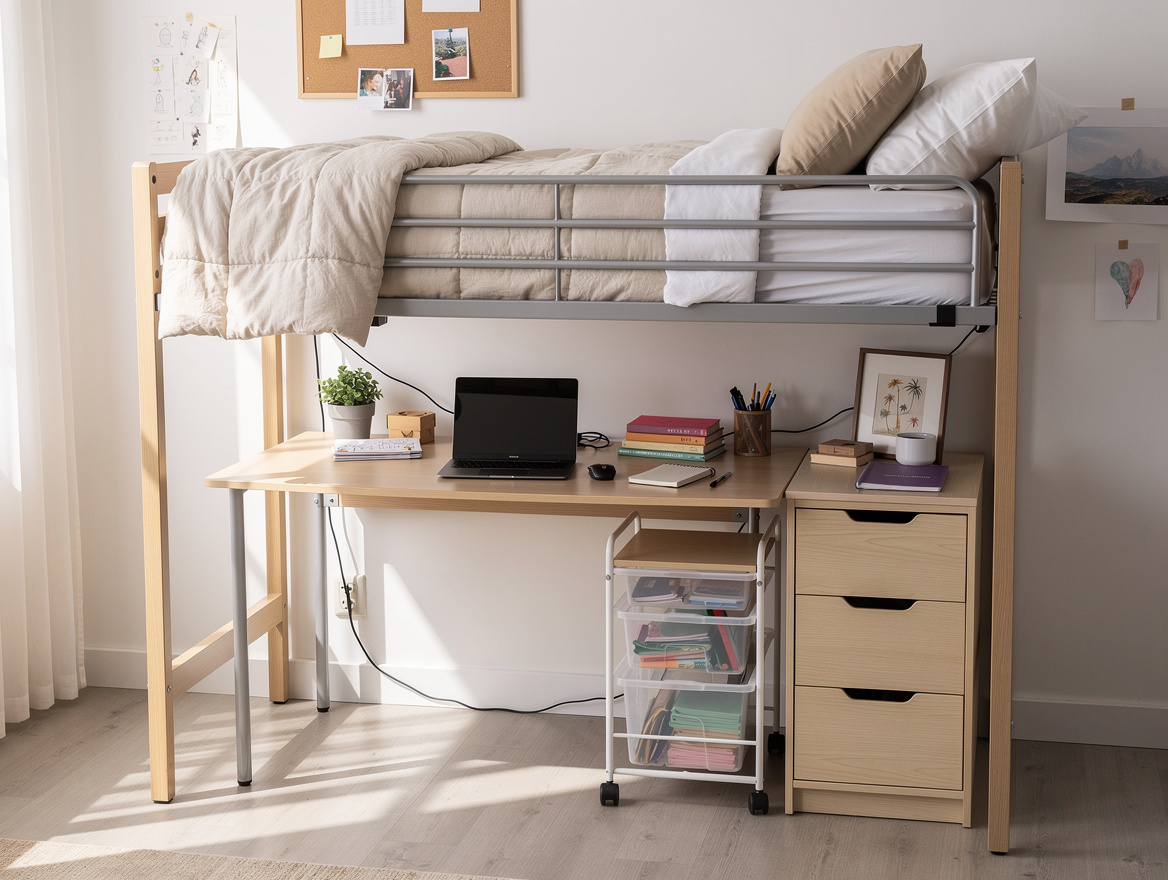
If your dorm allows a high loft, use the space underneath like a tiny studio apartment instead of a dumping ground. A small desk around 40 inches wide by 20 inches deep and about 29 inches high fits under many lofted frames, and that one move makes the room feel organized instead of cramped.
I like pairing that setup with a narrow dresser rather than a wider one, because vertical storage is what saves a shared room. A typical four-drawer unit from IKEA or Wayfair, around 28 to 30 inches wide and 16 to 18 inches deep, often costs $80 to $200 and gives you a clothing zone that does not swallow half the walkway.
Clear the Desk Before You Decorate It
Most dorm desks are only about 40 to 48 inches wide and 24 inches deep, so every inch matters once a laptop, notebook, water bottle, and charger pile up. Before adding cute extras, I would fix the layout with a monitor arm, a lamp, and a cable box, because cluttered desks make small rooms look messier than they really are.
A single monitor arm from Amazon usually costs about $35 to $120 and frees up a surprising amount of work surface, especially if the desk top is under the common 2 to 2.5 inch clamp limit. Add a task lamp with USB for roughly $20 to $60 and a cable box around $15 to $30, and the whole setup starts working like a real study station instead of a temporary camp desk.
Use the Wall Without Damaging It
Dorm walls need restraint. I would rather see one floating shelf above the desk than six random posters taped at odd angles, because a single useful piece makes the room feel intentional and still leaves breathing room around it.
A lightweight shelf from Wayfair or Target, around 24 to 30 inches wide and 6 to 8 inches deep, is enough for books, one plant, and a catchall tray if your housing rules allow removable mounting solutions. The best dorm wall decor is the kind that earns its space, and I think purely decorative clutter gets old very fast when the room is only around 216 square feet shared.
Choose Furniture That Does Two Jobs
Dorm rooms improve quickly when every piece has more than one use. A storage ottoman can hold extra bedding, act as a step for higher bed frames, and give your roommate’s friend a place to sit that is not your pillow.
I also like a slim rolling drawer cart tucked under a desk or bed, especially one near 16 inches wide, 20 inches deep, and 26 inches high. A basic version from Costco, IKEA, or Amazon usually falls around $30 to $80, and it keeps school supplies, snacks, and random chargers from spreading across every visible surface.
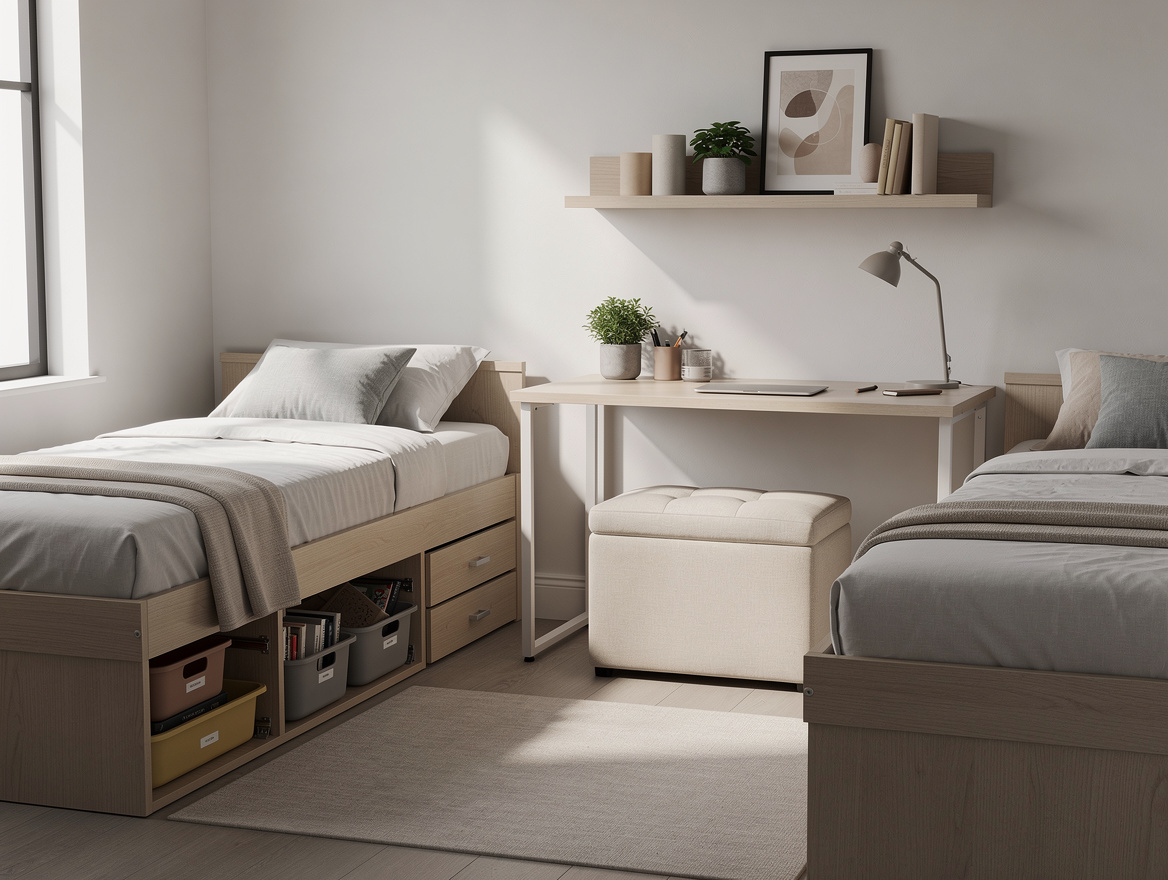
Start with the bed, then the under-bed storage, then the desk. Once those three areas work, even a cramped room from Home Depot-style basics and college move-in leftovers can feel calm enough to live in.
Mia Carter writes about small-space living and budget home makeovers. She has restyled three rentals and tests most ideas in her own 45 sqm flat.