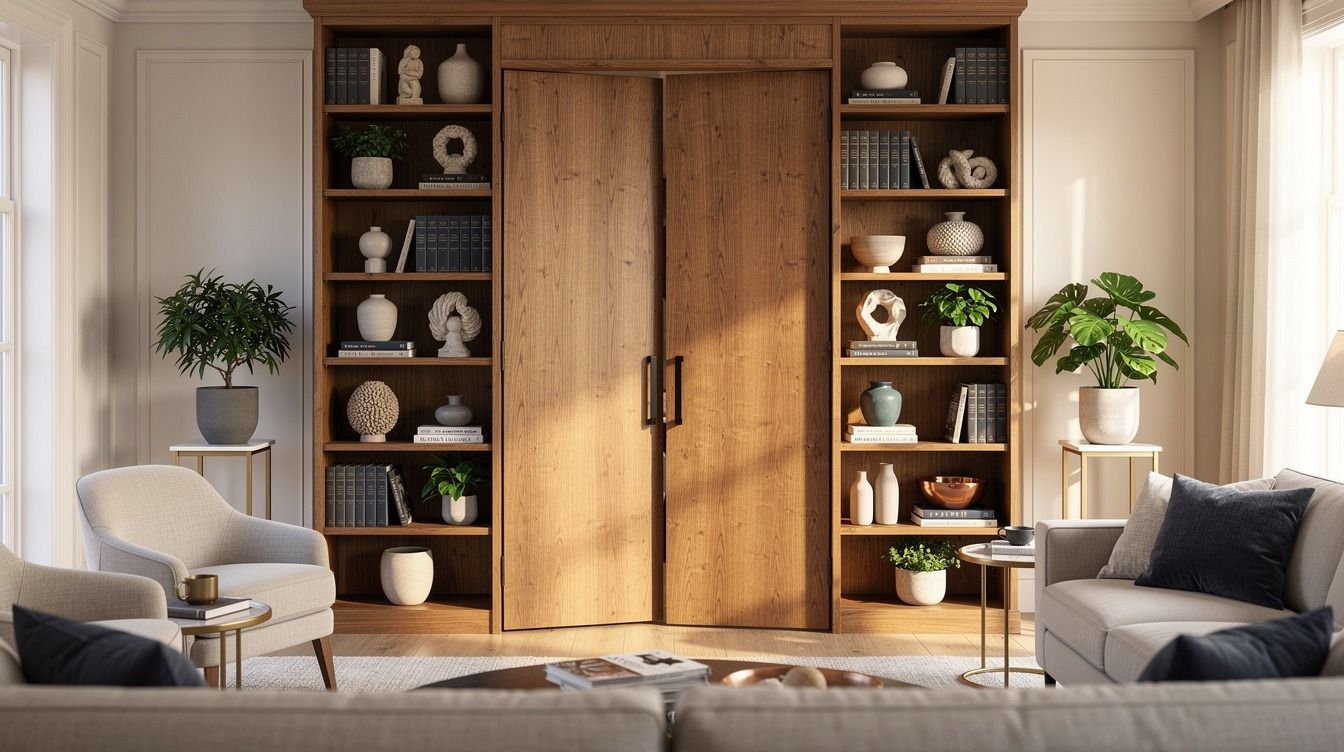
Hidden door with shelves can give you storage, a cleaner sightline, and a tucked-away entrance without making your living room feel gimmicky. I learned that after overstyling one bookcase wall so hard you could spot the door from across the room in five seconds. The fix wasn’t more decor. It was better millwork, better spacing, and a little restraint.
- Build a floor-to-ceiling bookcase door
- Frame the seam with picture lights
- Hide the latch behind stacked art books
- Panel the shelves in painted beadboard
- Blend the door into a library wall
- Add brass rails across shallow shelves
- Anchor the swing with oversized lower cabinets
- Wrap the opening with matching crown molding
- Use arched shelves for a softer reveal
- Camouflage hinges with vertical trim strips
- Style deep cubbies with baskets and ceramics
- Paint the detail shelves wall color
- Flank the doorway with twin built-ins
1Build a floor-to-ceiling bookcase door
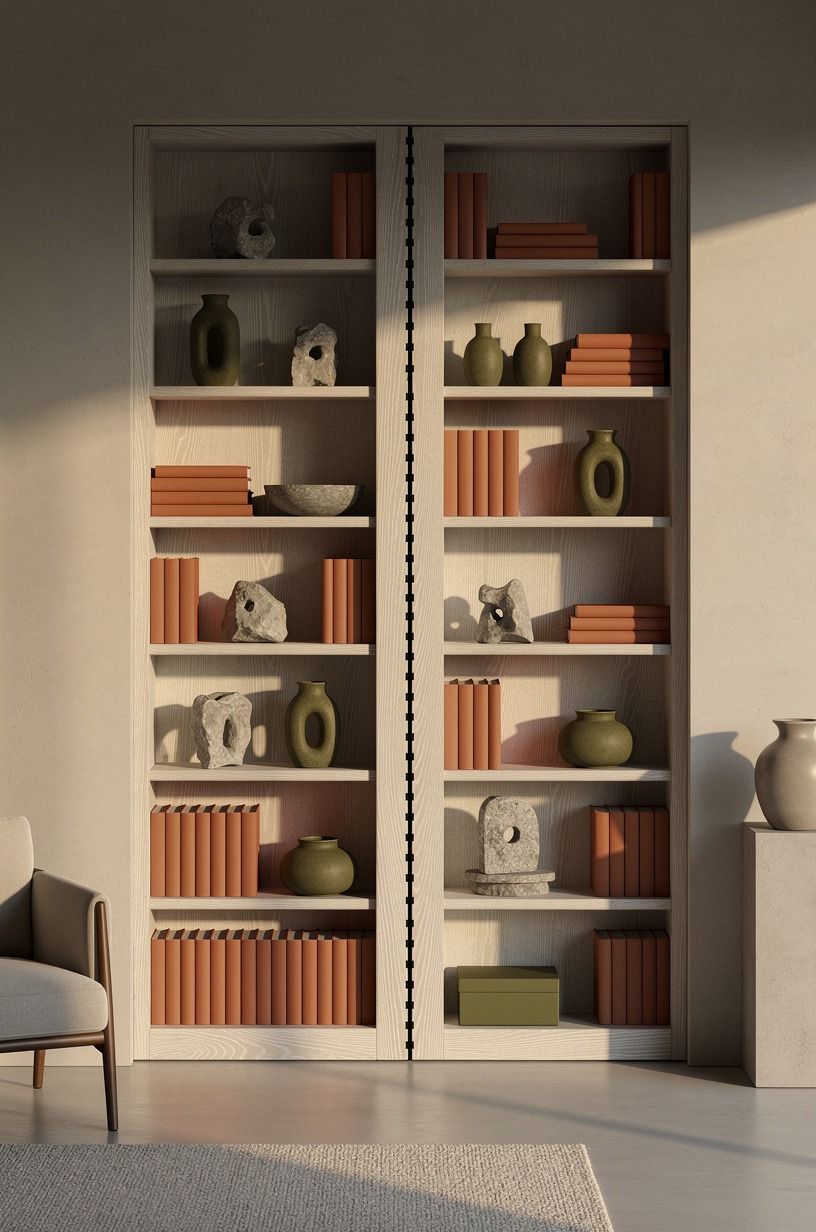
If you want a hidden door with shelves to read as architecture instead of a novelty, take it all the way to the ceiling. A short unit looks movable, and the second it looks movable, your eye starts hunting for the break line. I prefer 3/4-inch solid white oak or MDF with a painted face because you need enough stiffness for the swing and enough visual weight to hold the wall.
You should keep the shelf spacing believable, not theatrical. Mix tall shelves for books, medium shelves for bowls or boxes, and one lower row that can hide the boring stuff you use every week. I made the mistake of packing every shelf tight once, and it turned the door into a puzzle instead of a room feature.
Leave some air. If your living room already leans warm and wood-heavy, the ideas in this wood hidden door guide show why a continuous grain calms the whole wall.
The reveal matters too. You don’t need the door wide open in daily life. Slightly ajar is enough, because that thin shadow line tells the story without shouting it.
2Frame the seam with picture lights
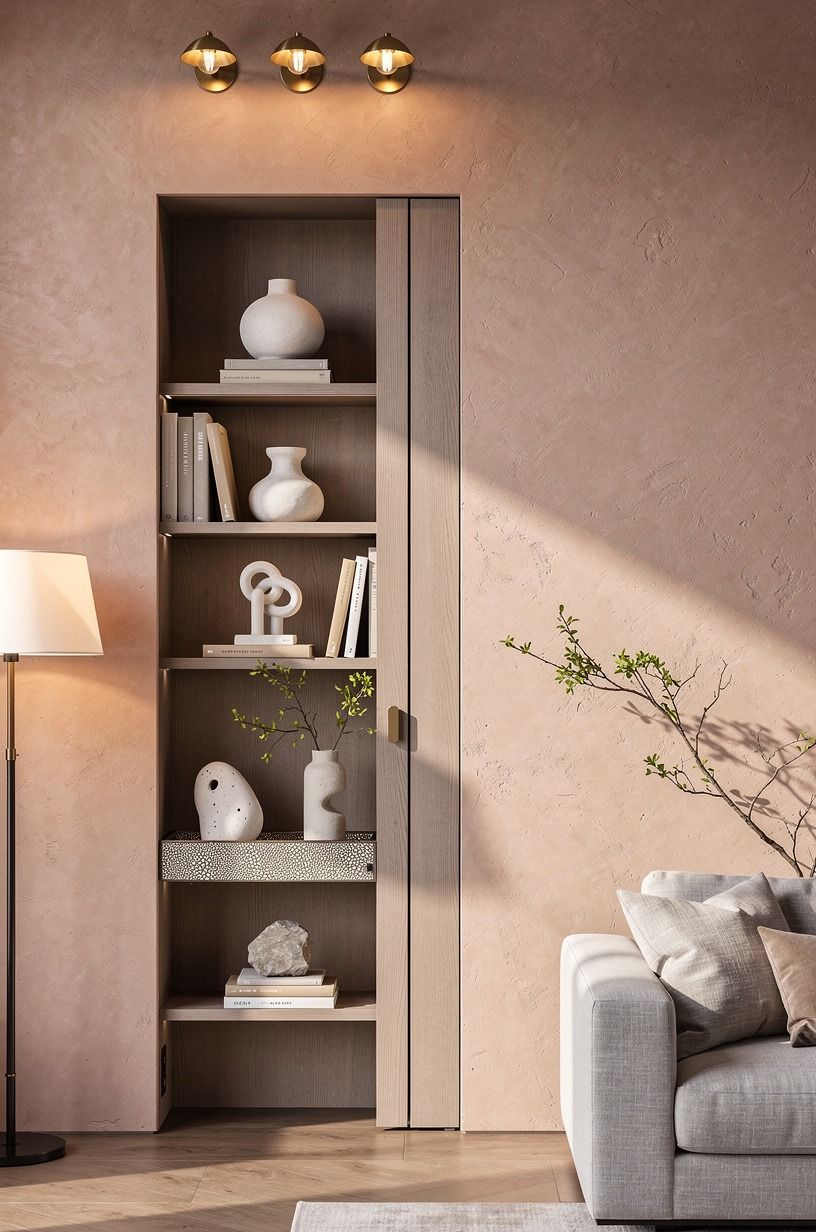
Picture lights can distract the eye in the smartest way.
3Hide the latch behind stacked art books
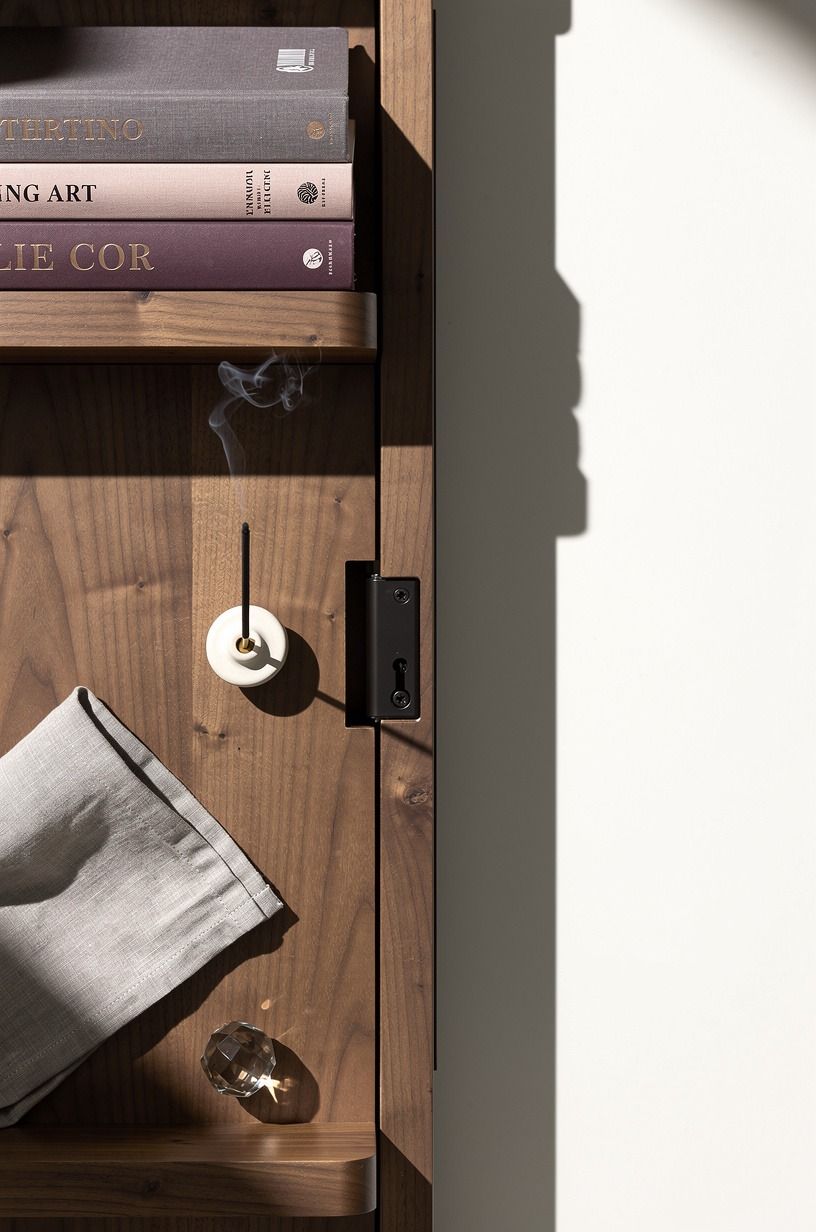
A visible pull ruins the illusion fast, so you need a latch strategy that feels normal for a shelf door design. Stacked books do that job better than a decorative object because you already expect to touch them. I like a low stack on a book-matched walnut shelf, with one heavier volume at the bottom and two slimmer ones on top.
Keep the stack near the shelf edge, not buried in the middle. You want your hand to find it on autopilot, especially if you’re carrying something or moving through the room in low light.
I wouldn’t use tiny paperbacks here. They slide, they fray, and they make the whole move feel fussy.
Choose oversized art books with enough weight to sit still, then leave the shelf around them a little quieter so your hand has space.
But don’t pile on ten decorative pieces because you think more camouflage is better. It isn’t. Three books, a small dish, maybe one unlacquered brass object.
Done.
4Panel the shelves in painted beadboard
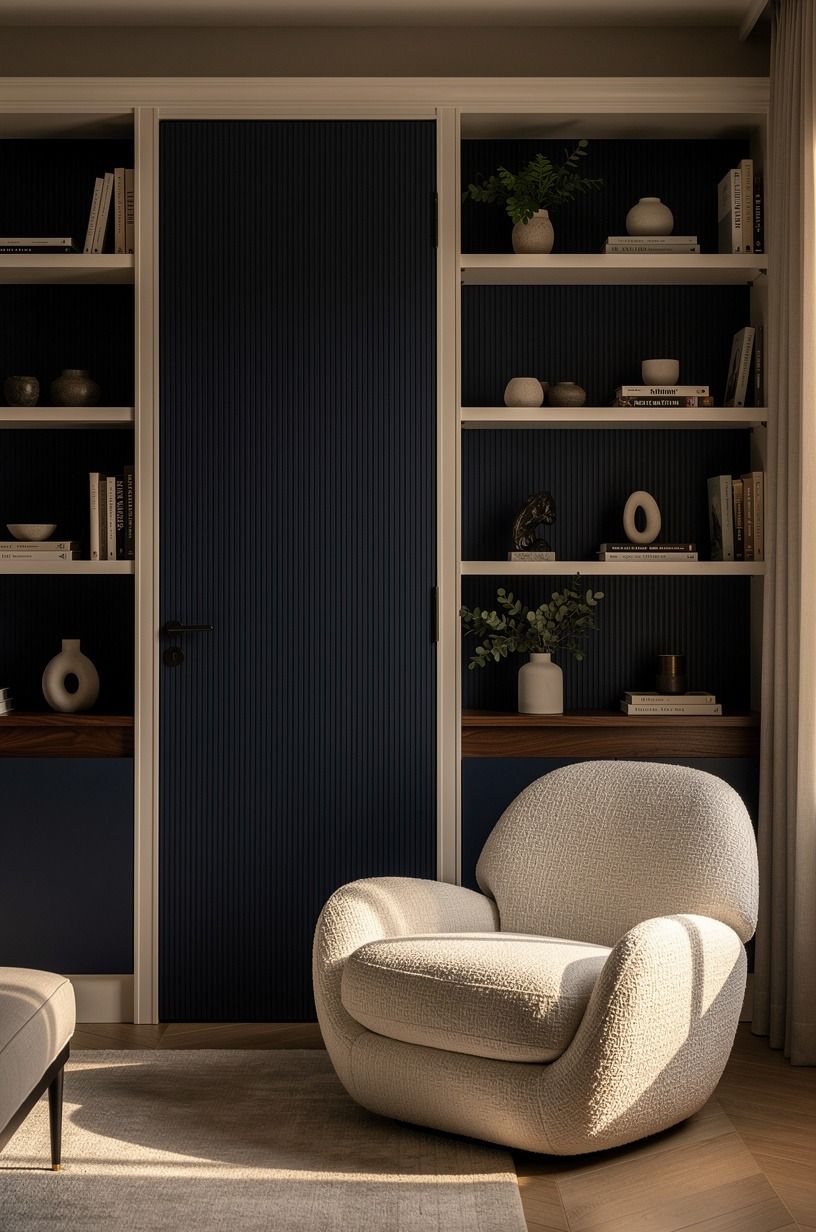
Painted beadboard gives you rhythm, and rhythm helps a hidden door with shelves disappear into the wall treatment instead of reading like a bolt-on unit.
5Blend the door into a library wall
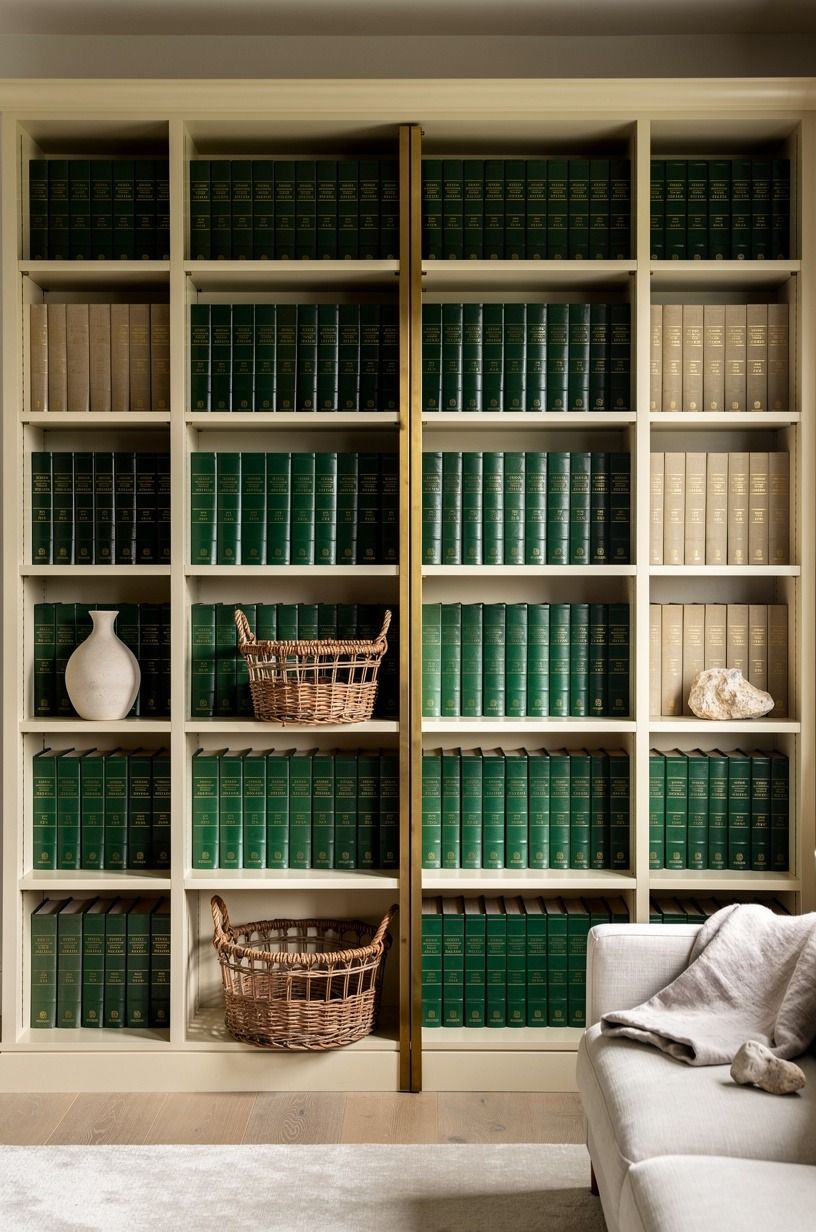
This is the move I trust most in a cream living room. A full library wall gives the door cover from every direction, because your eye reads the whole composition before it reads any one line. Deep cream shelving, emerald book spines, a few aged gold touches, and one quiet piece of hardware give you that settled, library-wall look people keep trying to fake with random decor.
You should think in zones, not individual shelves. Put books in larger blocks. Keep the middle third a little denser.
Let the lower shelves take heavier objects so the visual weight sits low and believable. I also like mixing one furniture anchor nearby, like an Article Sven sofa in tan leather, because it keeps the wall from feeling too precious. If your wall is mostly shelving already, compare it with the storage-first thinking in this hidden cabinet storage door roundup.
Would I paint the entire wall dark just because the books are dark? Probably not.
In a smaller room, cream shelving with darker spines gives you contrast without the cave effect. That’s the better trade.
6Add brass rails across shallow shelves
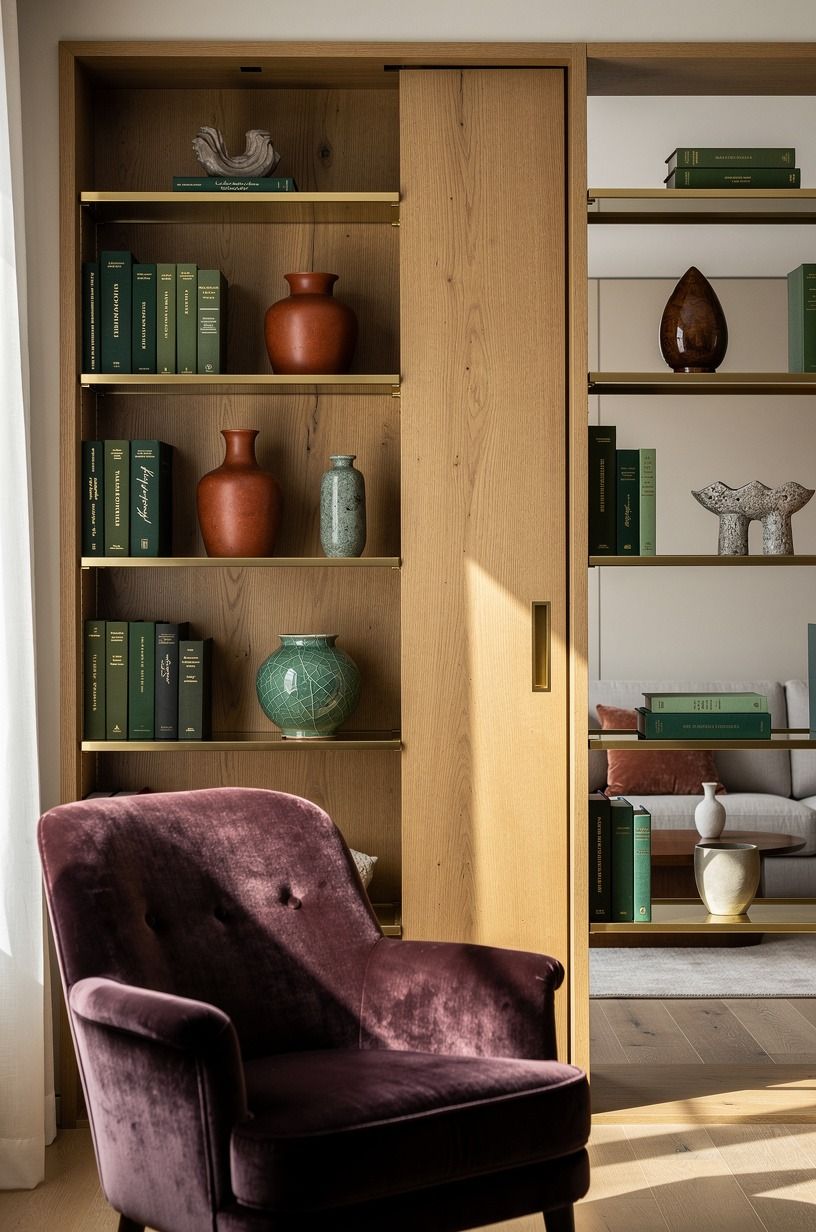
Shallow shelves need rails if you want the styling to survive the swing.
7Anchor the swing with oversized lower cabinets
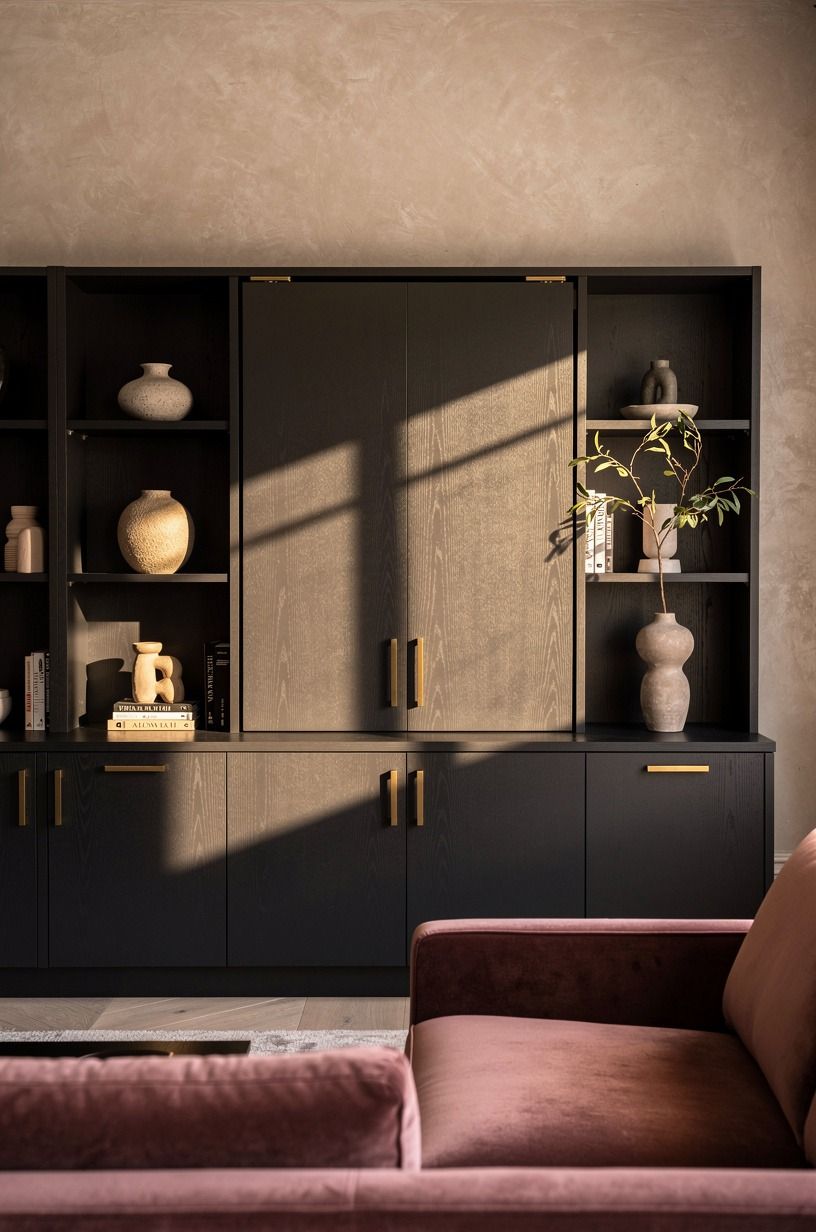
Lower cabinets do more than add storage. They visually anchor the door, hide heavier hardware, and stop the whole wall from feeling top-heavy.
In a large living room, I like a long cabinet run under the shelves so the moving section feels locked into the architecture. If you place the swing door slightly off-center, the cabinet base keeps that asymmetry looking deliberate instead of accidental.
This is also the place to be honest about cost. You can fake a lot with styling, but the structure underneath still matters. Here are the broad living-room budget tiers I use when clients ask where millwork sits inside the full room spend:
If your hidden door project is one piece of a larger room update, don’t blow the entire budget on the door and then leave the seating underscaled. A wool rug in 8×10 or 9×12, with the front legs of the seating on it, will do more for the room than one extra fancy hinge upgrade.
I mean it. That choice pays off every time!
For more ideas that prioritize function before show, I keep coming back to this hidden cabinet storage door roundup.
8Wrap the opening with matching crown molding
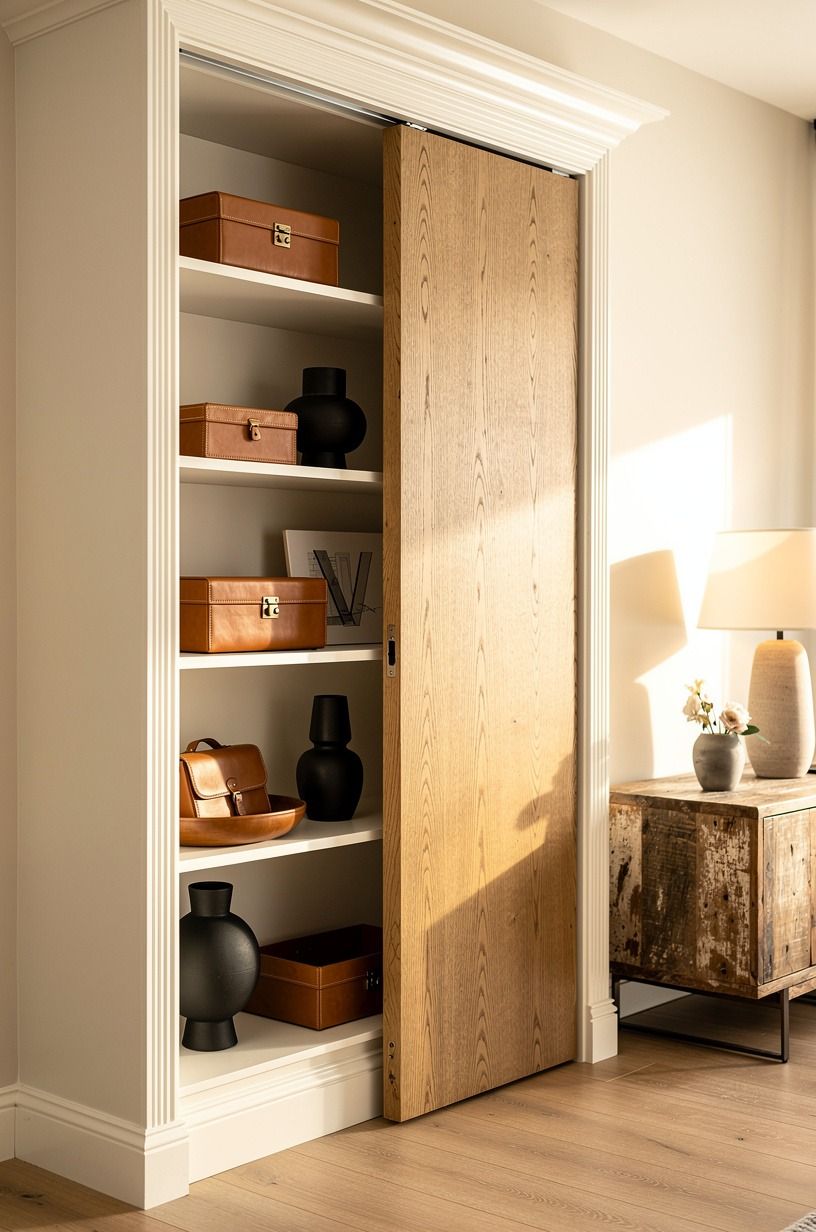
Matching crown molding is one of those details you miss until it isn’t there.
9Use arched shelves for a softer reveal
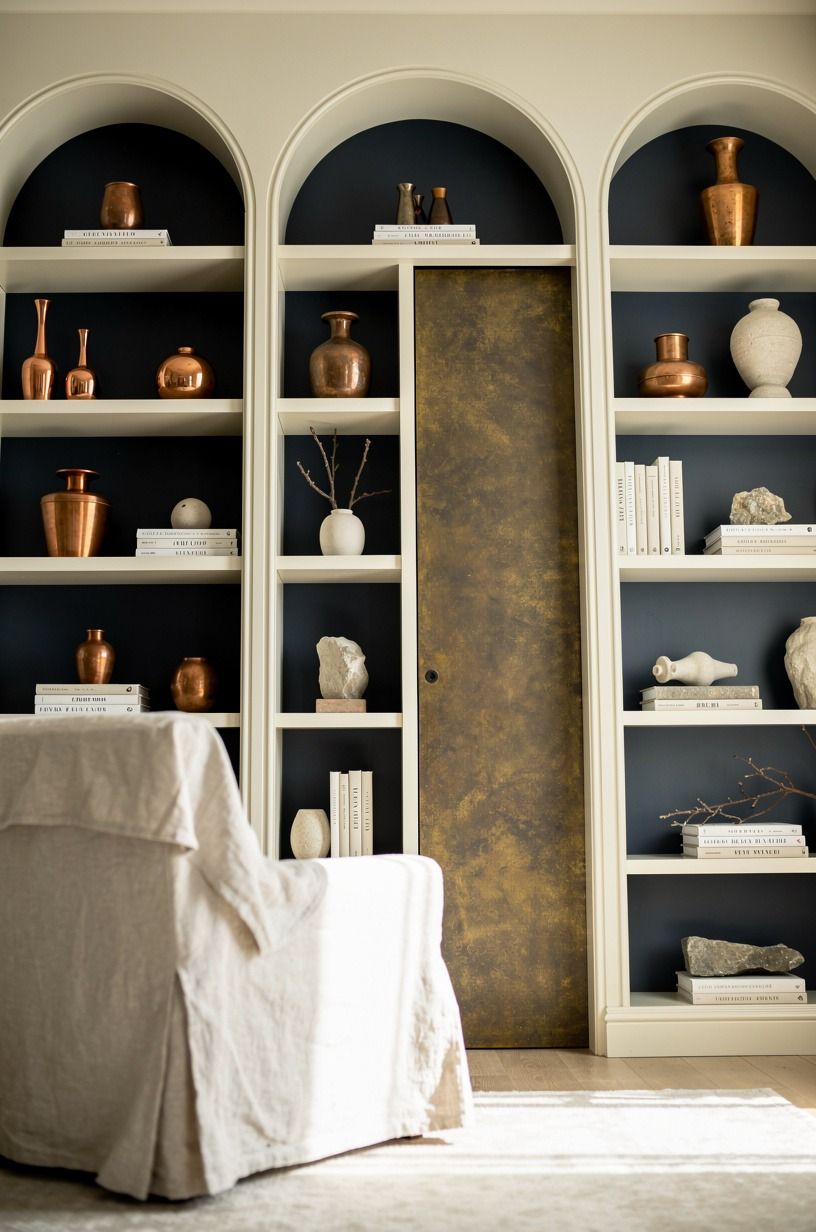
Arched shelf openings change the mood fast. Straight lines feel crisp and architectural, which can be great, but arches soften the reveal and make the doorway feel less obvious from across the room. If your living room has hard lines everywhere else, an arched shelf door can be the thing that relaxes it.
This works best when you repeat the curve in more than one place. A single arch looks random.
A row of repeating arches across the moving section and at least one echoed shape elsewhere, like an arched mirror or a rounded chair back, makes the idea feel intentional. I like this most in deeper colors such as Farrow & Ball Hague Blue No. 30, where the shadow inside the arch gets richer as the day goes on.
But skip tiny decorative objects here. The curve already adds personality. You don’t need novelty decor fighting it.
Think a few hardbacks, a bowl, maybe one CB2 Primitivo-style textured object, and plenty of breathing room.
10Camouflage hinges with vertical trim strips
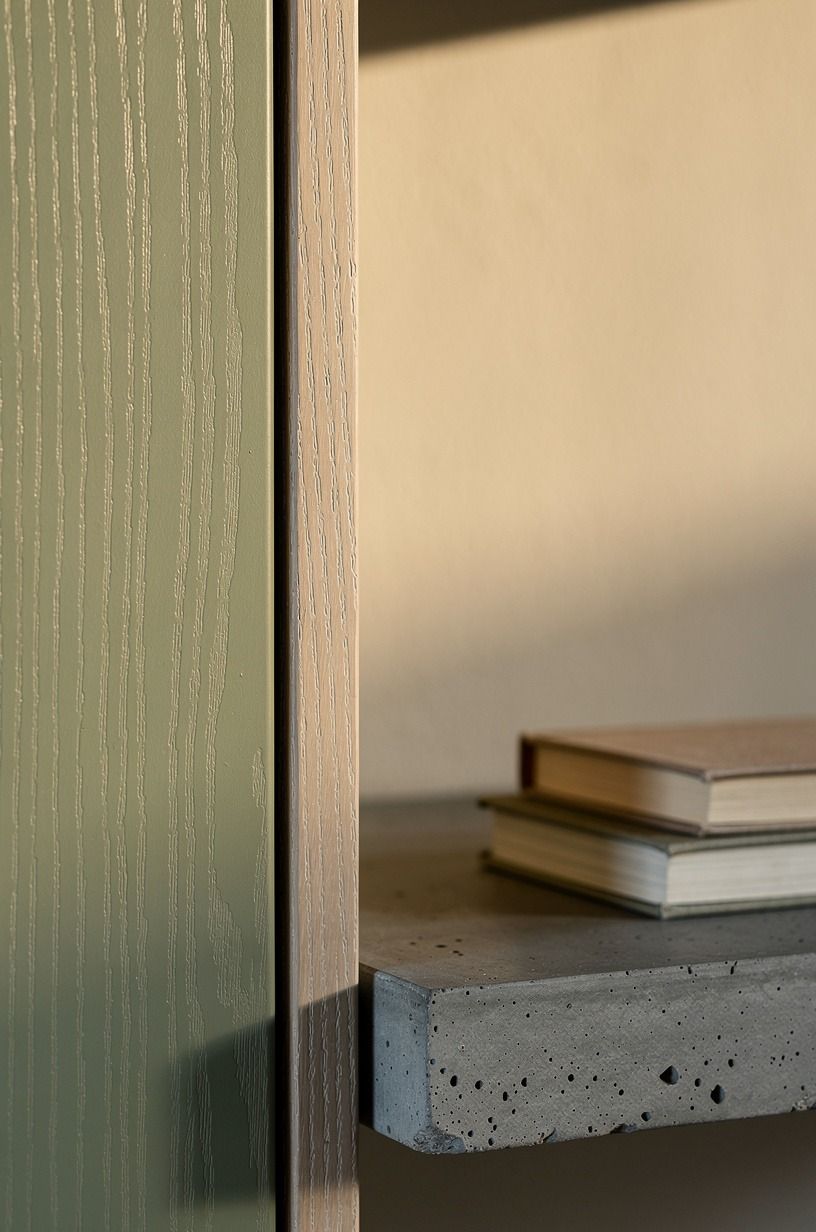
This is the part that separates a good-looking door from one you clock in two seconds.
11Style deep cubbies with baskets and ceramics
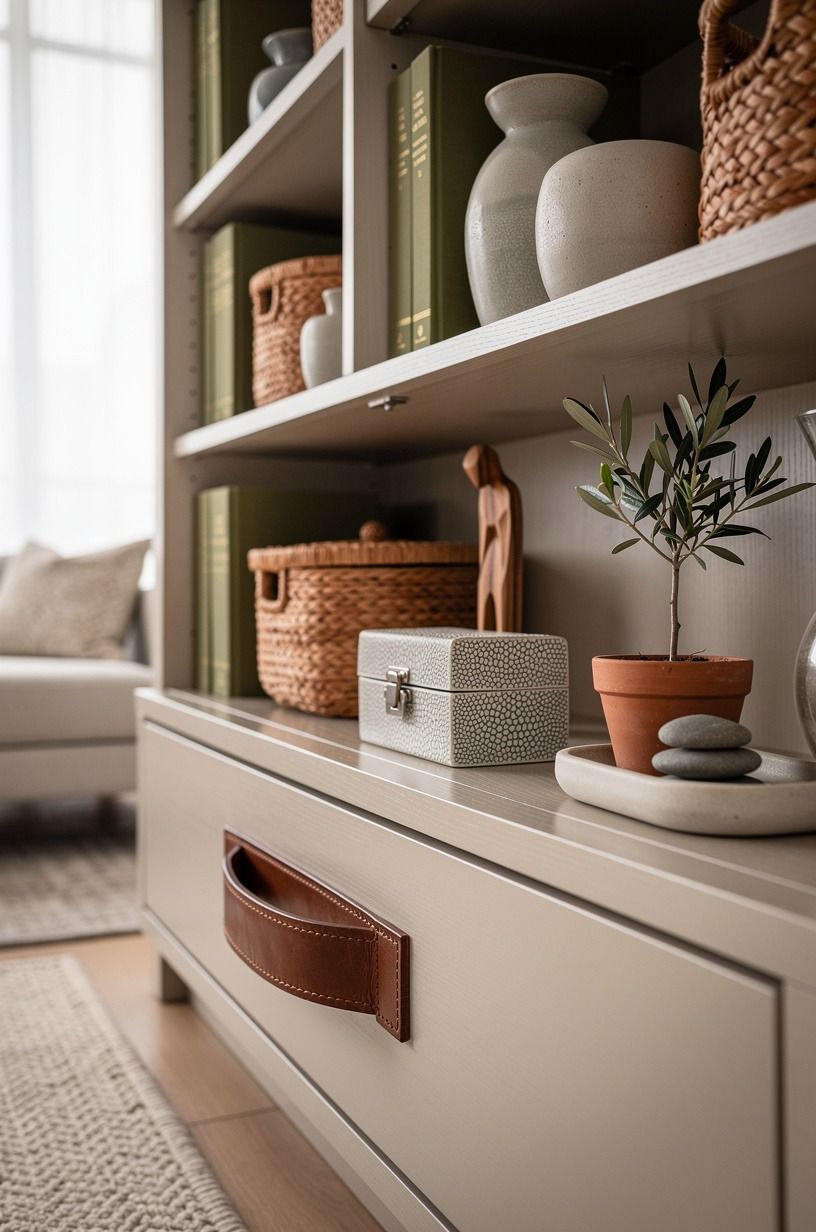
Deep cubbies are where you hide the useful mess. Throws, chargers, game boxes, remotes, kid stuff, the charger brick you can never find when you need it. If the shelf door is doing storage duty too, cubbies let you use the wall hard without making it look overloaded.
I like a mix of seagrass baskets, matte ceramics, and one or two closed boxes that share the same color family. The key is depth contrast.
Put the basket all the way back in one cubby, let a ceramic sit closer to the front in the next, and keep one opening almost empty so the wall can breathe. If your sofa is around 35 to 40 inches deep and your coffee table is 16 to 18 inches tall, the low sightline across the room will catch these lower cubbies first, so make them the most disciplined part of the wall.
You don’t need expensive containers for this. IKEA KALLAX bins, vintage crocks, and a thrifted bowl can do the same job if the palette stays tight. And if you need more ideas for storage that doesn’t scream storage, this hidden cabinet storage door roundup gives you more practical routes.
12Paint the detail shelves wall color
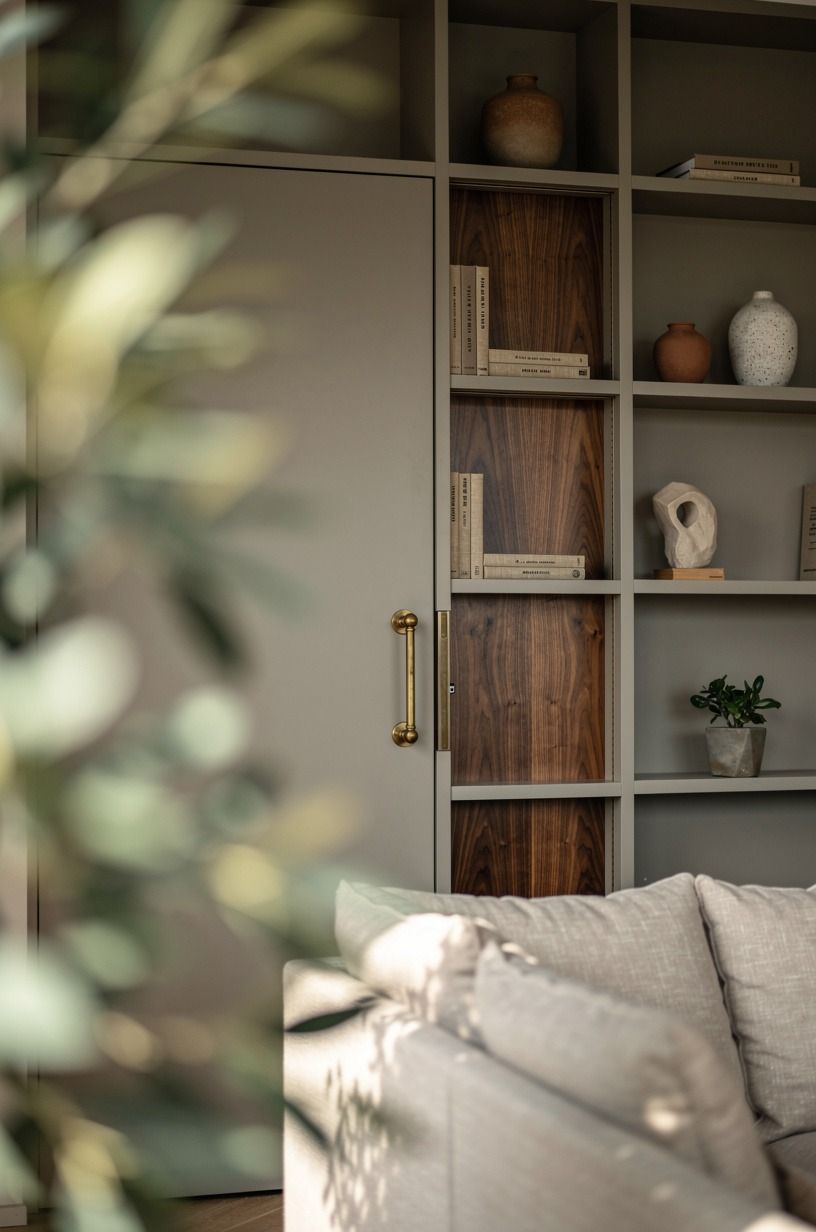
Painting the shelf door the same color as the wall is still one of the best ways to lower the contrast and keep the entrance from reading first.
13Flank the doorway with twin built-ins
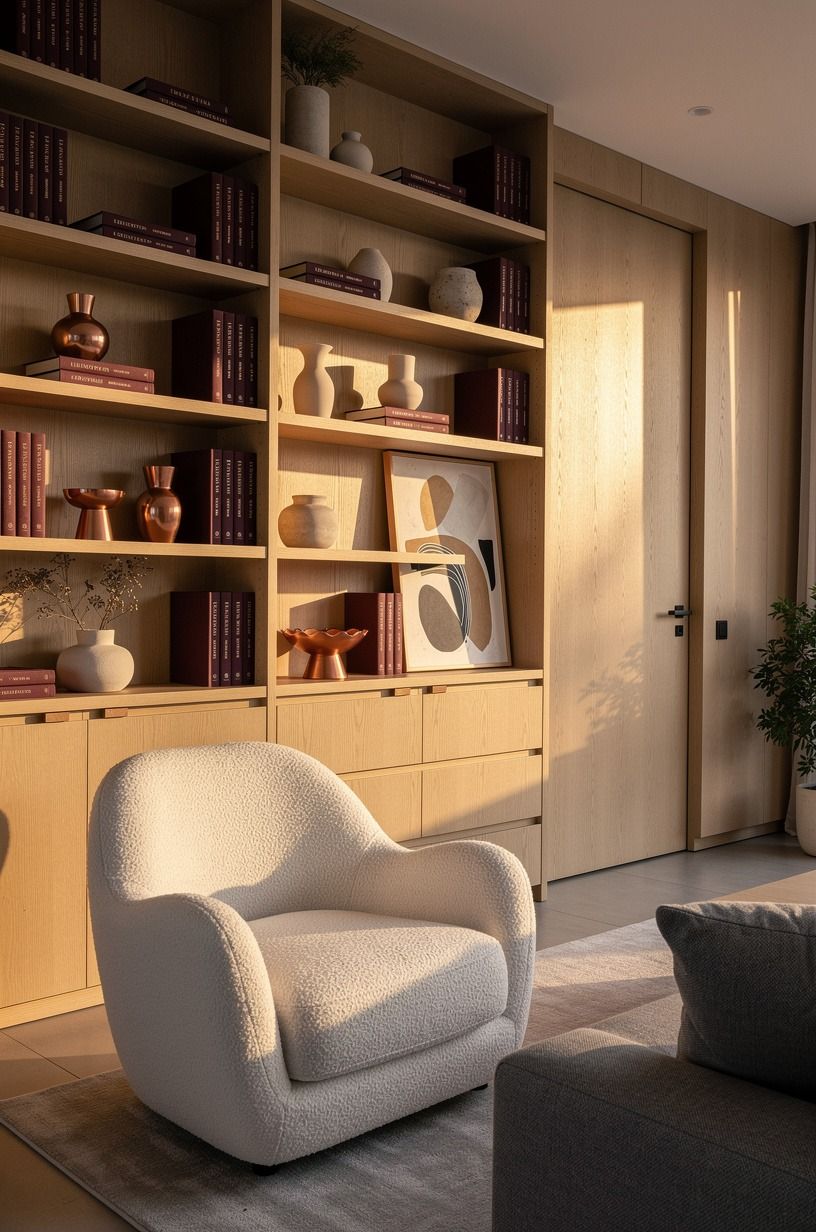
Twin built-ins are the safest way to make the whole wall feel balanced, especially when the doorway sits toward one side instead of dead center. Symmetry gives the eye a bigger pattern to read, so the moving section stops feeling like the star. That’s the win.
You should match shelf widths, cabinet heights, and trim reveals from left to right, then let the styling vary just enough that the wall still feels lived in. A pair of lower cabinets, book blocks at different heights, and a few repeated finishes can do a lot.
I like one side a little quieter and the other side a little fuller, because rooms don’t feel honest when both shelves look copy-pasted. If you need another reference point for that built-in look, this wood hidden door guide is useful for proportion alone.
And here’s my blunt take. Twin built-ins beat a freestanding bookcase every time when you want a door to disappear.
Freestanding units wobble visually. Built-ins hold the room together.
Why Hidden Shelf Doors Work Better Than People Expect
What surprises most people is that a hidden shelf door isn’t really about drama. It’s about relief. A normal doorway breaks a wall into functions you can read instantly: here is circulation, here is storage, here is seating.
That’s fine, but it also means your eye never gets a full, calm run across the room. When you tuck the entrance into shelving, the wall becomes one idea first. Storage.
Texture. Architecture. Then the opening reveals itself only when you need it to.
That order changes how a living room feels.
I’ve also found that the best versions don’t lean on novelty at all. They lean on discipline. Fewer objects.
Better hardware. More attention to sightlines from the sofa, from the doorway, from the seat that catches the afternoon light.
I used to think the magic was in the door kit. It isn’t. The magic is in making the moving part behave like the fixed parts. Same trim depth.
Same shelf rhythm. Same color logic.
Same willingness to leave empty space where your instinct says to fill it.
If you’re trying to decide whether this kind of project is worth the money, I’d ask a different question: what problem are you solving? If you need one more obvious bookshelf, you don’t need this.
If you need storage, a cleaner wall, and a softer way to move through the room, that’s where the idea earns its keep. It does three jobs at once, and good living rooms always reward that.
The room feels more gathered. Your stuff has somewhere to go. And the wall stops shouting doorway every time you walk in.
There’s a practical side too. A shelf door forces you to edit.
You can’t style it like a static bookcase because it has to open, close, and survive real use. That limitation is healthy.
It makes you choose objects with weight, scale, and purpose instead of covering every surface with filler. Honestly, that’s why these rooms tend to look better when they’re done.
Not because the door is clever, but because the constraints make you decorate with a little more honesty.
The Questions I Get Asked Most
What is the best hidden door with shelves for a small living room?
A full-height painted bookcase door is usually the best pick because it gives you vertical storage without eating extra floor space. I like a shallow profile, lower cabinets, and a color close to the wall so your room feels bigger, not busier.
Where can I buy hidden door with shelves pieces on a budget?
I’d start with IKEA, Target, and Wayfair for baskets, shelf styling, lights, and cabinet pieces you can adapt. Then check Facebook Marketplace for solid wood bookcases. You’re paying for proportion and finish here, not some magical source list.
How much does a hidden door with shelves makeover cost?
For a light refresh, you’re usually looking at about $100 to $300 for paint, lights, baskets, and styling. A more built-in look can climb fast once hardware and carpentry enter the picture. Free wins still count: editing shelves, repainting, and rebalancing the layout.
Can I create a hidden door with shelves on a budget?
Yes, and the budget version can still look intentional. Paint the shelves and wall the same color, swap in matching baskets, and use stacked books to mask the latch. Removable panel strips nearby can help if you’re faking the built-in look.
Is a hidden door with shelves worth it in a small space?
Yes, because a small room benefits most from double-duty storage. You get one wall doing several jobs at once, which frees up visual space elsewhere. Keep the furniture scaled right, with an 8×10 rug and a coffee table around two-thirds of the sofa length.
Is hidden door with shelves a good idea for a rental?
Yes, if you focus on low-damage upgrades instead of permanent millwork. Use removable lights, paint only when your lease allows it, add baskets and matching boxes, and style nearby shelves to carry the same look. You can fake a lot with color and restraint.
Where I’d Start First
If I had to pick one, I’d start with the floor-to-ceiling bookcase door. The height is what sells the illusion, because a short unit always looks movable. Pin that idea for later and build the full wall before you fuss over the styling.