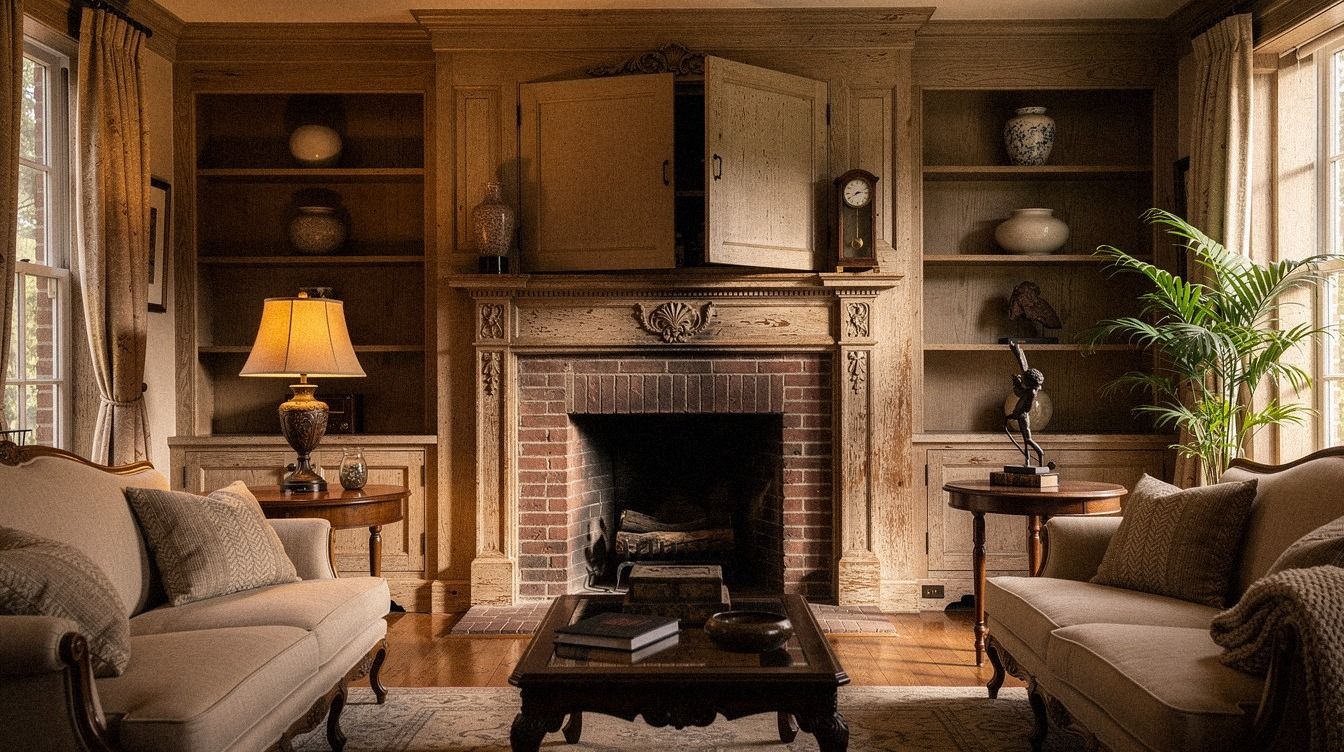
I’ve lived with two old houses and the hidden rooms inside them, and I’ll tell you the truth right up front: the ones that work don’t start with a gimmick. They start with trim, hardware, and a paint story that look like they grew up together. If your opening feels original instead of added later, the room behind it reads as history. That’s the whole game.
- Start with the fireplace wall’s hidden panel
- What does bookcase depth really hide?
- Camouflage a jib door in raised molding
- Farrow & Ball Hague Blue on the panel reveal
- Why does art work better than trim on a busy wall?
- Build a library nook beyond the shelves
- Paint the reveal in aged burgundy lacquer
- Install a mirror door beside the mantel
- Benjamin Moore Essex Green inside the lounge
- Conceal hinges inside carved Victorian trim
- Add a brass rosette as the release
- Tuck the passage behind a salon gallery
- Sherwin-Williams Evergreen Fog on the panel
- Style antique books to blur the opening
- Light the threshold with candlelike sconces
- Old trim vs. new millwork: which one hides a door better?
1Start with the fireplace wall’s hidden panel
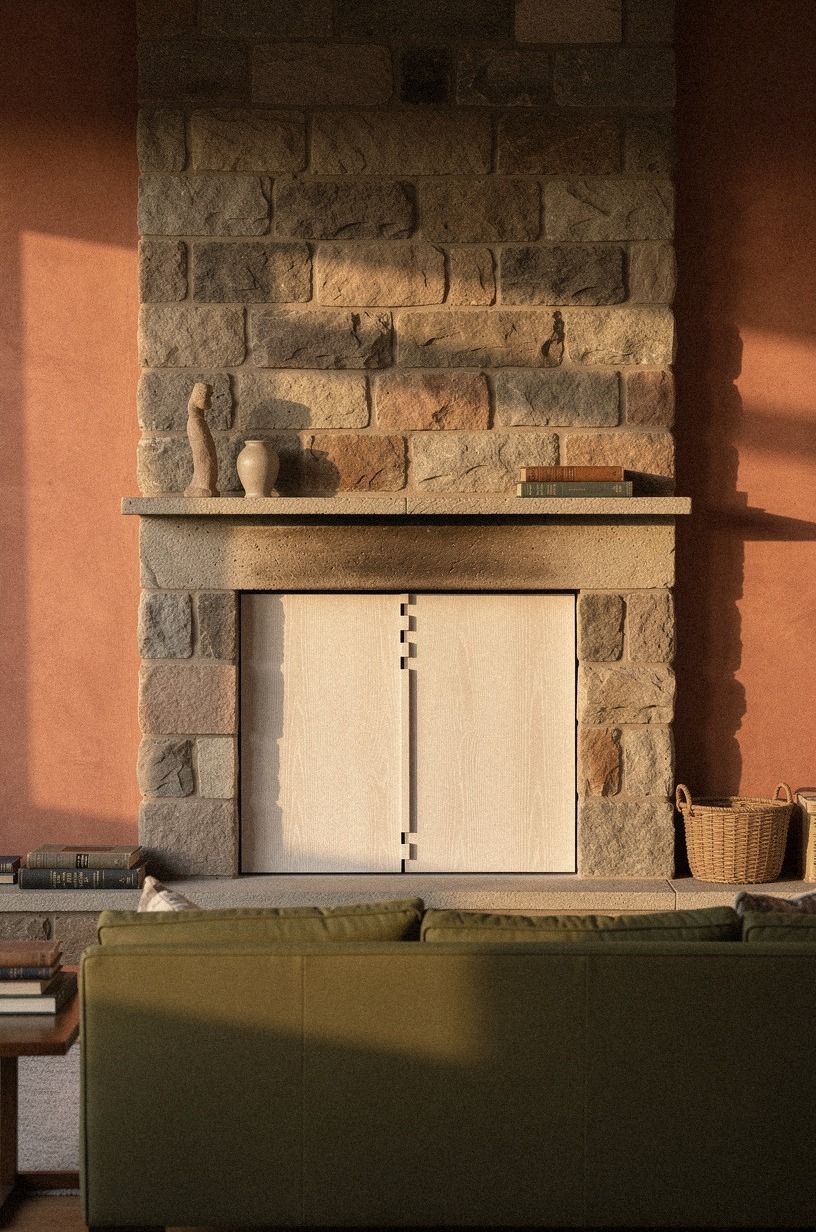
Start at the fireplace because it already acts like the center of gravity in an old living room, and a hidden panel tucked into the masonry carries the most old-world hush. If one section of cerused white oak sits slightly proud inside a stone mantel wall, you can use that tiny projection as your clue instead of fighting it.
I’d measure the reveal first, then keep the panel face flush within an eighth of an inch once the hardware goes in, because anything wider starts looking new. You want the opening to feel tied to the masonry, not floating beside it. A stone surround, a dove-gray firebox edge, and one wood field that reads a shade warmer will get you there without yelling for attention.
If you love rooms that already handle sultry balance well, the scale in these vintage dressing rooms with old-world charm is a useful reference. I’d skip glossy stain here.
It bounces too much light and gives the panel away on a quiet evening.
2What does bookcase depth really hide?
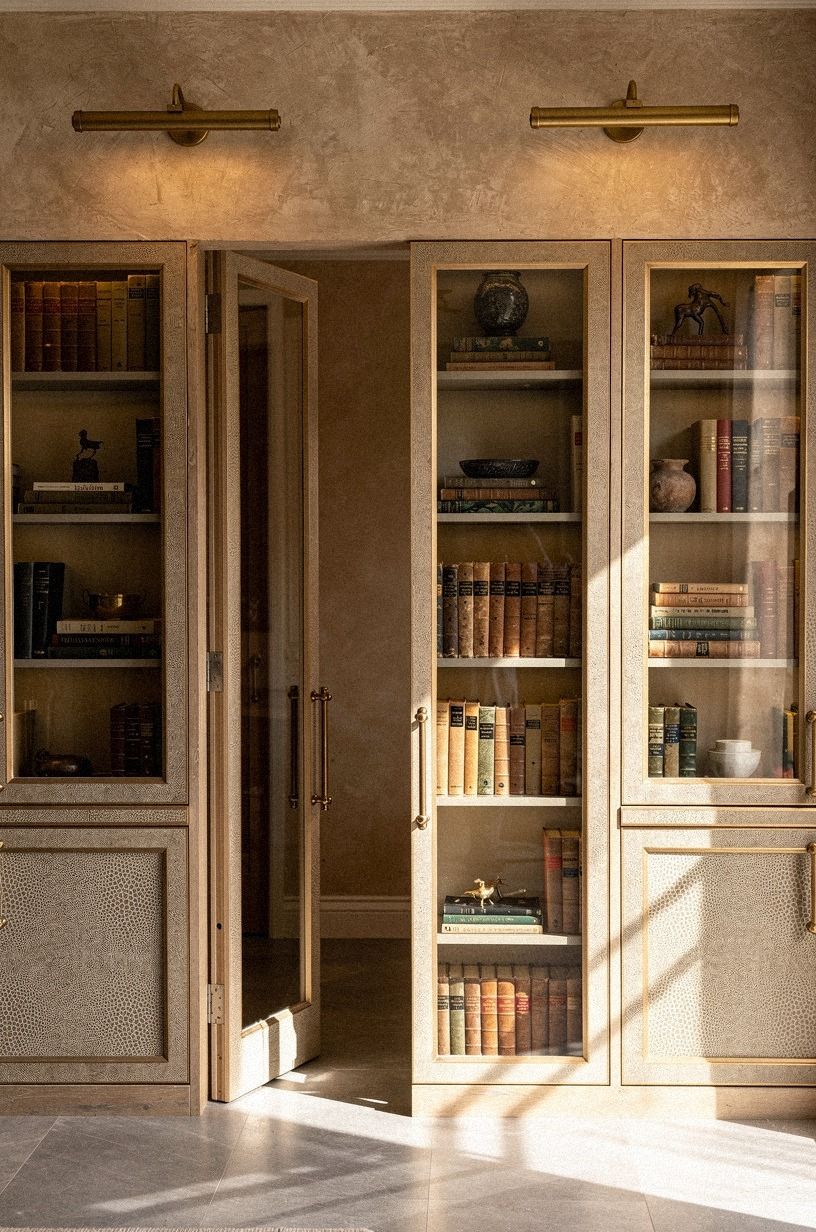
Glass-front bookcases are one of the cleverest disguises in an old house because you’re already expecting depth, reflections, and a quiet little visual interruption.
3Camouflage a jib door in raised molding
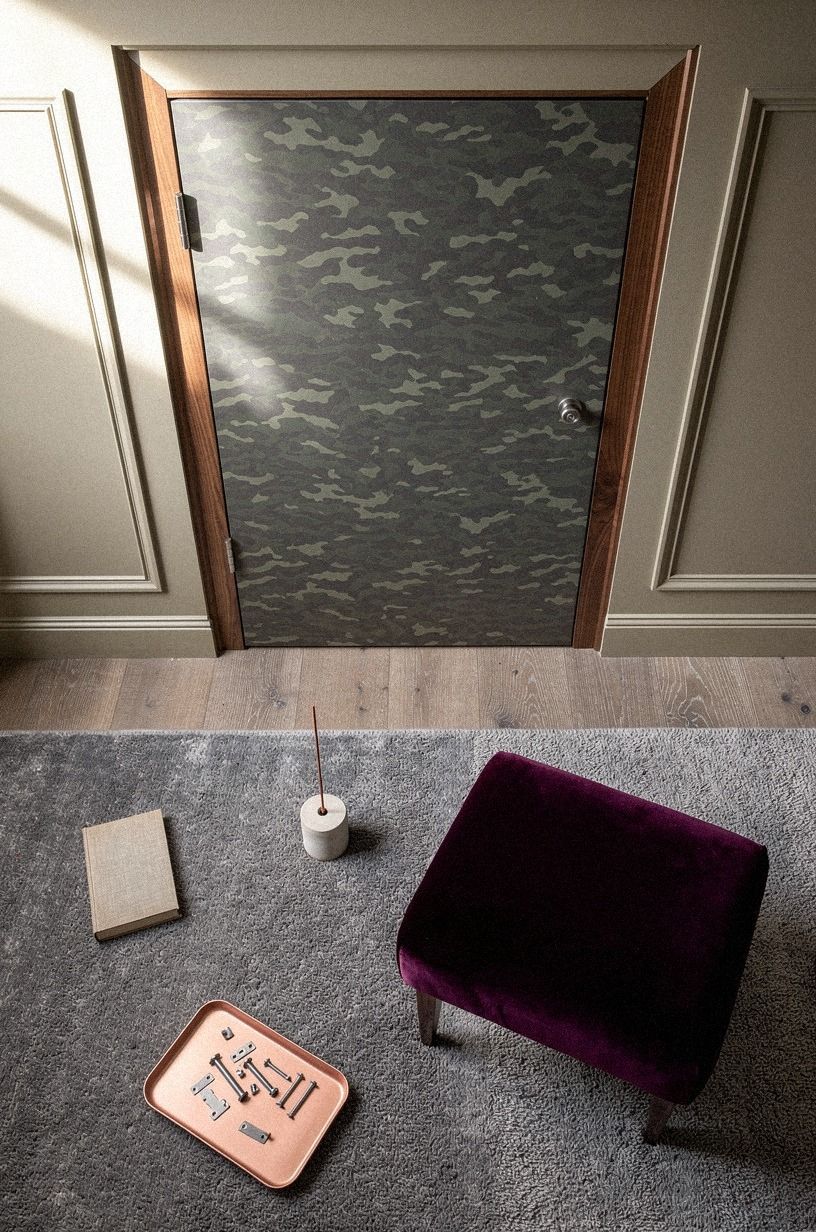
A jib door only works when the molding pattern tells your eye one continuous story. On a wall with raised panels, trace the seam with book-matched oak veneer inside each field so the grain mirrors cleanly across the opening. You should lay the pattern on the floor first, then number every piece, because once the adhesive sets you won’t get a second chance to fake symmetry. Keep the casing off the door itself and let the wall molding do the job.
Here’s the part people rush: the gap around the door needs to stay tiny and even, especially near the latch side, or the shadow line blows the illusion. I like a concealed touch latch only if the panel is light. If the door has weight, a real mechanical catch feels better in your hand.
For proportion and panel rhythm, these vintage dressing rooms with old-world charm are a useful reference. Fussy, yes.
Worth it, every single time!
4Farrow & Ball Hague Blue on the panel reveal
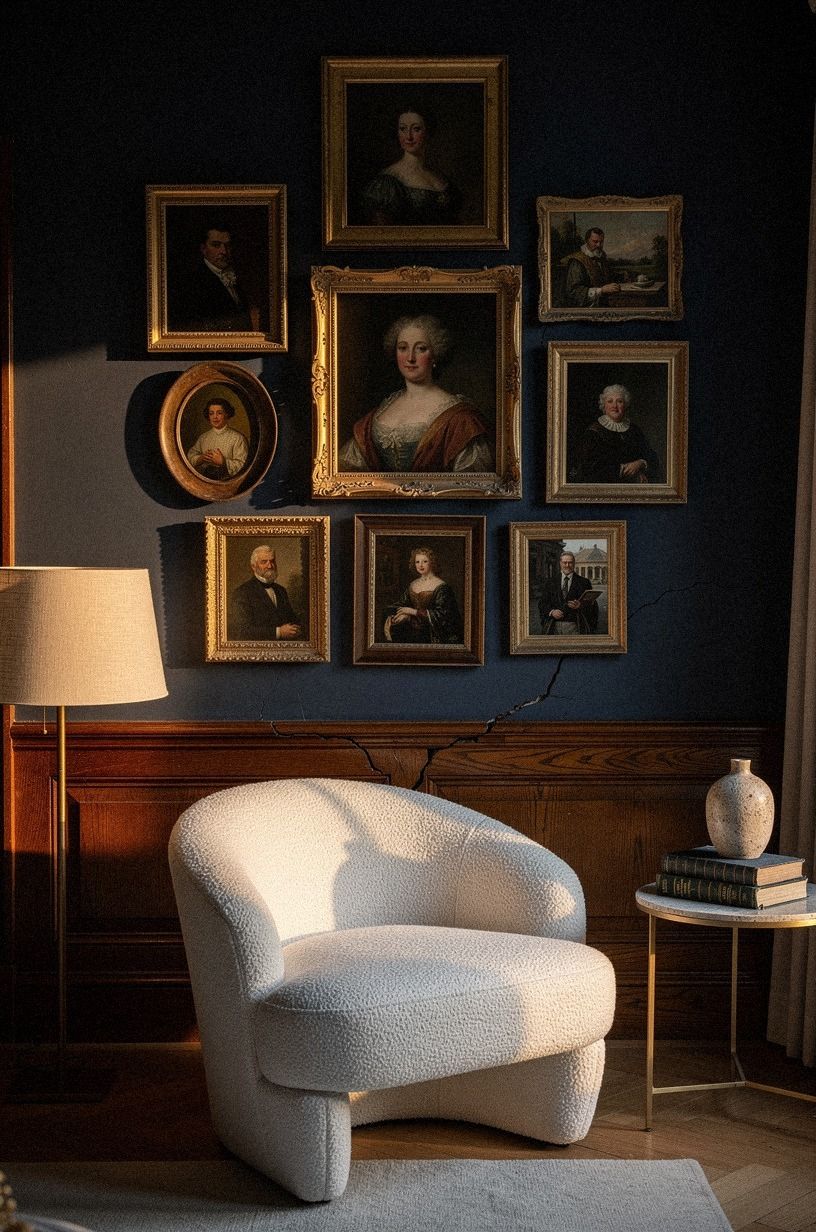
If you want a single move that makes a hidden door feel like part of the wall, paint the inside edge of the reveal in Farrow & Ball Hague Blue No.
5Why does art work better than trim on a busy wall?
Art is one of the smartest distractions you can give a concealed opening, especially when the seam lands above walnut wainscoting. Hang a tight salon-style stack of oil portraits so the frames cross the line where the panel opens, but keep the weight on a backer system that lifts off as one unit.
You don’t want to unhook six separate frames every time you need the room. This is the picture wall version of misdirection, and it works because your eye goes to faces, gold leaf, and shadowed varnish before it goes to joinery.
I’d mix one larger portrait with two medium landscapes and a smaller oval. Too many same-size frames look planned.
For a room that layers antiques without losing warmth, I keep coming back to these vintage dressing rooms with old-world charm. The opening gets discovered, not announced.
6Build a library nook beyond the shelves
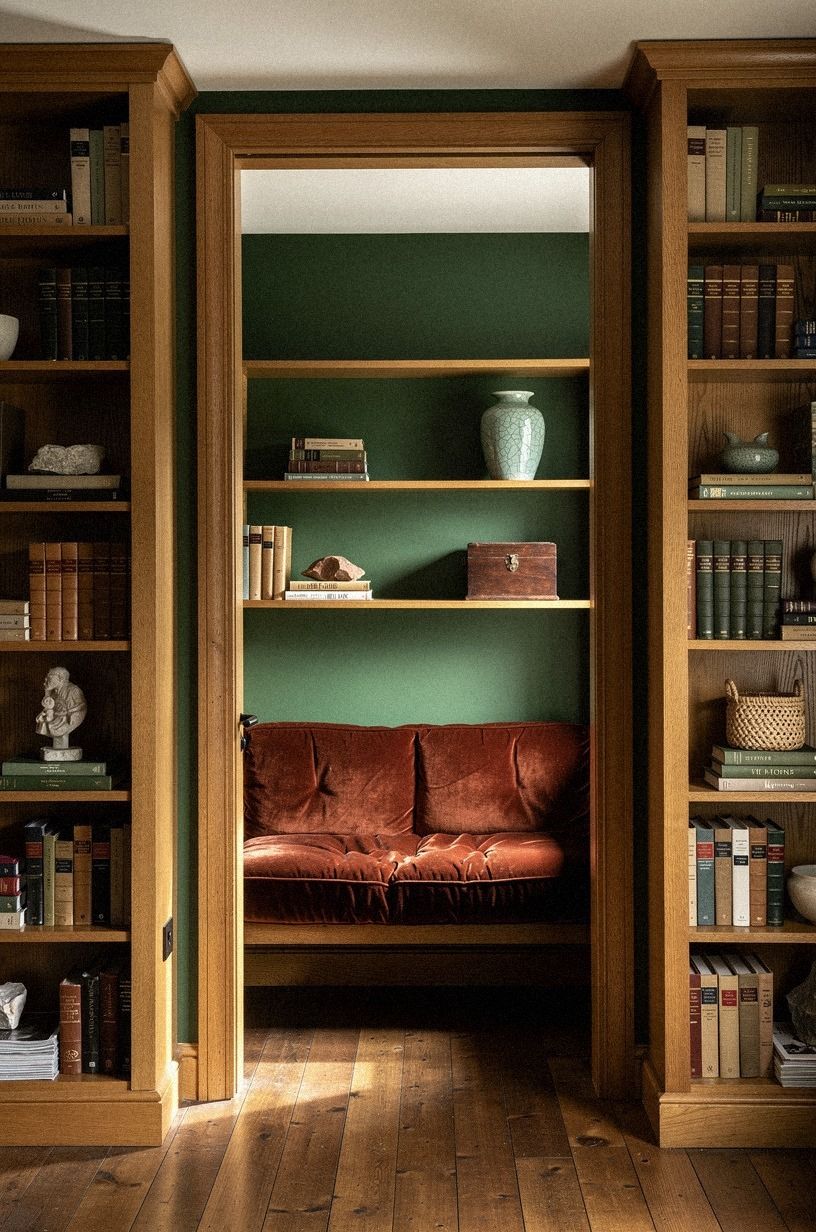
The passage gets more believable when it leads somewhere worth discovering. Through the opened bookcase door, carry the viewer into a nook with Farrow & Ball Hague Blue or a similar deep, evocative green, then ground it with an oak shelf and one low reading seat.
I like a seat depth around 35 to 40 inches if you want it to lounge like a real chair instead of perching like a bench. You don’t need much square footage.
A narrow alcove, one library sconce, and a shelf line that drops lower at the chair side can feel rich fast. I made the mistake once of filling the back wall with more books, and the little room felt pinched. Leave one painted zone bare so your eye can rest.
The mood in these vintage speakeasy decor ideas is a smart guide for how dark to go, and the energy is genuinely hushed and slow. Done right, this stops the room in its tracks!

7Paint the reveal in aged burgundy lacquer
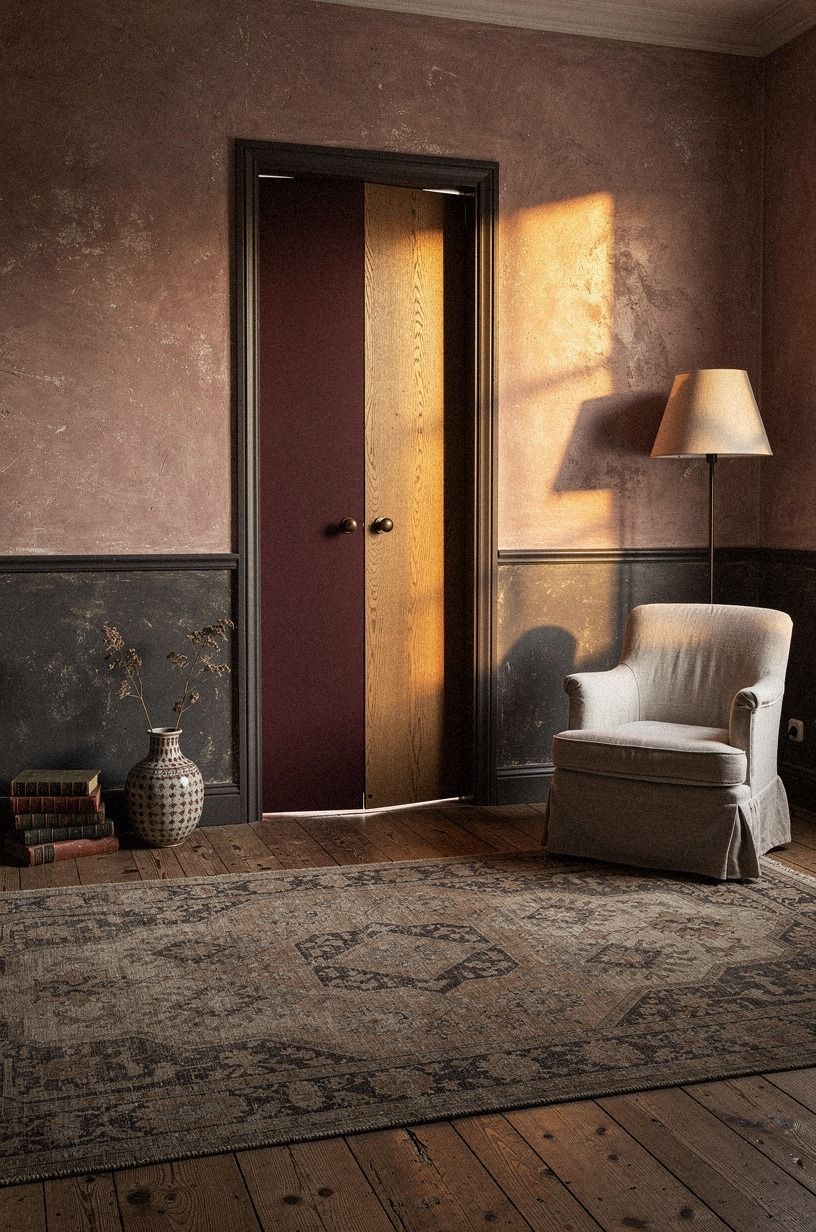
A reveal painted in burgundy lacquer can turn a plain doorway into something collected, quietly theatrical, and slightly moody, especially against dusty rose and charcoal walls.
8Install a mirror door beside the mantel
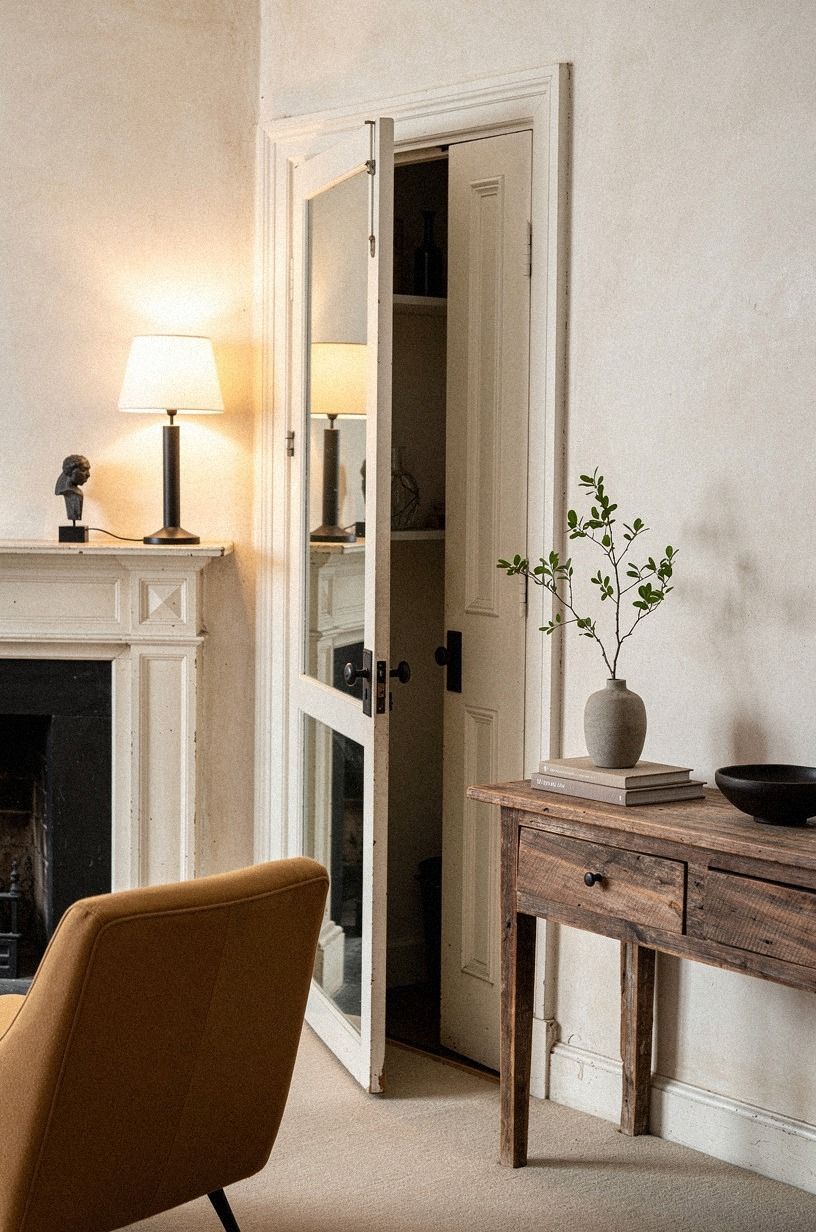
A pivoting mirror door works best when the room already wants a tall vertical element next to the fireplace. Use an antique mercury mirror look, or at least a foxed-glass finish, so the panel feels like furniture instead of a gym mirror.
I’d keep the frame narrow and dark, because a chunky bright frame turns the whole thing into a prop. The opening behind it can stay slim. A narrower passage often feels more convincing because old houses rarely gave extra inches away for free.
If you’re planning furniture nearby, keep your coffee table around 16 to 18 inches tall and about two thirds the sofa length so the mirror can swing without clipping the room. I love this move when the mantel wall needs height but not another bookcase.
For mirror scale and period mood, browse these vintage dressing rooms with old-world charm.
9Benjamin Moore Essex Green inside the lounge
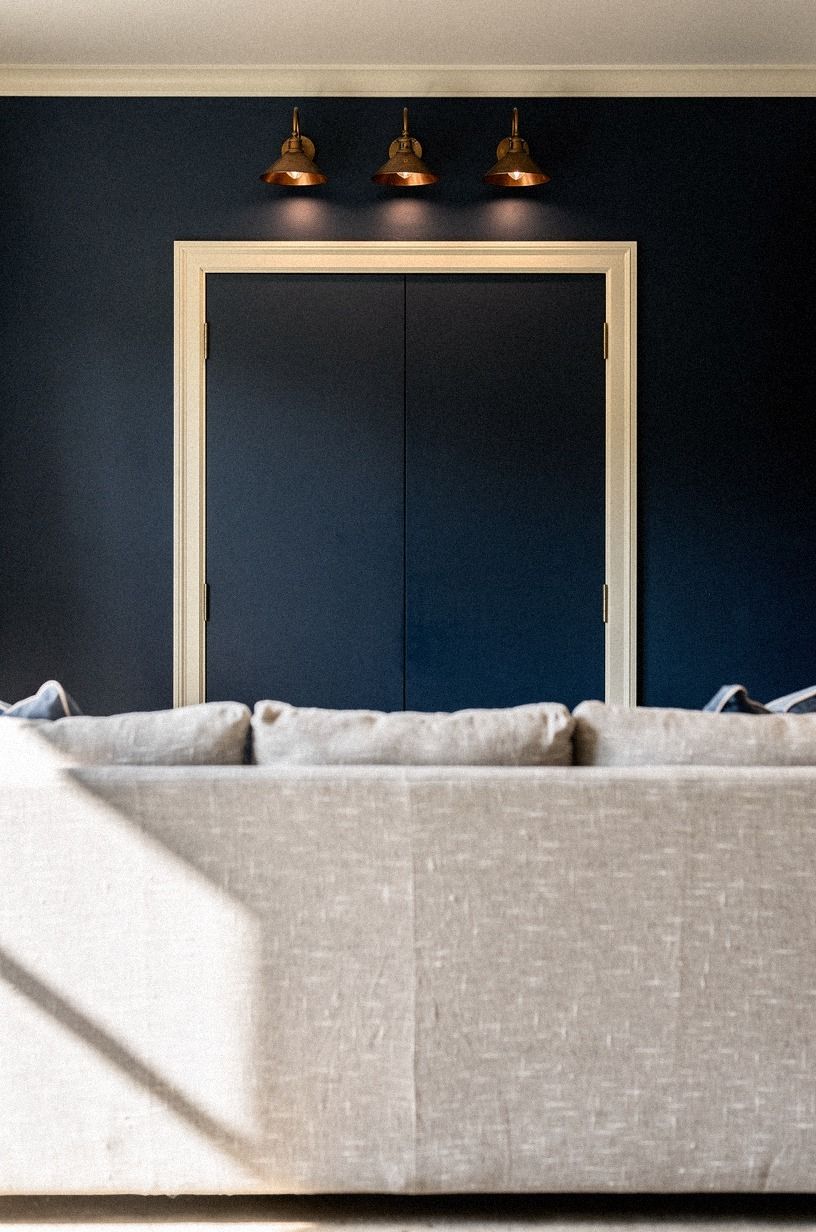
Once you cross the threshold, the inside room has to reward the reveal, and a deep, honest, enveloping color does the heavy lifting. Benjamin Moore Essex Green HC-188 is one of the smartest choices I know for a small interior. It carries blue and black, so the walls feel enveloping without going muddy, and it flatters walnut, brass, and warm oak. I’d paint the ceiling the same color, one shade lighter, so the room reads as one soft envelope.
If your room runs north-facing, I’d skip it. A north room pushes Essex Green colder than you want, and Farrow & Ball Studio Green is the better call.
For a finished feel, the layered mood in these vintage speakeasy decor ideas for old-world charm is a gorgeous reference. The result is a quiet, collected room that feels earned.
Yes, every time!
10Conceal hinges inside carved Victorian trim
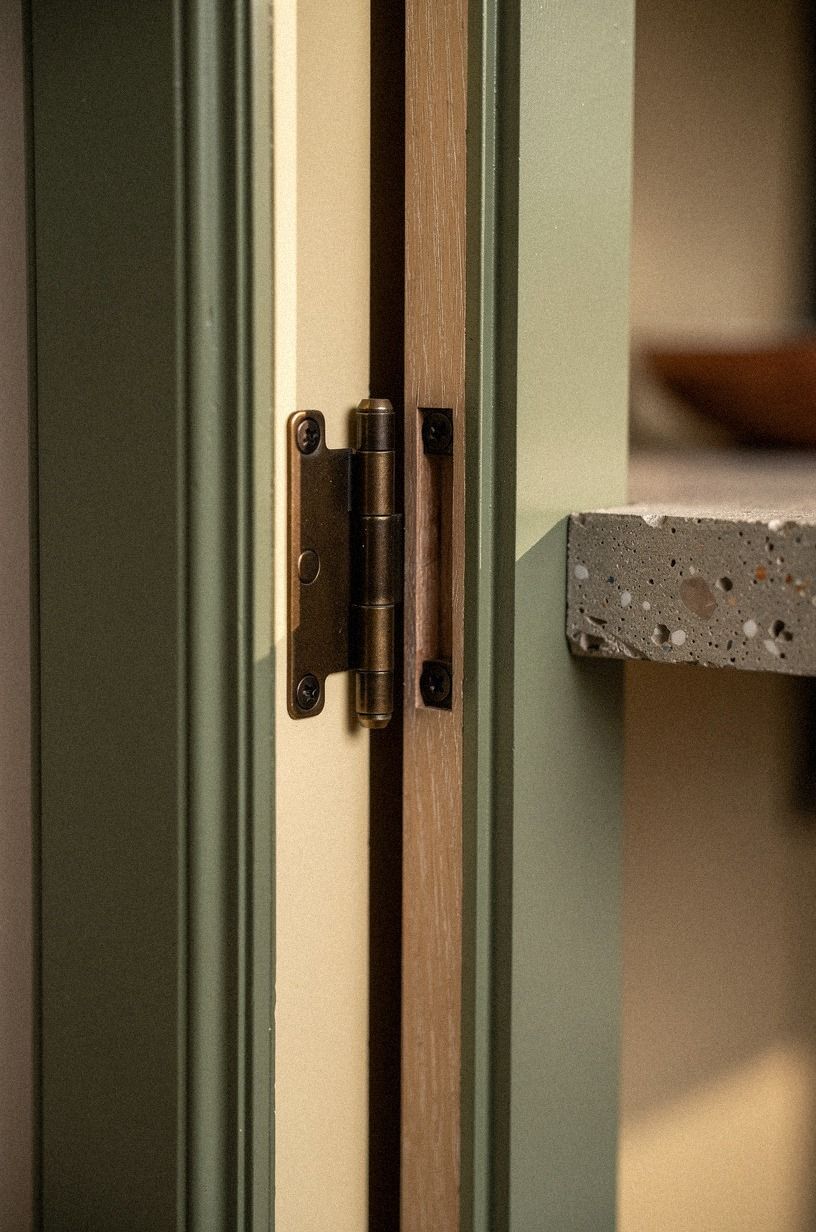
This is the fussy step, and it’s worth slowing down for. If the wall uses carved Victorian trim painted Sherwin-Williams Evergreen Fog SW 9130, the hinge mortise has to disappear into the profile, not land across it.
I’d dry-fit the full swing first with scrap pieces taped in place, because once you cut original-looking molding, every correction gets expensive. A concealed hinge is only as good as the trim line that hides it.
Use sharper shadow breaks near the outer edge and gentler ones toward the opening so the eye reads ornament before mechanics. If the molding has a fragile leaf or bead detail, don’t force it over the hinge pocket. Re-profile that tiny run separately.
Fussy, yes. Worth it, every time!
I like checking trim density against these vintage dressing rooms with old-world charm before committing.
11Add a brass rosette as the release
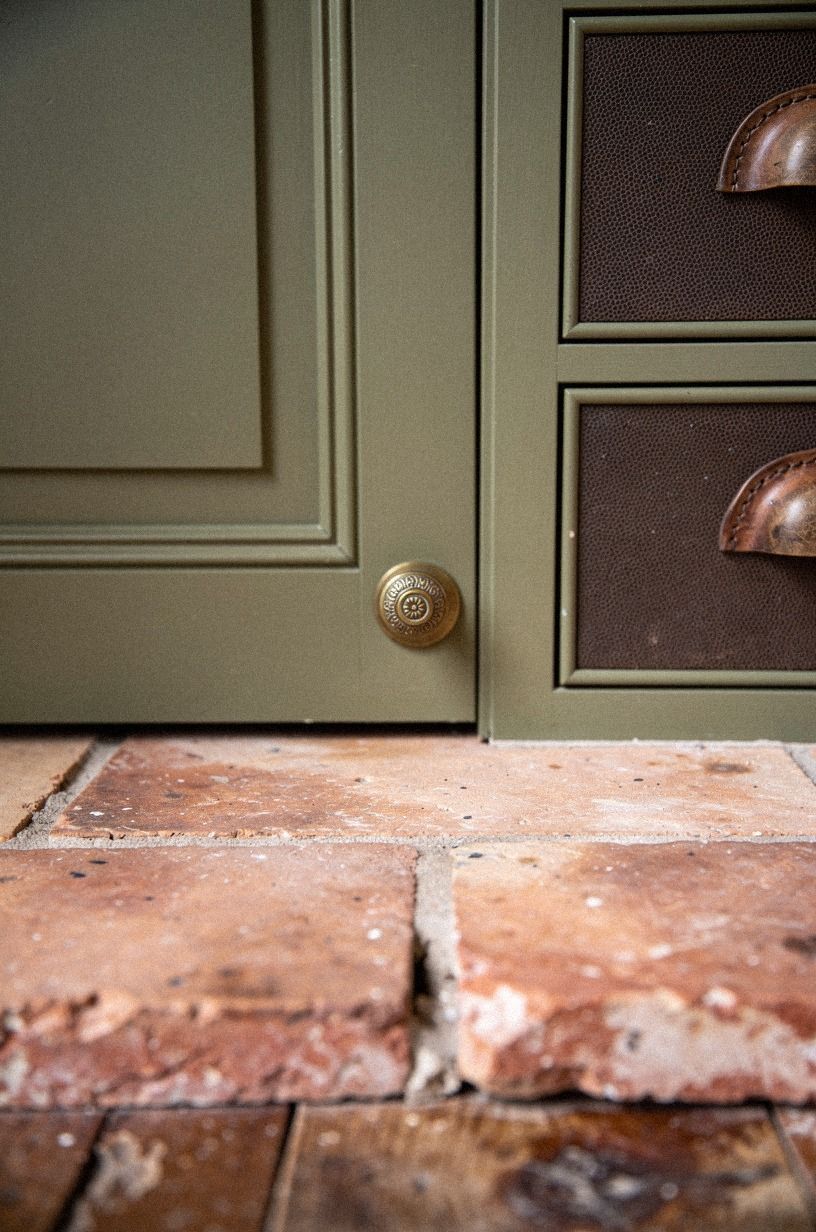
A hidden opening still needs a release point that feels satisfying in your hand, and a small brass rosette is the most forgiving choice in an old house. Skip the oversized pull, skip the chrome knob, and reach for an unlacquered rosette the size of a half-dollar.
The patina carries the age, the scale stays honest, and your hand finds it without thinking. I’d mount it where a knob would normally sit, not lower, because door hardware reads from muscle memory, not decoration.
If the panel sits inside a heavily carved wall, a plain rosette is even better. Too much detail on the release and the eye treats it as a button, not a piece of trim.
For warm, old-school hardware cues, the look in these vintage vanity corners that radiate old-world charm lands close. The patina does the work.
You’ll feel the difference every single time you swing it open!
12Tuck the passage behind a salon gallery
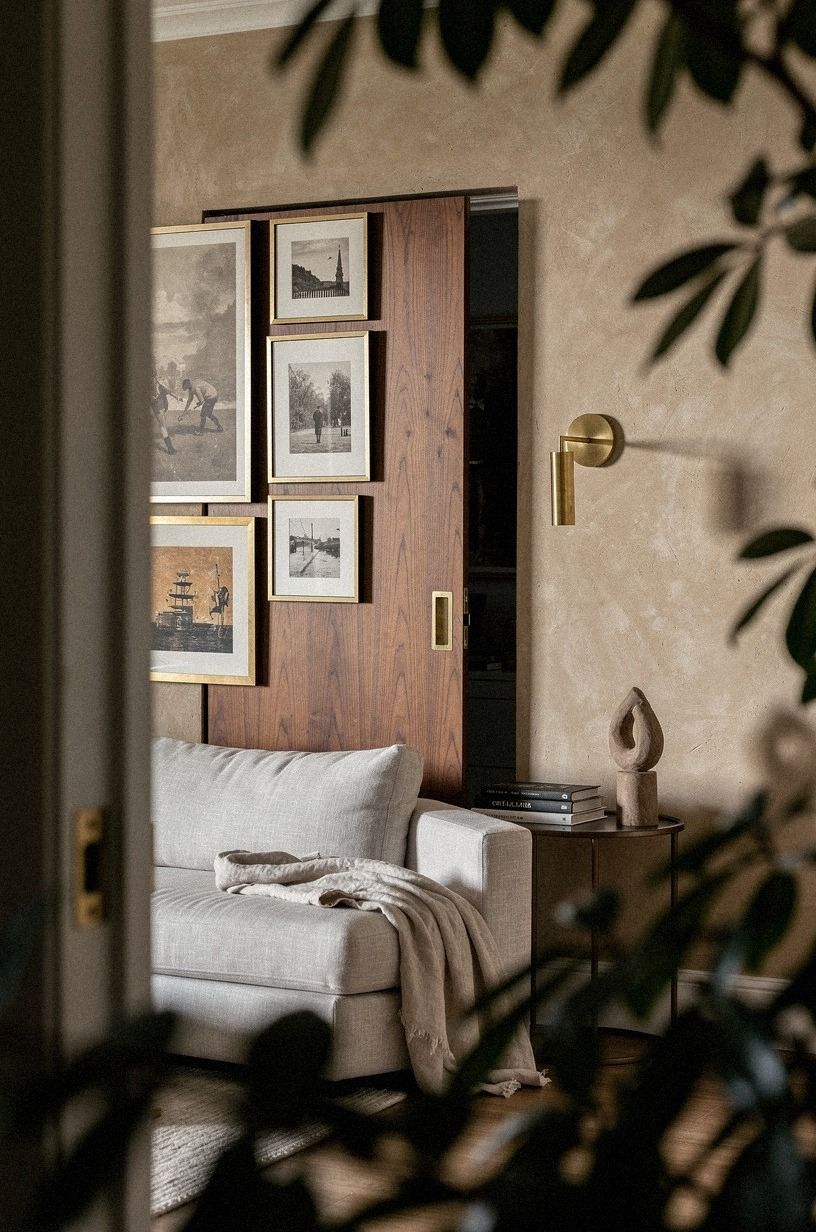
If the wall already carries art, let the hidden opening live inside that rhythm instead of beside it. One continuous picture-rail across the seam, frames hung on a single cleat so they lift as a unit, and the door disappears inside the gallery. It’s the most atmospheric move you can make for almost no money.
13Sherwin-Williams Evergreen Fog on the panel
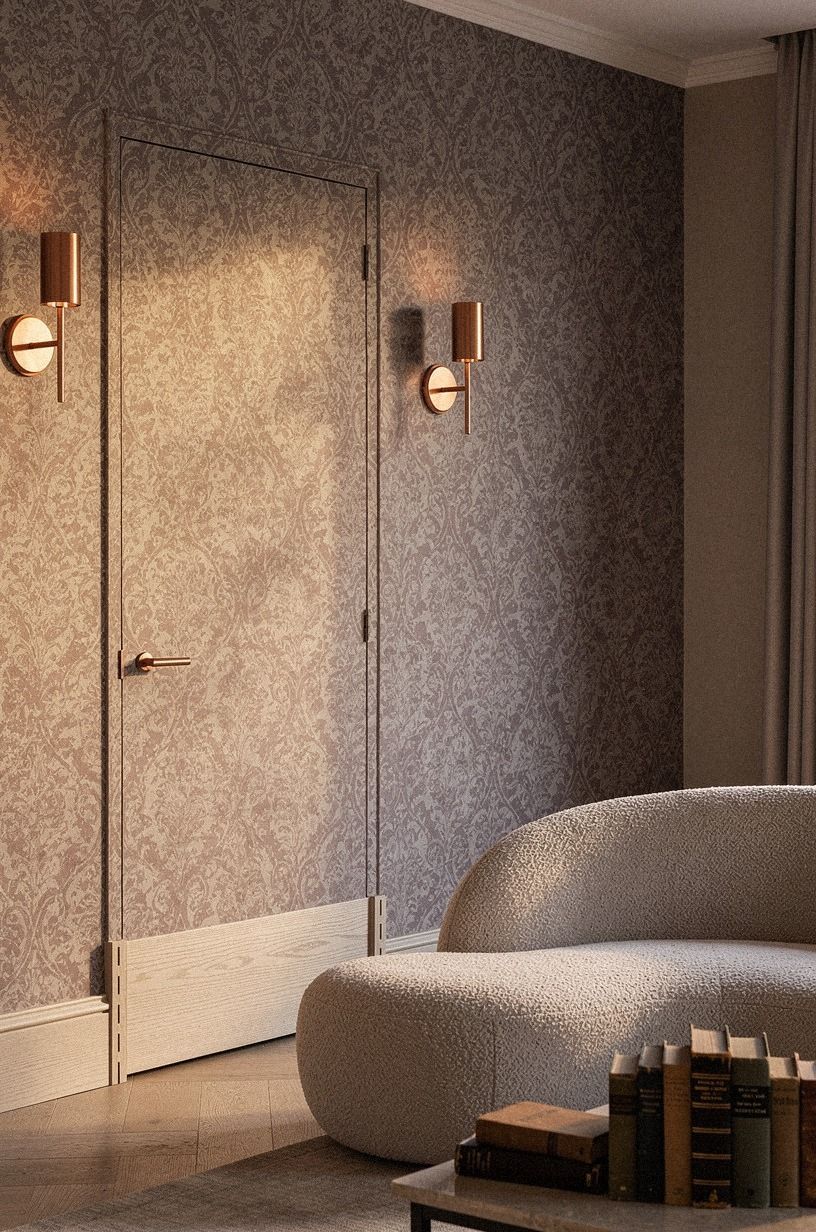
If your old house runs cool or north-facing, Sherwin-Williams Evergreen Fog SW 9130 is one of the most reliable color choices I know. It reads as a quiet, hushed green-gray in daylight, a soft botanical in evening lamplight, and never goes chalky the way some popular grays do.
I’d carry the color from the wall onto the door panel, then break it on the inside of the reveal with a contrasting lacquer, Benjamin Moore Hale Navy HC-154, so the threshold has its own moment. A satin finish beats flat here because the old plaster underneath wants a little sheen. For rooms that nail the same restraint, the atmosphere in these 1920s speakeasy decor ideas is a beautiful match.
The panel stays calm, and the room feels intentional.
14Style antique books to blur the opening
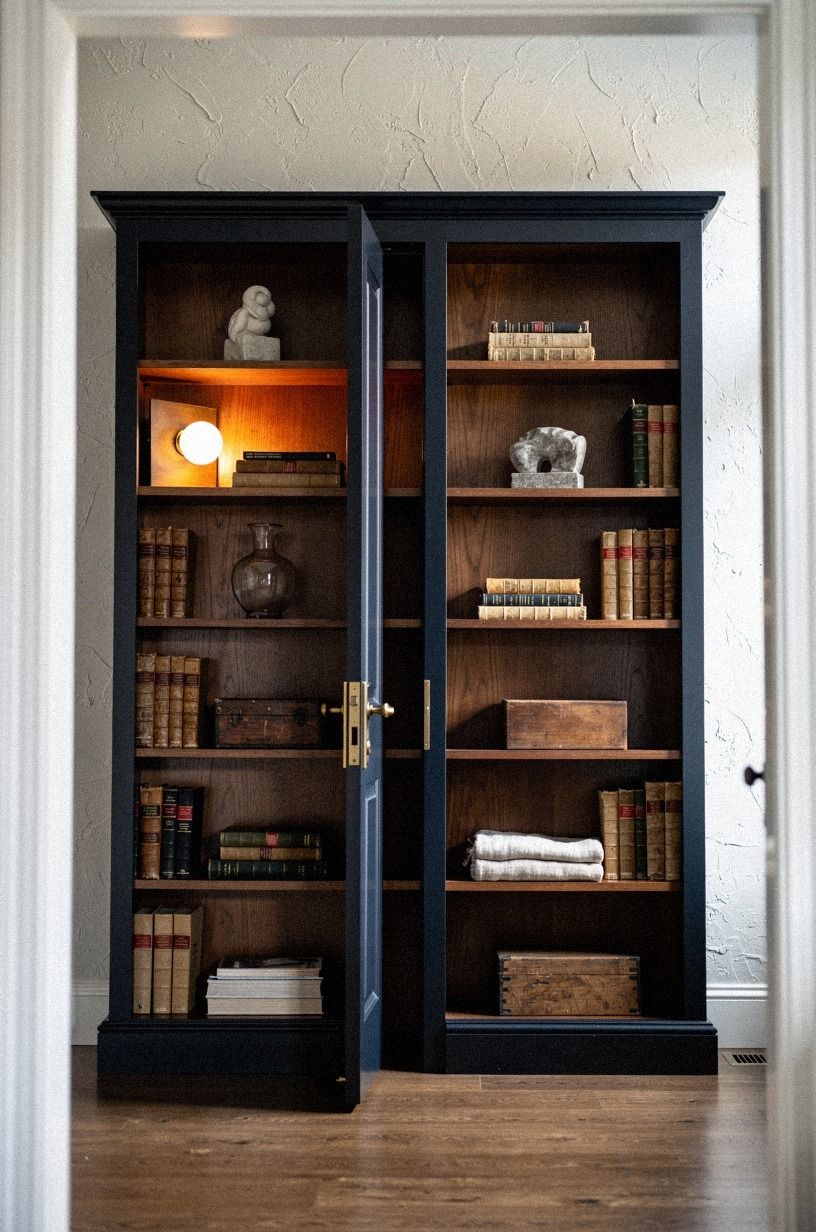
Books are useful because they create mass, shadow, and little irregularities your eye loves to read. On a symmetrical navy bookcase wall with white trim and walnut shelves, stack antique calfskin books across the opening line, then break the rows with one bowl, one frame, and one box.
The shelf doesn’t need more stuff. It needs better interruption.
I use the Two-Depth Shelf Rule here: a front row that softens the edge, then a deeper row that holds the wall visually behind it. But keep the heaviest stacks off the moving leaf if the hinge load is already doing work.
If you’re still deciding how far to push the old-world look, the atmosphere in these vintage speakeasy decor ideas for old-world charm shows how much mood books can add to a quiet, hushed room.
15Light the threshold with candlelike sconces
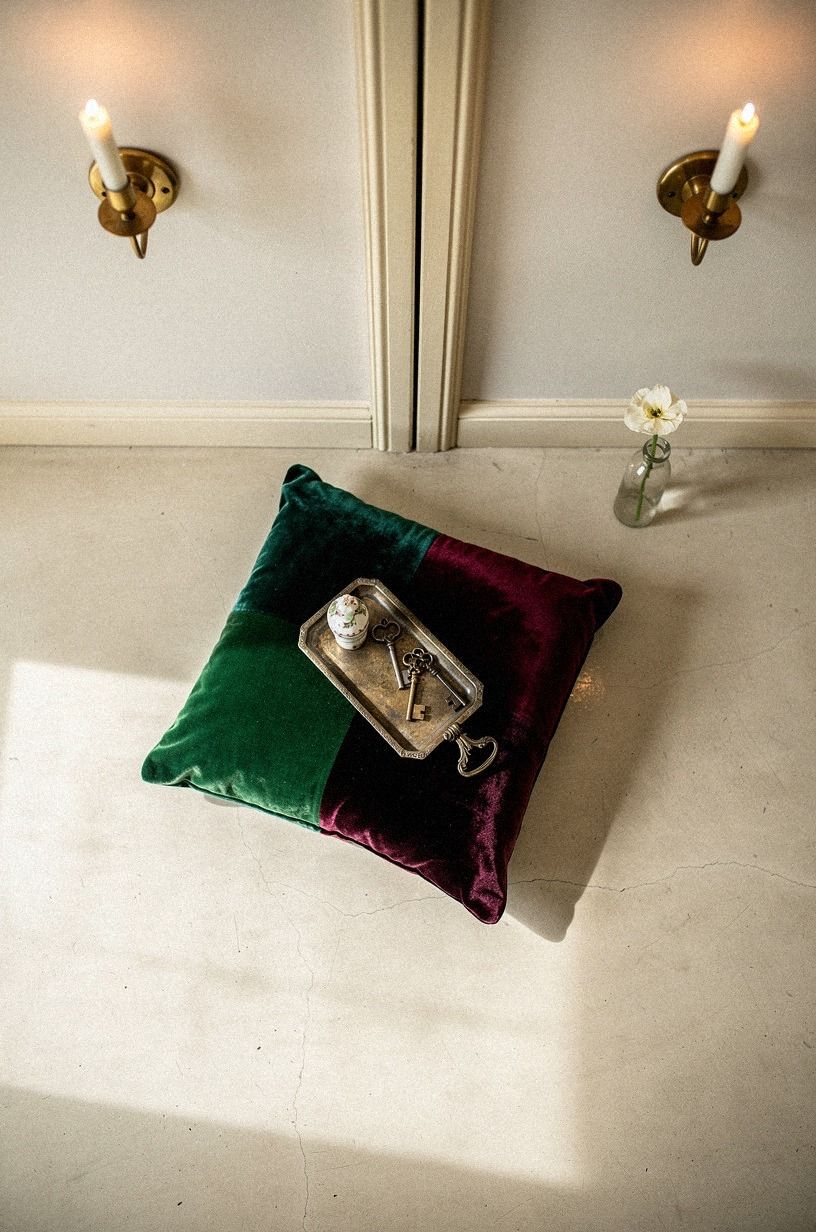
Lighting the threshold makes the passage feel intentional instead of accidental. Mount a pair of candle-style wall sconces around the small emerald-and-cream opening so the light grazes the trim and catches the latch side softly.
I’d keep the bulbs warm and low-output, around 2400K, because the point is glow, not visibility. Think invitation, not task light.
This is especially good if the opening sits in a darker corner of the living room. A sconce pair gives the wall a reason to exist even when the door stays closed.
Yes, go for shades or faux candles with a little texture rather than stark exposed bulbs. That tiny bit of softness helps the room feel older right away.
For the exact level of glow I’d chase, the mood in these vintage speakeasy decor ideas for old-world charm is genuinely close. Pure magic after dark!
16Old trim vs. new millwork: which one hides a door better?
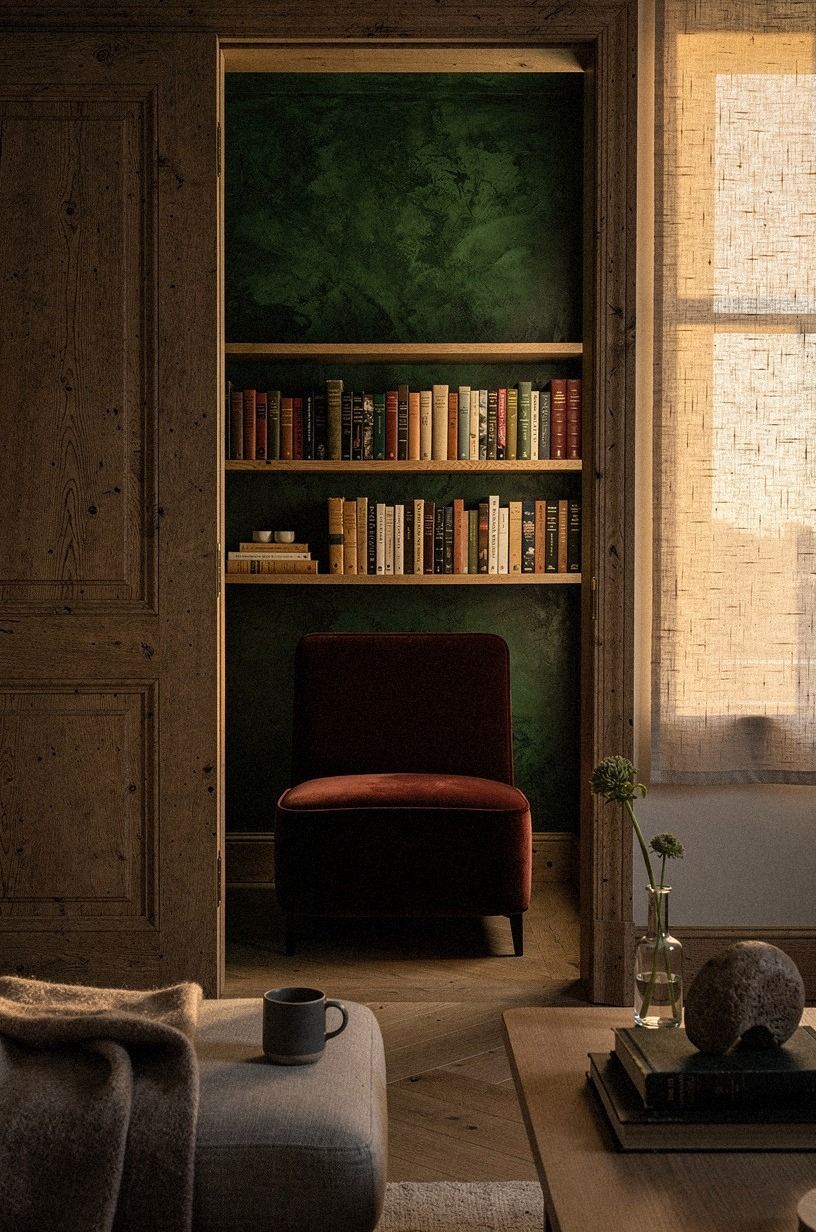
If you’re weighing original trim against fresh millwork, the honest answer is that old trim almost always wins.
What it usually costs before you commit
You can fake a lot with paint, trim, fabric, and hardware, but the cost climbs fast once you move into custom millwork or fireplace work. That’s why I tell people to price the look before they price the fantasy. Start with the wall treatment and concealment strategy, then decide whether the room beyond really needs built-ins.
Why this works in old houses when newer versions don’t
What makes these hidden passages convincing isn’t novelty. It’s restraint.
I’ve seen newer homes throw in a rotating bookcase or a flashy pivot wall and call it character, but old houses don’t win that way. They win when the reveal feels like it grew out of the room’s existing logic: the fireplace already wanted weight, the bookcase already wanted depth, the trim already wanted a continuation, the wallpaper already wanted to cross one more panel.
Once you work with that logic, the opening stops reading like a stage effect and starts reading like a room someone cared enough to solve properly. And the other reason this approach lands is that old materials forgive complexity better than new ones do.
Stone, patinated brass, limey paint, waxed walnut, and velvet all carry little shifts in tone, so a panel line or a pivot point doesn’t flash at you the way it would on flat builder-grade drywall. And honestly, that’s why I’d put the money into finishes before mechanics. A cheap latch wrapped in convincing wood and paint will usually feel better than expensive hardware dropped into a wall with no soul.
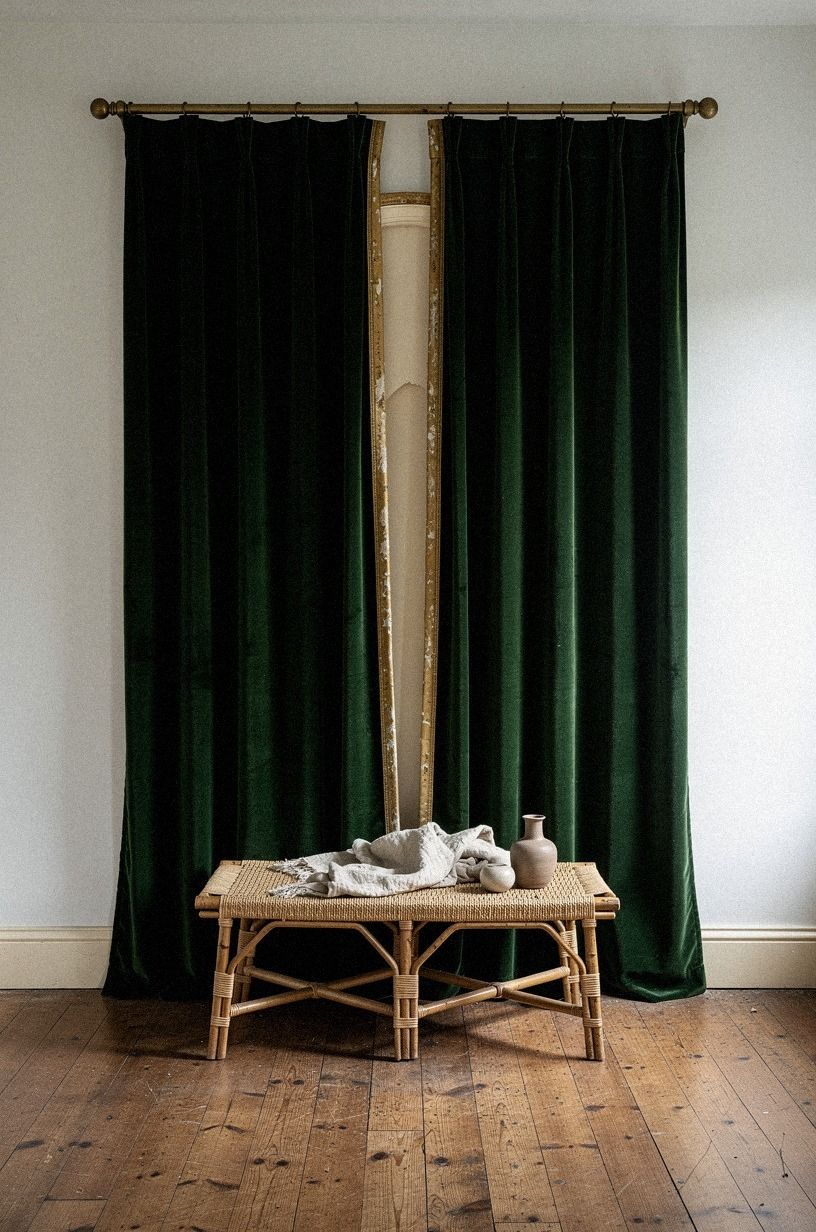
If you are choosing where to spend, I would save on the hidden hardware before I would save on the visible finish. A lined drape pair at $120 to $400, a decent oak table in the $300 to $1,200 range, or one 9 by 12 wool rug under the seating does more for credibility than a fancy release no one sees.
People notice atmosphere first. Always. If you want the room to feel collected instead of contrived, let age, texture, and a touch of asymmetry do the heavy lifting. It’s the small, honest imperfections that carry the mood in the end.
What People Always Want to Know
What is the best hidden room idea for a small living room?
A bookcase passage is usually the best pick for a small living room because it gives you storage and concealment in the same footprint. I’d use an IKEA BILLY built-in approach only if you upgrade the trim and doors, then study these vintage dressing rooms with old-world charm for proportion.
Where can I buy concealed hardware on a budget?
Start with Target Threshold, IKEA, and local salvage yards. You’ll save the most on frames, sconces, and hardware when you buy secondhand, then spend a little on paint and lining so everything looks intentional. Facebook Marketplace is great for old mirrors and bookcases.
How much does a concealed passage makeover cost?
Most living-room versions land around $300 to $8,000, depending on whether you stop at paint, drapery, and art or move into custom carpentry. Free wins matter too. Reworking what you own, moving art, and restyling shelves can shift the wall before you buy anything new.
Can I create a hidden nook on a budget?
Yes, and the smartest budget version starts with paint, fabric, and layout. Use a curtain over an arch, wrap the panel in wallpaper, or disguise the line with a gallery wall. Salvaged brass hardware, thrifted frames, and rearranged books go further than one expensive custom door.
Is a hidden nook worth it in a small space?
Yes, because a small space often benefits most from double-duty walls. When the bookcase stores real things and hides a passage at the same time, you gain function without adding bulk. Keep the seating scaled right, and let the rug anchor the room so the wall can stay visually busy.
Is a hidden nook a good idea for a rental?
Yes, if you stick to removable disguise layers. Tension-rod velvet, peel-and-stick wallpaper, freestanding bookcases, and battery picture lights can create the mood without cutting original trim. I’d skip hinge changes in a rental and focus on drapery, mirrors, and art instead.
Where I’d Start First
If I had to pick one, I’d start with the fireplace wall’s hidden panel. The mantel already controls the room, so one convincing opening there makes every later choice feel earned. Pin that move first, then let the trim, paint, and hardware fall in behind it.