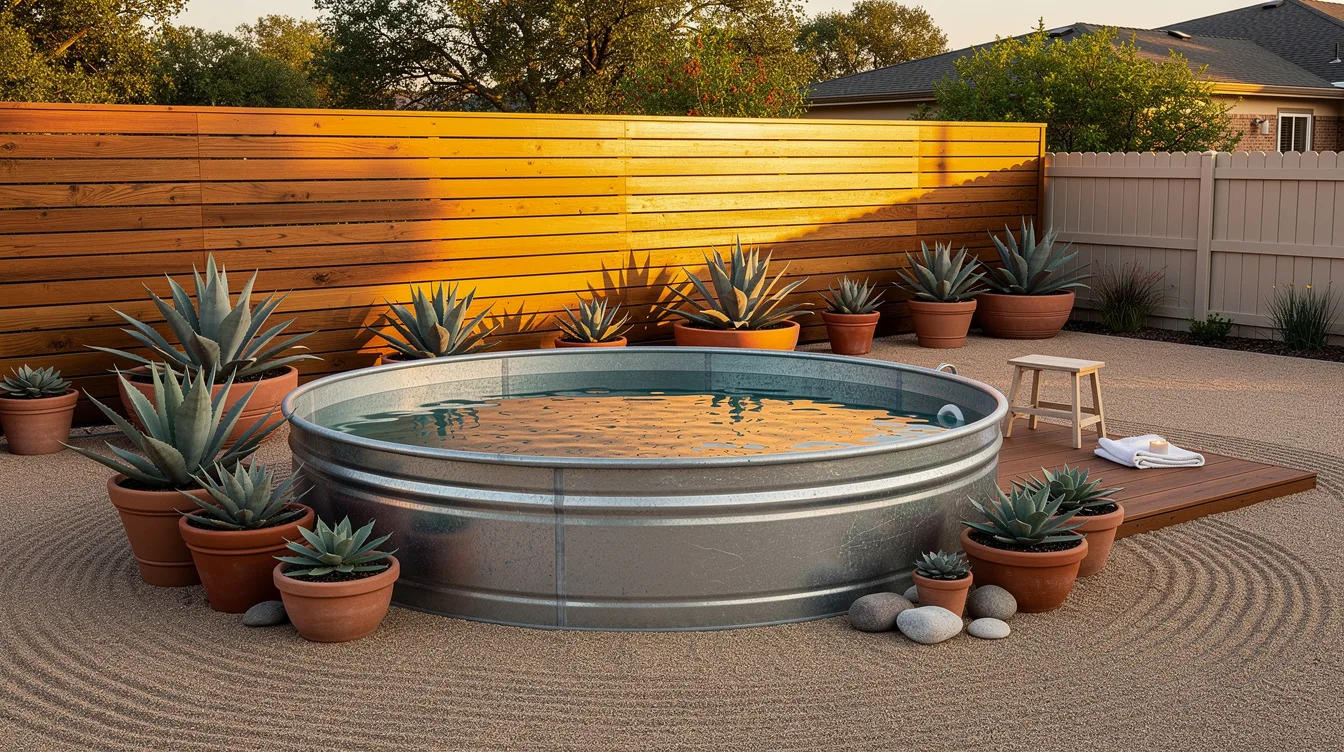
I knew a stock tank pool could look good, but mine kept reading as a metal tub dropped in the yard on a hot Saturday. The water was fine, the setup was not, especially once the patchy grass and plastic chairs got involved.
The fix was not making it bigger. It was making every inch around it feel deliberate, warm, and a little dry, like a tiny desert hotel courtyard you would actually want to sit in after dark.
Start With the Right Tank Size
A small pool only feels relaxing when it fits the yard instead of bullying it. For most backyards, an 8-foot galvanized stock tank is the sweet spot because it gives you room to soak without eating the whole patio.
A typical 8-foot model is about 24 inches deep, holds roughly 2,160 liters, and can weigh close to 4,925 pounds when filled to 80%. In 2026, bare tanks usually land around $500 to $900, while a more complete DIY setup can push the total into the $700 to $1,200 range.
If you want less guesswork, kits built around Hastings Black Label tanks with pump fittings and filtration usually run about $1,500 to $2,200. I think that extra cost is worth it if you already know plumbing is not your hobby.
Add Filtration That Keeps the Water Clear
Cloudy water kills the resort mood faster than anything else. A proper Intex sand filter pump with a timer gives a stock tank pool that clean, still look people usually miss in DIY projects.
The usual 2026 price range is about $250 to $450 for a decent sand filter setup with hoses and fittings. Some kits also use 40 pounds of glass filter media, and that tends to feel like the smarter upgrade over basic cartridges.
You can go cheaper with a smaller cartridge pump, especially if the pool is mostly for quick evening dips. I still would not cut filtration first, because clear water reads expensive even when the rest of the setup is simple.
Build a Gravel Base That Looks Intentional
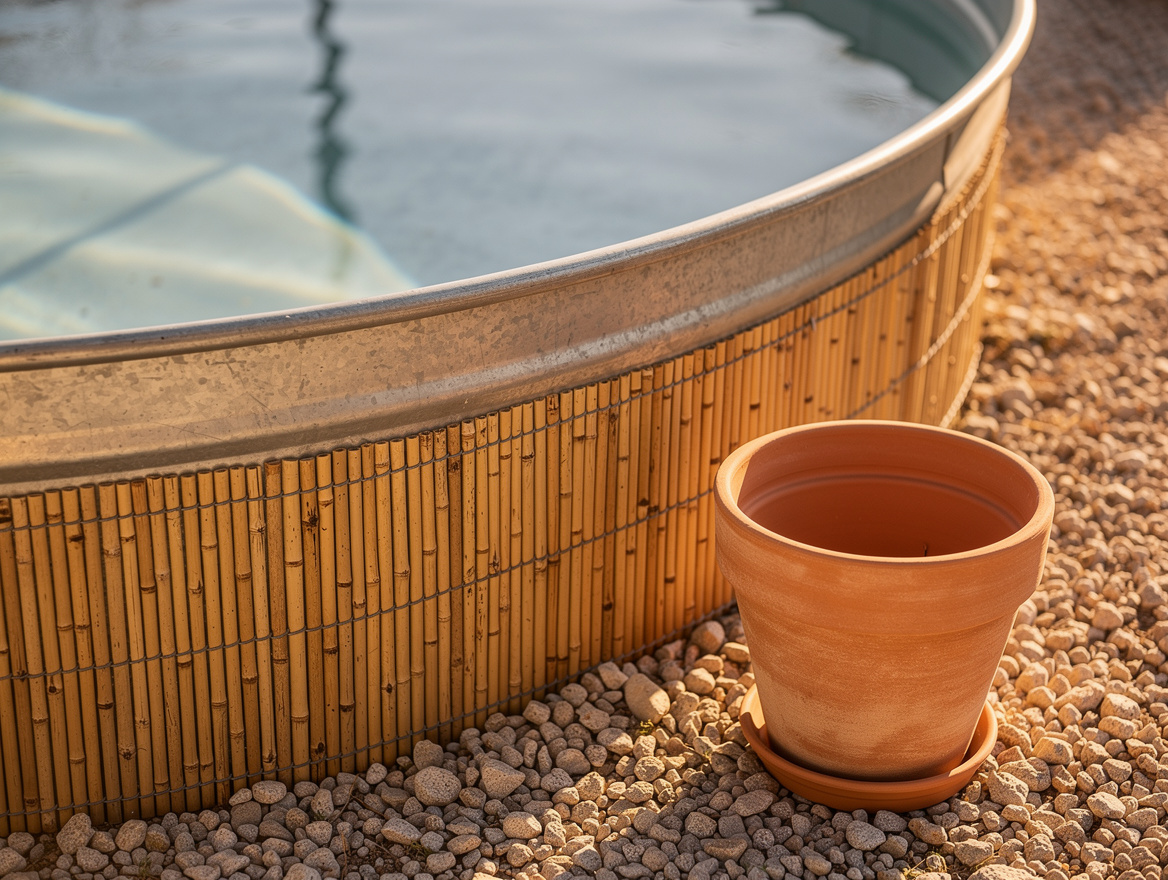
The fastest way to get desert-hotel energy is to stop treating the ground around the pool like leftover lawn. A ring of decomposed granite or gravel, about 3 to 6 feet around the tank, makes the whole setup look planned.
That dusty mineral texture works better than mulch for this style because it reflects light, drains well, and instantly shifts the pool away from farmhouse territory. Add a few large concrete pavers as a path, and the yard starts feeling more Palm Springs than weekend project.
This part of the makeover can stay pretty flexible on cost. For a smaller backyard, hardscape and plants together often land around $400 to $1,500, depending on how much gravel, decking, and planter size you choose.
Wrap the Metal With Warm Texture
Raw galvanized steel can look cool, but it can also read livestock supply if the rest of the yard is plain. A bamboo fencing wrap softens the tank fast and adds the warm tone that makes desert styling feel lived-in.
If bamboo feels too beachy for your taste, paint works too. Use exterior metal-rated paint in sand, terracotta, muted sage, or even a faded clay color, because those shades sit better with gravel, stucco, and dry planting than bright white ever will.
You do not need anything overworked here. I like a simple solid finish more than stripes or patterns, because the pool already has enough visual texture once sunlight hits the corrugated metal.
Create a Backdrop With a Small Privacy Wall
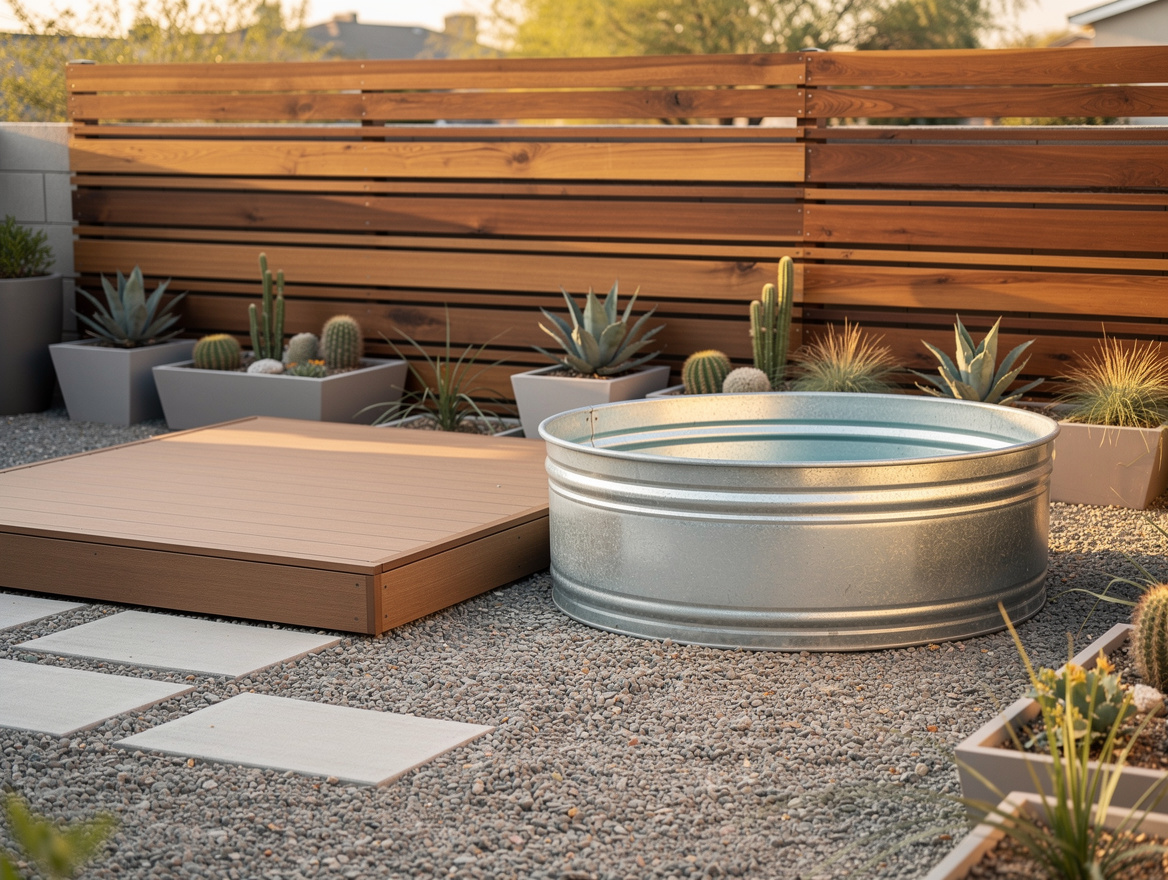
A pool in the open middle of the yard never feels exclusive. Put a cedar slat privacy screen 3 to 6 feet behind it, and suddenly the stock tank has a backdrop instead of just floating near a fence.
DIY versions often come in under $150, and that is one of the best cheap upgrades in this whole category. Warm wood tones make the silver tank, gravel, and planters feel connected, especially if your house already has tan, white, or brown exterior paint.
This is also where I would fake a little luxury on purpose. Mount a simple towel hook, add one narrow shelf for drinks or sunscreen, and the whole corner starts acting like an outdoor room.
Use Drought-Friendly Planters Instead of Garden Beds
Trying to build a desert look with thirsty flower beds usually backfires. A few oversized terracotta planters filled with agave, hardy succulents, or desert grasses give you the clean sculptural shape this style needs.
Tall narrow pots behind the pool work especially well because they lift the eye and hide fence lines without making the space feel leafy or crowded. If your climate is wrong for true desert plants, faux grasses mixed with gravel still get the look without the constant replacement bill.
I would rather buy three big pots than eight tiny ones. Sparse planting looks more expensive here, and it leaves enough visual breathing room for the tank to stay the main event.
Layer Low Lighting and a Small Deck Pad
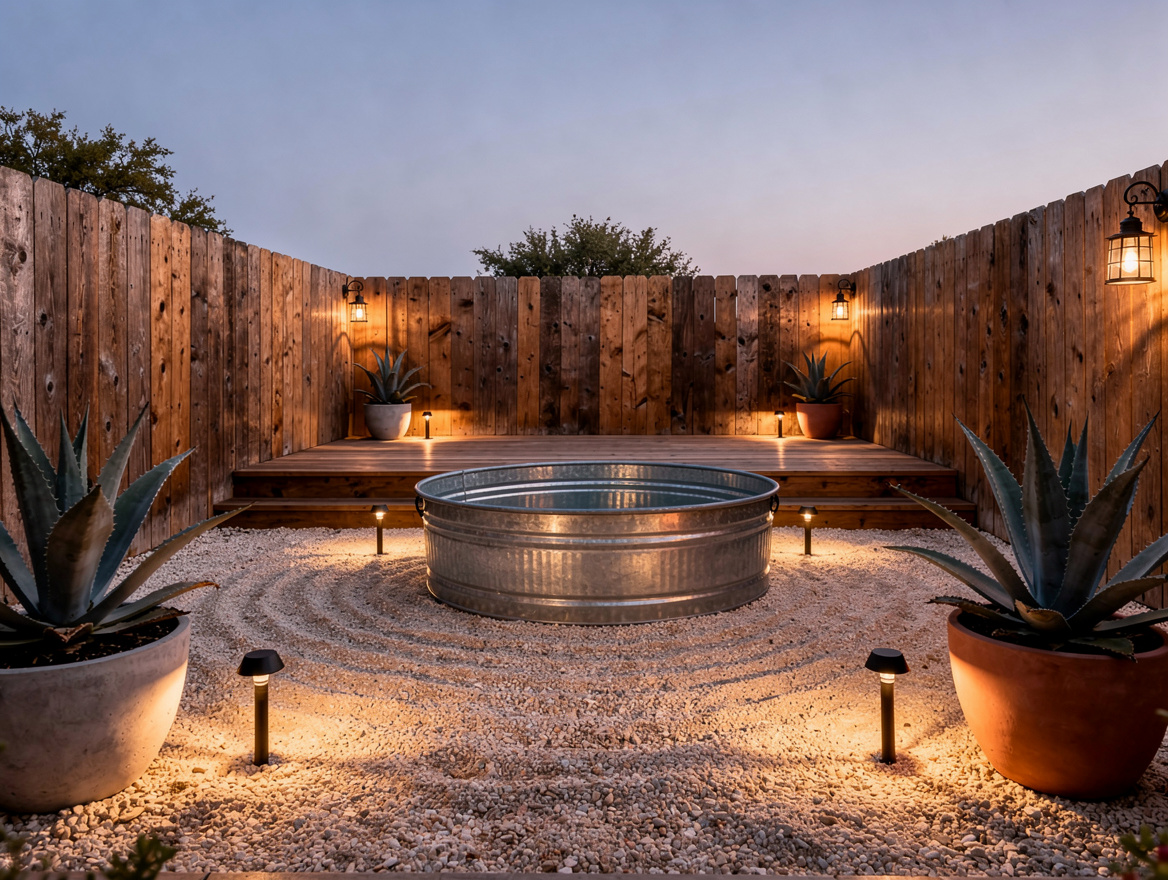
The desert-resort effect really shows up after sunset. A compact composite deck platform or weathered wood step next to the tank gives you a cleaner entry point and keeps bare feet out of dust and mud.
You do not need a full wraparound deck. One modest landing for a chair, a towel, and a drink is enough, and it keeps the budget in the sane zone while still making the pool feel built-in.
Then add low, warm lighting instead of bright floodlights. I like solar path lights near the pavers and one lantern-style light on the deck, because that soft glow is what makes an ordinary 8-foot tank look like a place you planned to be, not a thing you dragged home from Tractor Supply.
Begin with the ground first, not the accessories. Gravel, one good tank size, and a real filter will do more for the look than a pile of random decor ever will.
If the budget is tight, spend the first dollars on the pool base and water clarity, then add planters and a privacy wall once the shell already feels right.
Mia Carter writes about small-space living and budget home makeovers. She has restyled three rentals and tests most ideas in her own 45 sqm flat.