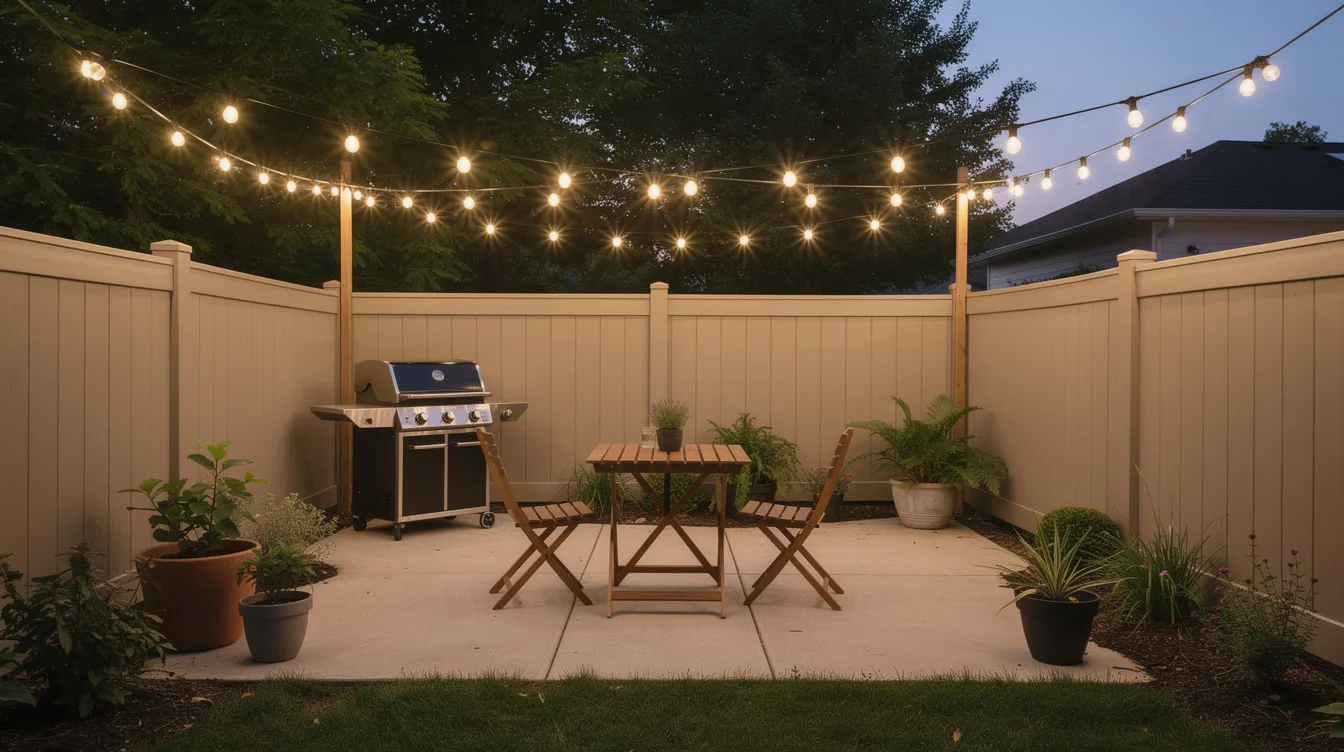
My patio is only 8 by 10 feet, and before I fixed the lighting, it had that awkward empty-middle problem. Two chairs hugged the wall, the grill took up one corner, and once the sun dropped, everyone drifted back inside within ten minutes.
I did not need a renovation. I needed the kind of warm overhead light that makes people stay for one more drink, then another half hour.
Map The Zigzag Before You Buy Anything
I started by measuring the full perimeter and then sketching a zigzag across the ceiling line of the space. On an 8×10 patio, one 48 to 50 foot LED string is usually enough if you run it in three or four passes instead of wasting length on a loose border.
That layout matters more than people think. A tight zigzag throws light onto the table and chairs, while a lazy single line just brightens one edge and leaves the middle flat.
Choose One Warm White Main Run
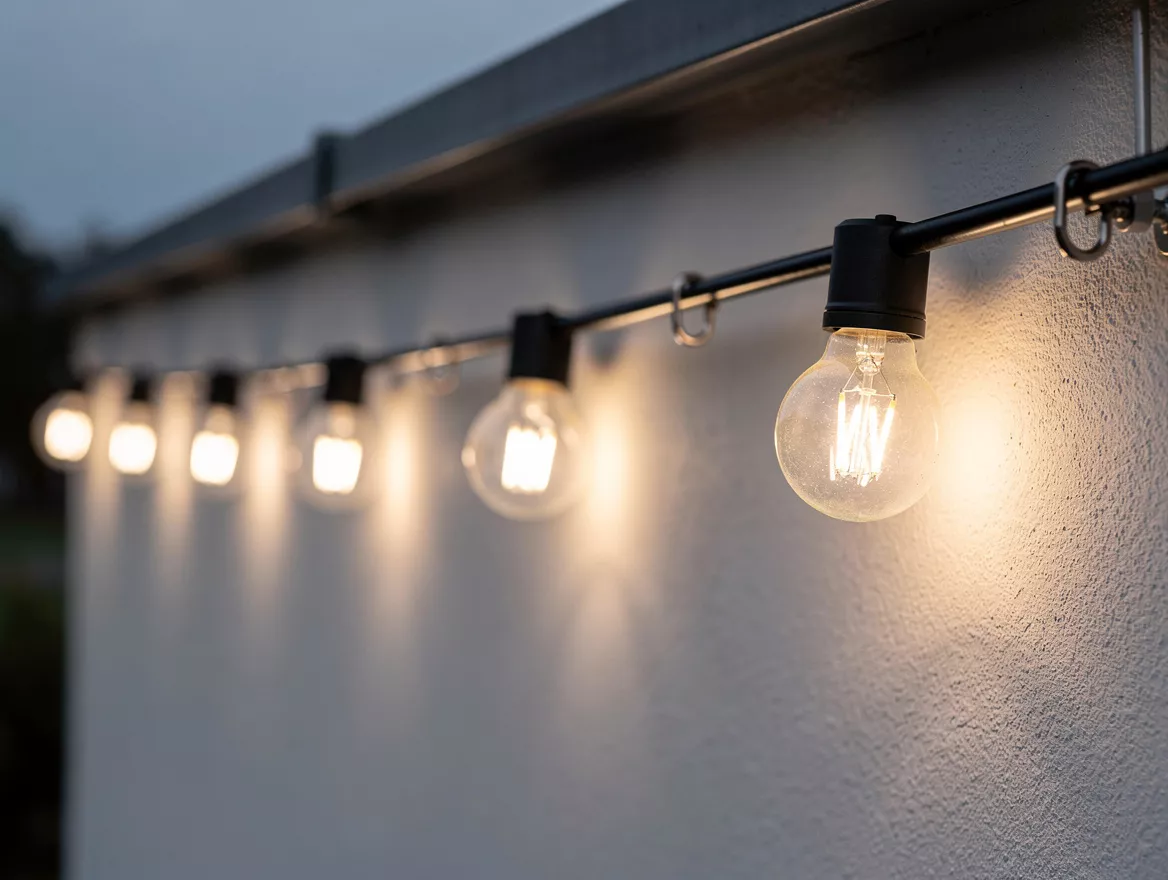
The best buy here is a warm-white café-style set, not tiny fairy lights and not cool white bulbs. A typical Amazon or Walmart 48 to 50 foot outdoor LED string runs about $22 to $35, and 2200 to 2700K gives that soft patio-bar look instead of backyard floodlight energy.
I would skip novelty colors and anything that looks blue at night. For a small patio, shatterproof bulbs and an IP65-style weather rating are the details that actually make the setup feel worth keeping up all season.
If your budget leans a little higher, the commercial-style sets around $35 to $50 usually hang straighter and feel less flimsy in wind. That extra structure is visible on a tiny patio because every droop reads as clutter.
Add A Short Accent Run Only Where It Helps
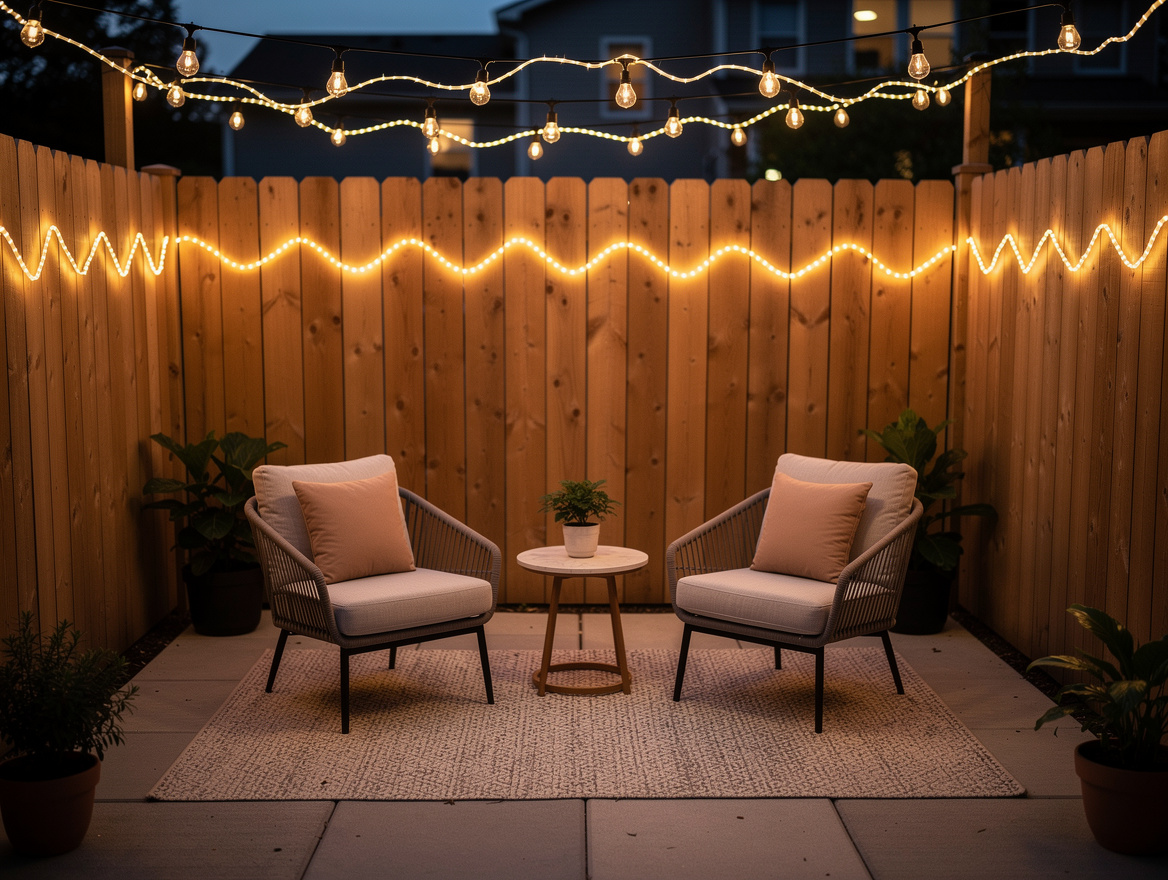
I did not blanket the whole space in lights. I used the main overhead run first, then saved room in the budget for one short 24 to 32 foot accent string along the fence line, which is typically another $10 to $20.
That second layer is what made the patio feel like a destination instead of a pass-through. One edge glowed softly behind the chairs, so the whole setup looked intentional even when the table was empty.
This is also where people overspend. On an 8×10 footprint, a second string is an accent, not the star, and too much brightness kills the cozy part fast.
Use Hardware That Keeps The Lines Clean
The least glamorous part was the one that changed the final look most: mounting hardware. A basic pack of eye hooks, anchors, zip ties, and light-duty support wire from Home Depot, Lowe’s, or Ace Hardware usually lands in the $5 to $15 range.
I used hooks where I had solid structure and zip ties only where they stayed hidden. Visible plastic loops everywhere make even decent lights look temporary, and that cheapens the whole patio in daylight.
If you need height on one side, slim metal poles work better than bulky wood posts on a small footprint. They disappear visually, which matters when your entire hangout zone is only eighty square feet.
Frame The Patio Like A Small Outdoor Room
The smartest visual move was hanging the lights high enough to define the patio without creating glare at eye level. Around 7 to 9 feet usually works on a compact setup, because the bulbs sit overhead and the space reads like a room with a ceiling.
I tested a U-shape first, then switched back to a zigzag because it lit the center better. That is my strong opinion on small patios: zigzag canopy beats perimeter framing when you actually want people to sit and talk, not just admire the outline.
If you already have a wall on one side and a fence or railing on the others, a U-shape can still work. It just needs furniture pulled inward, or the brightest part of the setup stays at the edges where nobody lingers.
Keep The Rest Simple So The Lights Can Work
Once the lights were up, I stopped trying to decorate every inch. A small outdoor rug, two solid chairs, and a compact table from Target, IKEA, or Wayfair did more for the space than adding planters I had to walk around.
The lights made the patio feel fuller, so the furniture could stay restrained. On a tiny layout, that balance is everything, because one extra side table can make the whole area feel fussy.
I also kept the bulb color consistent across every strand. Mixing warm white overhead with bright white solar path lights nearby is a fast way to lose the soft summer mood you paid for.
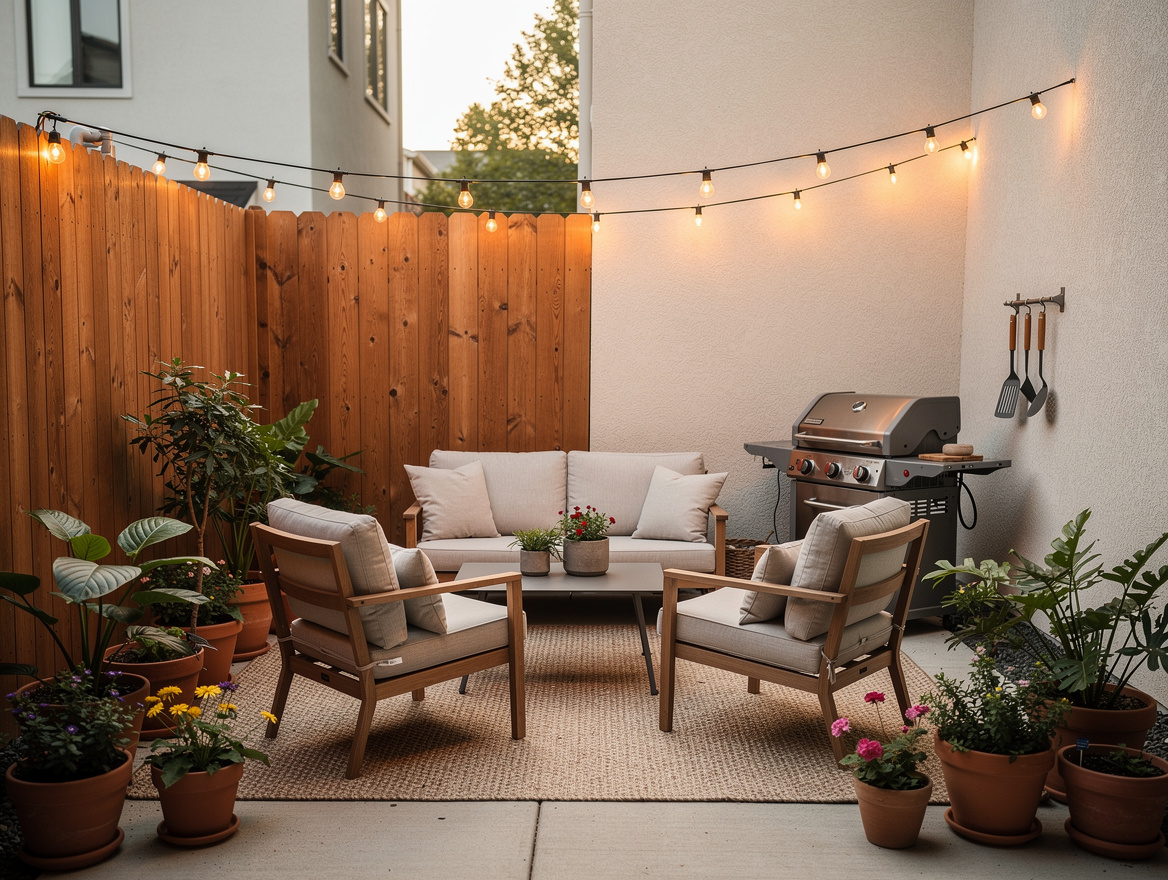
My total was right in the usual range: about $40 for one main string and hardware, or about $55 to $60 if you add a short accent run. Start with the overhead zigzag first, then wait one night before buying anything else, because a small patio usually needs less light than you think.
Mia Carter writes about small-space living and budget home makeovers. She has restyled three rentals and tests most ideas in her own 45 sqm flat.