
detail room in a closet ideas can work in a real home, and the short answer is yes: a convincing setup can start around $150 to $800 if you use rods, shelves, bins, and lighting well. I used to think you needed custom millwork and a contractor to pull off a closet hideout. You don’t. What changed my mind was seeing how much mood a small footprint can hold once the entry, light, and materials finally agree.
- Build a bookcase door inside the closet
- Install a mirror panel with touch-latch seams
- Paint the hideout in deep theater blue
- Frame the entry with faux wardrobe trim
- Tuck a reading bench under hanging rods
- Line the walls with peel-and-stick wood
- Mount floating shelves around the hidden doorway
- Add a curtain track behind closet doors
- Hide floor cushions inside storage cubbies
- Wrap the ceiling in starry wallpaper
- Use slatted panels to mask the opening
- Hang battery sconces for detail room glow
- Build a low platform with drawer steps
- Camouflage the handle as a robe hook
- Create a mini desk behind sliding doors
- Finish the reveal with velvet wall panels
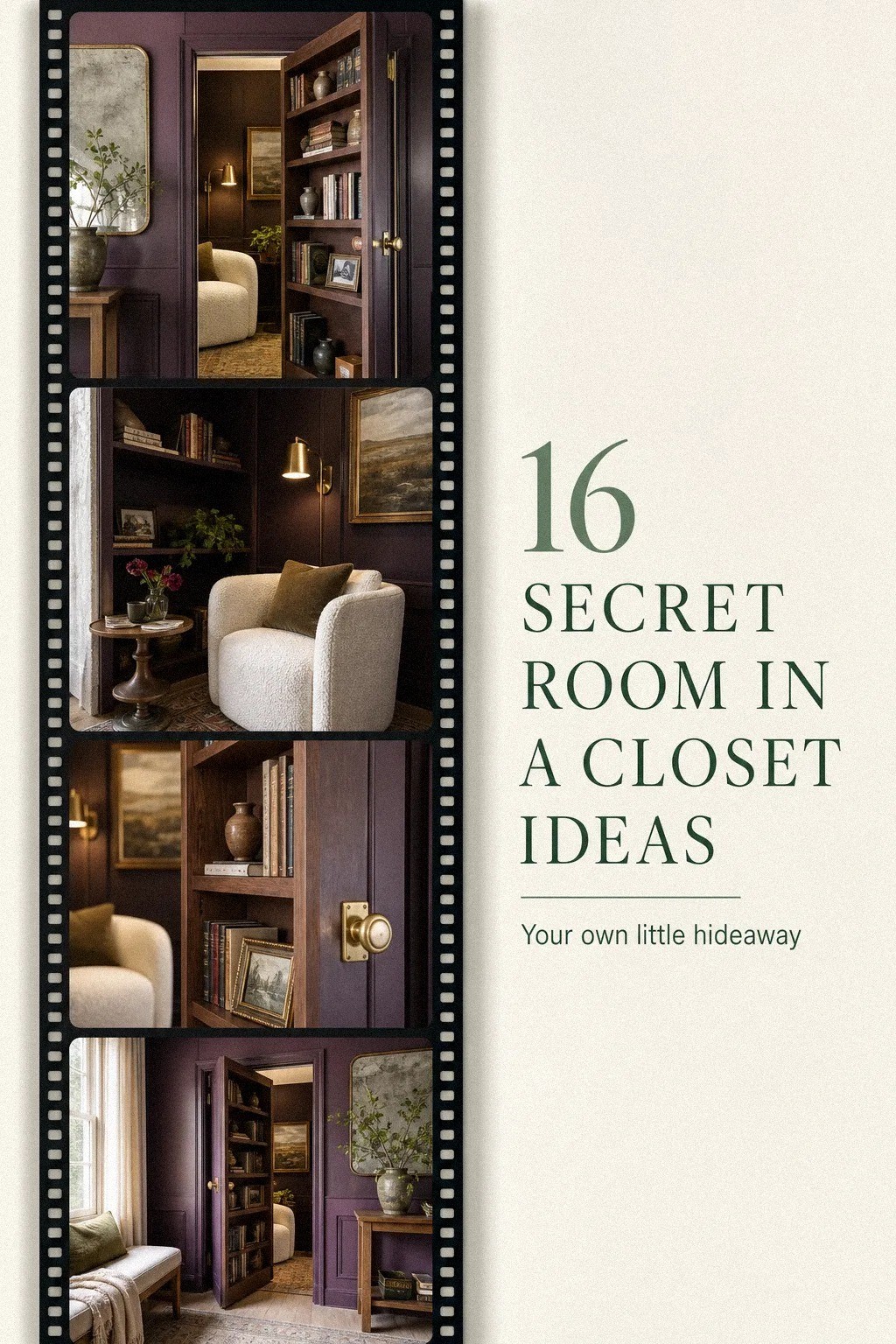
1Build a bookcase door inside the closet
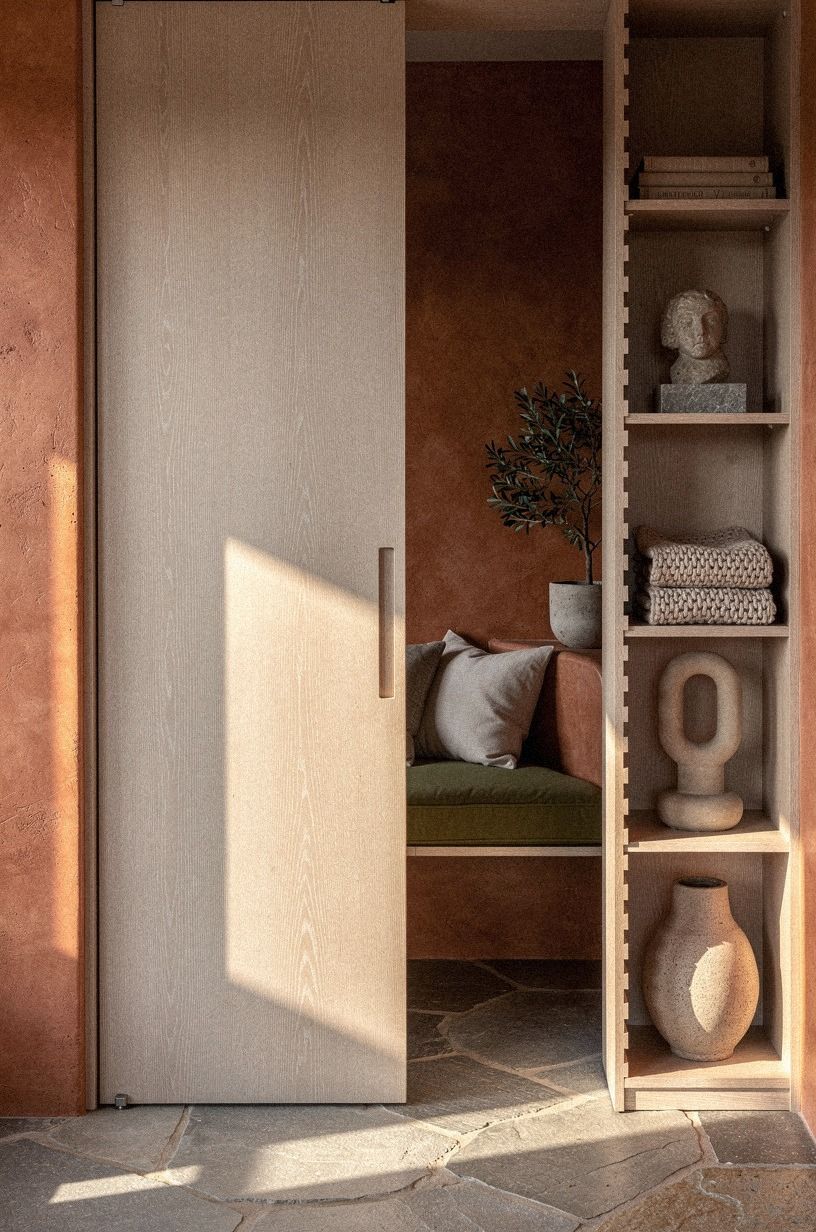
Start with the entry, because if the entry feels fake, the whole hidden closet behind bookshelf idea falls apart fast. A cerused white oak bookcase door gives you that built-in weight people trust on sight, especially when the shelves look balanced and the wall around them stays symmetrical. If your closet opening is close to the comfortable 6×8 ft range, you can afford deeper visual drama without making the room feel crowded.
I wouldn’t cram this with random decor just to prove it’s a shelf. You want a few believable pieces instead.
Stacked hardbacks. One bowl in travertine.
A linen storage box. Maybe a low plant if your room gets decent light. That’s enough.
The part that worked for me was treating the outer face like normal architecture, not a novelty. When you study detail room door ideas hidden entrances that actually work, you notice the good ones never try too hard.
And if you want a stronger classic version, detail bookshelf door ideas the classic hidden room entrance shows why shelf spacing matters so much. Keep your shelf depth around 14 in, let the terracotta plaster wall stay quiet, and let the door be the move your eye almost misses.
2Install a mirror panel with touch-latch seams
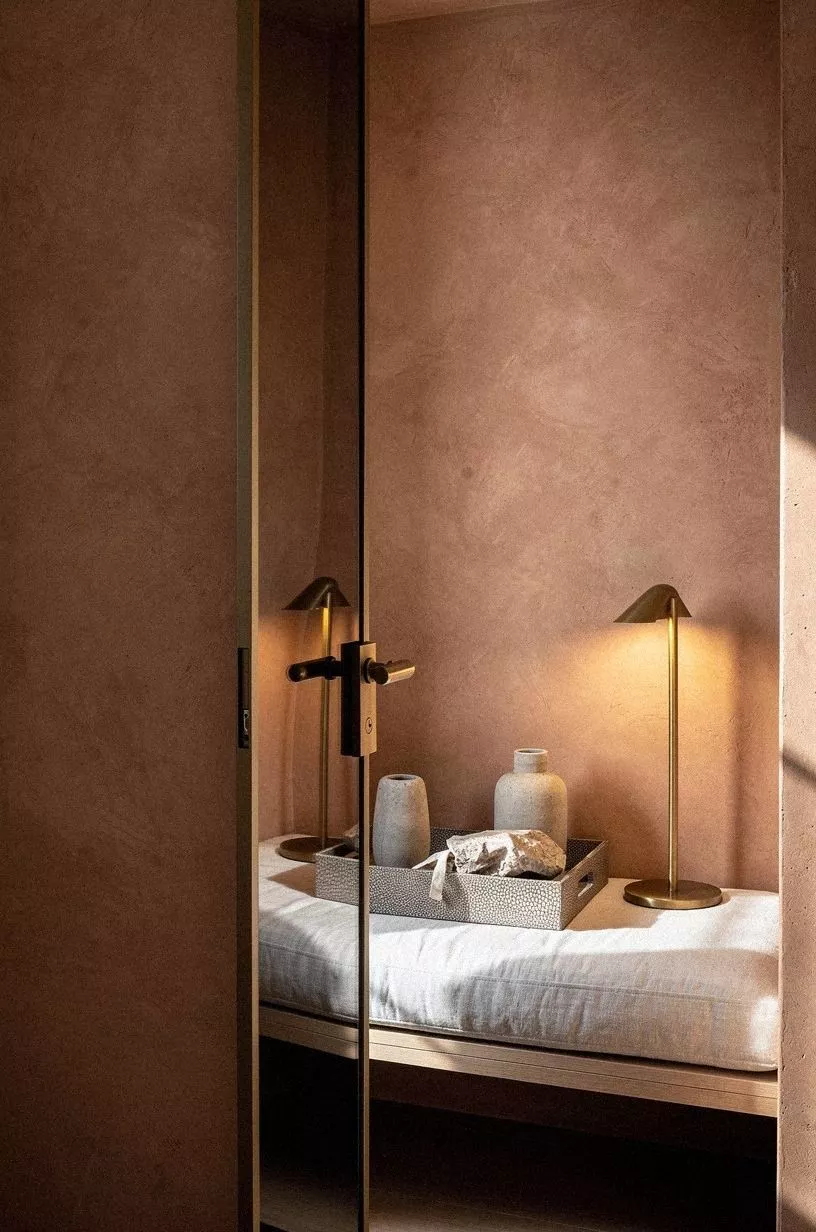
Go cleaner here. A mirror panel works when you let the seams disappear and keep the styling on one side airy, not busy. Think Benjamin Moore Pale Oak OC-20 on the trim, a narrow ledge, and just enough negative space that your reflection reads like part of the room instead of a prop.
I made the mistake once of adding a visible pull because I was worried nobody would know how to open it. Bad call.
It killed the illusion in one second. Touch-latch hardware is what keeps this detail closet room feeling plausible, and you don’t need much else if the panel is centered well and the reveal line stays crisp.
But here’s what nobody tells you: mirrors amplify every crooked detail. If the casing isn’t straight, you’ll see it twice.
I like this idea best when you want a softer, almost hotel-like entry, and it pairs well with the calmer mood in detail room ideas for the bedroom hidden hideaways. If you’re renting, removable trim and a freestanding mirror face can get you surprisingly close.
3Paint the hideout in deep theater blue
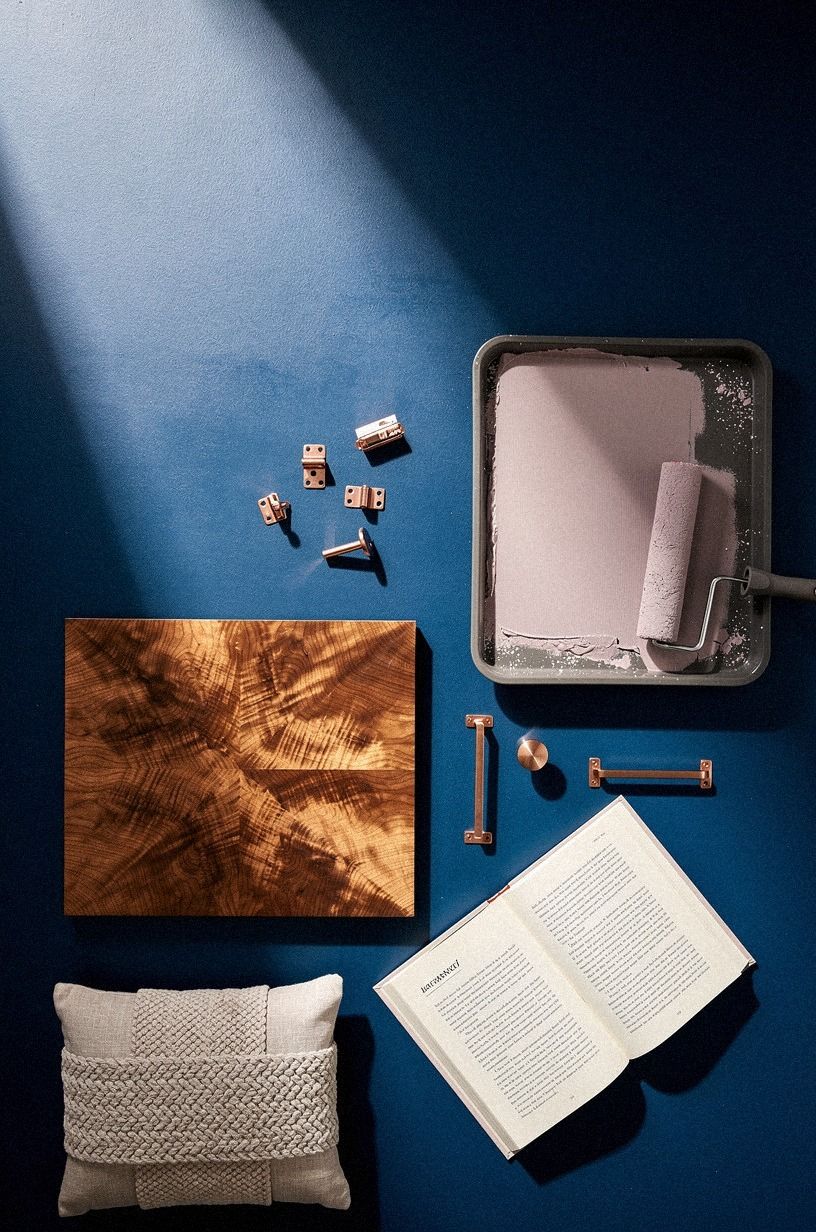
Paint is the cheapest mood swing in the whole article, and yes, it’s worth it. Deep theater blue turns a plain closet hideout into something that feels intentional the second you look in. I like a blue that leans smoky rather than nautical, especially when you set it against book-matched walnut accents and a plum-gray tray instead of bright white anything.
If your closet is only 4×4 ft, don’t panic. Dark color doesn’t automatically shrink it if your lighting is warm and your surfaces aren’t cluttered.
You just need contrast in the right places. A pale ceiling edge.
A warm wood shelf. One ivory textile. That’s where the room starts breathing again.
And yes, I would choose depth over safety here. Most people stop at beige because they’re scared of commitment.
I think that’s the wrong fear. The real risk is making a hidden room look like unfinished overflow storage.
If you’re comparing tones, under stairs detail room ideas turn dead space into magic is useful because the strongest small spaces always commit to one atmosphere and stay there.
4Frame the entry with faux wardrobe trim
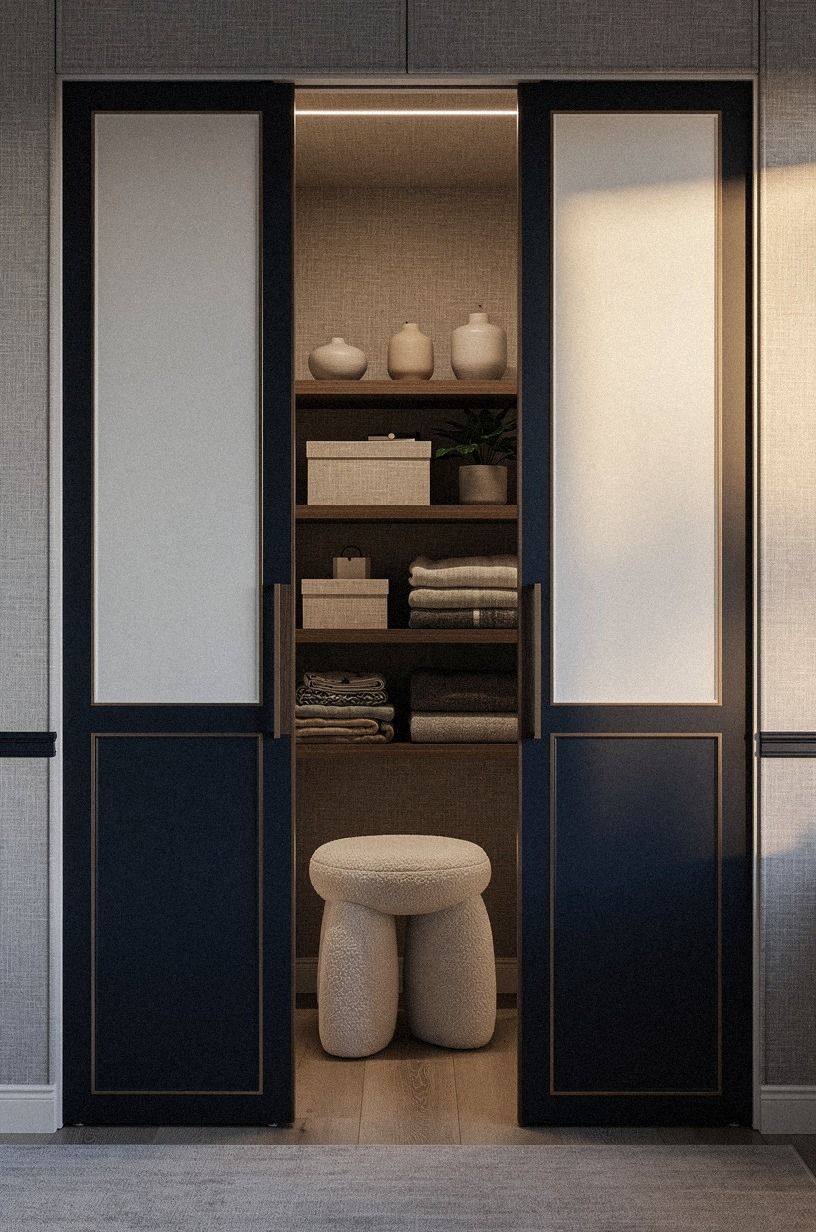
This is one of those ideas that looks simple only after it’s done. Faux wardrobe trim lets you make the opening disappear into a navy and white built-in front, and that symmetry matters more than fancy joinery does. A closet hideout should feel like it belongs to the room, not like it was shoved into it later.
Use Sherwin-Williams Alabaster SW 7008 on the lighter sections if you want the white to stay warm instead of stark. Then anchor the darker panels with a navy that reads tailored, not sporty. I also like narrow applied molding instead of chunky profiles here, because heavy trim can make a standard closet door look fake in a hurry.
The mistake I’d avoid is mixing three styles at once. Don’t do shaker doors, ornate crown, and modern hardware all together. Pick one lane and stay in it.
If you like disguise-first entries, detail room door ideas hidden entrances that actually work has the same lesson over and over: the convincing version is always the calmer one.
5Tuck a reading bench under hanging rods
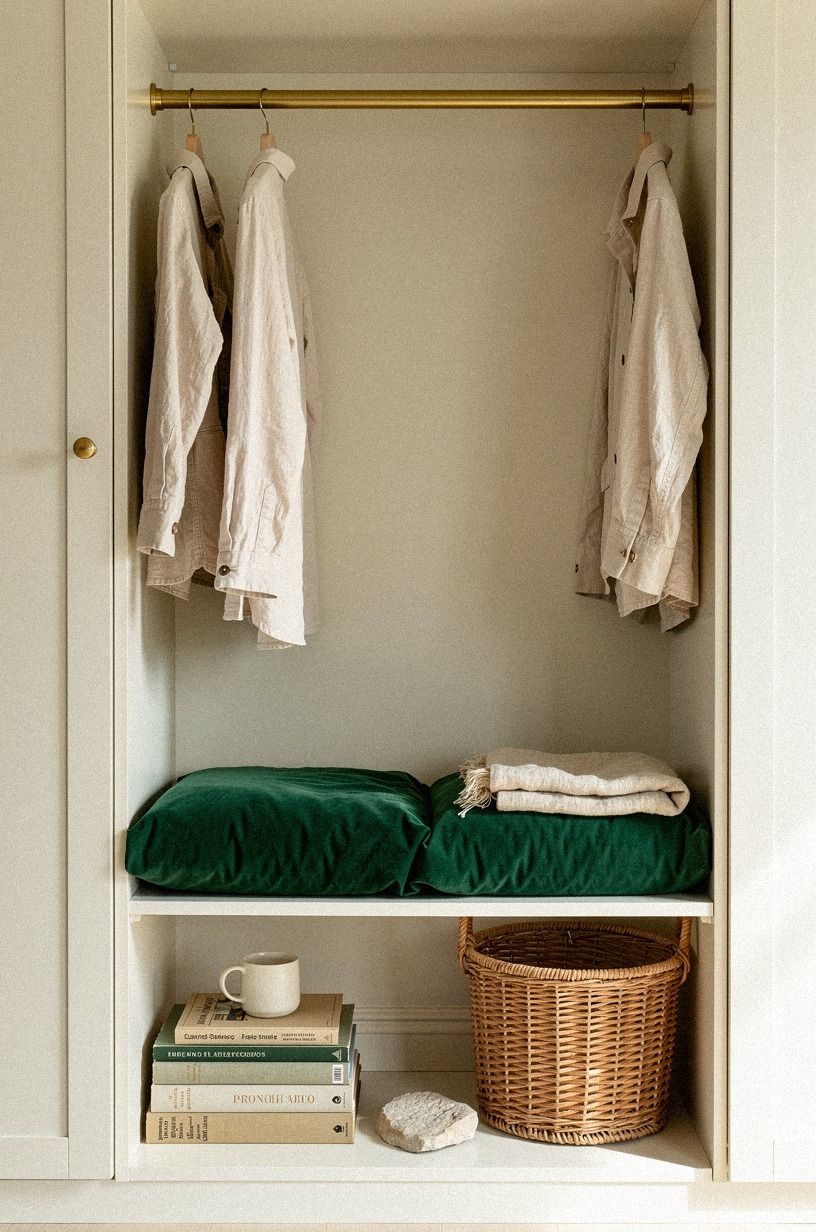
A bench under hanging rods sounds like it shouldn’t work, but it really does when the rods stay high and the seat stays visually light.
6Line the walls with peel-and-stick wood
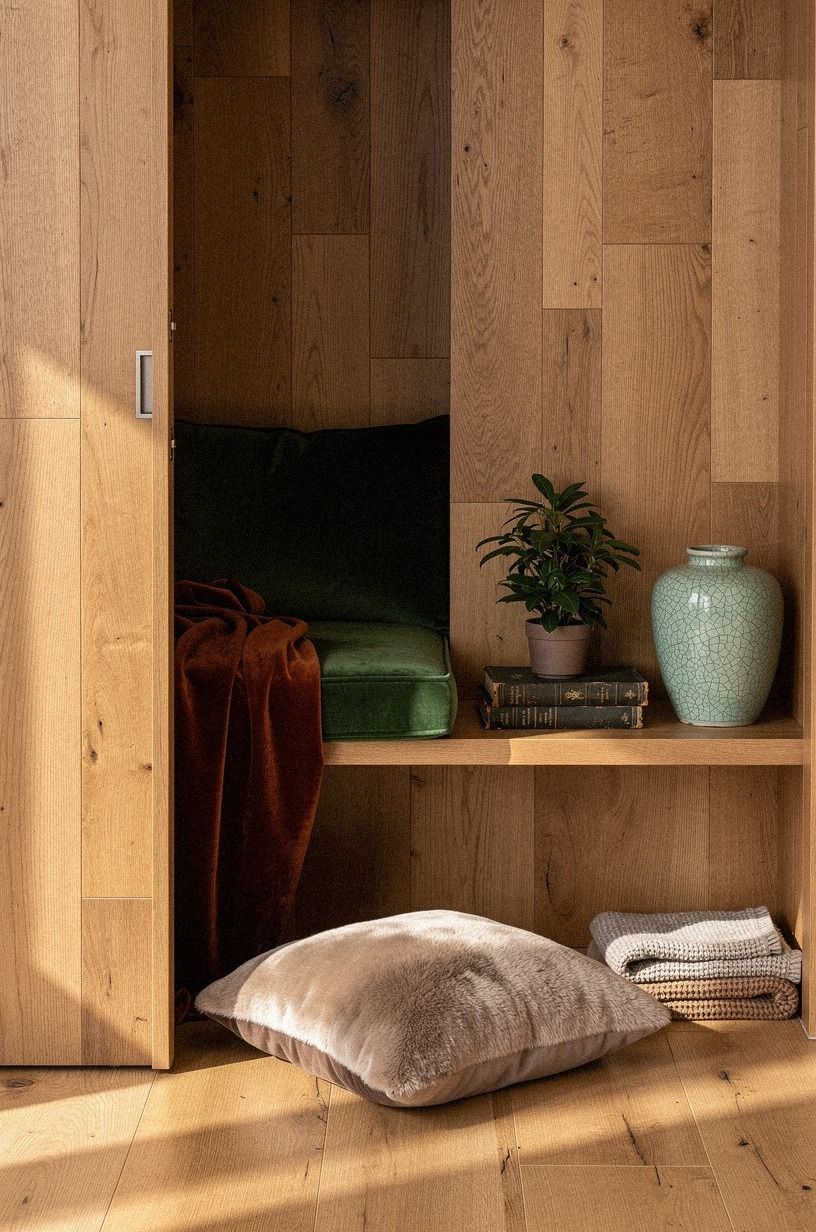
If you rent, this may be your best move in the whole list. Peel-and-stick wood can give a closet hideout instant depth without asking you to rebuild anything, and the look is strongest when the planks feel natural, a little matte, and not too orange. I like a medium tone near cerused white oak rather than glossy walnut imitation.
You should still edit the palette around it. Forest green cushion. Rust throw.
Natural oak shelf. That’s enough texture for one little room. More than that, and you’ll lose the quiet cabin-like effect that makes the space feel calm instead of cluttered.
But don’t buy the cheapest finish you can find and hope light will forgive it. It won’t!
Low-shine, believable grain is what keeps the wall from reading as stage set. And when the wood is right, the whole nook settles down fast. Such a difference!
I also like this route if you already love the mood in turn a closet into a hidden speakeasy bar small space genius because wood-lined enclosures thrive on the same close, cocooned atmosphere, minus the bar setup.
7Mount floating shelves around the hidden doorway
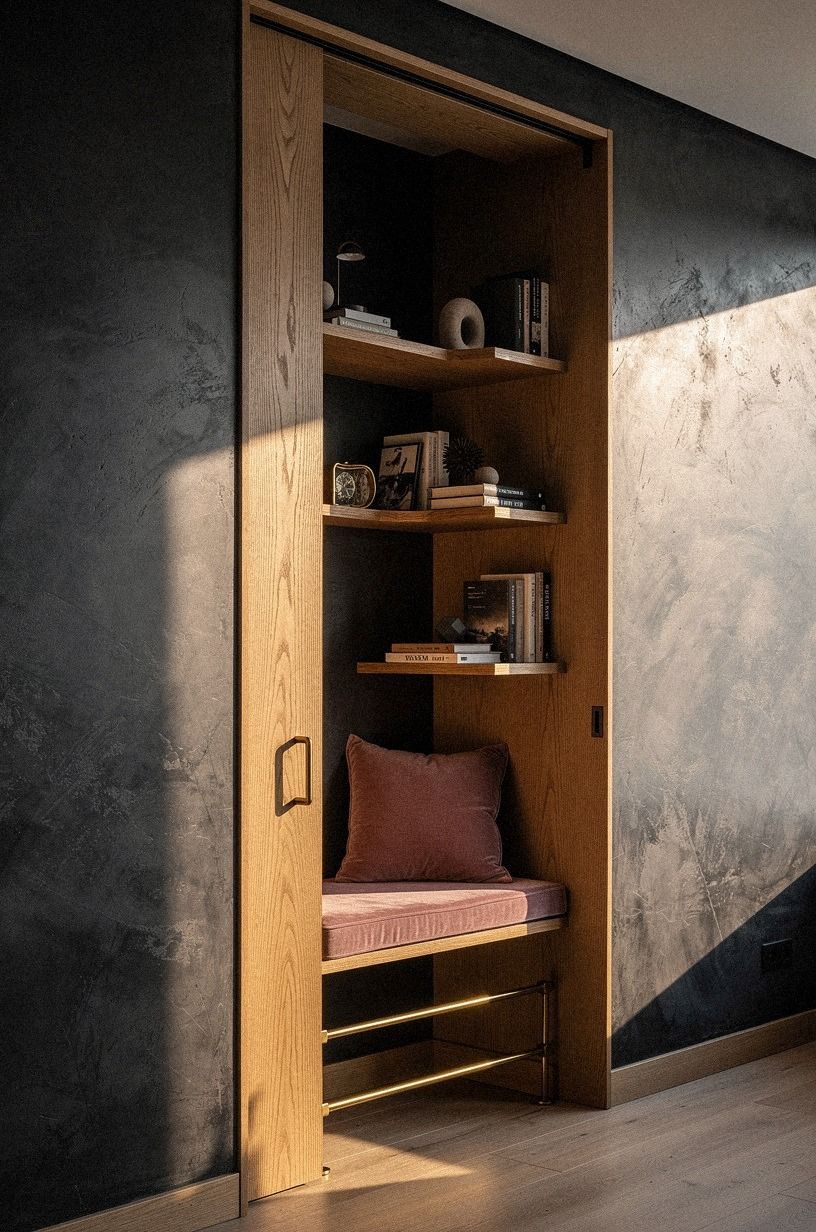
This is where I use what I call the Three-Edge Frame, and it’s one of the easiest ways to make a hidden closet room feel designed. Wrap the opening with floating shelves on two sides and across the top, but leave one edge quieter so the doorway doesn’t start shouting. You want asymmetry with discipline.
I prefer 3/4-inch solid white oak shelves here because thin laminate rarely has enough presence. Style them lightly. Two books turned horizontal.
A ceramic bud vase. One box in Belgian flax linen. And leave actual empty space, because the open gaps are what make the doorway feel accidental.
Would I center every object? No, and that’s exactly why this works.
The rule-of-thirds placement in the room keeps the opening feeling discovered rather than staged. If you like entrances that reveal themselves slowly, under stairs hidden bar ideas turn dead space into a detail shows the same principle in another small footprint. Quiet shelves.
Real function. Hidden payoff.
8Add a curtain track behind closet doors
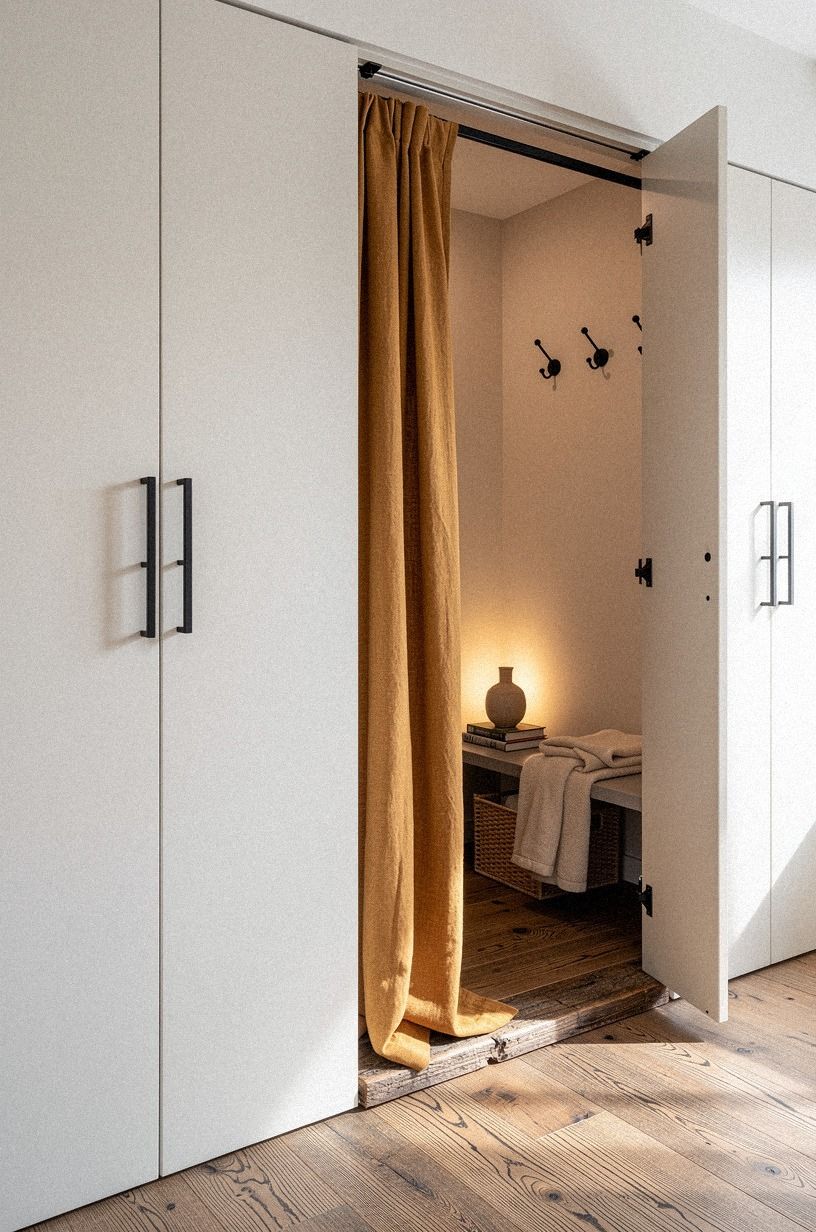
Sometimes you don’t need a hard door solution at all.
9Hide floor cushions inside storage cubbies
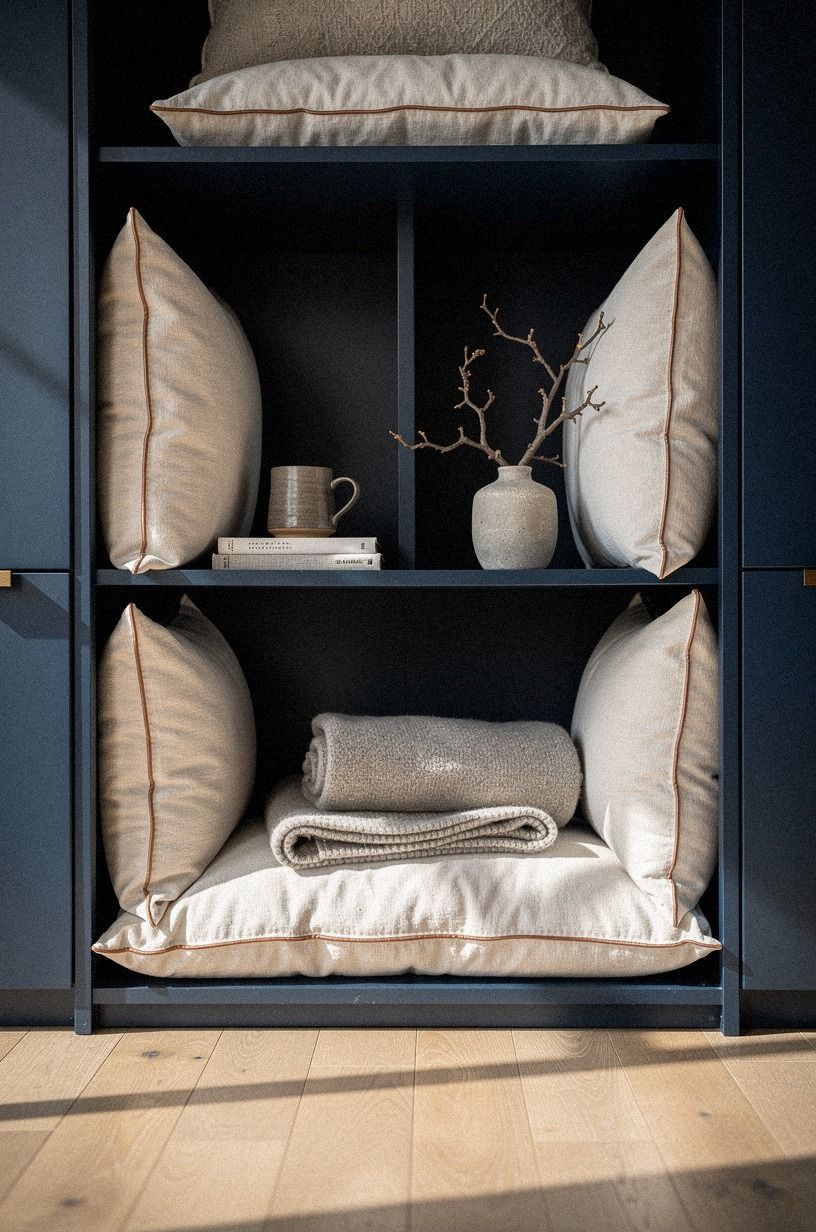
This one looks playful, but it solves a real small-space problem. Floor cushions tucked inside symmetrical cubbies mean your seating disappears when you don’t need it, and the room stays clean when the hideout is acting like regular storage. Midnight blue or olive work especially well with a pale shell.
I like cubbies deep enough to hold folded cushions without bulging, and that usually means respecting your shelf depth instead of winging it. Around 14 in is a useful benchmark for a reason. Add two square cushions in mohair velvet, one lumbar in woven stripe, and maybe a small tray in aged bronze if you want a place for tea or pencils.
I learned this after buying oversized pads that looked plush online and ridiculous in person. Too big, too tall, too eager.
If your room is small, the slimmer cushion usually wins. Kids detail room ideas magical hidden hangouts also gets this right: hidden seating is better when it stores flat and comes out fast.
10Wrap the ceiling in starry wallpaper
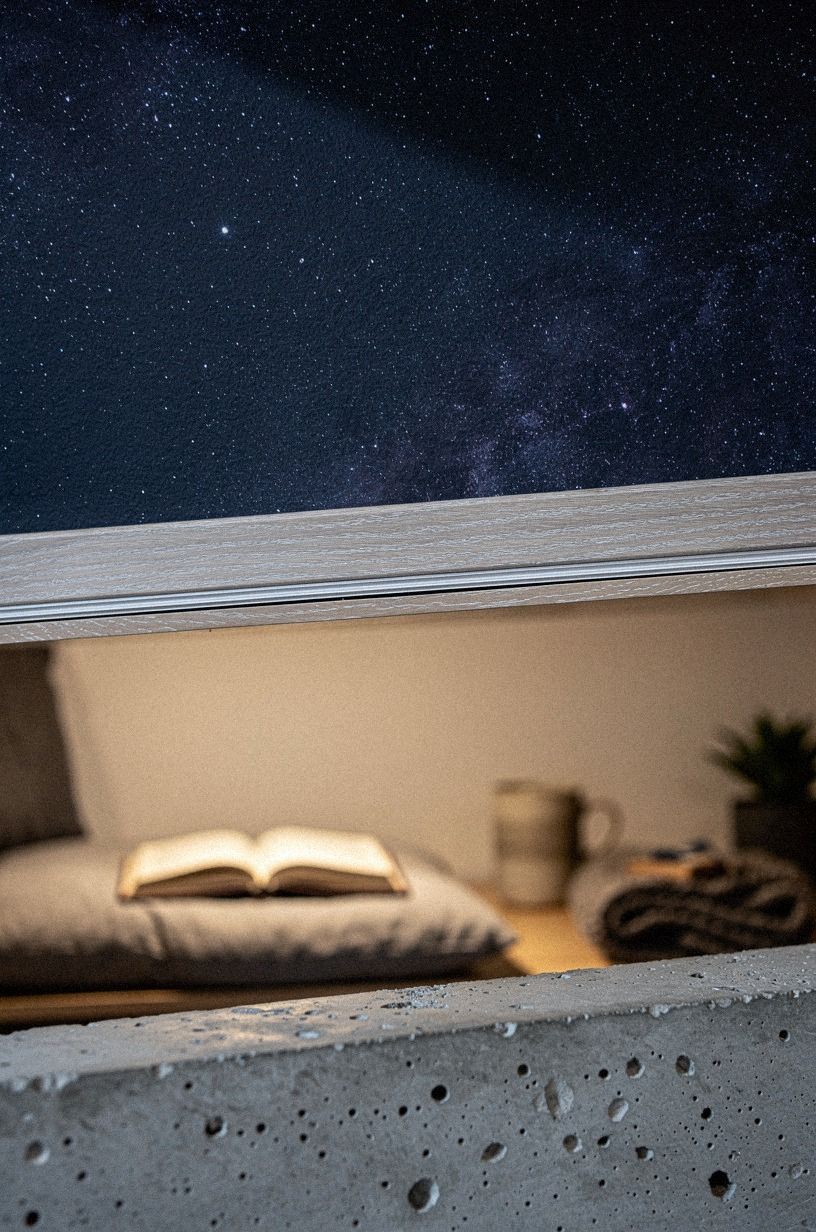
Look up. That’s the whole move.
A starry ceiling pulls attention away from the footprint and toward the experience, which is why this idea works so well in a detail closet room. Sage-and-cream paper feels softer than navy celestial prints, especially when it meets a cerused white oak shelf ledge and a warm lamp instead of chrome anything.
I wouldn’t wallpaper all four walls unless your pattern is unusually restrained. The ceiling is the surprise, and surprises land harder when the rest stays edited.
One shelf. One lamp.
One folded throw. The little dose of pattern overhead is enough to change the room without turning it childish.
And if you’re wondering whether adults can get away with this, yes, absolutely. The key is tone, not theme. It can look so good!
detail room ideas for the bedroom hidden hideaways can help you judge that line, because the most grown-up hidden rooms always keep the whimsy in one place and let everything else stay grounded.
11Use slatted panels to mask the opening
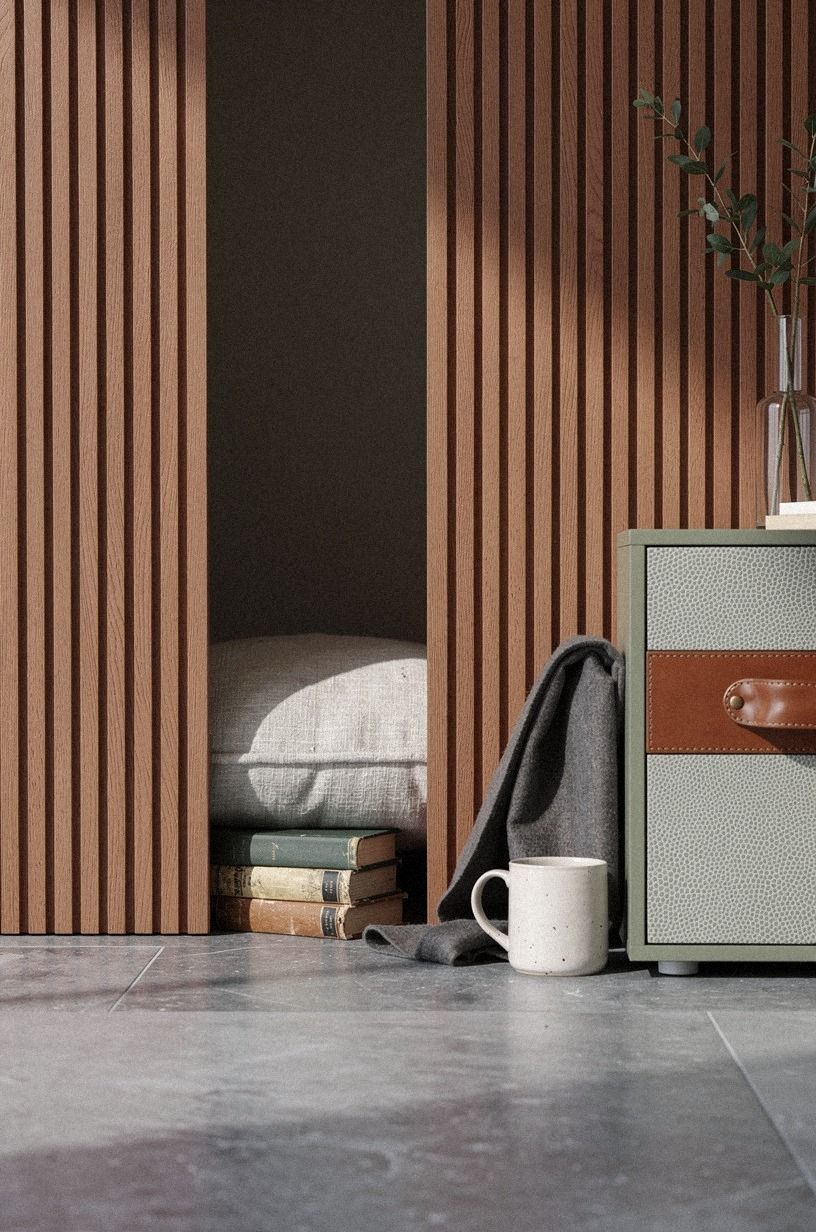
Instead of a flat disguise, try rhythm. Slatted panels bring shadow, repetition, and just enough visual noise to hide a gap in plain sight.
I call this the Shadow-Line Screen, and it works best when the slats feel architectural, not beachy. Terracotta and olive are especially good together because they read warm and earthy without getting muddy.
Keep the floor stony and quiet if you can. Let the panels do the talking.
I also like a little reveal between slats and wall so you get depth as you cross the room. That’s what gives the opening that second-take quality you want from a hidden closet behind bookshelf alternative.
But skip flimsy faux-wood strips with obvious plastic sheen. They’re a letdown every time. If you’re into concealed zones that depend on surface pattern more than hardware, under stairs detail room ideas turn dead space into magic gives you more examples of how repetition can distract the eye in a good way.
12Hang battery sconces for detail room glow
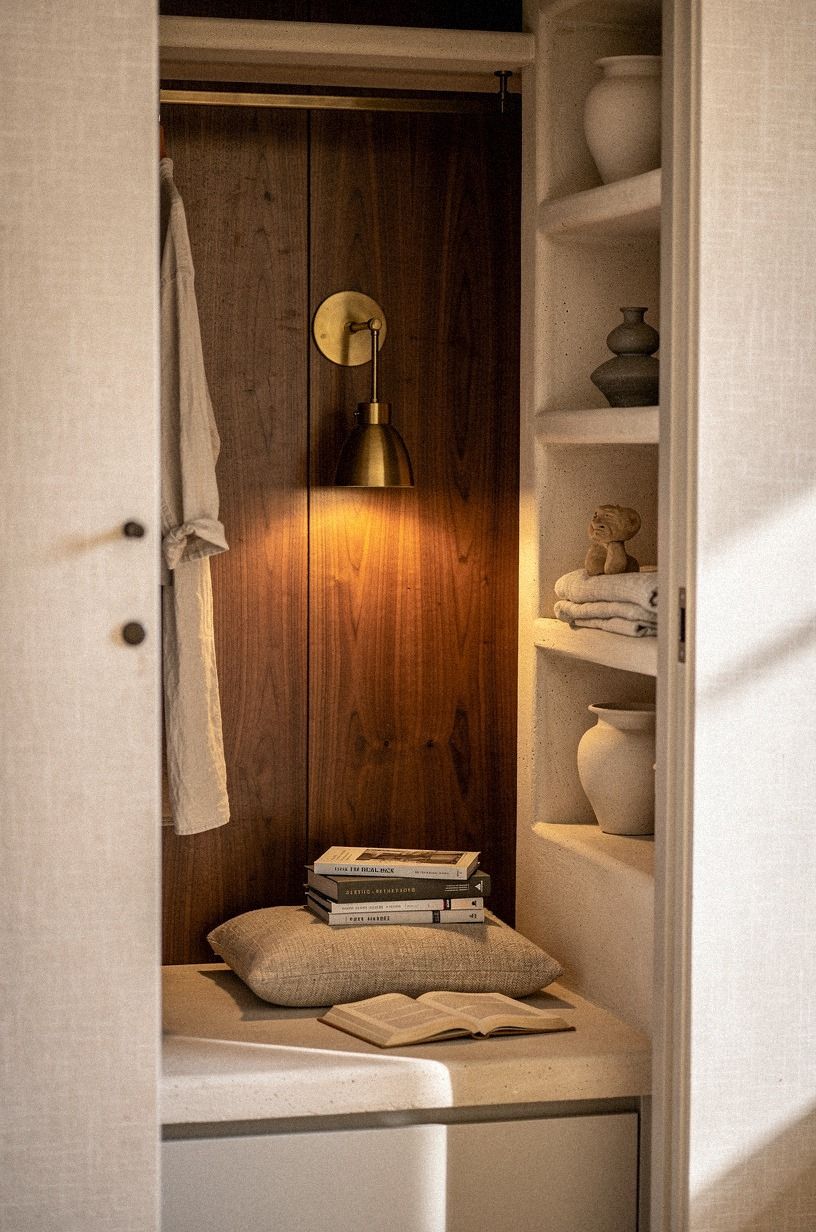
Lighting changes the room faster than almost anything else, and battery sconces are one of the few upgrades that feel renter-friendly and rich at the same time. Mount them so the glow lands around sitting height, not up at the ceiling, and choose warm bulbs only. You want amber spill on linen, not blue glare on white paint.
I like this best when the hideout sits just off-center in the closet opening and the fabric around it stays soft. Unlacquered brass is beautiful here if you can find a simple silhouette, but matte black works too if the rest of the palette is already warm.
The wall doesn’t need much. A sconce pair and one ledge can carry the whole nook.
And yes, battery lighting has limits. It isn’t for task-heavy work. But for reading, decompressing, or making the space feel like a retreat, it punches above its price.
If you love small spaces that glow instead of glare, turn a closet into a hidden speakeasy bar small space genius shows the same low-light logic in a moodier direction.
13Build a low platform with drawer steps
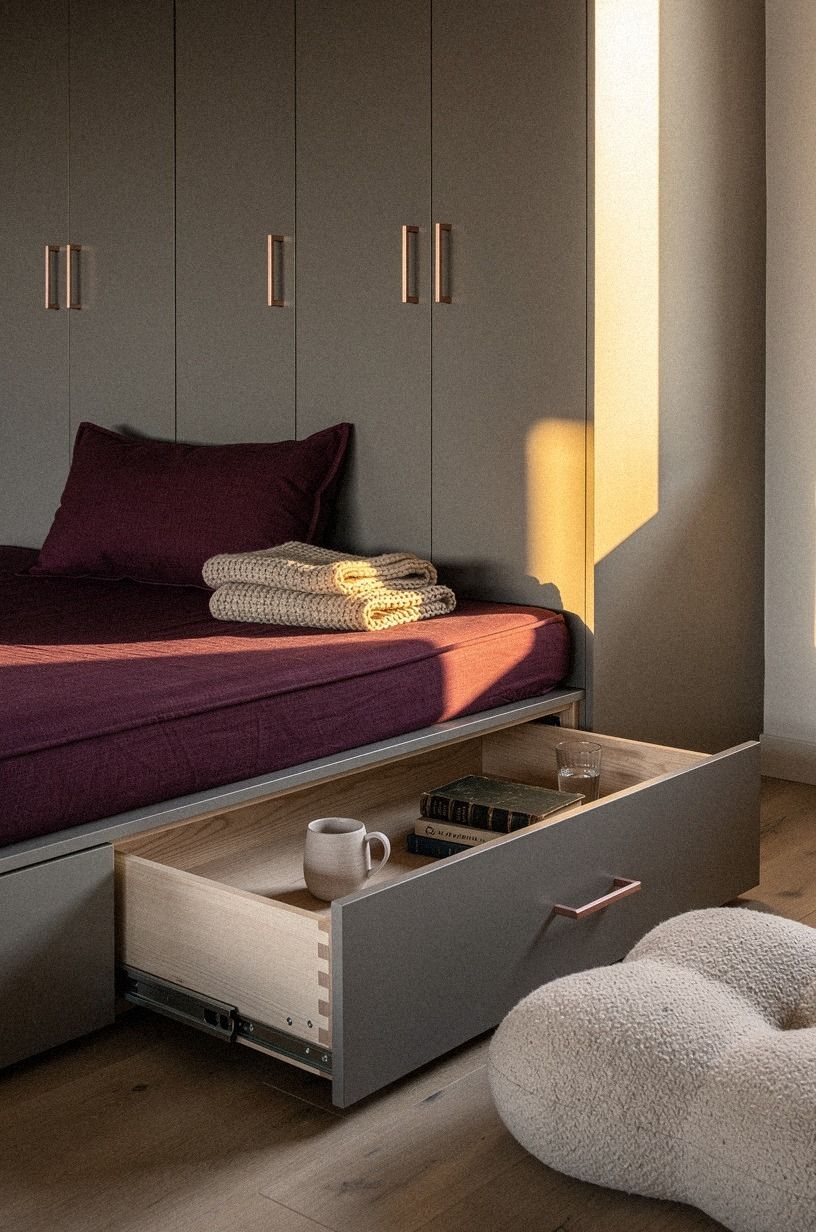
A low platform makes a small hideout feel like a destination, and drawer steps give you useful storage without wasting the vertical space you already have.
14Camouflage the handle as a robe hook
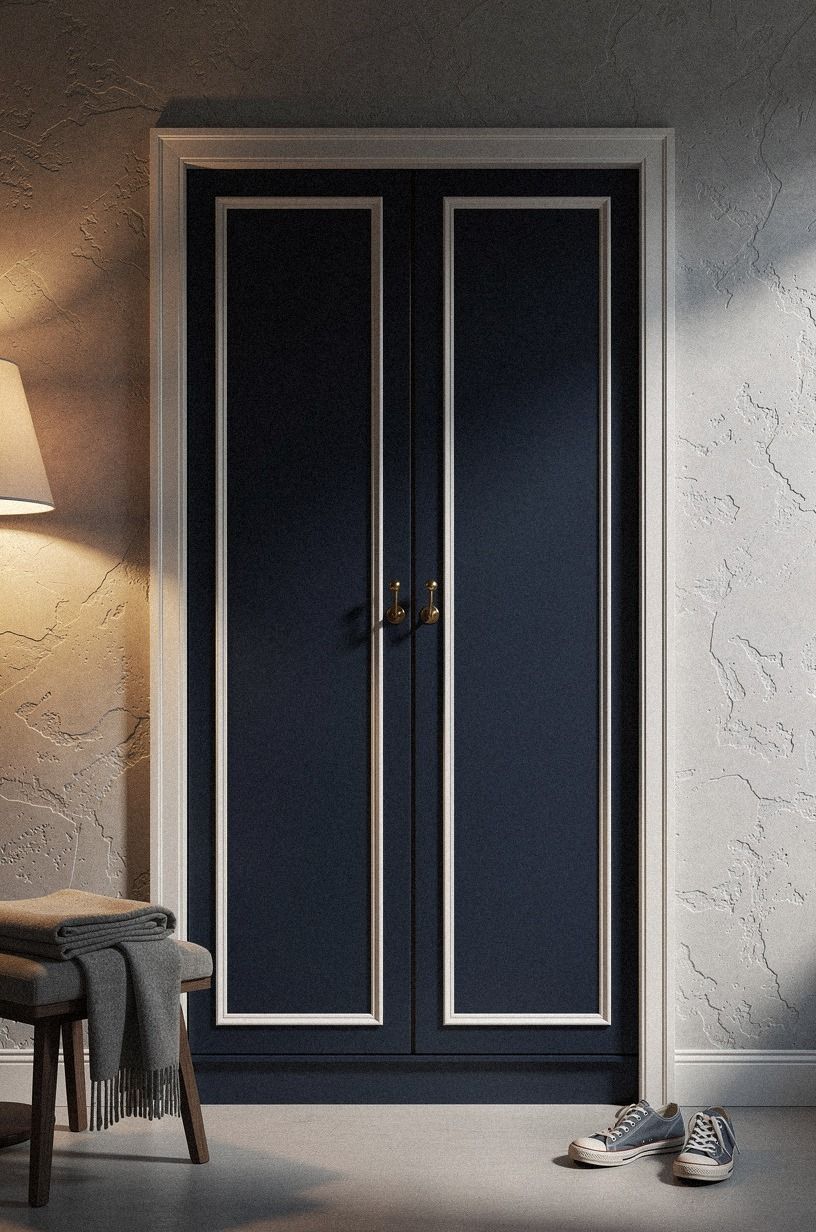
This is a small detail, but it’s not a minor one. A robe hook disguised as the handle is often what sells the whole wardrobe front, because your eye accepts a hook instantly and stops investigating. Navy panels, white trim, centered symmetry, done.
I like a hook in aged bronze or patinated brass better than anything shiny. Too much sparkle pulls attention straight to the mechanism, and that ruins the point. You also want the hook height to feel normal for actual use, not oddly placed for the convenience of the hidden latch behind it.
I went back and forth on this because I thought the hook might feel cheesy. It doesn’t, if the rest of the front is disciplined. For more entry-specific ideas, detail room door ideas hidden entrances that actually work is useful because the best disguised hardware always looks boring in the best possible way.
15Create a mini desk behind sliding doors
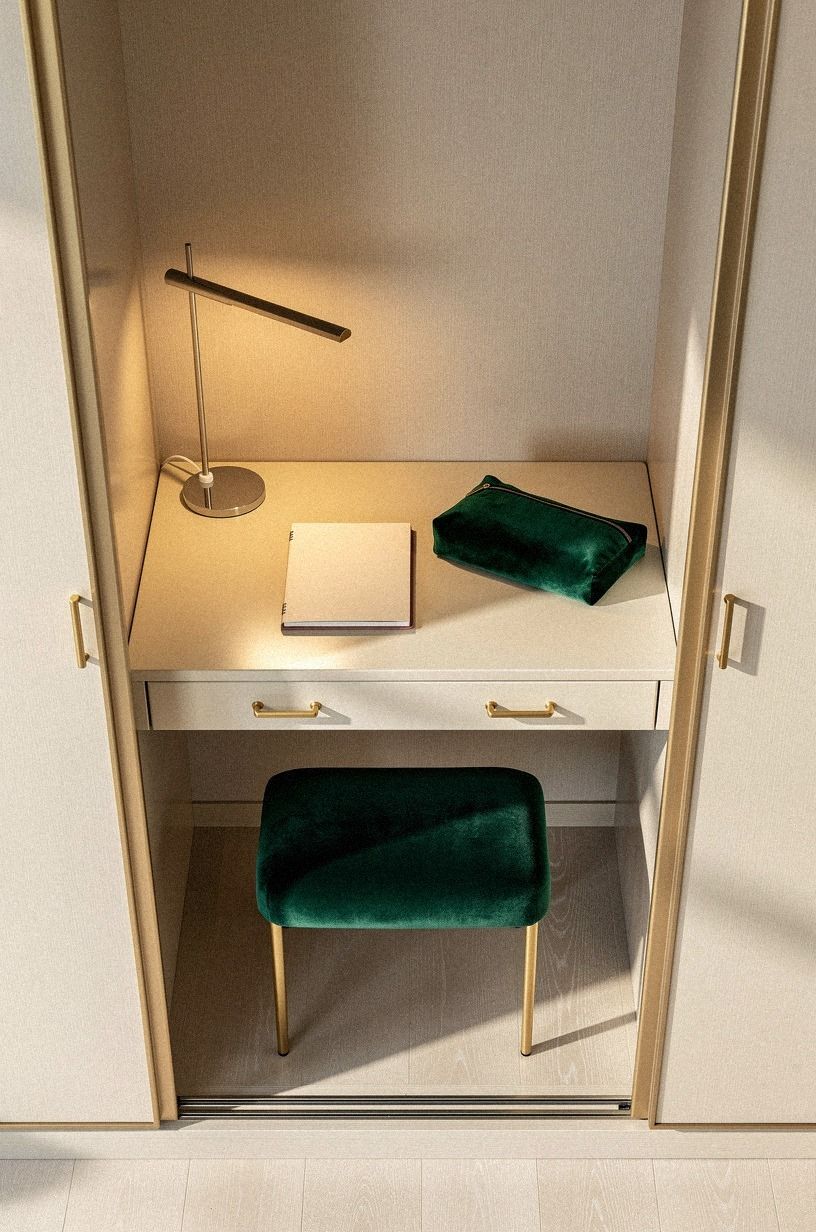
If you need the room to earn its footprint, a mini desk is the smartest use of all.
16Finish the reveal with velvet wall panels
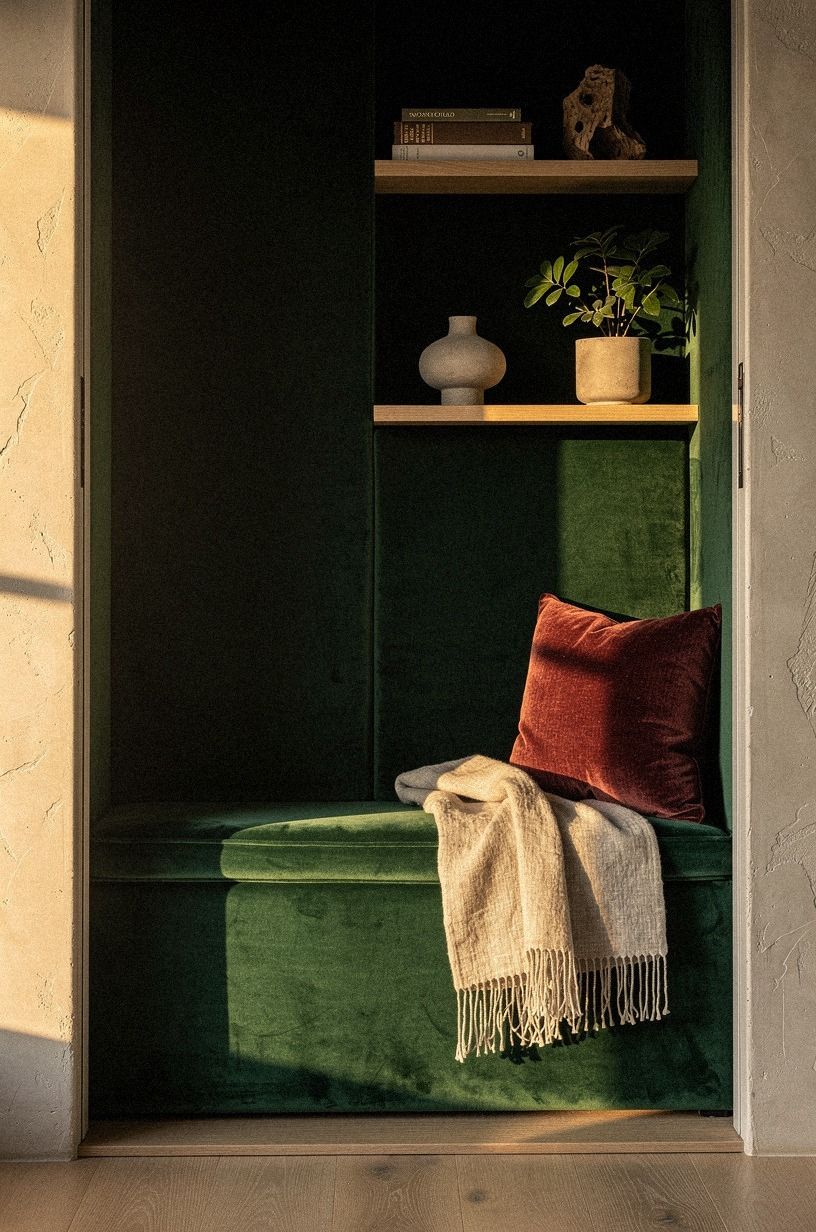
Velvet wall panels are pure atmosphere, and sometimes atmosphere is the whole point. Forest green panels wrapped around the inner hideout make the room feel hushed, warm, and a little theatrical in the best way. I like this choice most when you’ve already kept the entry restrained, because then the reveal feels earned.
Use real texture if you can. 18 oz cotton velvet or a dense performance velvet reads richer than the paper-thin stuff that goes limp after a season.
Keep the lines tidy and the panel rhythm regular so the room still feels architectural, not padded. One wood ledge, one sconce, one seat.
That’s plenty.
And honestly, I’d skip this if the outer room is already loud. Velvet wants contrast.
It needs a quieter shell around it to feel intentional rather than theme-y. For another hidden space that leans into mood, turn a closet into a hidden speakeasy bar small space genius proves how much a cocooned finish can change the emotional temperature of a tiny room.
The choice that makes a closet hideout feel real
If you want the honest version, the hidden room effect doesn’t come from novelty. It comes from restraint. I’ve seen expensive closet conversions feel flat because they solved only storage and ignored mood, and I’ve seen cheap ones feel memorable because the entry, finish, and lighting all told the same story.
That’s the real decision frame.
The first question I ask is simple: do you want the room to disappear, or do you want the reveal to feel dramatic? Those are different jobs, and they pull your budget in different directions.
If you want disappearance, spend your energy on the outer layer first. The door, mirror, trim, hook, or shelf composition is where the illusion lives. If you want the reveal, then the inner room deserves the money.
Color, velvet, battery sconces, wallpaper, a platform, better textiles. That’s where the emotional payoff sits.
I also think people overspend on storage hardware and underspend on finish. A modular system can absolutely be worth it, especially if you need the closet to function for clothes every day, but a hidden room isn’t memorable because the drawers glide beautifully.
It’s memorable because the room changes your pace when you step inside. The light gets lower.
The palette gets tighter. The textures start doing more work than the square footage does.
Here’s the part I’d defend every time: don’t chase perfection before atmosphere. If the opening is believable and the interior has one strong mood, you’ll forgive a lot.
A 6×8 ft hideout with soft light and a bench feels better than a bigger space with no point of view. I learned that the hard way.
I used to keep adding shelves, boxes, bins, hooks, and little organizers because they felt productive. But the room didn’t click until I removed half of them and let one material lead.
So if you’re choosing where to put your effort, decide what the room is for before you buy one more thing. Reading retreat.
Mini desk. Hidden lounge.
Quiet phone nook. Once you know that, your materials get clearer, your lighting gets easier, and you stop making the kind of purchases that look useful on a product page and weird in a room.
That’s when a closet hideout starts feeling less like a project and more like a place you’ll keep using.
The Questions Worth Answering First
What works best in a very small closet hideout?
A bench-and-sconce setup usually works best because it keeps the footprint open and the room useful. Small spaces benefit from fewer, better moves. Think narrow bench, warm light, one shelf, one cushion. I also like the compact examples in detail room ideas for the bedroom hidden hideaways.
Where can you buy pieces for this look on a budget?
Start with IKEA, Target Threshold, and Wayfair, then check Facebook Marketplace for wood shelves or mirrors with better bones. Budget buys: velvet hangers at $20-$60 a set, battery lights, baskets, curtain panels. I’d thrift the mirror first and buy lighting new.
How much does a closet hideout makeover usually cost?
Typical costs break into three clear tiers, and yes, the budget route can still look good. Finish matters more than people think.
A modular closet system often runs $1,000-$5,000, LED rod lighting lands around $30-$150, and a closet island can reach $800-$3,000 if your room is wide enough for a 24-36 in center piece.
Can you create this look on a budget?
Yes, and you really don’t need to renovate first. Paint, lighting, and fabric do a lot of the heavy lifting. Cheap wins: paint the interior deep blue, add a curtain track, use peel-and-stick wood, swap in floor cushions, and style one believable ledge instead of buying five little accessories.
Is it worth doing in a small space?
Yes, especially in a small space, because the scale helps the room feel tucked away fast. A tiny footprint can feel more magical than a larger one. Keep shelf depth near 14 in, avoid bulky furniture, and give yourself one use case so the room doesn’t turn into messy overflow.
Is this a good idea for a rental?
Yes, if you stick to removable layers and skip anything that would be painful to patch later. Renters can still get the mood. Peel-and-stick wood, battery sconces, tension-mounted curtains, removable wallpaper, and freestanding benches go a long way without asking your lease for mercy.
Where I’d Start First
If I had to pick one, I’d start with the bookcase door. It does the hardest job: making the room feel believable before you decorate a single inch. Pin the entry idea for later and let the interior upgrades come after the disguise is working.