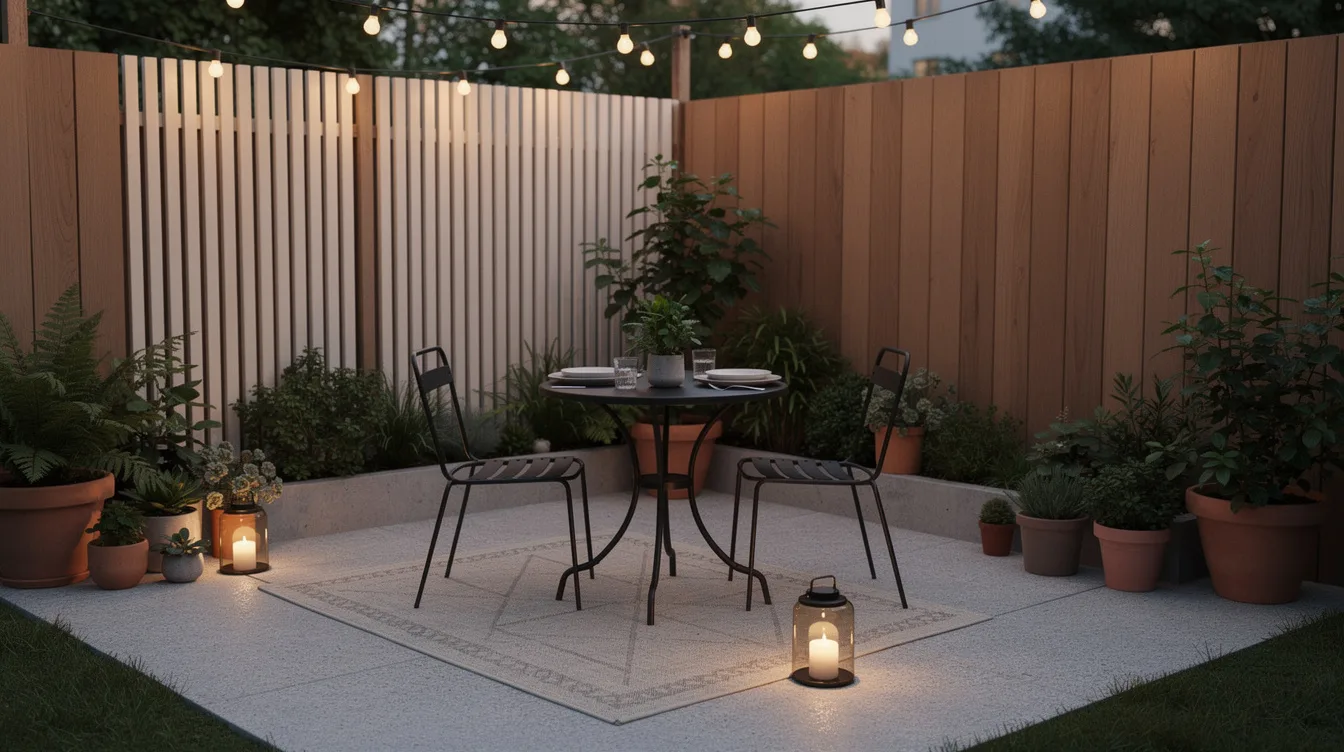
My patio had one corner that collected everything I did not want to deal with, a folded chair, a dusty planter, and a grill cover that never sat straight. It was only a few feet wide, but it bothered me every time I looked outside with a coffee.
I wanted that spot to feel like a little neighborhood terrace, the kind of place where dinner somehow lasts longer. I did it in a weekend by treating the corner like a tiny bistro fit-out instead of a full patio makeover.
Measure the corner like a host would
I stopped calling mine a patio problem and started treating it like a tiny dining room. That shift mattered, because a forgotten corner usually has enough space for a real meal setup if you match the footprint to the right format.
A 5 ft by 5 ft corner works for a two-seat bistro table, and a typical 7 ft by 8 ft corner can handle a four-seat table without everyone bumping elbows. If you have closer to 10 ft by 10 ft, you can add a slim serving piece, but most homes do not need that much to get the restaurant feel.
I also learned to leave actual chair room. I like at least 24 inches behind each chair, because squeezing past furniture kills the terrace mood faster than any ugly concrete ever could.
Fake a finished floor before you buy furniture
The floor changed everything first, because a dining corner needs visual edges. I covered my slab with a polypropylene outdoor rug, and the whole area suddenly looked intentional instead of left over.
For a compact dining terrace, a 5 ft by 7 ft or 6 ft by 9 ft rug is usually the sweet spot. At Target, Walmart, or Amazon, a flat-weave outdoor rug in that range typically runs about $40 to $120, which is cheaper than chasing a full patio rebuild.
If you want a harder surface, interlocking deck tiles are the fastest upgrade I found. IKEA RUNNEN packs are typically around $30 to $40 per 0.81 square meter pack, so a roughly 7 ft by 7 ft zone usually lands around four packs, about $120 to $160 total.
I prefer deck tiles over loose gravel for a dining corner, because chair legs stay steady and dinner feels calmer. Gravel can work on bare soil, but I would only use it if the corner already has a casual garden look.
Pick a table that looks like a place you would linger
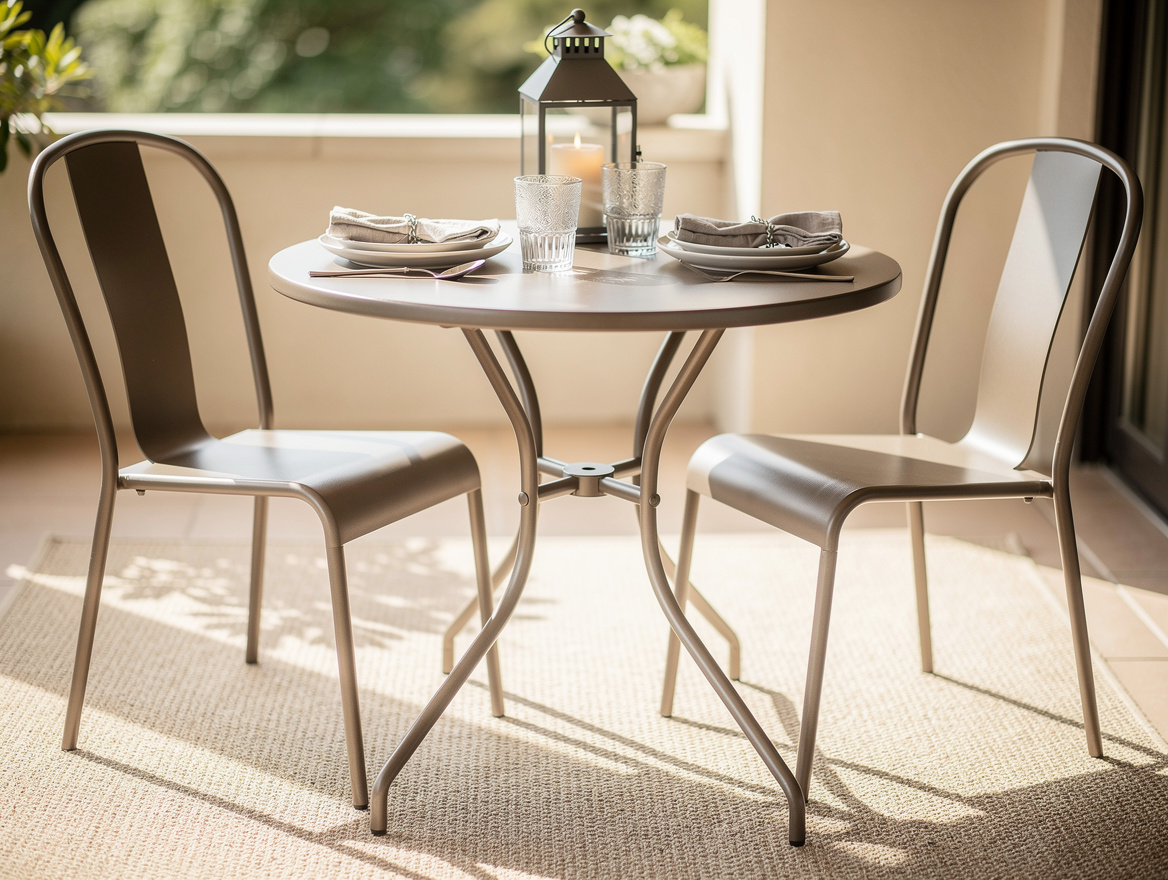
I skipped oversized patio sets and bought the kind of table a small restaurant would actually use. A 24 to 28 inch round table with a standard 28 to 30 inch height feels right for two plates, a drink, and one small bowl in the middle.
For a two-seat setup, I looked at slim metal options from IKEA, Target, and Wayfair. Typical 2026 pricing for a compact bistro set is about $120 to $300, and I think anything bulkier than that starts reading backyard storage, not terrace dining.
If your corner is closer to 7 ft by 8 ft, a 47 to 55 inch rectangular table works better than a round one. Four-seat sets from Home Depot, Lowe’s, or Wayfair usually sit around $300 to $900, depending on steel, faux wicker, or acacia-style tops.
I strongly prefer slim legs over chunky farmhouse bases outside. They make the corner feel lighter, and they let the floor show through, which is exactly what small restaurant patios do well.
Use chairs that can survive weather and still feel polished
The chairs mattered more than I expected, because they create most of the terrace personality. I went for stackable or slim-framed metal dining chairs, since they look sharper than puffy deep-seat patio loungers and take up less visual space.
A pair of simple outdoor dining chairs from Amazon, Walmart, or Ace Hardware typically starts around $80 to $180 for two. If you want four chairs, a reasonable average is about $160 to $400, and I would put that money into comfort before buying extra decor.
Seat height matters too. A standard 18 inch seat pairs best with a regular dining table, and anything much lower starts feeling like lounge furniture pretending to be dining furniture.
I also kept the chair color restrained, black, white, or warm brown. Restaurants do this for a reason: once the seating stops shouting, the food, candles, and greenery can do the work.
Layer the lighting so dinner can run past sunset
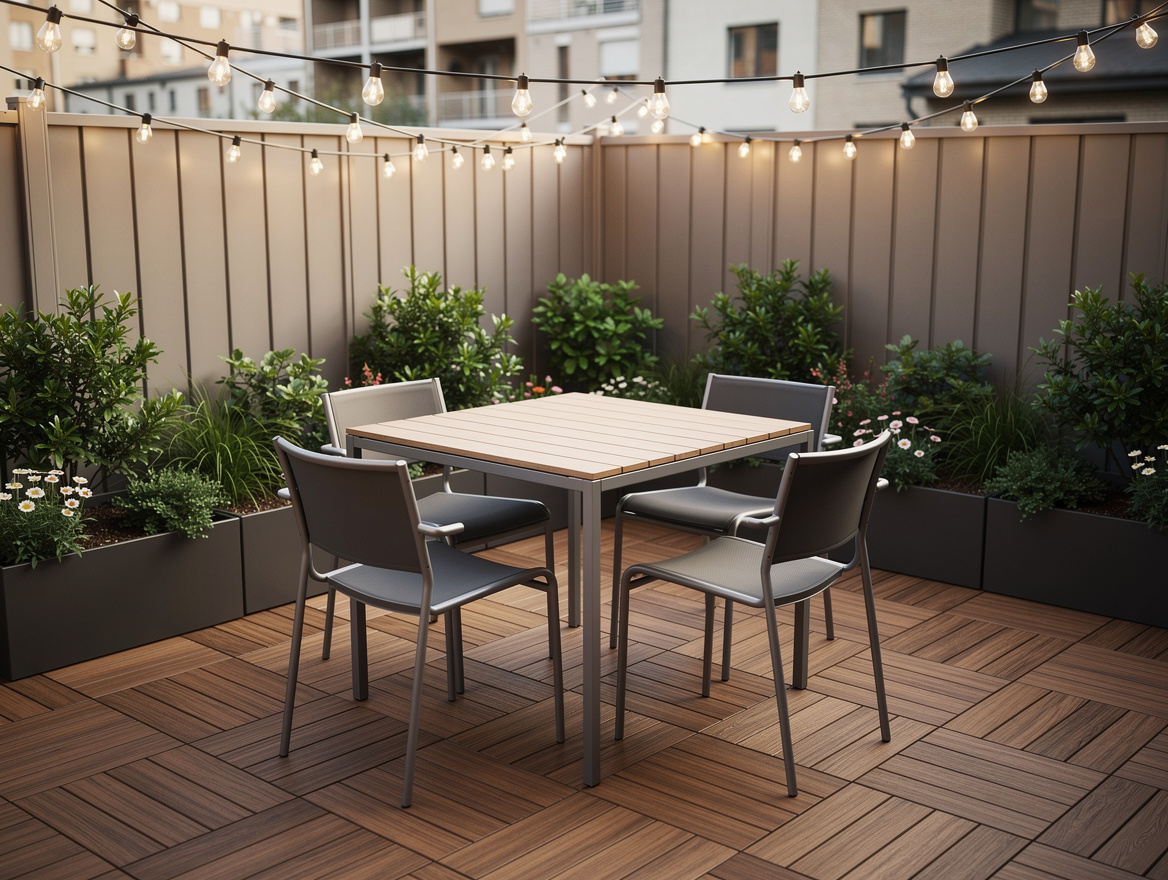
The biggest difference between a random patio corner and a place that feels booked for the night is lighting. I mixed one overhead source with lower glow, and the corner finally felt like somewhere to stay after the plates were cleared.
I hung warm string lights first, because they define the ceiling line without construction. A 24 to 48 foot outdoor strand from Target, Amazon, or Costco typically costs about $20 to $60, and warm white always looks better than cool white outside.
Then I added one lantern and two battery candles on the table. A metal lantern from IKEA or Home Depot usually lands around $20 to $40, and that one object gives the setup more restaurant energy than another throw pillow ever will.
I do not like relying on one bright porch light. It flattens the whole corner and makes dinner feel like a security check instead of a night out at home.
Add greenery in tight, deliberate pockets
I used plants the way a good cafe uses table spacing, sparingly and on purpose. One taller plant to anchor the corner, then a couple smaller pots, was enough to soften the edges without turning the dining area into a jungle.
A 15 to 20 inch planter with a grass, olive-style faux tree, or compact evergreen works well in the back corner. At Home Depot, Lowe’s, or Walmart, a typical planter and plant combination can range from about $35 to $120 depending on size and whether you go faux or live.
I like terracotta, matte black, or concrete-look resin for this. A resin planter is lighter to move, cheaper than stone, and honestly smarter for a weekend project.
The only mistake I would avoid is scattering tiny pots everywhere. That makes a small dining nook feel busy, and restaurants almost never do that because it clutters the table sightline.
Finish it like a dining spot, not a patio display
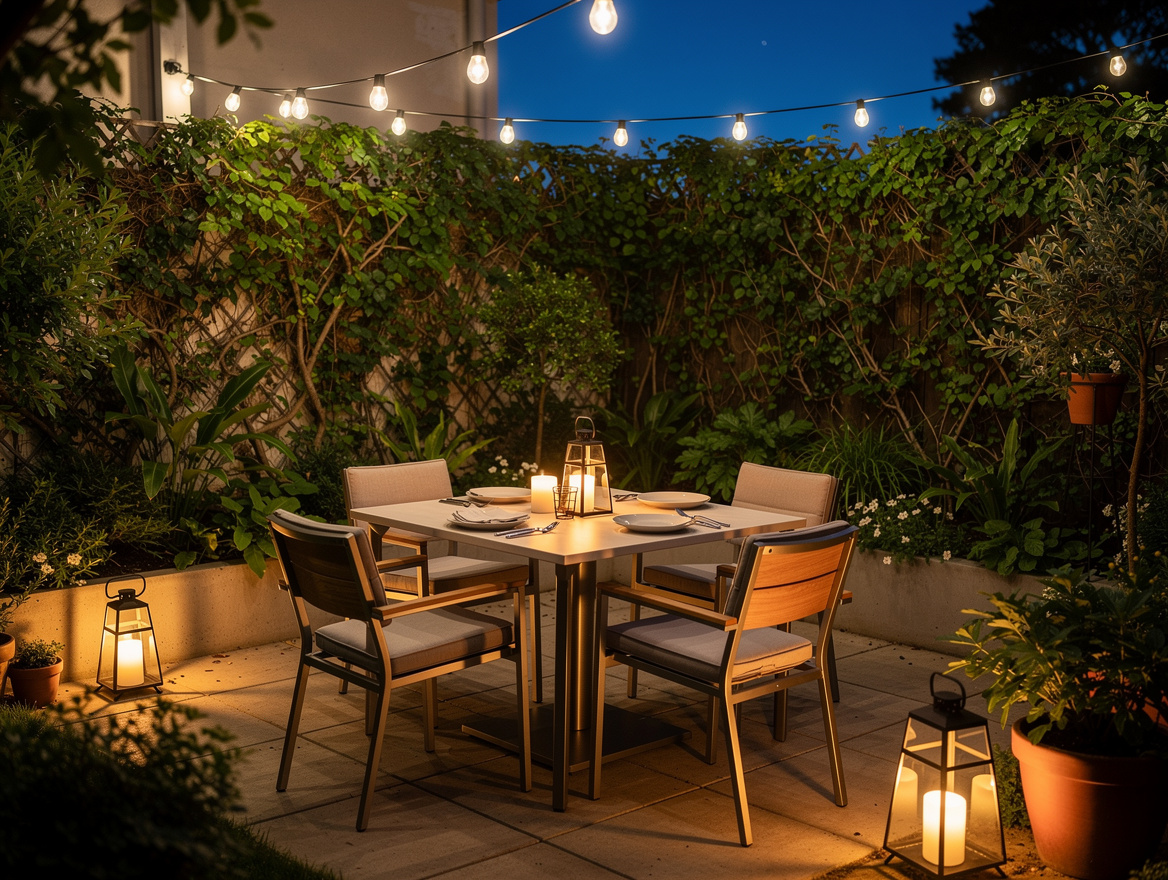
The last layer was the one that made people immediately get it. I added a small outdoor tray, cloth-look napkins, and one compact centerpiece, because a dining terrace should look ready for service even when nobody is sitting there.
A slim side table or bar cart from Wayfair, Target, or Amazon usually costs about $50 to $150. In a 10 ft by 10 ft corner it is worth it, but in a smaller footprint I would rather spend that budget on better chairs and lighting.
I also stuck to one palette, charcoal, natural wood, and green. A striped seat cushion or one tablecloth is enough personality, and more than that starts feeling staged instead of lived in.
What surprised me most was how little I needed once the basics were right. Floor, table, chairs, light, plants, done, because that is the restaurant formula hiding in plain sight.
Start with the floor boundary, then buy the right-size table for the footprint you actually have. Once those two pieces are right, the lights and plants fall into place fast, and the whole corner stops feeling forgotten.
Mia Carter writes about small-space living and budget home makeovers. She has restyled three rentals and tests most ideas in her own 45 sqm flat.