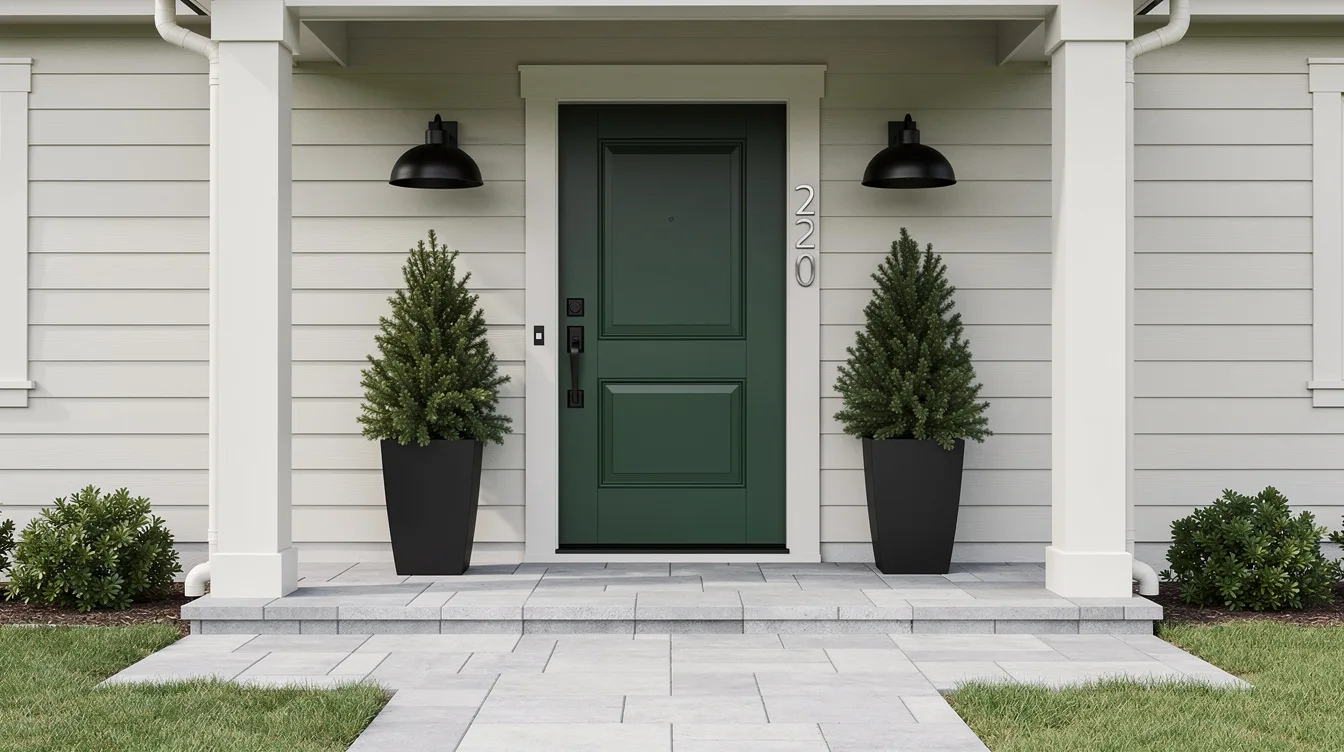
I got tired of walking up to my own house and seeing the same weak spots every day: a faded front door, a porch light that felt too small, and planting beds that looked random instead of intentional.
I didn’t need a full exterior remodel. I needed the few upgrades that make people assume the whole house costs more, and I learned fast that the front door, lighting, hardscape, and planting structure do most of that work.
Paint the front door like it matters
I started with the front door, because it’s the first thing your eye lands on. A standard 36″ x 80″ door can still look expensive if the color is rich, the finish is clean, and the trim is crisp.
I went with a deep green instead of black. It feels current without trying too hard, and a typical gallon of exterior paint plus supplies from Home Depot or Lowe’s runs about $80 to $150, which is cheap for the visual return.
If your actual door is dented or flat-out tired, replacement makes sense. A quality fiberglass door in the common 36″ x 80″ size typically lands around $600 to $1,500 installed, and that price range is where curb appeal starts to look polished instead of patched together.
Frame the entry with thicker trim and solid hardware
Once the door looked better, the skinny trim around it made the whole entry feel underdressed. Swapping to 4- to 6-inch trim gave the doorway more presence right away, and that chunky outline reads custom even on a basic facade.
I also added a simple header above the door, about 6 to 8 inches tall. That one line changed the proportions more than I expected, and it gave the entrance the kind of symmetry people usually associate with pricier homes.
The other piece was the handle set. A substantial matte black lockset from Amazon or Wayfair typically costs around $200 to $450, and I’m convinced flimsy hardware ruins a good door faster than any bad paint color.
Swap house numbers and the mailbox together
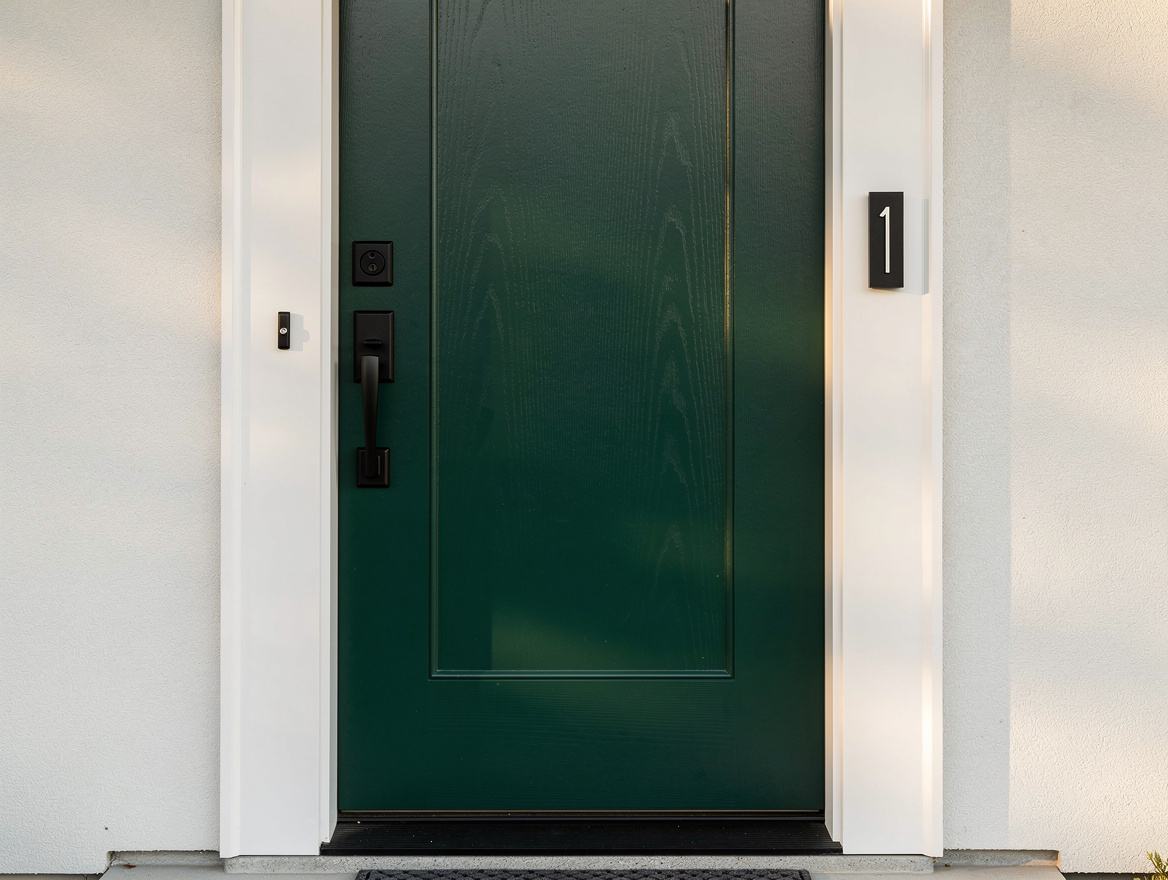
I almost skipped the house numbers, which would have been a mistake. Oversized numbers, usually 5 to 8 inches tall, mounted with a small stand-off gap, look far more considered than the builder-grade numbers that sit flat against the wall.
A typical set for four to six numbers from Wayfair or Amazon usually costs about $80 to $250. That’s the kind of small upgrade buyers notice without realizing why the entry feels cleaner.
I changed the mailbox at the same time so the metal finish matched. A modern wall-mount version from Ace Hardware or Amazon usually falls around $70 to $200, and mixing old brass, new black, and random silver is one of the fastest ways to make the front look cheaper.
Scale up the porch lighting
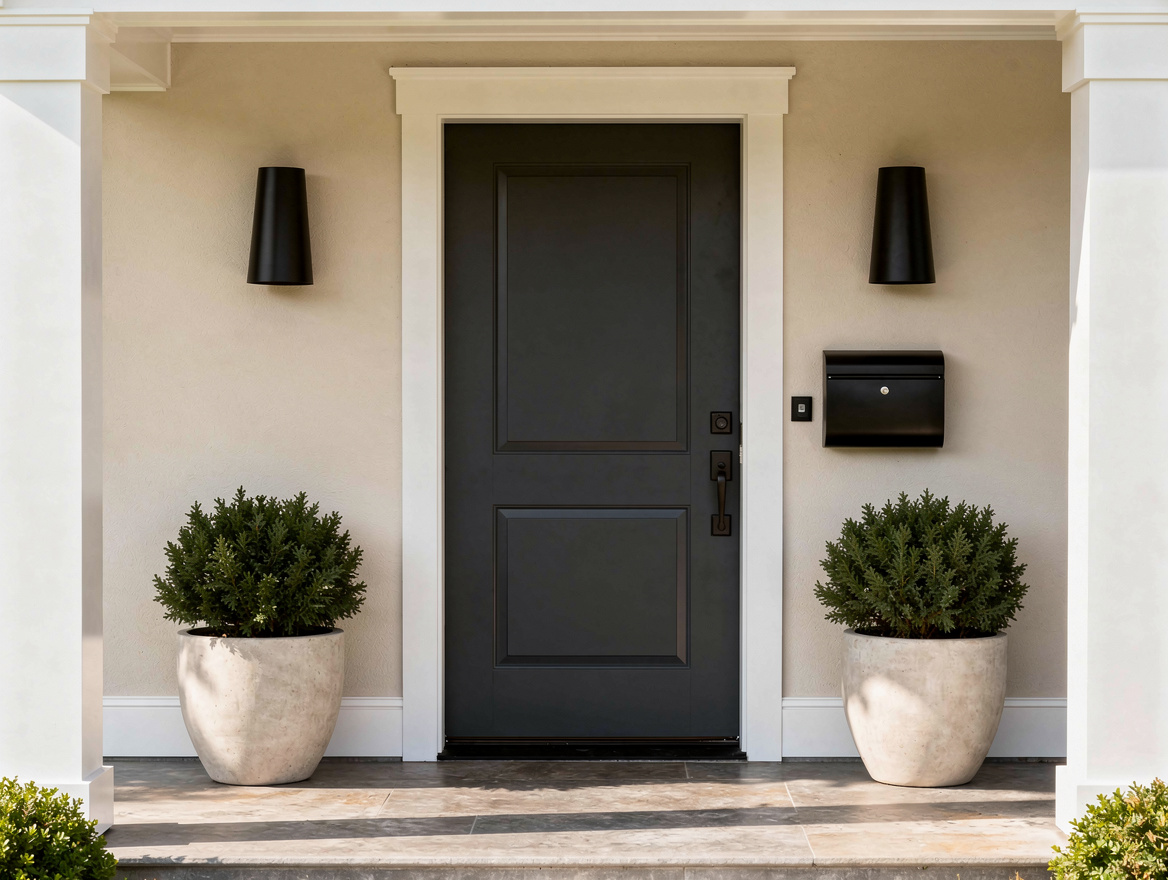
My old porch lights were too tiny for the width of the door, which made the whole entry look timid. Larger sconces with clear lines fixed that, especially when I placed them at a height that felt intentional instead of squeezed wherever the old junction box happened to be.
I like warm lighting outside because cool bulbs can make a house feel harsh. A pair of exterior sconces from Home Depot or Lowe’s can range from about $90 to $300 for the set, and that’s enough to get a size that actually holds its own against the door.
I kept the finish consistent with the hardware and numbers. Matching black metal lighting looks expensive because it feels disciplined, and curb appeal gets better when you stop introducing one more finish just because it was on sale.
Clean up the path with larger pavers and sharper edges
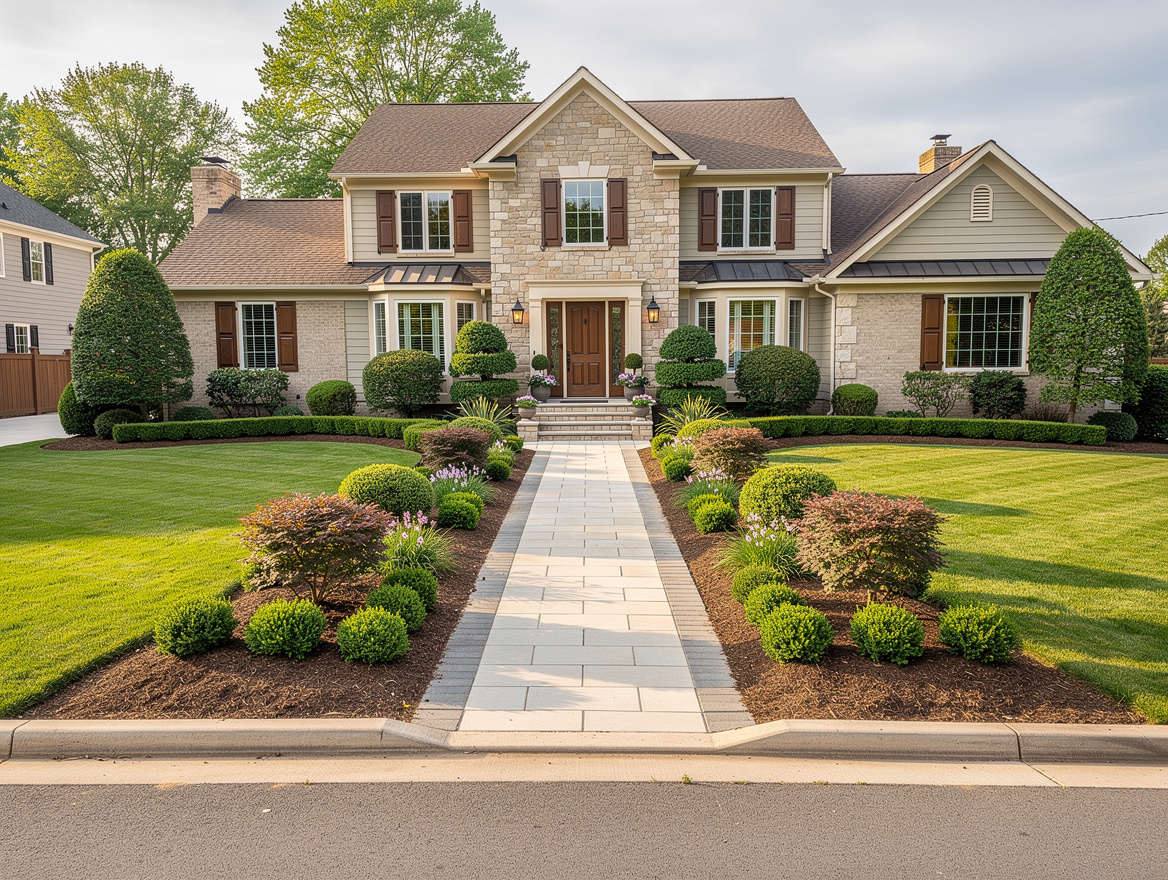
The walkway made a bigger difference than I expected because it controls the approach to the house. A front path that’s 36 to 48 inches wide feels comfortable, and once you get closer to 60 inches wide, it starts reading much more generous.
I like large-format concrete pavers best for this. Sizes like 24″ x 24″ or 24″ x 36″ look calmer than a busy small-paver pattern, and that restraint is exactly what gives hardscape a more expensive feel.
Typical installed costs for a poured concrete path run about $10 to $18 per square foot, while large-format pavers usually land around $18 to $30 per square foot. I looked at options from Lowe’s and Home Depot, and my opinion is simple: cleaner geometry beats fussy pattern every time.
I also made sure the edges looked precise. Crisp edging, a narrow gravel joint, and no wobble underfoot matter more than chasing the fanciest material with a sloppy layout.
Give the planting beds structure instead of clutter
My yard improved the most when I stopped buying random seasonal color and started building around structure. A pair of evergreen shrubs near the entry, one small ornamental tree, and repeating mounds along the path gave the front yard a rhythm it never had before.
I used black mulch sparingly because too much of it can look harsh, and I prefer dark brown for a softer finish. What matters more is the contrast between the mulch, the path, and the lawn, because that separation makes the whole front look maintained.
For containers, I skipped lightweight plastic that looks chalky after one season. Two substantial planters from Target, Wayfair, or Costco in the $50 to $150 range each usually look better than four cheap ones, and symmetry by the entry always feels more expensive than scattered pots.
I kept the palette tight with green foliage, white flowers, and a little silver leaf. That kind of restraint has a luxury feel, while ten plant colors fighting each other always reads like a garden-center impulse buy.
Refresh the driveway edges and keep every line sharp
I didn’t replace the whole driveway, and I’m glad I didn’t. What changed the look was cleaning the driveway edge, patching the cracks that were obvious from the street, and making sure the border where it met the lawn looked straight and deliberate.
That sounds minor, but worn edges and weeds instantly drag down the value signal of everything else. Even if you save a full resurfacing for later, spending a little now on crack filler, edging, and pressure washing from Home Depot or Ace Hardware gives the house a more finished frame.
I also trimmed back anything leaning over the drive. Expensive curb appeal usually comes from clean lines and quality materials, and overgrowth hides both.
Start with the front door if your budget is tight, then move to lighting and numbers so the whole entry reads as one decision. After that, put money into the path or planting beds, because expensive-looking curb appeal comes from order first, then materials.
Mia Carter writes about small-space living and budget home makeovers. She has restyled three rentals and tests most ideas in her own 45 sqm flat.