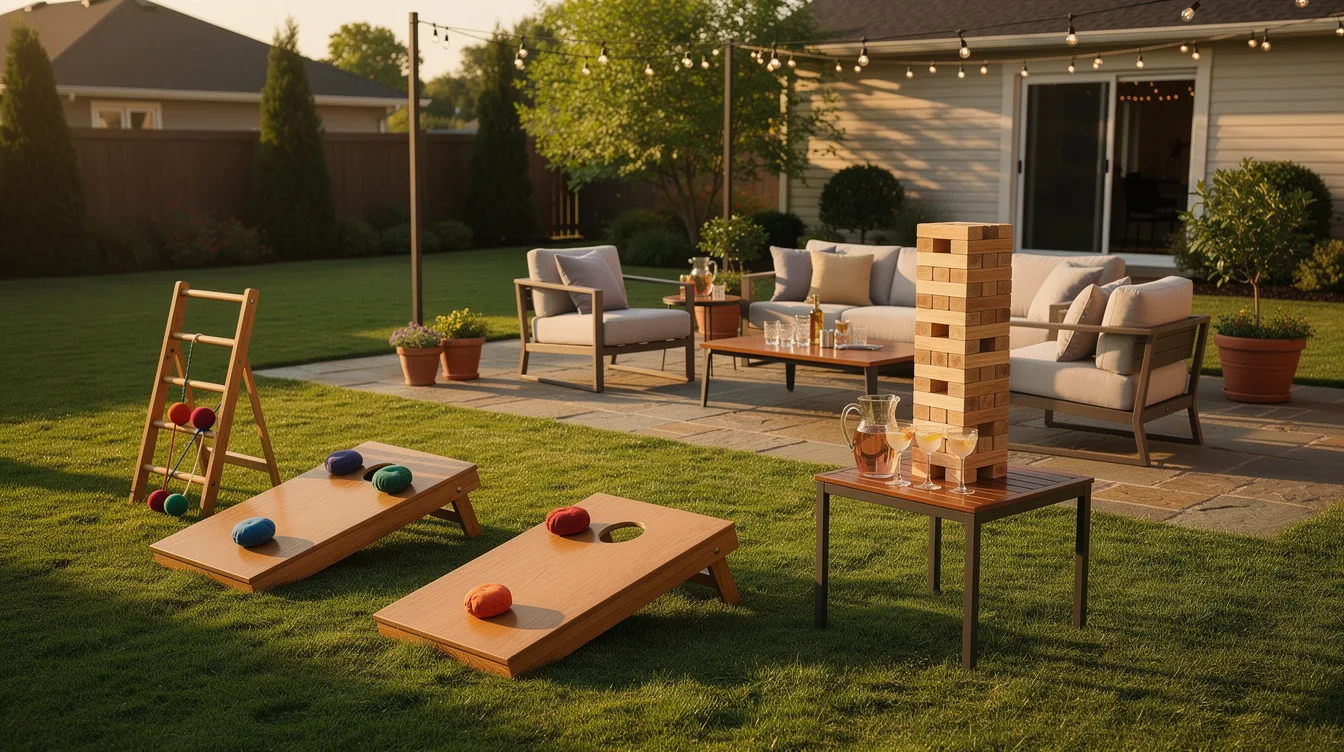
The awkward part of hosting outside is the dead space between the first drink and dinner. People drift to the patio door, stare at the grill, and ask if they should help with ice.
I like parties better when there’s something to do with your hands, and backyard games fix that fast. The good ones also look decent on a lawn instead of reading like a kid’s birthday setup.
Set Up Regulation Cornhole First
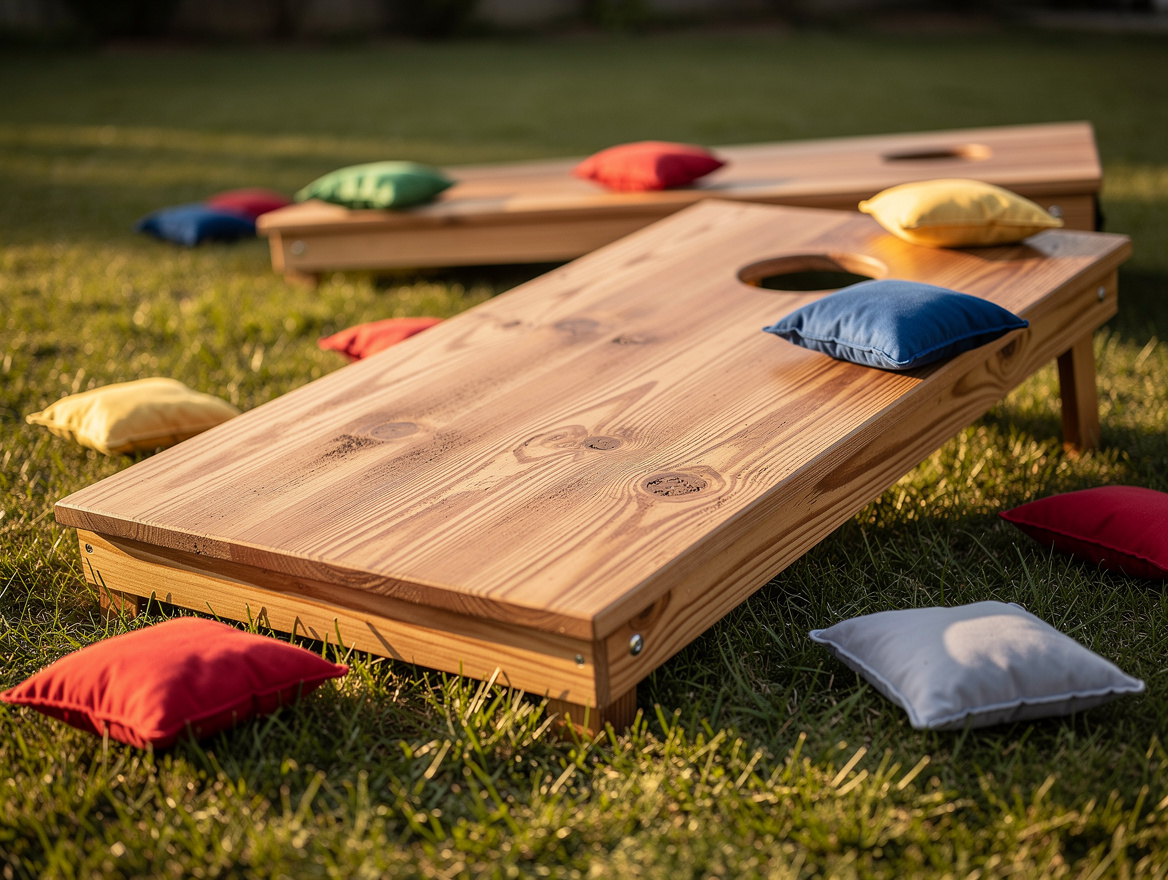
Cornhole is still the adult backyard default because it works for every energy level, from laid-back neighbors to people who absolutely keep score. A regulation board is 24 inches wide by 48 inches long, with a 6-inch hole centered 9 inches from the top edge, and that sizing matters more than the graphics.
If you want the easiest buy, typical entry-level wood sets sold through Amazon or Walmart land around $70 to $120 for two boards and eight bags. That’s the sweet spot for a party host who wants real boards instead of the flimsy plastic stuff that skids across the grass.
For a nicer finish, mid-grade and custom wood sets usually run about $150 to $250, and they look better parked beside a deck or fire pit. I’d still skip anything too glossy, because varnished tops can play fast and annoy half your guests after the second round.
If you’re even mildly handy, a Home Depot DIY build is the smartest value here. Typical wood, hardware, and paint costs come in around $30 to $80, and you can keep the stain dark and simple so the boards look like patio furniture, not tailgate leftovers.
Add Ladder Toss for Easy Conversation
Ladder toss is what I set out when I know the group will be talking as much as playing. The rules are light, the pace is forgiving, and nobody needs a warm-up before trying to hook a bola onto the top rung for three points.
Most retail sets are about 24 inches wide and 40 inches high, with rung spacing around 13 inches. That compact shape is why it works so well in smaller yards where cornhole boards would crowd the seating area.
Budget sets at Walmart usually sit around $30 to $45, often with PVC frames, soft plastic balls, rope bolas, and a carry bag. I actually prefer the softer bolas for adult parties, because they’re less obnoxious around drinks, dogs, and patio glass.
If you want a cleaner, less toy-like look, the nicer bracket is usually $50 to $80 at Target or Amazon. White PVC is not elegant, I know, but it disappears surprisingly well once it’s on grass and people start playing.
Bring In Roundnet When the Group Gets Competitive
Roundnet changes the whole mood of a backyard hang. The second that little net comes out, the athletic people stop leaning on the fence and start calling for teams.
Starter kits typically run about $59 to $75 on Amazon, and that range makes sense if you only break it out a few times each season. It’s a better buy for adults than a lot of novelty lawn games, because people actually come back for another match.
Pro-level sets usually start around $99 and often land between $99 and $120 at retail, with some listings pushing higher. Those kits tend to have a sturdier frame, grippier balls, and better leg traction, which matters if your yard is more patchy than pristine.
The boxed size for a typical pro kit is about 23.1 by 9.5 by 6.3 inches, and the weight is roughly 6.5 pounds, so storage is easy. My only hard opinion here: don’t make this the only game unless your whole guest list likes to move, because roundnet can leave the chatty crowd standing around.
Use a Giant Tumbling Tower for Slow-Burn Laughs
Giant tumbling towers are the best answer for guests who want a game without feeling trapped in a tournament. Someone makes one risky pull, the whole table turns to watch, and suddenly people who swore they were “just hanging out” are fully invested.
Typical outdoor sets use solid wood blocks, often pine, stacked into a tower that starts around 2 to 3 feet tall and can climb well past 5 feet during play. That height is exactly why it works near lounge seating, because it becomes part game and part spectacle.
I’d shop this one at Wayfair or Target and look for a stained wood finish over bright painted blocks. Natural wood reads more adult, and it won’t fight your patio rug, planters, or deck furniture in photos.
One warning, and it matters: give this game its own corner on a flat surface. A tumbling tower on bumpy grass is funny once, then it’s just a crooked stack with splinters and people arguing that the yard made the move unfair.
Create a Two-Zone Layout So Games Actually Flow
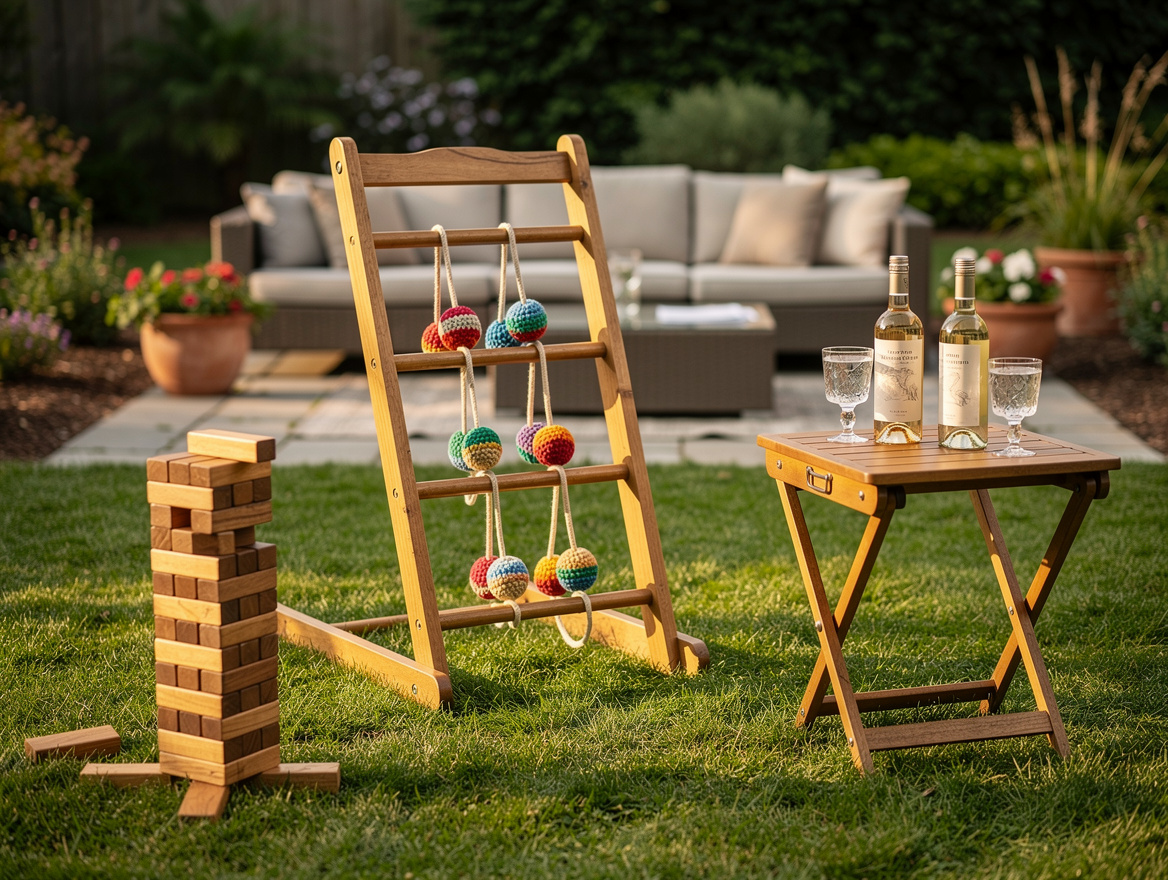
Backyard layout decides whether the party feels smooth or chaotic. I like one active zone for cornhole or roundnet, then one slower social zone for ladder toss and the tumbling tower, with a clear walking path between the two.
For cornhole, leave enough depth behind each board so players aren’t backing into chairs. Since regulation boards are 48 inches long, the game already claims visual space, and it looks cleaner when you line it up with the long edge of the yard instead of aiming it across the patio.
A simple Costco folding table works well as a drink station between zones because it gives people a place to pause without blocking play. I’d rather spend money on the games than on decorative serving furniture that has to be hauled back into the garage after every get-together.
Then add one low-storage piece, like a Home Depot deck box, so bags, bolas, and balls don’t end up in random planters by sunset. The best backyard game setup is the one you can reset in five minutes next weekend, with no hunting through the house for missing pieces.
Start with regulation cornhole, then add one fast game and one low-pressure game around it. That mix keeps adults moving, talking, and staying outside longer, which is the whole point.
Mia Carter writes about small-space living and budget home makeovers. She has restyled three rentals and tests most ideas in her own 45 sqm flat.