
Small speakeasy room ideas work best when they solve the squeeze first, not when they pile on more mood. I learned that after stuffing one tiny lounge with a heavy bar cabinet, two fat chairs, and a rug that was way too small. The room looked expensive and felt awful. Once you hide bulk, tighten the palette, and light the edges, the whole thing opens up.
- Hide the bar behind paneled pocket doors
- Paint the ceiling midnight lacquer
- Why a smoky mirror niche beats an open shelf
- Tuck a brass tray table beside the sofa
- Skirt the lower shelves in velvet
- Mount picture lights over moody gallery walls
- Wrap the corner in oxblood grasscloth
- Use a bookcase bar instead of a cabinet bar
- Cluster amber sconces around the seating nook
- Layer damask drapes behind the lounge chairs
- Float a round marble drinks pedestal
- Build banquette seating under the window
- Use smoked glass doors on cabinets
- Can a leather sofa really work in a small lounge?
- Why a rolling cart beats a built-in bar (in a small space)
- Backlight the bar shelves with warm LEDs
- The Sidebar Lounge Move
- Panel one wall in dark walnut strips
- Ground the room with a faded Persian rug
1Hide the bar behind paneled pocket doors
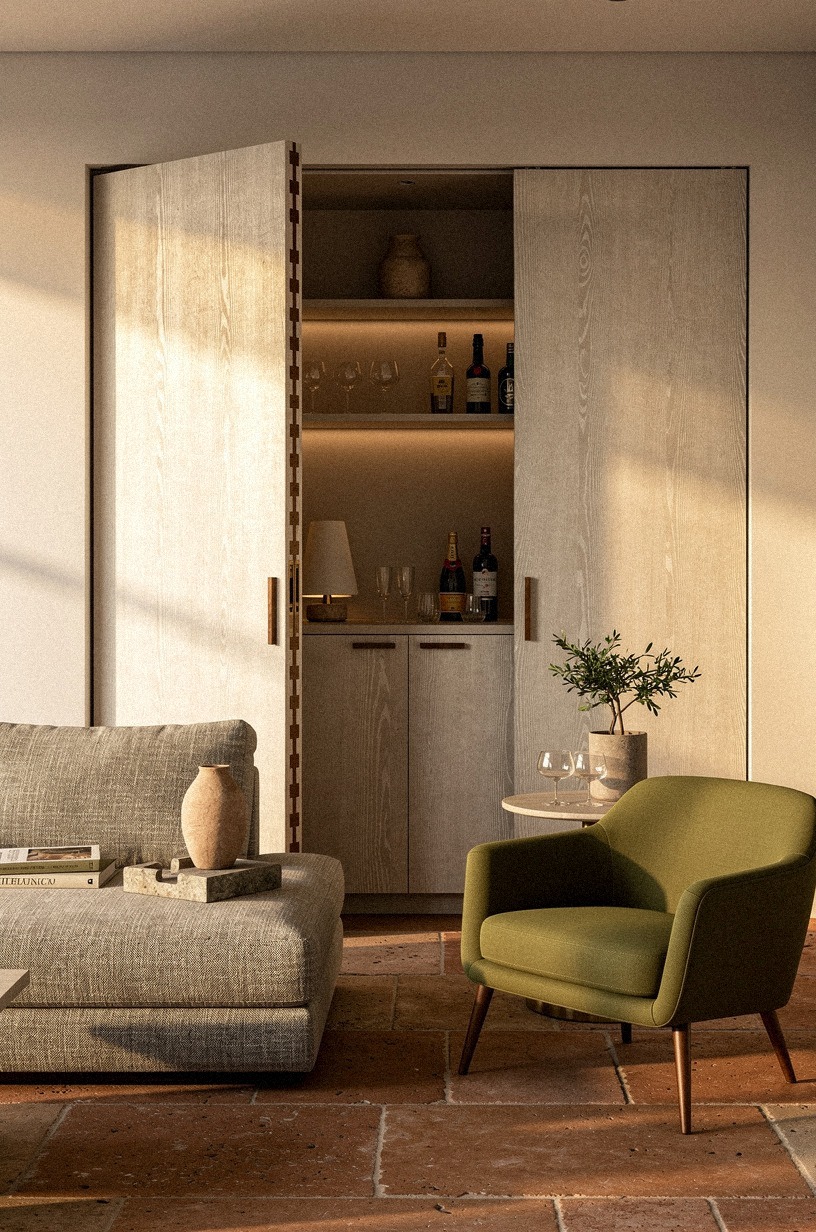
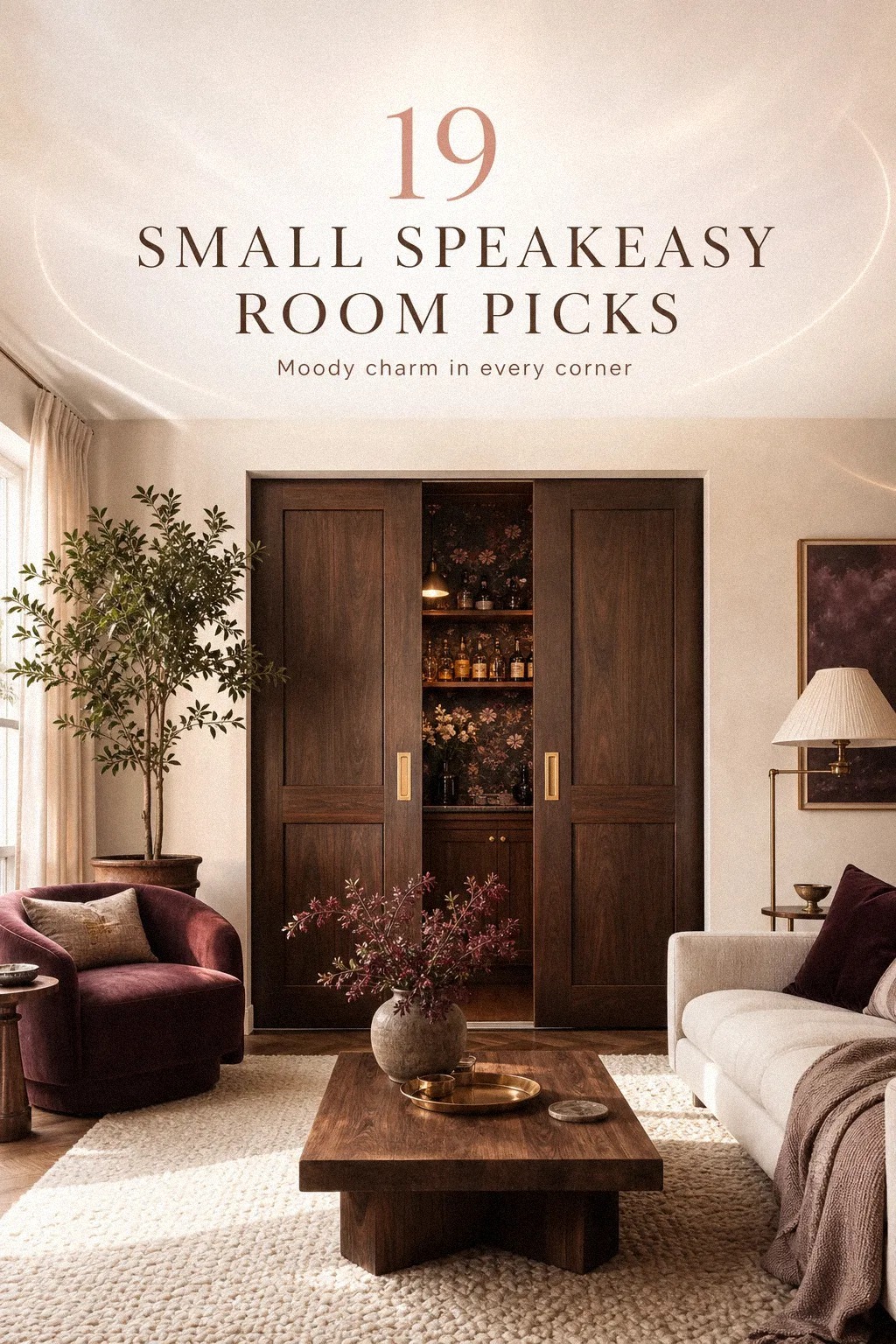
Pocket doors do what a bulky cabinet never can: they let your small speakeasy disappear when you want the room back. In a tight living room, that matters more than one more shelf of bottles. I like slim panels in cerused white oak because the grain keeps the wall alive even when the bar is closed.
Use the opening width as your real layout tool. If your bar niche is only 30 to 36 inches wide, pocket doors save the swing space that normal doors steal from your seating.
And when the panels meet in the middle, the room reads as architecture instead of storage. A Schlage pocket door hardware kit runs about $80 to $200 for the frame and rollers, which is less than most people expect.
Inside, keep the bottle ledge shallow and the glassware low. One aged brass rail.
A compact metal ice bucket. A couple of coupe glasses.
If you want another hidden setup, this piece on turning a closet into a hidden speakeasy bar shows why hidden storage wins in a small home speakeasy.
2Paint the ceiling midnight lacquer
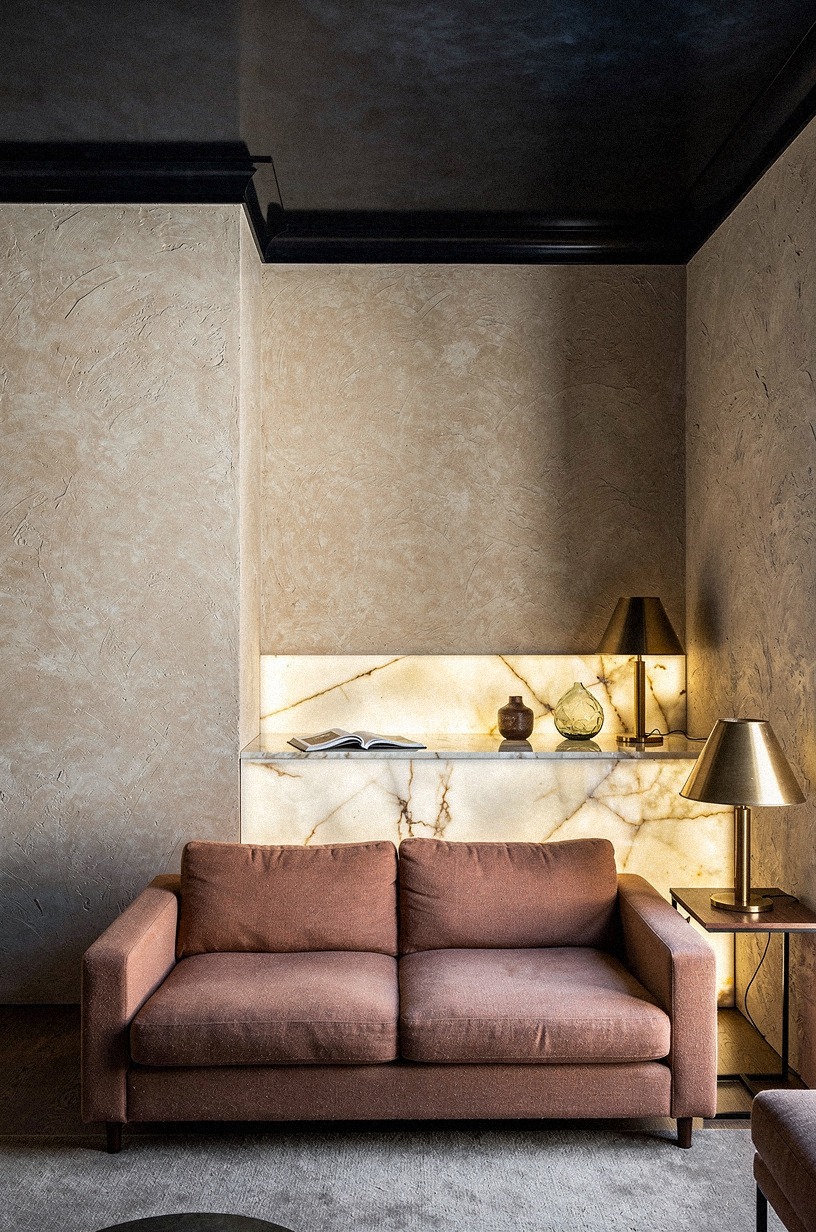
A dark ceiling sounds risky, but in a tiny lounge it can pull the walls upward instead of pressing them down. That part surprises people.
When you bounce a lamp off a glossy ceiling, the shine keeps the room moving. I reach for Farrow & Ball Hague Blue No.30 when you want blue-black depth without the flat void of pure black.
Keep your walls softer so the ceiling gets to be the drama. A clay linen sofa, warm ivory trim, and one compact onyx bar front will hold the palette steady.
If your room already feels cramped, skip stark white overhead paint. It cuts the room in half.
And yes, sheen matters. Eggshell won’t do the same thing. A true lacquer finish, or the closest pro-level gloss you can get, turns the ceiling into part of the lighting plan.
A single gallon of Farrow & Ball Full Gloss runs about $110 to $130, which is why most people limit the high-sheen paint to one surface and not the whole room. For another lesson in scale, I like this article on why your living room feels cold because it’s too small, not too big.
If you want to push the dark-ceiling idea further into the rest of the room, dark living room ideas that feel warm instead of cave-like is worth a save before you commit.
3Why a smoky mirror niche beats an open shelf
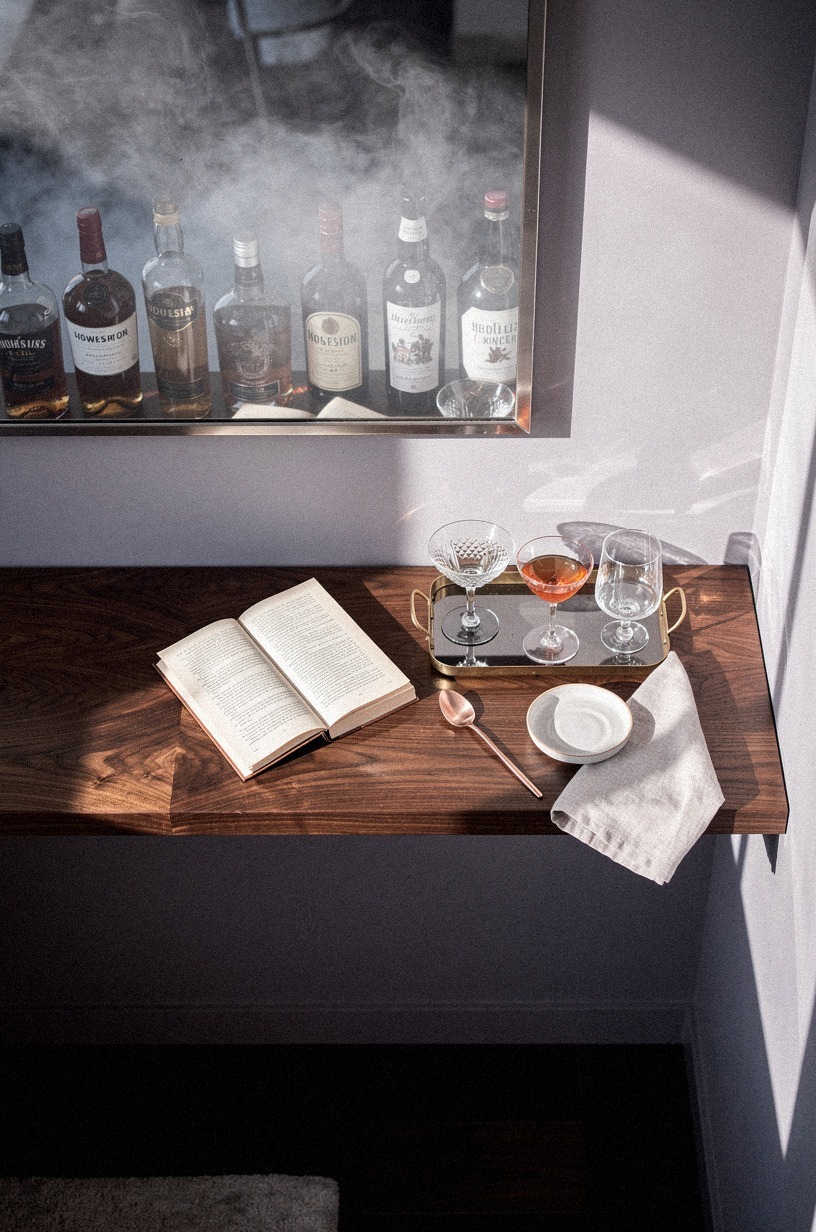
If you want bottles to feel decorative instead of cluttered, recess them into one narrow mirrored niche. I like the niche set just behind the bar zone so the reflection doubles your light without doubling your floor space.
Use a smoky, not crisp, mirror so the bottles look like they belong to the room, not a vanity. A 6 to 8 inch depth is plenty for standard spirits, and a single aged bronze shelf lip keeps the glasses from rolling.
I tuck one small picture light above the niche in 2700K so the glass catches the glow instead of going flat. Worth every penny if you ask me!
It’s the kind of move that reads as built-in for a fraction of the cost. And because the mirror bounces the lamp back at you, a tiny lounge can suddenly feel twice as deep. For more on building the bar wall as a feature, hidden bar ideas that make a small lounge feel custom is a useful save.
4Tuck a brass tray table beside the sofa
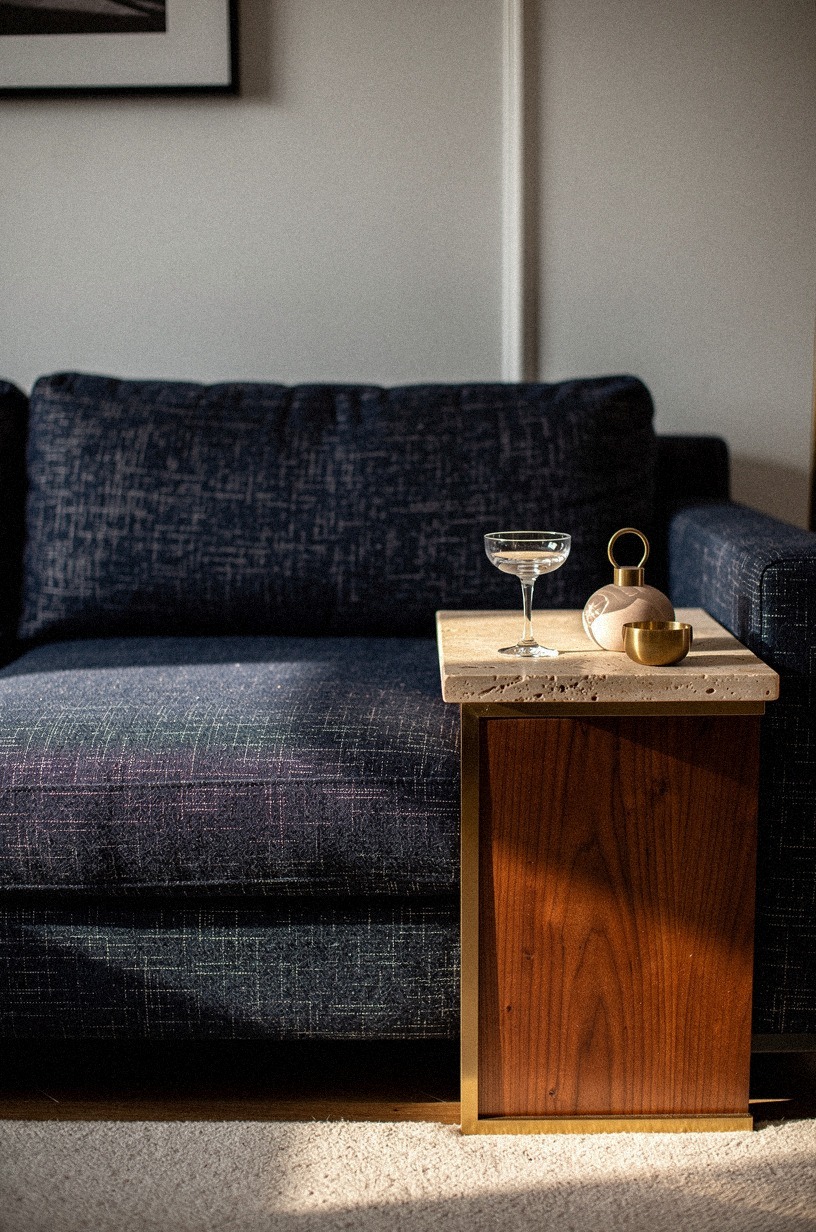
A tray table beside the sofa gives you landing space without the sprawl of a full coffee table. That’s a better move in a room where every inch has to earn its keep.
I look for a narrow stem and a lip high enough to catch a coupe, usually in unlacquered brass so the finish gets softer over time. A solid brass C-table runs about $120 to $260 and lasts decades.
You don’t need a giant center table if the sofa is already compact. In fact, if your sofa is in the 35 to 40 inch depth range, a side perch often works better than filling the middle. Let your knees and your sightlines keep the floor open.
But watch the color. Bright yellow brass can feel hotel-lobby fast.
A mellow antique finish near linen or leather feels clubby instead. I’d look at Schoolhouse Electric or Rejuvenation for the right mellow brass; both run about $180 to $350 per table.
If your whole room is struggling with oversized furniture, read your Pinterest Nordic room feels cold because furniture is too big for the space. Same problem, different mood.
For a layered take on the same idea, small sitting room ideas that make tiny spaces feel luxurious is a good companion read.
5Skirt the lower shelves in velvet
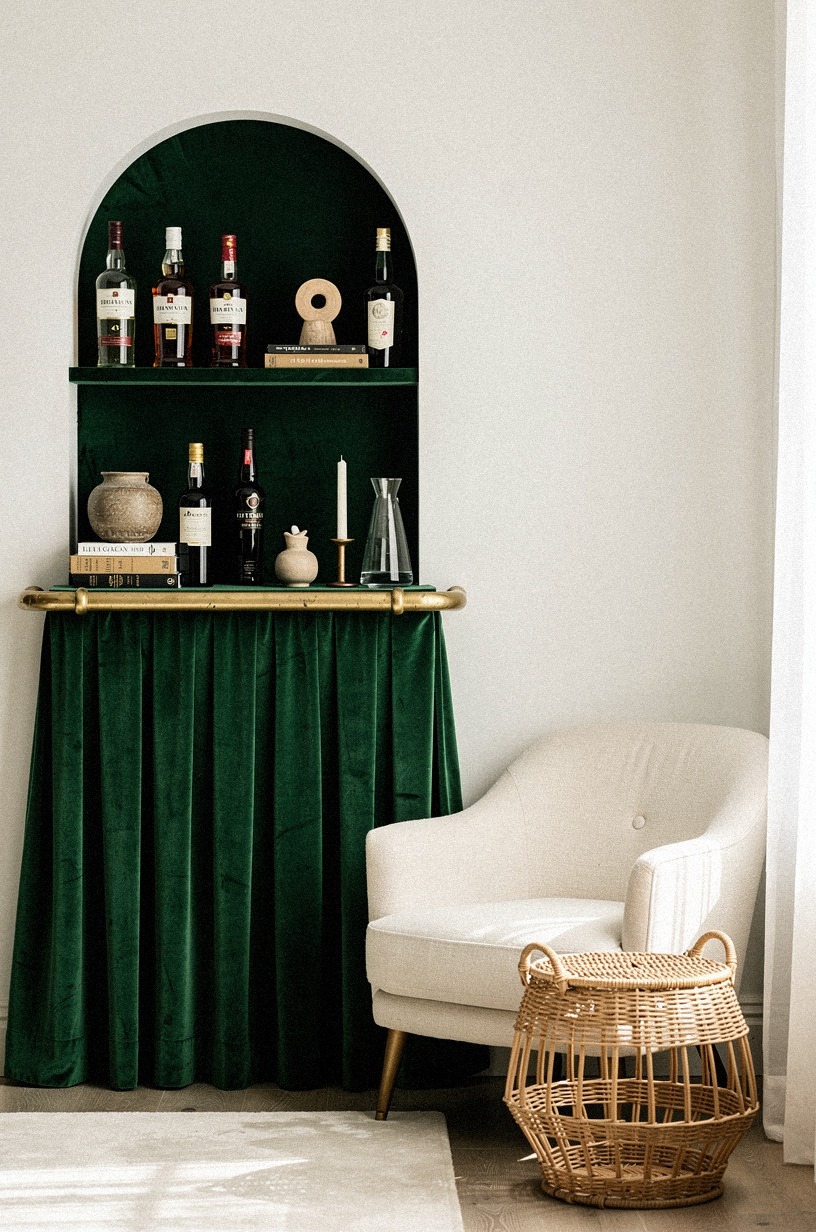
Open lower shelves in a tiny bar corner tend to show every stray thing you own. That’s why I like a simple shelf skirt more than baskets here. A gathered panel in 18 oz cotton velvet hides the mess, softens the room, and keeps the lower half from feeling busy.
Emerald is gorgeous if the rest of your palette stays warm and dark. Oxblood works too.
I’d skip a stiff flat panel, though, because it looks more utility closet than after-hours lounge. Let the fabric puddle just a little.
This is also one of the cheaper updates on the list. A yard or two of Coventry Cloth velvet, ring clips, and a slim tension wire can land well under the $40 to $80 budget bracket. And because the shelf line disappears, the room feels calmer the second you walk in.
6Mount picture lights over moody gallery walls
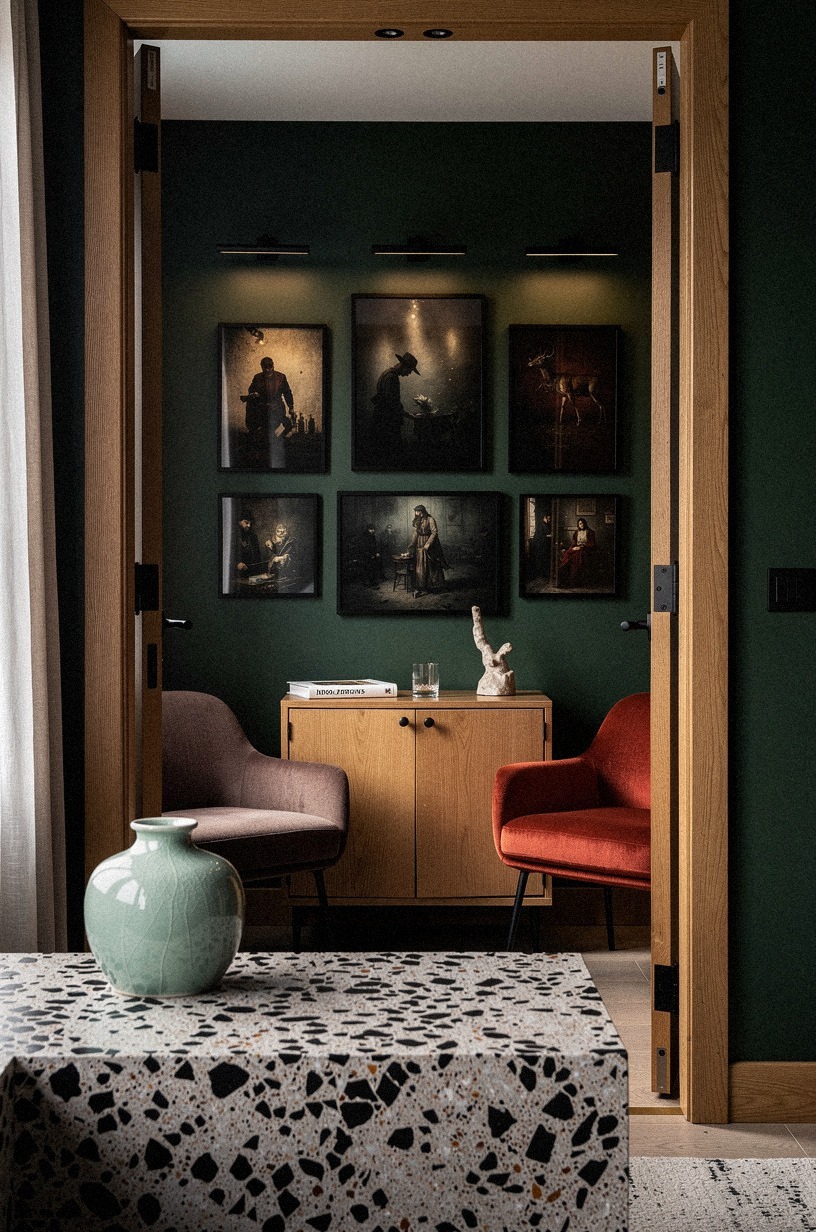
Picture lights do two jobs at once in a compact speakeasy. They light the art, obviously, but they also stretch the wall upward and outward.
In a tiny lounge seen through a doorway, that extra glow gives the eye somewhere to travel. I lean toward aged brass lights with a warm 2700K bulb from Cleveland Lighting or Schoolhouse Electric, both around $80 to $220 per fixture.
Keep the art dark and roomy. Charcoal portraits, sepia landscapes, old menus in walnut frames. You don’t need a giant gallery wall.
Four or five pieces with breathing room is enough if the light is doing its job.
Here is the part people miss: overhead light will flatten this whole setup. Kill it. Let the picture lights and one lamp carry the room.
If you love layered rooms that still feel small in the good way, 18 small sitting room ideas that make tiny spaces feel luxurious is worth a save.
7Wrap the corner in oxblood grasscloth
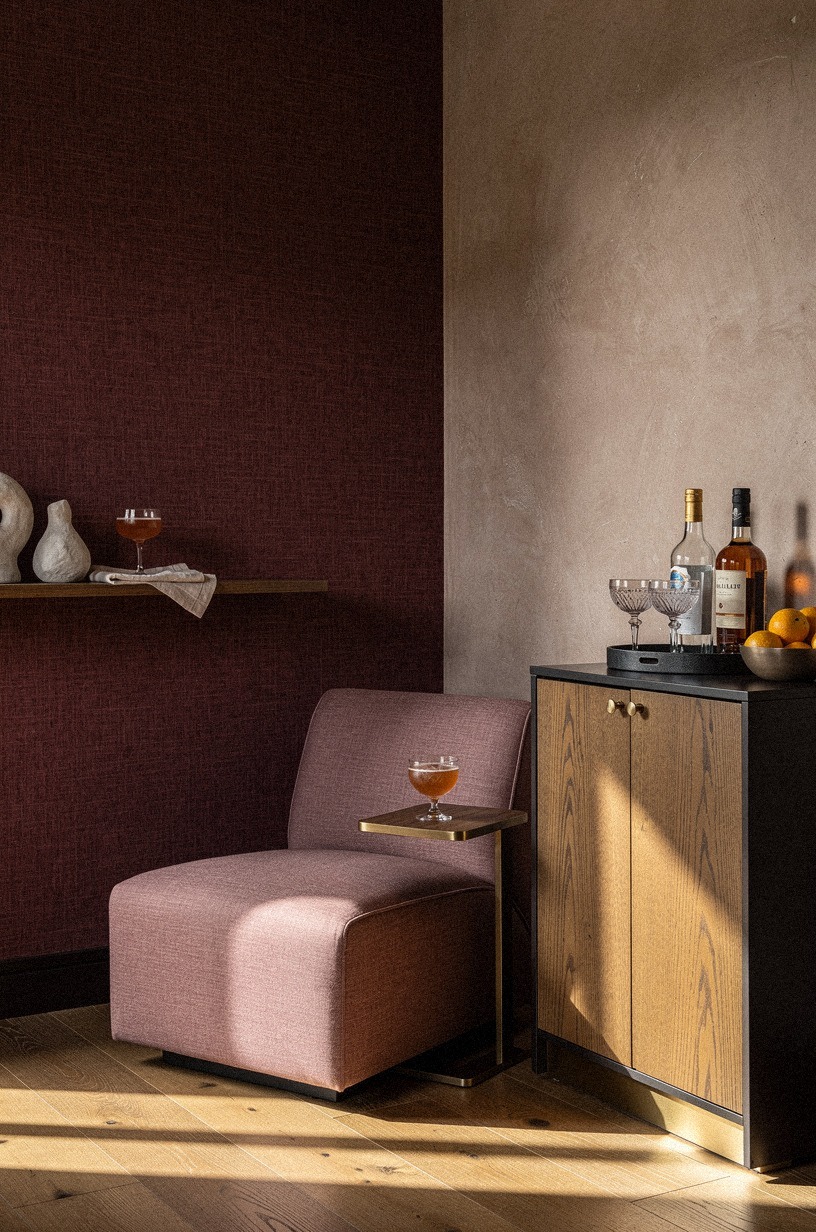
When one corner needs to hold the whole mood, wallcovering is faster than adding more stuff. Grasscloth gives you texture from across the room, and in oxblood it reads rich without going flat. I’ve gone back and forth on red walls before, but oxblood grasscloth wins when the rest of the room stays restrained.
Use it on the corner that holds the seating zone, not on every wall. One wrapped section around a drink ledge and a small cabinet is usually enough to mark the lounge. More than that, and the room can start feeling boxed in.
Pair it with wood that has a little gray or white in the grain so the red doesn’t get muddy. A Phillip Jeffries grasscloth runs about $120 to $180 per roll, and the peel-and-stick version sits closer to $40 per roll.
And if you rent, peel-and-stick paper in a woven finish can fake the look surprisingly well. A single dramatic wall in the right texture can carry a whole room, and the eye reads it as warm instead of busy.
For more ideas on grounding a small lounge with one strong move, cozy small living room ideas that make tight spaces feel like a retreat is a good next read.
8Use a bookcase bar instead of a cabinet bar
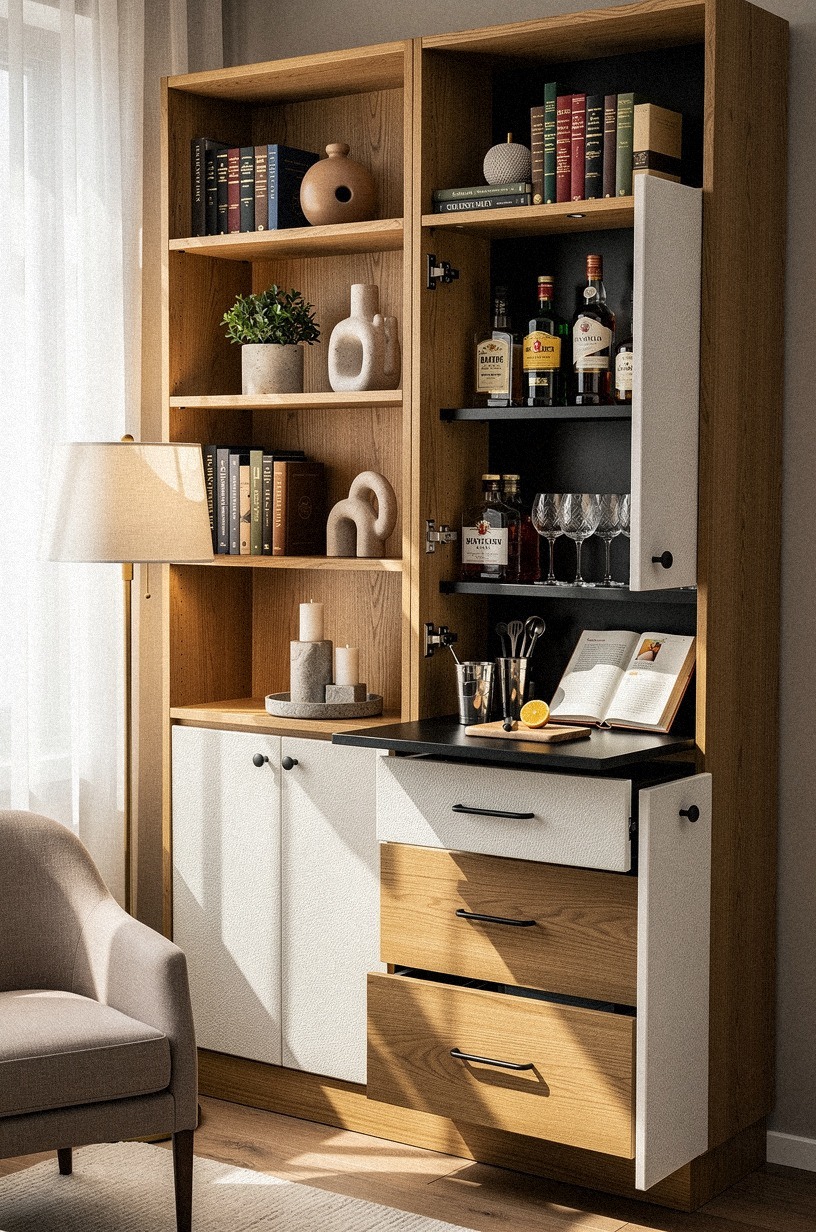
A bookcase bar works because it gives you storage, disguise, and display in the same footprint. In a small home speakeasy, that’s hard to beat. I like using an IKEA BILLY shell when the budget is tight, then upgrading the back panel, hardware, and shelf styling so it stops reading like flat-pack.
One shelf can swing open or slide, but honestly, even a fixed case can feel hidden if the lower half is books and boxes first. Keep the bottles concentrated on one band at eye level. That way your room still reads library, not minibar.
And style the reveal with a little discipline. A stack of paperbacks.
One lamp. A walnut tray.
Three glasses. I’d back the inside of the IKEA BILLY with a panel of beadboard or smoked mirror to hide the white shelf from sight; both cost under $60 for the section.
If you’re already working tiny-space storage from other angles, I turned my 540 sq ft apartment into a stylish haven with 7 IKEA tips has the same ruthless small-room logic.
9Cluster amber sconces around the seating nook
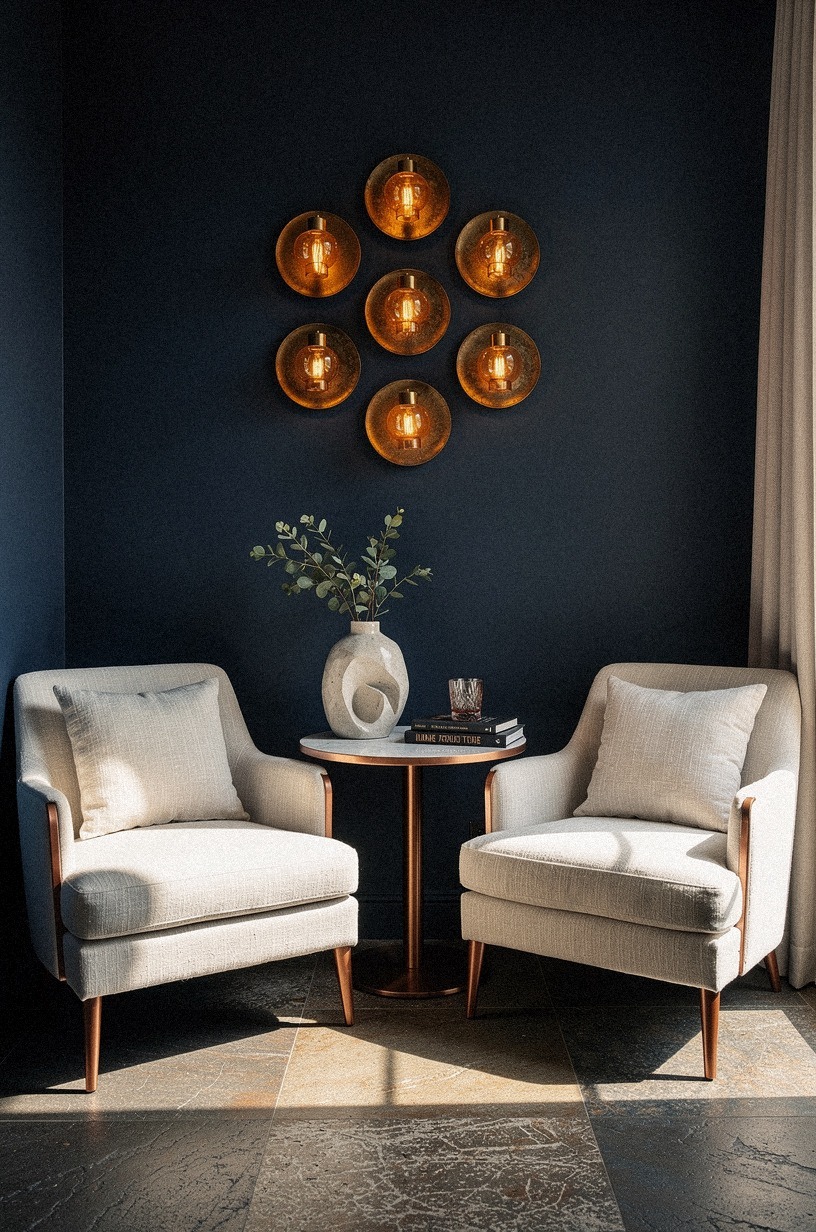
One lonely sconce won’t carry a speakeasy corner. Two or three small sources will.
That’s the whole Three-Height Glow Rule I keep coming back to: light at eye level, shoulder level, and low table height makes a tiny room feel wrapped instead of exposed. For this look, I want amber glass sconces with a dim, honeyed bulb.
Place the pair around the chairs first, then decide if the third belongs near the bar or the art. You’re not chasing brightness.
You’re shaping edges so the center feels softer. Ever notice how the best bars never blast the room?
I’d look at Schoolhouse Electric or West Elm for amber glass in the $90 to $220 range per sconce.
If you can plug into one outlet and run paintable cord channels, do it. That’s easier than waiting for hardwiring, and in a rental it’s far more realistic.
Your seating nook will feel finished the same night. If you want to take the layered-light idea across the rest of the room, living room lighting ideas that make a small room feel twice as big covers the bulb temps and placement.
10Layer damask drapes behind the lounge chairs
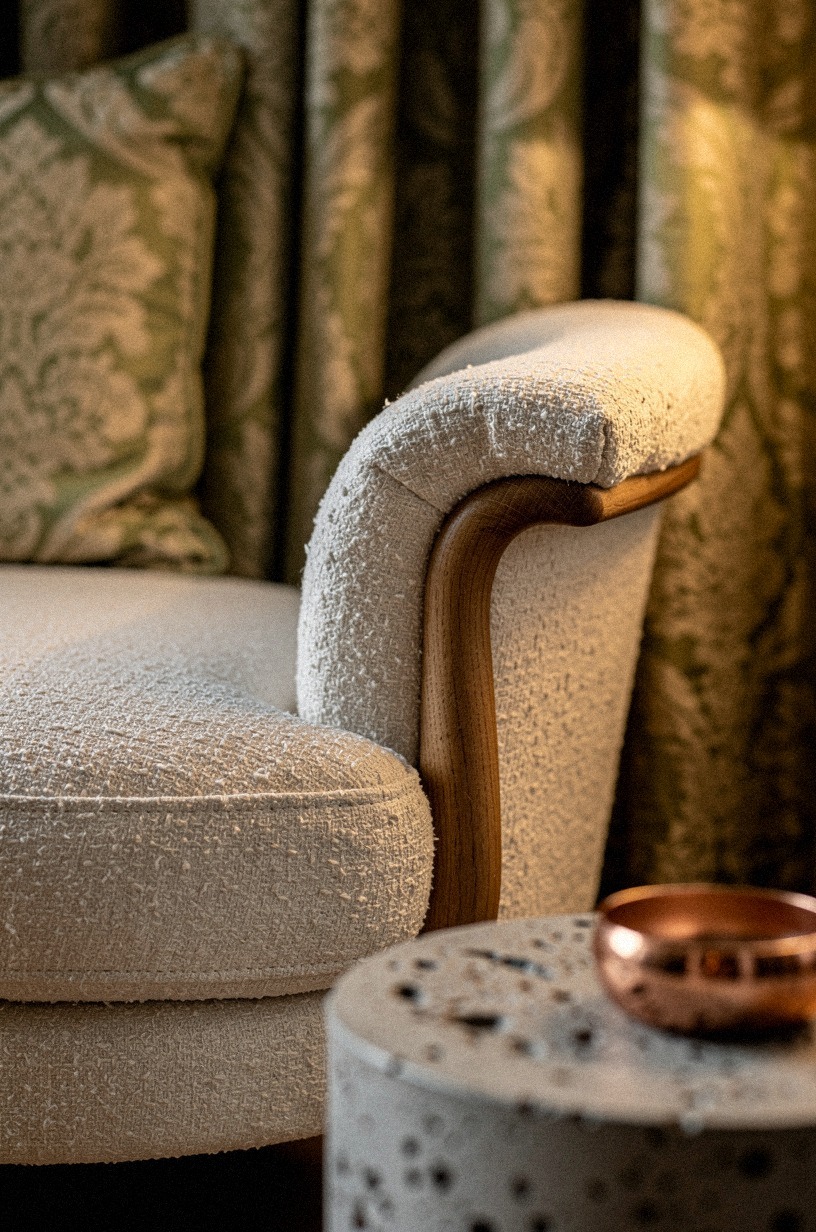
Pattern behind seating can make a tiny nook feel deep, almost like a booth. A low-contrast damask in cream or tobacco gives you the depth without fighting the rest of the palette, and it softens every lamp glow that lands on it.
Hang the rod close to the ceiling, not at the window frame, so the eye reads the wall as taller. Let the panels puddle a half inch on the floor for that after-hours drape.
And keep the fabric weight honest. Anything lighter than 18 oz cotton velvet or a heavy Belgian linen will look like sheers in a moody room, and that’s the wrong read.
It’s a small change, but it pays off the second you turn the lamps down.
11Float a round marble drinks pedestal
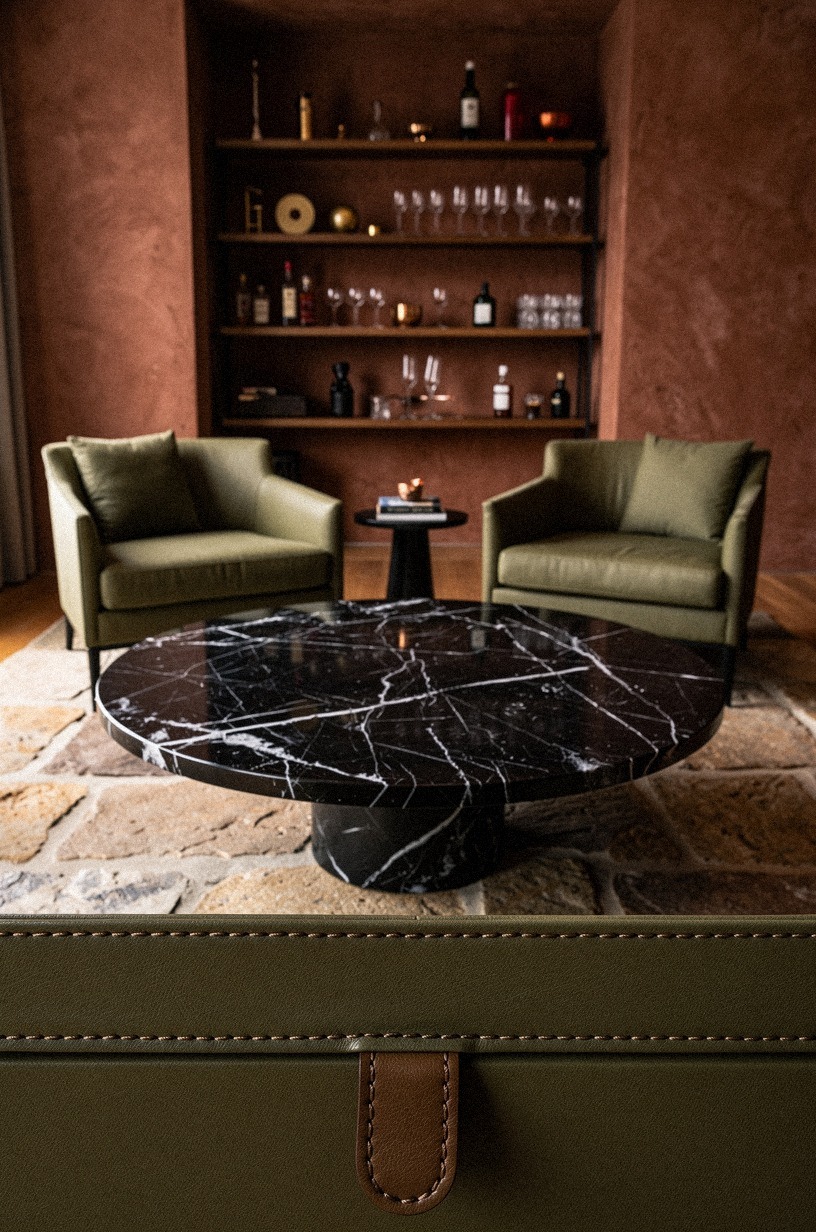
A round pedestal between low chairs gives you function without the visual stop of a rectangular table, especially with a 16 to 18 inch profile. In a room where people are crossing close to the furniture, that matters. I love a small Nero Marquina marble top here because the black surface disappears and the white veining keeps it alive.
Stick close to coffee-table height, about 16 to 18 inches tall, so drinks land comfortably without blocking sightlines. And don’t oversize it. Around two thirds of the seat grouping width usually feels right.
The base wants to be slim. Tulip, turned wood, even a narrow plinth. A Knoll Saarinen-style tulip base or a West Elm mid-century pedestal both land in the $350 to $900 range and pay back every night.
What you’re after is one grounded point in the middle, not another bulky object. Plot twist: the tiny table often makes the chairs look more expensive than a big table does.
If you are mixing lounge pieces in a tight footprint, your Pinterest Nordic room feels cold because furniture is too big for the space solves the same scale issue from another angle. For a closer look at small lounge layouts, 25 small lounge ideas that make tiny spaces feel inviting is a smart companion.
12Build banquette seating under the window
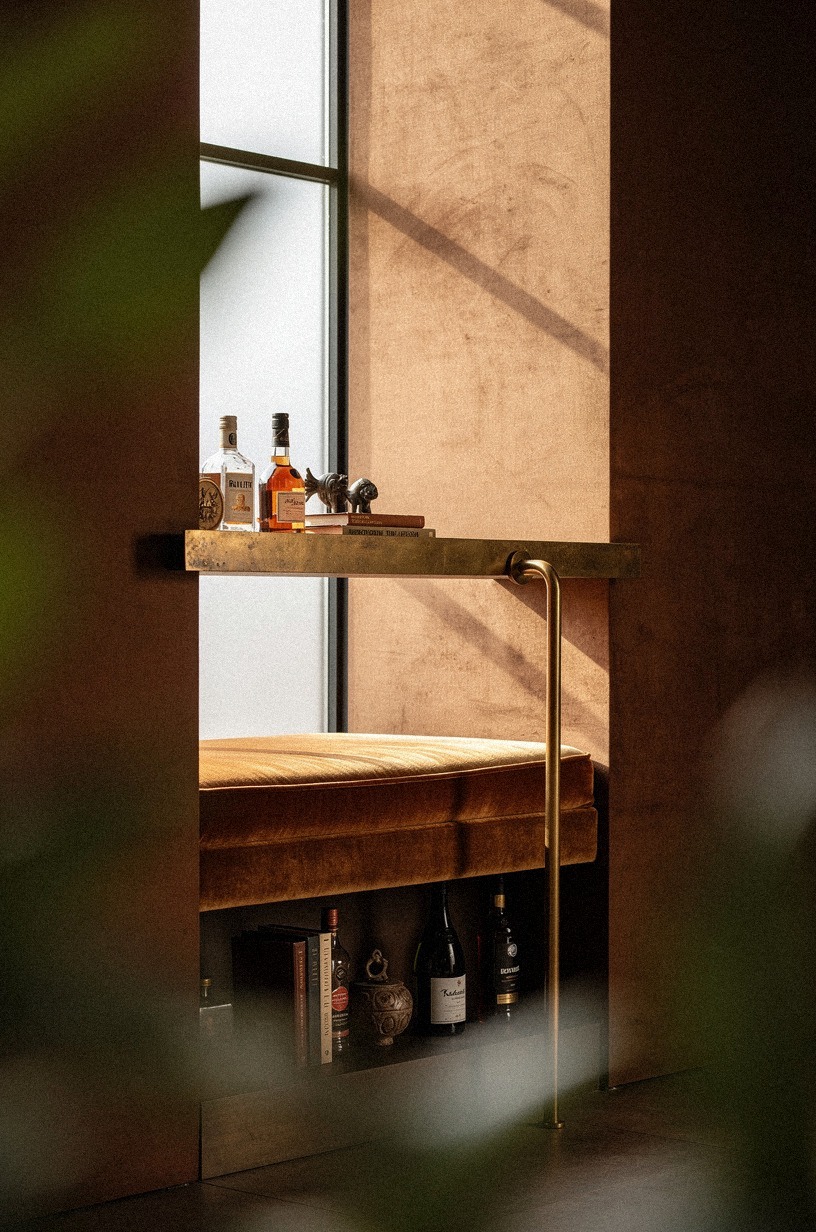
Banquettes are almost unfair in small rooms because they turn dead wall space into real seating. A built-in bench seat tucked under the window gives you one more guest without one more chair fighting the floor. A CB2 or Article banquette kit lands in the $700 to $1,400 range and saves you a custom carpenter.
Keep the cushion deep, at least 22 inches, and the back low so the window line stays the hero. A mohair velvet in a deep tone hides wear and feels clubby. Toss two compact lumbar pillows against the wall and you’ve got the look of a reservation-only booth without the actual reservation.
It’s one of the few moves in this list that genuinely adds square footage. And in a room this small, that’s the whole game.
13Use smoked glass doors on cabinets
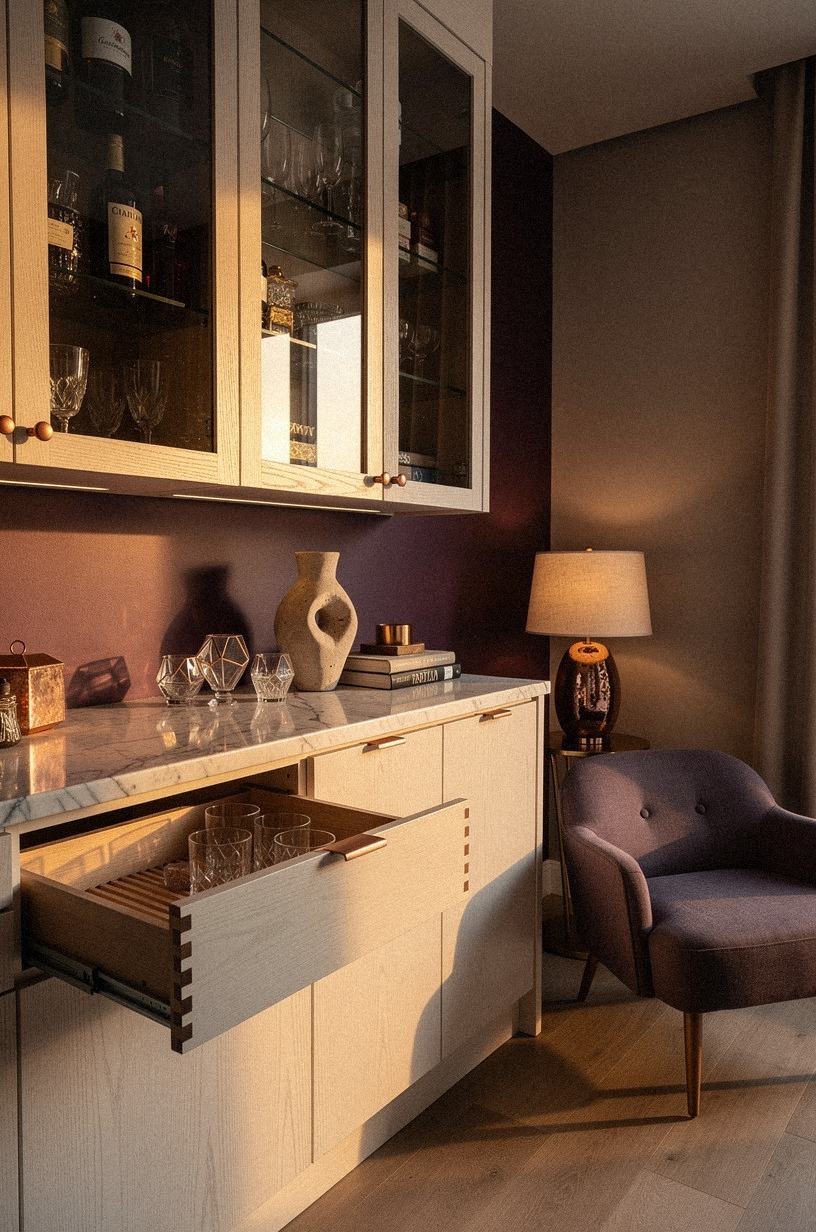
Clear cabinet doors show everything, including the stuff you wish stayed invisible. Smoked glass is more forgiving, and in a speakeasy it adds haze and reflection without the coldness of plain mirror. I reach for slim frames in dark bronze metal so the cabinet line stays crisp.
This works especially well when the bar wall is pushed to one side of the room. The glass catches the lamp glow, the clutter softens, and the cabinet feels lighter than solid wood would.
You still get the silhouette of bottles, which is half the charm. A standard smoked glass panel runs about $60 to $120 per square foot installed, so a single cabinet door stays under $300 in most cases.
If your room is already short on contrast, pair the smoked glass with warm wood and one light wall nearby. Otherwise the whole side can go murky. You want mystery, not mud.
Big difference. For more on balancing smoked glass with the rest of the room, living room cabinet ideas that hide clutter without killing the mood is a quiet, useful read.
14Can a leather sofa really work in a small lounge?
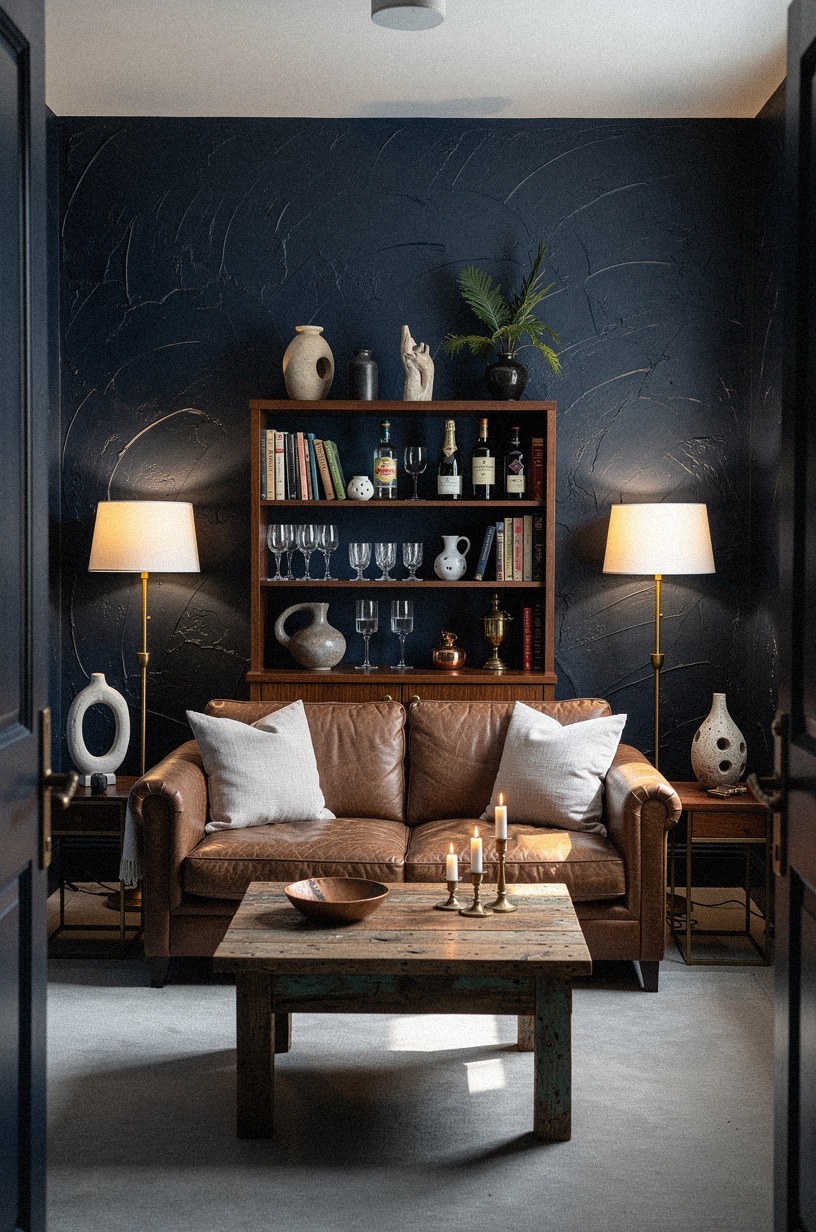
The wrong sofa can kill a small speakeasy before you even start styling. Pick a tight-arm, low-back profile in a tobacco or oxblood leather and the whole room suddenly has a center of gravity.
I’d skip the giant four-seater every time. A 72 to 78 inch sofa gives you enough seating without eating the floor.
And a leather that develops a patina, not the coated kind, gets better every year. That part matters in a room you sit in every night.
Layer one soft throw and one lumbar pillow in Belgian flax linen to break the leather’s weight, and you’ve got the clubby anchor the rest of the room can lean into.
15Why a rolling cart beats a built-in bar (in a small space)
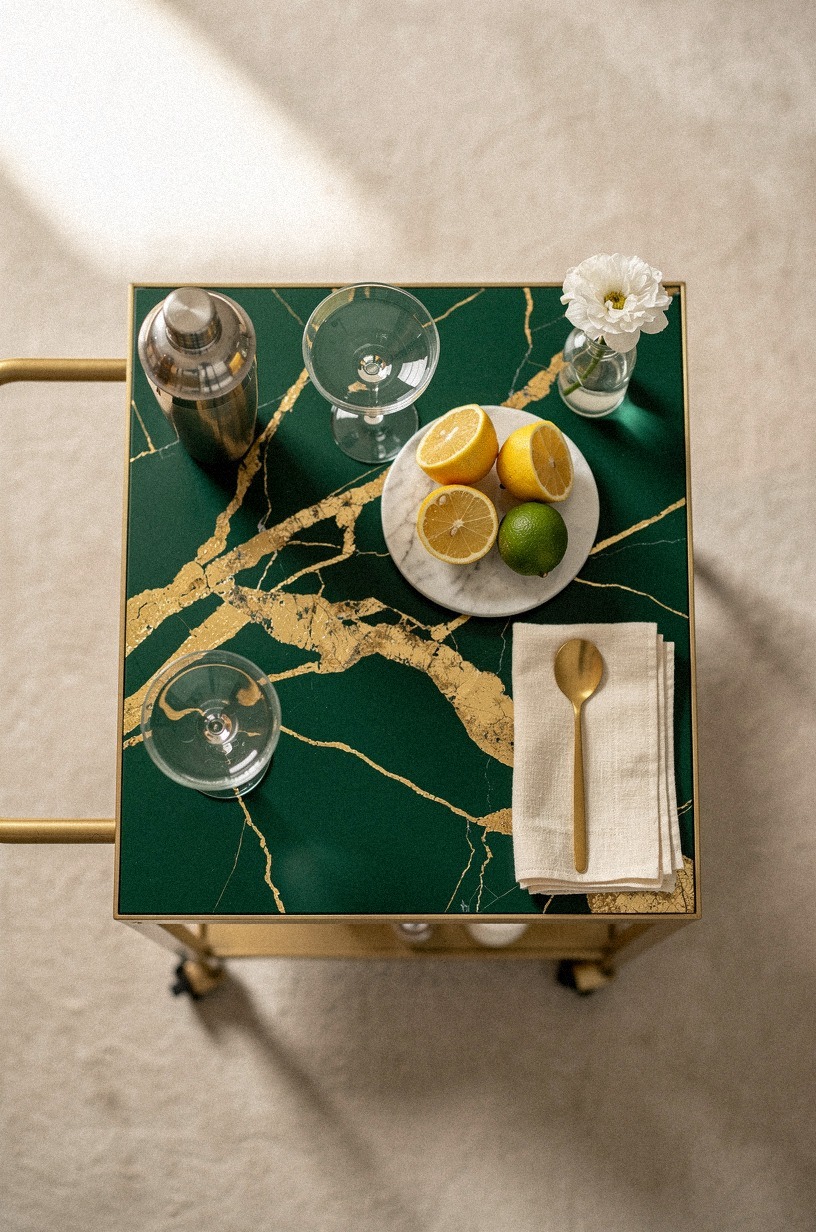
A rolling cart is perfect when you want the bar to move with the room. Tucked by the wall on weekdays, pulled close to the chairs at night, it earns more than its square footage. I love an emerald cart top with Calacatta Gold marble because the stone keeps the piece from feeling flimsy.
Keep the top edited. Shaker.
Jigger. Ice bucket. Two bottles you truly use.
If the cart holds twelve things, it will look like storage. If it holds six good things, it looks intentional.
And the lower shelf can do the boring work. Napkins, tonic, extra coupes.
Nobody needs to see all of it. For more ideas on making a compact corner feel layered instead of cramped, small sitting room ideas that make tiny spaces feel luxurious pairs well with this move.
If you want to go deeper on the cart-as-hero angle, bar cart styling ideas that make a tiny lounge feel intentional is a useful next read.
16Backlight the bar shelves with warm LEDs
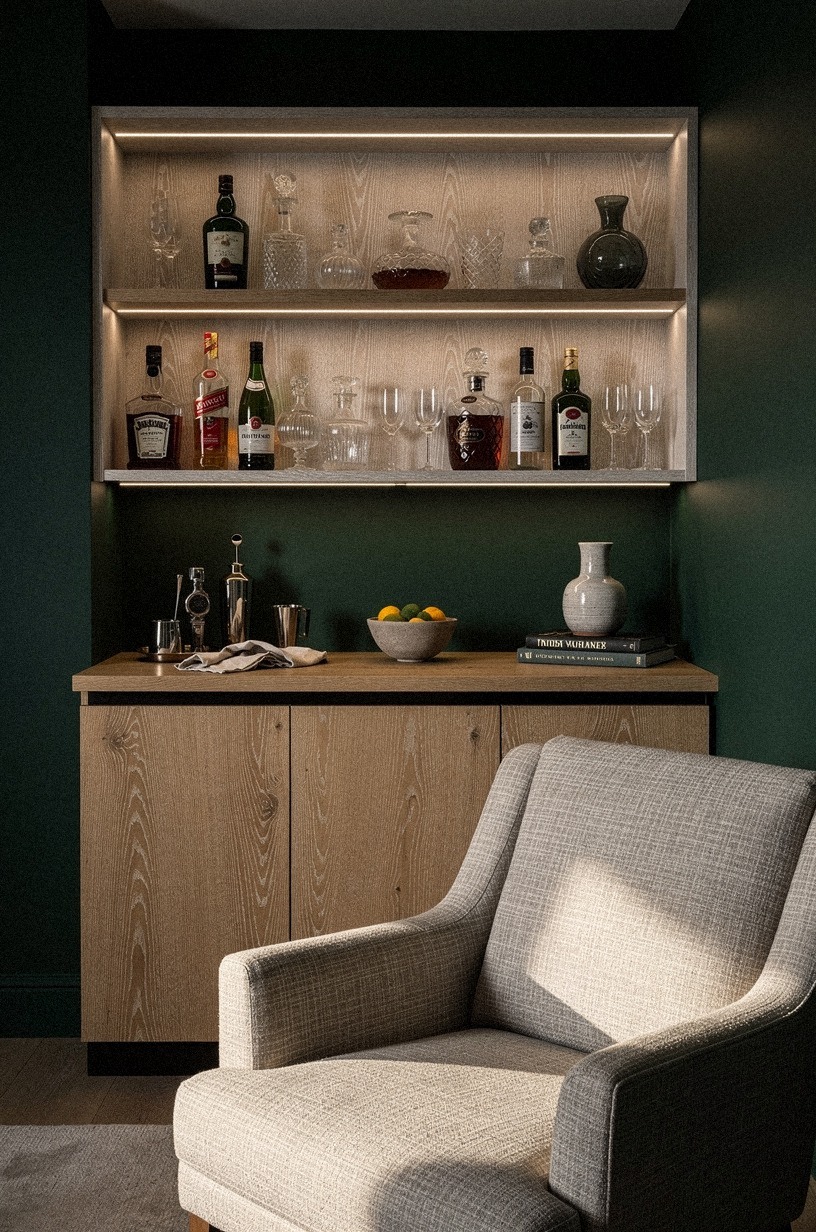
Backlighting is one of those upgrades that costs less than people assume and reads far more custom than it is. Warm strip lighting behind glass and bottles turns the shelves into a glow source, not just a storage wall.
I always choose 2700K LED tape here because cooler light kills the old-club mood instantly. A 16-foot reel runs about $25 to $40, which is almost embarrassing for the payoff.
Mount the strip where you don’t see the diode dots. Behind the face frame, under the shelf lip, or hidden in a back groove.
The light should seem to come from nowhere. That’s the whole point, and it costs less than dinner out!
This is also where cost tiers help. Here are the typical ranges if you’re building the full look around your lighting plan:
For more on layering warm light across a small lounge, warm lighting ideas that make a small living room feel cozy is a useful save.
17The Sidebar Lounge Move
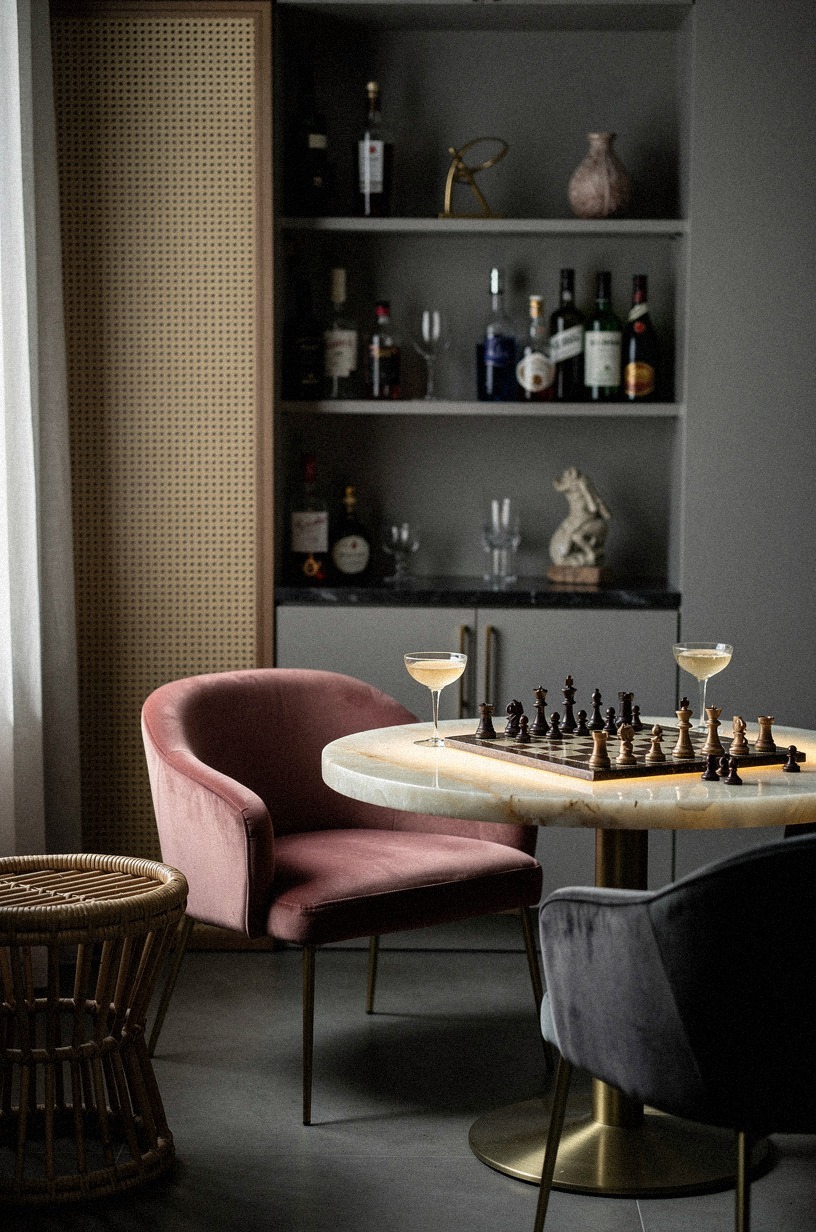
A low game table gives a tiny lounge something to do besides look pretty. A 14 to 16 inch tall table in dark walnut or stained oak doubles as a board-game surface, a card table, and a drinks perch when the lamps are low.
Skip the bright game sets. A simple walnut and bone chess set reads as decor even when nobody is playing.
And because the table is low, it doesn’t fight the seating zone for attention. A solid oak game table lands around $450 to $900 and ages beautifully.
It’s the kind of move that turns a styled room into a room people stay in for hours. That’s the whole point!
18Panel one wall in dark walnut strips
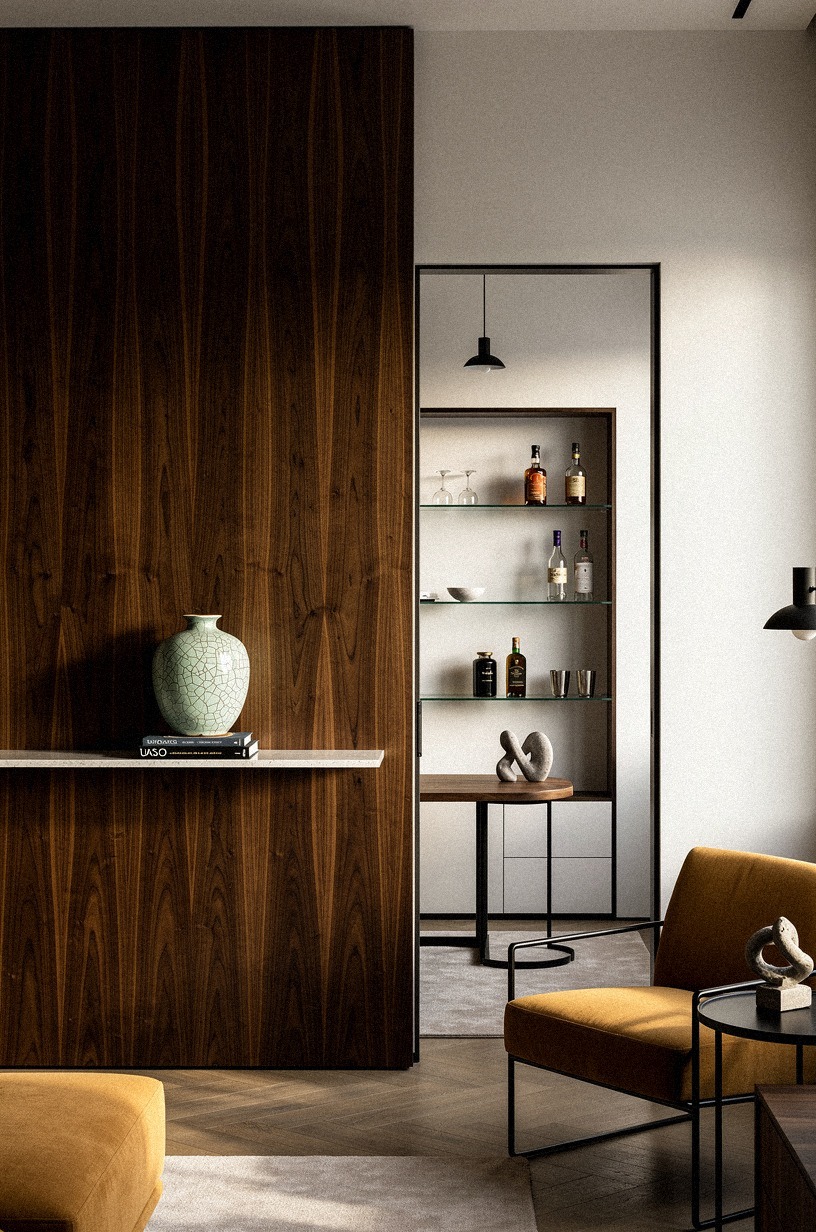
Vertical walnut strips make a short room feel taller and a plain wall feel finished. Done on one wall only, the effect is strong without being suffocating. I like narrow slats with a little space between them and a satin finish on book-matched walnut veneer so the grain reads even in dim light.
The doorway view matters here. When you glimpse the striped wall from another room, the space looks more designed before you even step in. That first impression does a lot of heavy lifting in compact homes.
Stikwood peel-and-stick walnut planks run about $8 to $12 per square foot, which keeps a single wall under $300 in most rooms.
If you can’t panel the full wall, fake the look behind the bar cabinet alone. A focused band still works. And if you’re balancing other small rooms nearby, 11 small kids room ideas that work in tight quarters is a good reminder that vertical moves keep paying off.
19Ground the room with a faded Persian rug
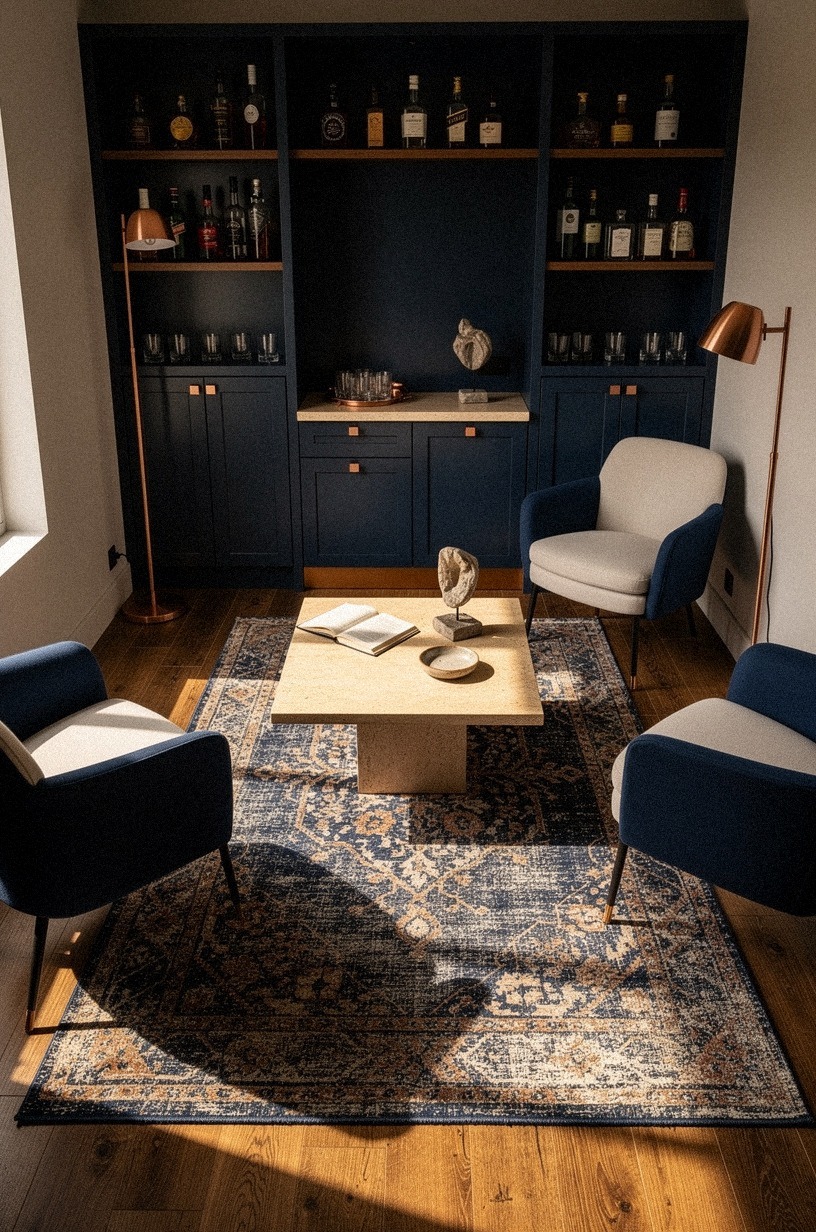
A faded rug is what stops all the wood, leather, and brass from floating apart. An antique Persian rug in softened reds or blues ties the seating zone into one piece, and the wear makes it read as lived-in instead of styled.
I’d size the rug to catch the front legs of every seat in the lounge. Usually that’s a 6×9 in a tight room, sometimes an 8×10 if the sofa runs long.
Anything smaller and the floor wins. Anything bigger and the rug eats the room.
Worth every penny, this one!
Layer a flat-weave Turkish kilim underneath if you want extra depth without losing the worn look. That’s a move designers charge for, and it costs almost nothing.
The Three-Layer Glow Rule
If you are wondering what these small speakeasy room ideas have in common, it’s not the bar. It is controlled contrast. One dark move, one reflective move, one soft move, working in layers around the glow rule.
That’s the formula I keep using because it works in apartments, basements, and awkward living rooms where you can’t afford to waste even 12 inches.
Your dark move might be the lacquer ceiling or the walnut wall. Your reflective move might be smoky mirror or a brass table.
Your soft move might be velvet, leather, or a faded rug. Once those three layers are in place, the room stops feeling tiny and starts feeling deliberate.
For a related take on contrast in small rooms, small living room ideas that make tight spaces feel warm and finished is a calm companion read.
The Door-Closed Rule I Use in Small Speakeasies
The biggest mistake I made in my first tiny speakeasy room was treating it like a themed corner instead of a real living room. I kept adding references to bars I loved, thinking more mood would make the room feel richer.
It did the opposite. The bottles got louder.
The lighting got fussier. The seating got tighter.
And when I walked in during the daytime, all I could see was effort.
Now I use what I call the Door-Closed Rule. If the room still feels good with the bar shut, the palette trimmed down, and only the lamps on, then the design is working.
If it only feels exciting when every bottle, tray, and piece of brass is on display, you do not have atmosphere. You have props.
That rule changes where I spend money too. I’d put cash into the sofa, the rug, and the lighting before I’d spend a dollar on fancy glassware.
Why? Because comfort is what gives a speakeasy its pull.
You need a seat that lets you stay, a rug that stitches the room into one zone, and light that keeps faces soft after dark. The decorative stuff only matters once those basics are right.
I also think small rooms are better for this look than giant open-plan spaces. Really. In a huge room, you have to work hard to create intimacy.
In a cramped lounge, intimacy is already there, you just need to stop fighting it. That might mean fewer bottles, lower chairs, and one strong wall instead of four.
It might mean a pocket door instead of a statement cabinet. It definitely means editing harder than you want to (I still struggle with this part).
So when you are choosing between two ideas, pick the one that makes the room feel calmer with less on show. That’s usually the right call. A good small speakeasy doesn’t beg for attention.
It pulls you in, keeps you seated, and looks even better when half the room is doing nothing at all.
The Questions I Get Asked Most
What is the best small speakeasy setup for a tight living room?
The best pick is a hidden bar plus one compact sofa, because hidden storage keeps the room from feeling crowded. I’d start with pocket doors or a bookcase bar, then add a tight sofa like the Article Sven in tan leather, which sits around $1,800 to $2,400. If you want more small-room layout help, see 18 small sitting room ideas that make tiny spaces feel luxurious.
Where can I buy small speakeasy pieces on a budget?
Start with IKEA, Target Threshold, and Wayfair for the basics, then hunt Facebook Marketplace for the character pieces. A cart, a pair of sconces, and a rug are often easier secondhand than new. For hidden-bar inspiration, I also like turn a closet into a hidden speakeasy bar.
How much does a small speakeasy makeover cost?
A typical makeover costs about $300-$1,200 if you are painting, adding art, bringing in a rug, and swapping lighting. Once you add a sofa and better materials, you are usually in the $2,500-$8,000 range.
The free wins? Editing what is out, closing storage, and moving light lower.
Can I create a small speakeasy look on a tight budget?
Yes, and small rooms are cheaper to shift than large ones. Close off clutter first.
Rehang the art lower. Move one lamp to the far edge of the room.
Then add one budget move, like velvet shelf skirting or a secondhand bar cart. That’s often enough to change the whole mood.
Is a small speakeasy worth it in a compact space?
Yes, because a tight room already has intimacy, which is the hardest part to fake in a larger space. Keep your walkway clear, let the rug catch the front legs of the seating, and choose one focal wall. That is why these rooms often feel more convincing than a huge open bar area.
Is a small speakeasy a good idea for a rental?
Yes, if you lean on reversible layers. Peel-and-stick wallpaper.
Plug-in sconces. Tension-mounted drapes.
A rolling cart instead of built-ins. And if your rental is already tight on floor space, your living room feels cold because it’s too small, not too big is a smart companion read.
What paint colors work best in a small speakeasy room?
Farrow & Ball Hague Blue on the ceiling and a warm ivory like Benjamin Moore White Dove OC-17 on the walls is my default. The dark overhead reads as depth, the warm ivory keeps the rest from going murky. For more on pairing paint with mood lighting, moody paint colors that make a small room feel intentional is a useful save.
Start With the Disappearing Bar Rule
If I had to pick one, I’d start with the paneled pocket doors. They give you mood without making the room perform all day, and that is why they beat an exposed cabinet. Pin this idea for later and come back once your layout is set.